Reynand Wu
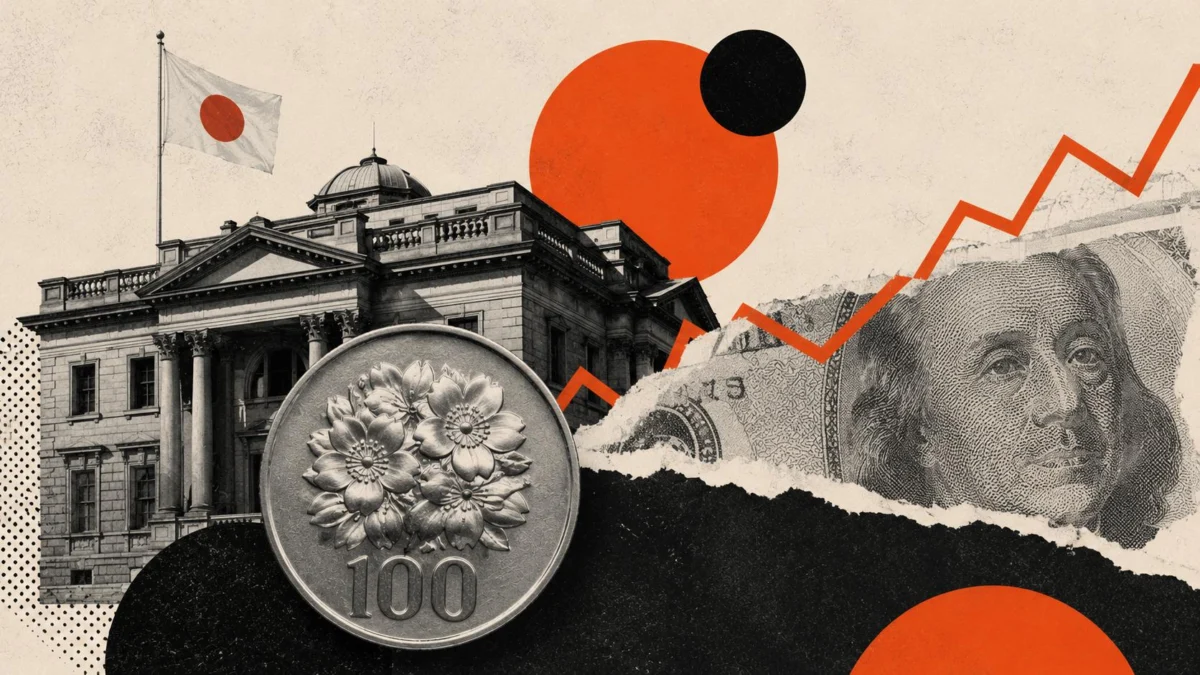
The US Dollar (USD) demonstrated a cautious uptick against the Japanese Yen (JPY) during Monday’s European session open, yet its advance remained firmly capped below the floor of its preceding three-week trading range. Market participants are exercising palpable restraint, biding their time in anticipation of pivotal central bank decisions scheduled for the latter half of the week. The USD/JPY currency pair has successfully found a robust support floor around the 156.00 psychological level, but its attempts to gain significant acceptance beyond the 157.00 mark have, so far, proven challenging, underscoring the prevailing market indecision. This delicate balance reflects a broader global economic narrative characterized by persistent inflationary pressures, nuanced monetary policy shifts, and the intricate interplay of divergent economic trajectories between major industrial nations.
Anticipating Key Monetary Policy Shifts
The week ahead is poised to be a watershed moment for global financial markets, with both the US Federal Reserve (Fed) and the Bank of Japan (BoJ) set to announce their latest monetary policy decisions. These pronouncements are expected to set the tone for currency markets, particularly for the USD/JPY pair, which often acts as a barometer for the divergence in monetary policy between the world’s largest and third-largest economies. The current market environment is one of heightened sensitivity, where even subtle shifts in rhetoric from central bankers can trigger significant movements across asset classes.
The Federal Reserve’s Deliberation: A Data-Dependent Stance Amidst Lingering Inflation
Before the BoJ’s announcement, the Federal Reserve is widely anticipated to maintain its benchmark interest rate at its current level. This decision would mark a continuation of the Fed’s strategy to hold rates steady after an aggressive tightening cycle initiated in early 2022 to combat surging inflation. The current target range for the federal funds rate stands between 5.25% and 5.50%, a level reached after eleven rate hikes designed to cool an overheated economy and bring inflation back to the Fed’s 2% target. The cumulative effect of these hikes has pushed borrowing costs to their highest in over two decades, impacting everything from mortgage rates to business investment.
However, the path forward for the Fed remains shrouded in uncertainty. While headline inflation, as measured by the Consumer Price Index (CPI), has shown signs of moderation from its multi-decade highs of over 9% in mid-2022 to around 3.2% recently, it continues to hover above the central bank’s comfort zone, particularly when factoring in core inflation metrics that strip out volatile food and energy prices. Core CPI, for instance, has remained stubbornly above 4%, indicating persistent underlying price pressures. The US labor market, despite some signs of cooling such as a slight increase in unemployment from historical lows and a moderation in job openings, has demonstrated remarkable resilience. Unemployment rates remain historically low at around 3.8%, and wage growth, while moderating from its peak, still contributes to inflationary pressures by supporting consumer demand. This resilience presents a dilemma for policymakers: tighten further and risk a recession, or hold steady and risk inflation becoming entrenched and requiring even more aggressive measures later.
Fed Chair Jerome Powell, known for his emphasis on data dependency, is expected to reiterate the central bank’s commitment to achieving its dual mandate of maximum employment and price stability. His communication will be meticulously scrutinized for any hints regarding the timing and magnitude of potential future rate adjustments. The Fed’s aversion to explicit forward guidance, a stance that gained prominence after the global financial crisis and was reinforced during the post-pandemic recovery, means that the central bank’s future rate path is likely to remain intentionally vague. This deliberate ambiguity allows the Fed maximum flexibility to react to incoming economic data without being constrained by prior commitments, providing optionality in a highly uncertain economic landscape.
In this context, the US Personal Consumption Expenditures (PCE) Price Index, scheduled for release on Thursday, assumes heightened importance. The PCE is the Fed’s preferred gauge of inflation, considered more comprehensive than the CPI as it accounts for shifts in consumer spending habits and a broader range of goods and services. Its core component (excluding food and energy) is particularly closely watched as an indicator of underlying inflationary trends. A higher-than-expected PCE reading, especially in its core measure, would likely fuel speculation of a potential rate hike in December, reinforcing a hawkish stance from the Fed and potentially strengthening the dollar. Conversely, a softer PCE report could temper expectations for further tightening, potentially weighing on the dollar and providing some relief to the bond market. Analysts currently project the year-over-year core PCE to be around 3.5%, still above the Fed’s 2% target, but down from its peak of 5.4% in early 2022. Headline PCE is expected to be slightly higher, influenced by recent energy price fluctuations.
The Bank of Japan’s Gradual Normalization: A Historic Departure from Decades of Deflation
Across the Pacific, the Bank of Japan is also on the cusp of a significant policy juncture, albeit one stemming from a vastly different economic backdrop. The BoJ is widely expected to maintain its benchmark interest rate at its current range of 0% to 0.1%, a level it reached in March 2024 when it finally ended its eight-year experiment with negative interest rates and abolished its yield curve control (YCC) policy. This landmark decision marked a historic pivot away from decades of ultra-loose monetary policy, which was initially designed to combat persistent deflation and stimulate economic growth in an economy long plagued by stagnant prices and wages.
However, the BoJ is anticipated to signal a further rate hike potentially in December, adhering to a strategy of gradual, quarterly monetary tightening. This measured approach reflects the BoJ’s cautious optimism that Japan is finally escaping its deflationary spiral and that sustained inflation, driven by rising wages and domestic demand, is becoming a reality. Recent data has indeed shown Japanese inflation rates consistently above the BoJ’s 2% target, with the core Consumer Price Index (CPI) hovering around 2.5-3.0% year-on-year for an extended period. This upward trend in inflation, coupled with significant wage increases negotiated during annual "shunto" labor talks (which saw average wage growth exceed 5% for the first time in decades), provides the central bank with the long-awaited justification to normalize its monetary policy.
The BoJ’s challenge lies in carefully managing this transition. After decades of fighting deflation, Japanese households and businesses are accustomed to low prices and stagnant wages. A rapid tightening could stifle nascent economic growth and consumer spending, potentially sending the economy back into a deflationary environment. Therefore, Governor Kazuo Ueda and his board are likely to emphasize a "data-dependent" and "sustainable" approach to policy normalization, ensuring that the economy can absorb higher borrowing costs without derailing the recovery. Any explicit hint or subtle shift in language regarding future rate hikes will be closely monitored, as it could significantly impact the Yen, potentially leading to a repricing of Japanese assets and a partial unwinding of the popular carry trade strategy, where investors borrow in low-yielding JPY to invest in higher-yielding currencies globally. Analysts will specifically look for changes in the BoJ’s assessment of inflation risks and economic projections for signs of conviction for future hikes.
Timeline of Key Events and Anticipated Market Reactions
The upcoming week presents a critical sequence of economic announcements and policy decisions that will shape market sentiment:
- Mid-week (Wednesday): The Federal Reserve’s Federal Open Market Committee (FOMC) meeting concludes with an interest rate decision and accompanying statement. While a hold is priced in, the "dot plot" (summary of economic projections) and Fed Chair Powell’s press conference will be key. His commentary on the economic outlook, inflation trajectory, and future policy path will be dissected for any hawkish or dovish signals. A more hawkish tone, even without a rate hike, could boost the USD.
- Late-week (Thursday): The US Personal Consumption Expenditures (PCE) Price Index for the previous month will be released. This data point is crucial for contextualizing the Fed’s stance and informing market expectations for December’s meeting. A stronger-than-expected PCE, particularly core PCE, could bolster the USD significantly, as it implies persistent inflation. Conversely, a softer reading might lead to JPY strengthening if it dampens expectations for future Fed tightening.
- Late-week (Friday): The Bank of Japan concludes its monetary policy meeting, announcing its interest rate decision and providing an updated economic outlook. BoJ Governor Ueda’s subsequent press conference will be vital for understanding the nuances of the central bank’s forward guidance on future rate adjustments. A clear hint towards a December hike, or an upward revision of inflation forecasts, could provide a significant boost to the JPY, potentially leading to a sharp reversal in USD/JPY. Conversely, a cautious stance without strong forward guidance could see the Yen weaken further.
Broader Economic Implications and Market Dynamics
The decisions from the Fed and BoJ carry significant implications beyond the immediate currency pair. For the global economy, the Fed’s actions influence borrowing costs worldwide, impacting international capital flows and investment decisions. A hawkish Fed could exacerbate global financial conditions, especially for emerging markets, by drawing capital towards higher-yielding US assets and strengthening the dollar. A more dovish stance, on the other hand, could provide some relief to global markets.
The BoJ’s normalization, though gradual, signals a major shift in the global monetary landscape. For years, the JPY served as a primary funding currency for carry trades due to its near-zero interest rates. As the BoJ slowly raises rates, the attractiveness of the carry trade diminishes, potentially leading to capital repatriation to Japan and a strengthening Yen. This could have ripple effects on global bond yields, as demand for higher-yielding foreign bonds might decrease, and on equity markets, as risk appetite shifts.
Furthermore, the divergence in economic growth and inflation between the US and Japan remains a critical factor. While the US economy has demonstrated robust growth despite higher interest rates, Japan’s recovery has been more modest, though now supported by rising inflation. The differing speeds of monetary policy normalization will continue to drive the USD/JPY pair. Geopolitical developments, such as ongoing conflicts in Eastern Europe or the Middle East, or renewed supply chain disruptions, also introduce elements of uncertainty, potentially prompting safe-haven flows into either the USD or JPY, depending on the nature and perceived global impact of the crisis.
Technical Analysis: Rangebound Movement Below Key Resistance and Momentum Indicators
From a technical perspective, the USD/JPY pair is currently exhibiting characteristics of a market in consolidation, constrained within a defined range as traders await fundamental catalysts. The pair’s frail recovery attempt, presently trading around 157.13, indicates that while buyers are attempting to push higher, their conviction remains limited. The price action suggests a battle between underlying buying interest and overhead selling pressure.
Analysis of 4-hour charts reveals neutral momentum indicators, reinforcing the idea of a market lacking a clear directional bias. The Relative Strength Index (RSI 14), a popular momentum oscillator that measures the speed and change of price movements, has picked up to levels just above the 40s. While an RSI above 50 generally indicates bullish momentum and below 50 bearish, the current positioning just above the 40s suggests a slight tilt towards positive momentum but one that is not yet decisive. It implies that selling pressure has eased, but buying pressure has not yet overwhelmed the market sufficiently to signal a sustained uptrend.
Similarly, the Moving Average Convergence Divergence (MACD) line, which identifies changes in the strength, direction, momentum, and duration of a trend, is observed to be hovering close to its signal line, with histogram bars remaining small and near the zero line. This configuration further underscores the absence of a strong immediate bullish trend. A clearer upward trajectory in the MACD line crossing decisively above the signal line, accompanied by expanding positive histogram bars, would typically signal a stronger upward momentum. As it stands, the "hovering" action indicates a state of equilibrium, where neither buyers nor sellers are asserting dominance with conviction.
Key Resistance Levels:
Upside attempts for USD/JPY continue to face formidable resistance, specifically capped below a critical area roughly spanning 157.20 to 157.50. This zone previously functioned as a significant support level throughout earlier parts of October, successfully fending off multiple bearish assaults. In technical analysis, once