Gilang Muhammad
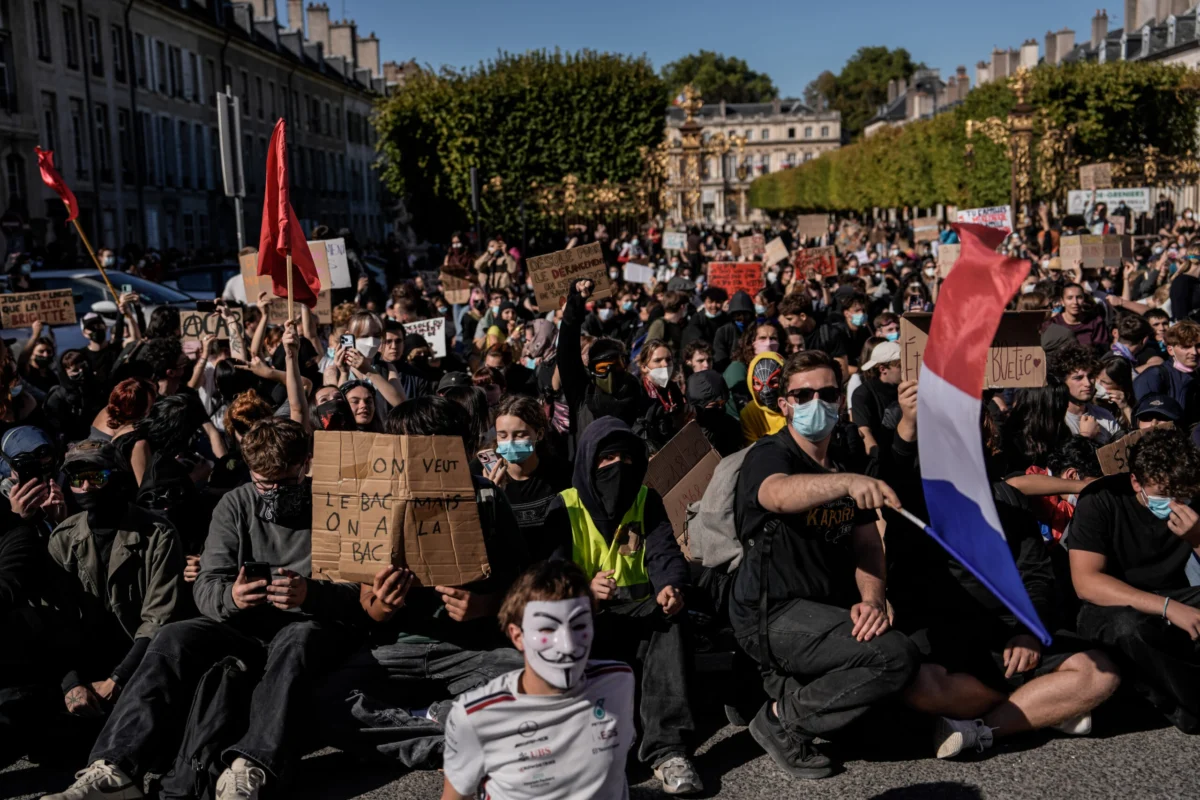
France’s parliament is set to commence a pivotal debate on the 2027 budget this Tuesday, a discussion overshadowed by the nation’s escalating fiscal challenges. High deficits, a burgeoning national debt, and persistent student protests against perceived underfunding in public services are sharpening the political cost of desperately needed fiscal consolidation. The euro zone’s second-largest economy finds itself at a critical juncture, with many market observers warning that a failure to sustainably curb its national deficit could precipitate a significant debt crisis, with potential contagion effects across the continent.
For nearly a decade under President Emmanuel Macron’s leadership, France has consistently recorded one of Europe’s highest deficit-to-GDP ratios. This persistent fiscal imbalance has occurred even as thousands have taken to the streets to protest years of perceived underfunding in vital public services, particularly education, highlighting a deep societal schism between fiscal realities and public expectations. Government spending, especially in the politically sensitive realms of social protections like pensions and healthcare, remains significantly higher than that of many of its European peers. This expansive social model, combined with a period of tepid economic growth, has failed to generate sufficient revenue to offset expenditures, pushing the nation towards a precarious financial precipice.
The Genesis of a Crisis: A Decade of Accumulation and External Shocks
The roots of France’s current fiscal predicament are complex, extending beyond recent policy choices to decades of robust social spending commitments that have become deeply ingrained in the national fabric. However, the last decade has seen an acceleration of these trends, particularly under President Macron, whose reform agenda has often been met with fierce resistance.
Upon taking office in 2017, Macron pledged to reform France’s economy, including efforts to streamline public spending and boost competitiveness. Initial progress was made, but the trajectory was significantly disrupted by a series of unprecedented global events. The "Gilets Jaunes" (Yellow Vests) protests, beginning in late 2018, forced the government to backtrack on certain austerity measures and introduce costly social packages, further straining public finances.
The COVID-19 pandemic, starting in early 2020, necessitated massive government intervention to support businesses and households, leading to a dramatic surge in public debt and deficits across Europe. France, with its already high spending levels, saw its debt-to-GDP ratio soar past 110%, while its deficit-to-GDP ratio peaked well above the EU’s 3% Maastricht threshold. While these emergency measures were crucial for economic stability, the subsequent withdrawal of stimulus has proven challenging.

Further exacerbating the situation, the energy crisis triggered by geopolitical events in 2022 led to additional government spending on energy subsidies and price caps to shield consumers and industries from soaring costs. These successive shocks, coupled with structural spending rigidities and a growth rate that, while positive, has often lagged behind expectations, have made it exceedingly difficult for France to return to fiscal health.
Economic Indicators Sounding Alarm Bells
The financial markets have begun to reflect the growing unease surrounding France’s fiscal trajectory. French government borrowing costs have soared to their highest level in nearly a quarter of a century, a stark indicator of investor apprehension regarding the country’s ability to implement effective fiscal consolidation. The widening gap in French bond yields over their more stable German equivalents—a key gauge of risk perception within the euro zone—has become a particular point of concern. For instance, the spread on 10-year government bonds, which typically reflects the market’s assessment of a country’s creditworthiness, has expanded significantly, signaling a growing premium demanded by investors to hold French debt.
Recent projections from the European Commission and independent economic bodies paint a concerning picture. France’s deficit-to-GDP ratio, after showing some signs of improvement post-pandemic, has proven stubbornly high, with current estimates suggesting it will remain significantly above the 3% EU threshold for the foreseeable future. National debt-to-GDP ratios continue to hover around 112-115%, placing France among the most indebted nations in the Eurozone. Critically, these figures are not merely abstract economic indicators; they directly impact the nation’s capacity to invest in future growth, maintain its social safety net, and respond to unforeseen crises.
Tepid economic growth, which has consistently underperformed initial forecasts, further complicates the fiscal outlook. While GDP growth has been positive, averaging perhaps 1.0-1.5% in recent years, it has not been robust enough to generate the substantial tax revenues needed to outpace the growth in public spending. Unemployment, though reduced from its peaks, remains a structural challenge in certain sectors, while inflation, though moderating, has contributed to calls for higher wages and social benefits, creating a challenging environment for fiscal restraint.
The Social Contract Under Strain: Protests and Public Services
The economic challenges are inextricably linked to social unrest. The ongoing student protests are a poignant manifestation of public frustration over years of perceived underfunding in public services, particularly education. Students and educators argue that inadequate resources are compromising the quality of teaching, research, and infrastructure, ultimately hindering France’s long-term competitiveness. These protests echo broader discontent seen in recent years, notably the widespread opposition to pension reforms that aimed to raise the retirement age.

President Macron’s government has repeatedly emphasized the necessity of these reforms, arguing they are crucial for the long-term sustainability of the pension system. However, unions and left-wing political parties contend that such measures disproportionately burden workers and retirees, while neglecting alternative solutions like increased employer contributions or progressive taxation. This ongoing tension highlights a fundamental disagreement within French society about the allocation of resources and the future of its generous social model. The government’s attempts at fiscal consolidation are thus not merely economic exercises but deeply political battles over the very essence of the French social contract.
The European Central Bank’s Dilemma and the Shadow of Past Crises
The escalating concerns about France’s fiscal health have inevitably raised questions about the potential for intervention from the European Central Bank (ECB). The widening yield gap between French and German bonds, if it continues to expand, could threaten the stability of the euro zone. However, any ECB intervention would be an expensive and politically controversial step.
The legacy of the Sovereign Debt Crisis, which hammered countries such as Greece, Ireland, Portugal, Spain, and Italy just over a decade ago, looms large. During that period, the ECB, under then-President Mario Draghi, famously pledged to do "whatever it takes" to preserve the euro, leading to the creation of instruments like Outright Monetary Transactions (OMT). More recently, the ECB introduced the Transmission Protection Instrument (TPI) to address unwarranted, disorderly market dynamics that pose a serious threat to the transmission of monetary policy across the euro area.
However, as Professor Antonio Fatas of INSEAD Business School unequivocally stated, "The ECB will not step in just to ‘bail out’ France. If there was a European crisis they will intervene in some form but they will not save a country that cannot save itself." This sentiment underscores a crucial distinction: while the ECB is committed to maintaining price stability and safeguarding the integrity of the euro, its mandate does not extend to directly financing national governments or bailing out countries that fail to implement necessary fiscal reforms. Intervention would likely require drastic action and credible commitments from France itself to address its underlying fiscal imbalances, a condition that was paramount during the previous crisis for nations seeking European assistance.
ECB President Christine Lagarde has consistently reiterated the central bank’s focus on price stability and the importance of sound fiscal policies by member states. While not directly commenting on specific countries, her statements align with the view that national governments bear the primary responsibility for their own fiscal sustainability. Any move by the ECB would be meticulously scrutinized by other Eurozone members, particularly those that have undergone painful austerity measures, to ensure fairness and adherence to the principle of moral hazard.
A Political Minefield: Elections and Parliamentary Gridlock

The current fiscal debate is deeply entrenched in France’s political landscape, especially with presidential elections looming next year. President Macron, barred from seeking a third consecutive term, faces the challenge of securing his legacy while navigating an increasingly fragmented parliament. The lack of a clear majority has made it difficult to pass contentious reforms, leading to frequent reliance on executive powers (like Article 49.3 of the Constitution) to push through legislation, which often fuels further public discontent and opposition.
The main opposition parties are capitalizing on the government’s fiscal woes. Marine Le Pen’s National Rally, currently leading in many polls, has outlined an economic vision that, while critical of Macron’s fiscal management, also includes significant spending commitments, particularly on social welfare and protectionist measures. While Le Pen’s platform often advocates for reducing bureaucracy and specific taxes, it simultaneously proposes increasing pensions, reducing the retirement age, and enhancing public sector wages, raising questions about its own fiscal sustainability. Similarly, left-wing parties continue to push for increased public investment in social services and environmental initiatives, often advocating for higher taxes on corporations and wealthy individuals, positions that diverge sharply from the government’s current reform path.
French Finance Minister Bruno Le Maire has repeatedly warned of the gravity of the situation, urging parliamentarians to compromise and support the necessary fiscal adjustments. He has emphasized the need for "rigor and responsibility" to avoid a loss of market confidence and a potential downgrade by credit rating agencies. A downgrade, should it occur, would further increase France’s borrowing costs, creating a vicious cycle of higher debt servicing and greater pressure on public finances.
The European Commission, tasked with monitoring member states’ adherence to EU fiscal rules, is also closely watching France. While the Stability and Growth Pact (SGP) has been partially suspended or relaxed in recent years due to successive crises, a return to stricter enforcement is anticipated. France, along with other high-deficit countries, could face excessive deficit procedures if it fails to present a credible plan for fiscal consolidation.
Looking Ahead: Pathways to Stability and the Cost of Inaction
The path forward for France is fraught with challenges. Sustainable fiscal consolidation will require a combination of difficult measures:
- Spending Cuts: Identifying areas where public expenditure can be reduced without critically undermining essential services or triggering widespread social unrest. This could involve reforms to the administration, streamlining public sector operations, and re-evaluating certain subsidy programs.
- Revenue Generation: Exploring options for increasing tax revenues, potentially through adjustments to existing tax structures, while being mindful of competitiveness and economic growth.
- Structural Reforms: Implementing reforms that boost long-term economic growth, such as improvements to the labor market, investment in innovation, and reducing regulatory burdens. This would enhance France’s productive capacity and generate more tax revenue organically.
The current budget debate is therefore more than just an annual legislative exercise; it is a critical referendum on France’s economic future and its standing within the European Union. A failure to address the structural issues underpinning its deficit and debt could have profound implications, not only for the French people but for the stability of the entire euro zone. The ability of French political leaders to forge a consensus on a credible and sustainable fiscal path will be a defining test of their resolve and commitment to the nation’s long-term prosperity. The cost of inaction is a future burdened by higher debt, constrained public services, and diminished influence on the global stage.