Lina Wu
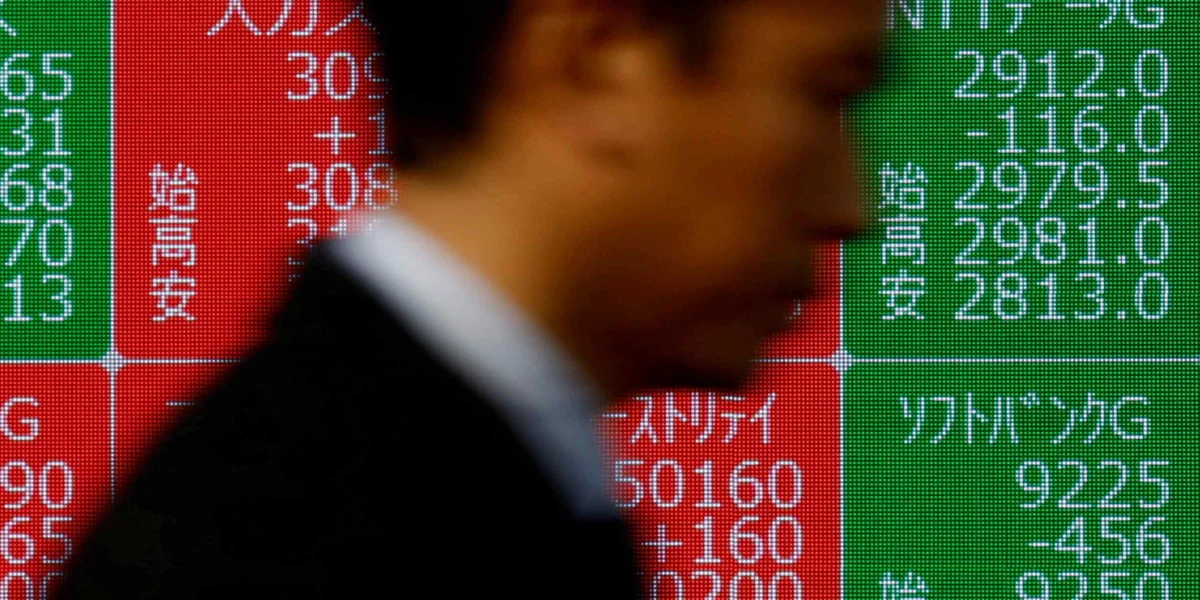
TOKYO – Japanese bond yields experienced a notable decline on Friday, October 23, 2026, while the yen saw a significant appreciation against major currencies. This market movement signals a pronounced shift towards perceived safe-haven assets, driven by escalating concerns over the substantial and rapidly accumulating debt within the artificial intelligence (AI) sector. The apprehension surrounding the financial health of AI-centric companies has rippled across Asian markets, exerting downward pressure on equities.
The day’s trading saw the benchmark 10-year Japanese government bond yield dip to its lowest point in over six months, trading at 0.85% by midday. This contrasts sharply with the yields observed just a week prior, which hovered around 1.05%. Concurrently, the yen strengthened against the US dollar, reaching 112.50 from its opening at 114.20, and against the Euro, moving from 125.80 to 123.90. This synchronized movement in bonds and currency underscores a palpable risk-off sentiment pervading global financial landscapes.
The AI Debt Conundrum: A Growing Concern
The genesis of this market anxiety can be traced to a series of reports released over the past fortnight, highlighting the ballooning debt levels of several prominent AI development firms and the hardware providers powering them. While the AI revolution has been a significant driver of market growth and innovation for the past several years, the sheer capital expenditure required for cutting-edge research, development, and the deployment of massive data centers has led to substantial borrowing.
In early October 2026, a report by the International Institute for Financial Stability (IIFS) estimated that the collective debt accumulated by companies directly involved in advanced AI research and semiconductor manufacturing had surpassed $2 trillion globally. A significant portion of this debt, the report detailed, was short-term or carried variable interest rates, making these entities particularly vulnerable to rising borrowing costs and potential liquidity crunches.
Specifically, several key AI infrastructure providers, which have seen their valuations skyrocket on the back of AI-driven demand, have engaged in aggressive debt financing to fund the construction of new fabrication plants and expand their cloud computing capabilities. While this expansion was initially viewed as a testament to their growth potential, the current economic climate, marked by persistent inflation and the specter of further interest rate hikes by major central banks, has cast a shadow over their ability to service this debt.
One of the most closely watched companies, "QuantumLeap AI," a leader in next-generation AI algorithms, announced on October 18th a delay in its quarterly earnings report, citing "complexities in accounting for its substantial R&D expenditures and associated debt obligations." This announcement alone sent shockwaves through the tech-heavy NASDAQ, contributing to a broader market sell-off that has since extended to Asia.
A Timeline of Shifting Sentiment
The shift in investor sentiment has been gradual but has accelerated in recent weeks.
- Late September 2026: Initial concerns began to surface as inflation figures in the US and Europe remained stubbornly high, prompting speculation of prolonged higher interest rates. This led to a slight uptick in yields on safe-haven assets like US Treasuries and Japanese government bonds.
- Early October 2026: The IIFS report on AI debt levels provided concrete data that fueled these nascent anxieties. Tech stocks, particularly those with high debt-to-equity ratios, began to experience minor corrections.
- Mid-October 2026: A series of downgrades by credit rating agencies for several smaller AI startups, citing "increasing financial leverage and uncertain revenue streams," intensified the sell-off. This period also saw the first significant appreciation of the yen as investors began to seek refuge.
- October 23, 2026: The market’s reaction to the QuantumLeap AI news and the subsequent broad-based decline in Asian tech indices solidified the "flight to quality" narrative.
Supporting Data: The Divergence of Markets
The divergence in market performance on October 23rd was stark. The Nikkei 225, Japan’s benchmark stock index, fell by 1.8%, its sharpest single-day decline in over three months. Technology-heavy sub-indices within the Nikkei experienced even steeper losses, with the semiconductor and IT services sectors down by over 3.5%.
In South Korea, the Kospi index shed 2.2%, dragged down by major electronics manufacturers heavily involved in AI component production. Taiwan’s Taiex, a bellwether for the global semiconductor industry, dropped by 2.5%.
Conversely, the Japanese government bond market saw robust demand. The yield on the 10-year JGB, which moves inversely to its price, fell by 10 basis points to 0.85%. The yield on the 5-year JGB also declined by 8 basis points, settling at 0.42%. This strong demand for Japanese sovereign debt is a classic indicator of investors seeking safety.
The yen’s appreciation is also a significant data point. A stronger yen makes Japanese exports more expensive and imports cheaper, which can have mixed effects on the Japanese economy. However, in times of global uncertainty, a stronger yen is often interpreted as a sign of financial stability and capital inflows.
Official Responses and Market Analysis
While no immediate official statements were issued by Japanese financial authorities regarding the market movements, central bank observers noted that the Bank of Japan (BoJ) has been gradually signaling its intention to normalize monetary policy. However, the current market turmoil might prompt a more cautious approach, at least in the short term.
Economists and market analysts are interpreting these developments as a potential turning point in the AI investment narrative. For years, the sector has been fueled by a seemingly endless appetite for growth, often with less scrutiny on profitability and debt management.
"We are seeing a recalibration of risk appetite," commented Ms. Hiroko Tanaka, Chief Market Strategist at Global Asset Management in Tokyo. "Investors are beginning to question the sustainability of the high valuations in AI-related companies when their debt burdens are substantial and the economic outlook is increasingly uncertain. The ‘growth at all costs’ mentality is being replaced by a focus on financial prudence and profitability."
The analysis suggests that companies with strong balance sheets, clear paths to profitability, and diversified revenue streams are likely to weather this storm better than those heavily reliant on speculative growth and debt financing. The current environment also favors companies that produce essential goods and services, as well as those in defensive sectors.
Broader Impact and Implications
The implications of this "flight to quality" extend beyond Asian markets. Global investors are re-evaluating their portfolios, leading to a broader reassessment of tech valuations worldwide. This could have a dampening effect on future fundraising rounds for AI startups and may lead to increased M&A activity as stronger companies acquire weaker ones to consolidate market share and gain access to talent and technology.
For Japan, the appreciation of the yen could pose a challenge for its export-oriented economy, potentially impacting the competitiveness of Japanese manufacturers in international markets. However, it also signifies a potential increase in the purchasing power of Japanese consumers and businesses for imported goods and services.
Furthermore, the focus on AI debt raises questions about the regulatory oversight of this rapidly expanding sector. As AI technology becomes more integrated into critical infrastructure and daily life, ensuring the financial stability of the companies developing and deploying it is paramount. Future policy discussions may revolve around enhanced disclosure requirements for AI-related debt and stricter lending criteria for highly leveraged tech firms.
The current market sentiment suggests that the era of unchecked exuberance in the AI sector may be giving way to a more discerning and risk-aware investment landscape. Investors are now prioritizing sustainable growth and sound financial management over speculative potential, a shift that could reshape the trajectory of technological innovation and financial markets for the foreseeable future. The coming months will be crucial in determining whether this is a temporary correction or a more profound and lasting change in investor behavior towards the high-flying AI industry.