Reynand Wu

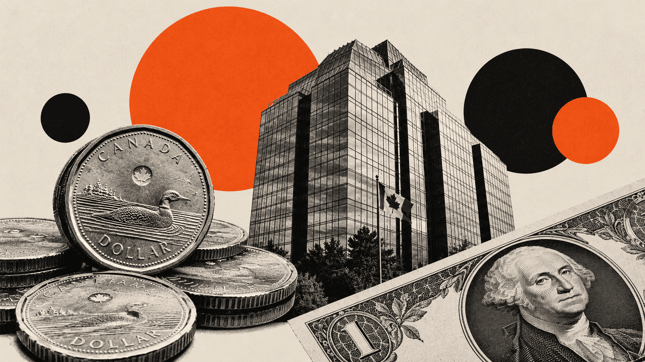
The Canadian Dollar (CAD) has recently surged to the forefront of financial markets, becoming the epicenter of an intense debate surrounding the Bank of Canada’s (BoC) next monetary policy decision. Market participants have rapidly recalibrated their expectations, aggressively pricing in a rate hike at the BoC’s upcoming meeting. This hawkish shift in sentiment has propelled the CAD higher against its U.S. counterpart, with the USD/CAD pair retreating significantly to 1.4071, a notable decline from its October 14 peak of 1.4300. This dramatic repricing underscores the market’s conviction, largely fueled by a confluence of rising domestic inflation expectations and persistent global economic uncertainties.
Leading financial institutions are sharply divided on the BoC’s likely course of action. MUFG, a prominent global financial services group, anticipates the central bank will indeed deliver a rate hike, potentially followed by a second tightening move in December, citing mounting inflationary pressures and a responsive market. Conversely, Standard Chartered adopts a more cautious stance, arguing that current market expectations for tightening are excessive. They project the BoC will maintain its policy rate at 2.25% through the end of 2026, and even into 2027, given underlying economic fragilities. Providing crucial context to this divergence, Royal Bank of Canada (RBC) highlights survey evidence indicating a sharp increase in Canadian inflation expectations, a phenomenon exacerbated by the recent collapse of critical trade talks with the United States. For the Canadian Dollar, its immediate trajectory hinges precariously on whether the Bank of Canada validates these aggressive rate-hike bets or opts for a more conservative approach.
The Hawkish Repricing: Fueling the Canadian Dollar’s Rebound
The recent strength of the Canadian Dollar is largely attributable to a significant hawkish repricing of the Bank of Canada’s monetary policy outlook. Just last week, market pricing indicated approximately 9 basis points (bps) of tightening expected from the BoC. However, this has surged to around 21 bps, reflecting a near-consensus view among traders and analysts that a rate hike is imminent. This shift gained considerable momentum following reports that three major Canadian banks — a powerful indicator of institutional sentiment — revised their forecasts to anticipate a hike at the next meeting. The BoC’s own business and consumer surveys further buttress this hawkish argument, revealing a concerning uptick in households’ longer-term inflation expectations, signaling a potential de-anchoring of price stability perceptions.
Lee Hardman, an analyst at MUFG, observes that this repricing has directly powered the Canadian Dollar’s rebound. "The BoC has recently signaled that they are moving closer to hiking rates," Hardman stated, suggesting that if the central bank prioritizes forward-looking measures of inflation risks and market expectations remain elevated, a policy tightening is highly probable. The rapid decline of USD/CAD from 1.4300 to 1.4071 in just over a week vividly illustrates the market’s conviction in a stronger CAD, driven by the prospect of higher interest rate differentials. However, Hardman also injects a note of caution, acknowledging that a hike is "not a done deal," particularly given the consecutive months of heavy job losses reported in September, which could complicate the BoC’s decision-making process. Despite this, the prevailing sentiment from MUFG is that the BoC is likely to "pull the trigger" on a rate hike, with the possibility of a second increase before December, further bolstering the Canadian currency.
Unpacking the Drivers of Rising Inflation Expectations
The foundation of the market’s hawkish shift, as illuminated by RBC, lies in the rapidly escalating inflation expectations among Canadian businesses and consumers. Claire Fan, an economist at Royal Bank of Canada, reports a concerning trend: while Canadian business sentiment showed signs of improvement through early August, it deteriorated markedly after the abrupt breakdown of Canada-U.S. trade talks on August 21. This diplomatic setback had immediate repercussions, leading to renewed weakness in business sentiment, exports, and investment.
Crucially, this economic unease coincided with a significant turn in inflation expectations. Firms’ one-year-ahead expectations for inflation resurged to 3.7% in September, with two-year-ahead expectations climbing to 3.1%. These figures are alarmingly close to their spring highs and well above the BoC’s 2% target. More than half of surveyed firms indicated plans to pass on increased costs to customers, a higher proportion than in the previous quarter, suggesting that inflationary pressures are becoming embedded in pricing strategies. On the consumer side, longer-term five-year-ahead inflation expectations rose significantly, matching shorter-term outlooks. This surge was primarily attributed to the ongoing geopolitical conflict in the Middle East, which has stoked fears of higher energy prices and broader supply chain disruptions. The intertwining of domestic trade uncertainties and global inflationary pressures presents a complex challenge for the BoC, making a "wait and see" approach increasingly difficult to justify in the eyes of the market.
The Counter-Argument: Why a Hold Might Be Prudent, According to Standard Chartered
Despite the pervasive hawkish sentiment, Standard Chartered stands firmly on the opposite side of the debate, arguing that the market’s tightening bets are excessive and unwarranted. Dan Pan, an economist at Standard Chartered, projects that the Bank of Canada will maintain its policy rate at 2.25% through the end of 2026 and even into 2027. Pan’s analysis posits that the Canadian economy currently exhibits sufficient slack to absorb potential inflationary pressures without necessitating an immediate rate hike.
Standard Chartered’s cautious outlook is anchored in several key observations:
- Soft Domestic Demand: Despite a resilient labor market in some segments, overall domestic demand remains subdued. Retail sales figures for Q3 showed a modest 0.2% quarter-over-quarter growth, falling short of analyst expectations of 0.5%. Consumer confidence surveys also indicated a slight dip in discretionary spending intentions, suggesting households are tightening their belts amid rising cost-of-living concerns.
- Subdued Core Inflation: While headline inflation has been influenced by volatile energy prices, Standard Chartered points to core inflation metrics (e.g., CPI-trim, CPI-median, CPI-common) remaining relatively contained. For instance, the average of these core measures has hovered around 2.5% to 2.8% in recent months, still within a range that the BoC might consider temporary or manageable, especially if driven by external shocks.
- Weak Labor Market Signals: Despite robust job creation earlier in the year, recent data, including a surprise 30,000 job loss in September and a slight uptick in the unemployment rate to 5.6%, signals a potential softening in the labor market. This weakness, according to Standard Chartered, reduces the risk of wage-push inflation broadening across the economy.
Pan asserts that an October interest rate move would be justified by "caution, not necessity," implying that any hike would be a pre-emptive measure rather than a response to deeply entrenched inflationary forces. The approximately 100 basis points of tightening priced in by the market over the next year, in his view, lacks a strong underlying growth catalyst. While acknowledging that high oil prices have reduced the likelihood of a near-term rate cut, Standard Chartered believes that sustained economic slack and contained underlying inflation still provide a strong case for the BoC to "look through near-term energy price shocks."
The Bank of Canada’s Mandate and Economic Crossroads
The Bank of Canada operates with a clear mandate: to preserve the value of money by keeping inflation low, stable, and predictable, targeting a 2% annual rate within a 1% to 3% control range. It also plays a role in supporting maximum sustainable employment. The current economic landscape presents a significant challenge to this dual mandate, forcing the BoC to weigh the immediate threat of rising inflation expectations against signs of economic fragility.
Historical Context: Following a period of aggressive rate hikes in 2022 and early 2023 to combat surging post-pandemic inflation, the BoC had signaled a pause in its tightening cycle. The policy rate, set at 2.25%, was deemed appropriate to allow the effects of previous hikes to permeate the economy. This pause was underpinned by early signs of cooling inflation and a gradual rebalancing of supply and demand. However, recent developments, particularly the resurgence in inflation expectations and the geopolitical oil price shock, have complicated this strategy. The BoC’s recent communication has emphasized its data-dependent approach, with Governor Tiff Macklem repeatedly stating that the bank is prepared to act if inflationary pressures prove more persistent than anticipated.
Current Data Dilemma: The BoC’s decision will hinge on its interpretation of conflicting economic signals. While headline Consumer Price Index (CPI) has hovered above the 3% mark in recent months, largely driven by energy and food prices, the central bank places significant emphasis on core inflation measures to gauge underlying price pressures. The debate among economists often centers on whether the recent inflationary uptick is transitory, stemming from external shocks, or indicative of broader, more persistent domestic pressures. Furthermore, the labor market data, showing a mix of robust wage growth in some sectors but overall job losses, adds another layer of complexity. The BoC must assess whether the Canadian economy can withstand further tightening without tipping into a deeper slowdown, especially given the global economic headwinds.
Broader Impact and Implications
The Bank of Canada’s upcoming decision carries profound implications for various facets of the Canadian economy and beyond:
- For the Canadian Dollar: A rate hike, as anticipated by MUFG, would likely validate the market’s hawkish repricing, potentially extending USD/CAD’s downward trajectory and opening the door to speculation of a December follow-up hike. This would make the CAD an attractive carry trade currency, benefiting from higher interest rate differentials. Conversely, if the BoC opts to hold rates, as Standard Chartered predicts, the unwinding of hawkish positioning could lead to a sharp pullback in the CAD, as investors re-evaluate their bets.
- For Consumers: Higher interest rates directly translate to increased borrowing costs for mortgages, lines of credit, and other loans. This could further strain household budgets already grappling with elevated inflation, potentially dampening consumer spending and economic growth. The housing market, particularly sensitive to interest rate fluctuations, could see renewed cooling or even price corrections.
- For Businesses: A rate hike increases the cost of capital, potentially deterring investment and expansion plans. Exporters could face challenges if a stronger CAD makes Canadian goods more expensive abroad, although this would be partially offset by lower import costs. Businesses that rely on borrowing for operations or expansion would see their profitability margins squeezed.
- For the Economy: The BoC faces a delicate balancing act. Tightening too aggressively risks triggering a recession, while not acting decisively enough could allow inflation to become entrenched, eroding purchasing power and long-term economic stability. The decision will shape the trajectory of Canada’s economic recovery and its resilience against global shocks.
- For Trade Relations: RBC’s analysis underscores the critical link between trade and inflation expectations. The breakdown of Canada-U.S. trade talks, even if specific details are yet to fully unfold, injects uncertainty into the economic outlook. Any renewed protectionist measures or trade disputes could further disrupt supply chains, increase import costs, and dampen business confidence, creating additional inflationary pressures that the BoC would need to consider.
The Road Ahead: What to Watch For
As the BoC’s policy meeting approaches, market participants will be scrutinizing every piece of economic data and every official statement for clues. Key indicators to watch include:
- Upcoming inflation reports: A higher-than-expected CPI reading would solidify the case for a hike.
- Labor market data: Any significant improvement or deterioration in employment figures could sway the BoC.
- Retail sales and consumer confidence: These will provide insights into the health of domestic demand.
- BoC’s Business Outlook Survey: This comprehensive survey provides direct feedback from businesses on their expectations for sales, investment, employment, and pricing.
The BoC’s communication strategy following its decision will be paramount. The accompanying statement, any press conferences, and subsequent speeches by Governor Macklem will be meticulously analyzed for forward guidance on future policy moves. The central bank’s ability to clearly articulate its rationale, whether for a hike or a hold, will be crucial in managing market expectations and maintaining its credibility.
Conclusion: A High-Stakes Decision for the Canadian Dollar
The Bank of Canada stands at a critical juncture, facing a complex interplay of rising domestic inflation expectations, global energy price volatility, and lingering economic fragility. The divergent views from MUFG, Standard Chartered, and RBC vividly illustrate the depth of this policy dilemma. MUFG’s expectation of an imminent hike, potentially followed by another, is a testament to the market’s conviction that the BoC must act decisively to anchor inflation expectations. Conversely, Standard Chartered’s argument for maintaining the current rate through 2026 underscores concerns about excessive tightening in the face of soft domestic demand and a potentially weak labor market. RBC’s detailed findings on escalating inflation expectations, particularly those linked to trade uncertainties and global conflicts, provide compelling evidence for the underlying pressures driving the market’s hawkish repricing.
The Canadian Dollar’s near-term direction will be unequivocally decided by the outcome of the upcoming BoC meeting. A rate hike would likely validate the market’s aggressive repricing, extend USD/CAD’s recent slide, and open the door to speculation of a December follow-up. However, if the BoC, as Standard Chartered suggests, opts to look past the immediate energy-price shock and hold its policy rate at 2.25%, the unwinding of hawkish positioning could lead to a significant pull-back for the CAD. Irrespective of the immediate decision, the evidence presented by RBC—that Canadian firms and consumers are raising their inflation expectations, with many businesses planning to pass on costs—suggests that the inflation-risk narrative will not quickly fade. This will keep the Bank of Canada under sustained pressure and the Canadian Dollar highly sensitive to every nuance and hint regarding its future policy trajectory. The stakes are exceptionally high for Canada’s economy and its currency.