Farhan Pambudi
TechCrunch Disrupt 2026 is scheduled to return to Moscone West in San Francisco from October 13 to 15, establishing a central hub for more than 10,000 founders, investors, operators, and technology leaders. This year’s event marks a significant milestone in the conference’s history, focusing heavily on the transition of artificial intelligence from digital assistants to physical entities and autonomous agents. The recently released breakout session agenda highlights a strategic shift in the tech ecosystem, emphasizing practical application, the "inference economy," and the evolving mechanics of startup fundraising in a post-hyper-growth era.
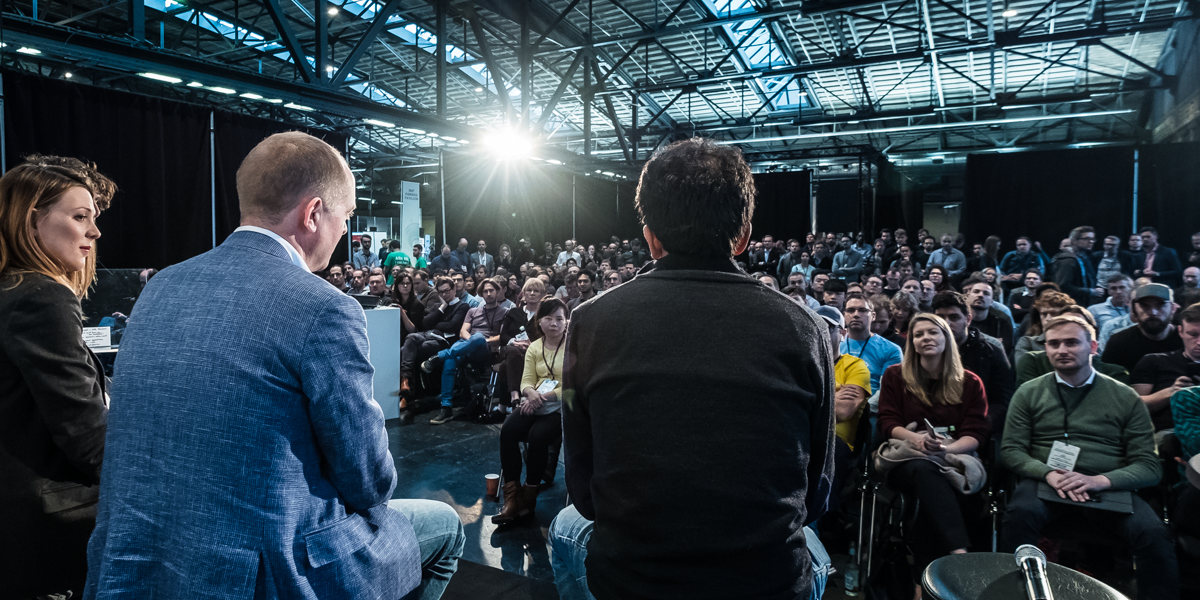
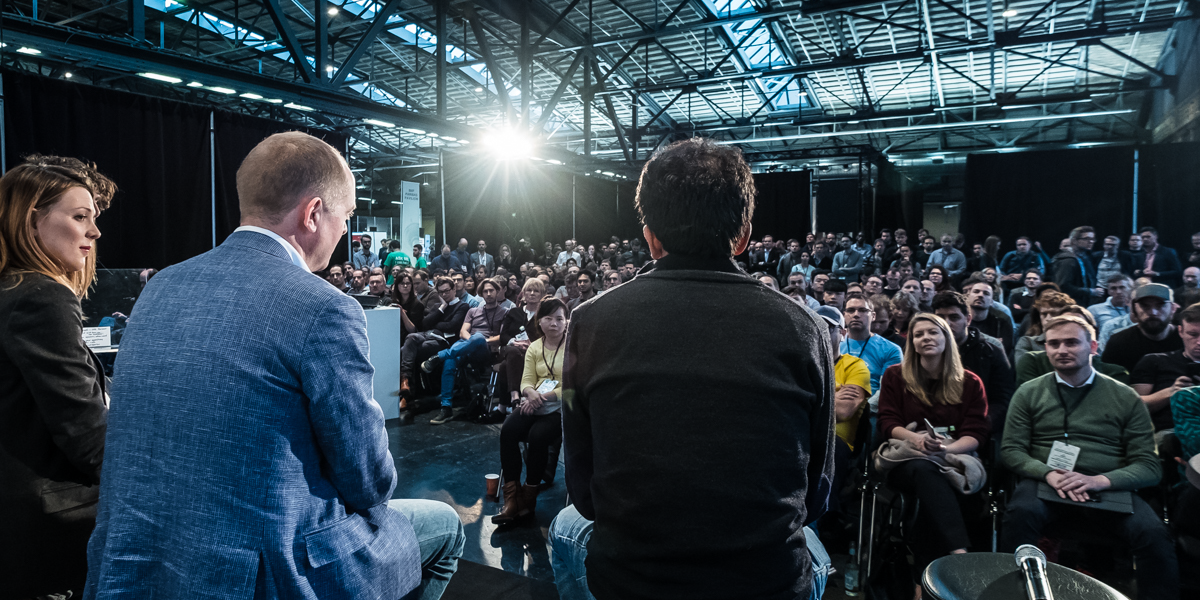
The three-day summit serves as a critical barometer for the health of the global startup economy. While the main industry stages typically host high-level visionary keynotes, the breakout sessions are specifically designed for deep-dive technical and operational explorations. These 50-minute sessions are structured to facilitate direct interaction between industry experts and the audience, allowing for a rigorous examination of current market challenges. Attendance for these sessions is managed on a first-come, first-served basis, reflecting the high demand for actionable insights among the Silicon Valley community and international delegates.
Historical Context and the Evolution of Disrupt
TechCrunch Disrupt has long been considered the premier launchpad for early-stage startups. Since its inception as the successor to the TechCrunch40 conference, Disrupt has been the site of major debuts for companies that eventually became household names, including Dropbox, Fitbit, and Mint. The 2026 iteration comes at a pivotal moment for San Francisco, which has seen a resurgence as the "AI Capital of the World" following a brief period of decentralization during the early 2020s.
The 2026 agenda reflects the maturity of the generative AI cycle. Whereas the 2023 and 2024 conferences focused on the "magic" of Large Language Models (LLMs) and foundational training, the 2026 breakout tracks are focused on "Physical AI" and "Inference." This shift suggests that the industry is moving away from the pure research phase and into the execution phase, where value is derived from how AI interacts with the physical world and how efficiently models can run in production.

The Rise of Physical AI and Robotics
A cornerstone of the 2026 agenda is the exploration of Physical AI, a field that bridges the gap between digital intelligence and mechanical execution. The session "What Is Physical AI, Anyway?" led by Susan Schofer and Duncan Turner of SOSV HAX, aims to define this emerging category. As venture capital flows increasingly toward robotics and hardware-software integration, Schofer and Turner will provide a playbook for building machines that can perceive and reason in unpredictable environments.
This theme is further expanded in the session "Physical AI Isn’t a Model Problem. It’s an Execution Problem," featuring Ethan Batraski of Venrock, Ivan Poupyrev of Archetype AI, and Ian Rountree of Cantos. This discussion is expected to address the critical "execution layer" between a digital decision and a mechanical action. Industry analysts suggest that 2026 will be the year when the "Sim-to-Real" gap—the difficulty of moving AI from simulated environments to the real world—is finally bridged by many commercial startups.
The Shift to the Inference Economy
Data from the semiconductor and cloud infrastructure sectors indicates that the cost of AI is shifting. While the initial "gold rush" was centered on the hardware required to train models (Training), the long-term profitability of the sector now rests on "Inference"—the process of running those models for end-users. Hagay Lupesko of Cerebras Systems and Rudina Seseri of Glasswing Ventures will lead a session titled "The Inference Economy: Why AI’s Next Trillion Dollars Won’t Look Like Its First."
This session will analyze why frontier models are becoming commoditized and where the new "moats" or competitive advantages will be found. As latency becomes a primary product feature, the infrastructure decisions made by startups today will determine their economic viability tomorrow. This reflects a broader trend in 2026 where investors are demanding clearer paths to profitability rather than just user growth.
Autonomous Agents in the Professional Workflow
The concept of "Agentic Workflows" has moved from a theoretical possibility to a daily reality for many engineering teams. Anthropic’s Steve Androulakis and Sachin Malhotra will present "Outnumbered Either Way: How an Engineer and an Architect Run Their Jobs on Agents." This session is particularly relevant as organizations look to increase output without necessarily increasing headcount.

The session will demonstrate how multiple Claude agents can be run in parallel to delegate complex engineering tasks. This marks a significant change in the "Operating System" of a startup. Instead of AI being a tool used by a human, the human becomes the orchestrator of a fleet of autonomous agents. This transition raises important questions about trust and reliability, which will be addressed by Robbie Goldfarb of Forum AI in his session on building trustworthy AI systems.
The 2026 Fundraising Environment: Data and Strategy
Fundraising remains a central pillar of the Disrupt experience. Despite the influx of capital into AI, the bar for Series A and Series B rounds remains historically high. The 2026 breakout agenda includes several sessions dedicated to navigating this rigorous environment. "Best Practices for Running a Successful Fundraise," sponsored by Fidelity Private Shares, and "Fundraising Mistakes That Will Kill Your Round," featuring speakers from General Catalyst and HealthQuest Capital, provide a dual perspective from both the founder and the venture capitalist.
Current market data suggests that investors are increasingly focused on "cap table hygiene" and "due diligence" in a way that was often overlooked during the 2021 bull market. The sessions are designed to help founders prepare for a more scrutinized investment process, covering everything from investor targeting to the technicalities of data rooms.
Broader Impact: Space, Growth, and Talent
The 2026 agenda also looks toward the frontiers of technology and organizational scaling. "Breaking Into Space: The AI Builder’s Opportunity," featuring experts from The Aerospace Corporation and Little Place Labs, highlights the intersection of the "New Space" economy and artificial intelligence. As satellite constellations grow and autonomous space operations become necessary, the opportunities for AI founders in the space sector are expanding beyond traditional government contracts.
On the organizational side, the conference will address the human element of technology. Nomi Khedawala of Reddit will lead a session on "Talent as the Operating System," focusing on how high-performance teams scale in an era where AI handles much of the rote work. Additionally, "Building a Growth Engine in the AI Era," led by Patrick Burke of Hostinger, will explore how bootstrapped companies can use AI to identify underpriced distribution channels and outpace venture-backed competitors.

Chronology of the Event and Registration Details
TechCrunch Disrupt 2026 will follow a structured timeline over its three-day duration:
- October 13: Opening of the Expo floor and the start of the Startup Battlefield 200 competition. Initial breakout sessions focus on foundational AI and fundraising preparation.
- October 14: Intensification of breakout tracks, focusing on Physical AI, Space, and the Inference Economy. The "Disrupt After Hours" networking events take place across the SoMa district.
- October 15: Final rounds of the Startup Battlefield, where the $100,000 equity-free grand prize is awarded. Concluding breakout sessions focus on post-exit strategies and the future of talent.
Registration for the event is currently open, with several pricing tiers designed to ensure a diverse range of participants. General attendees can save up to $100 on their passes during the early-bird period, and TechCrunch is offering a "Buy One, Get One 50% Off" promotion to encourage co-founders and teams to attend together. Groups of four or more are eligible for additional discounts.
In a move to support the tech workforce during ongoing industry shifts, TechCrunch has also reserved a limited number of "Expo+ Passes" for $75 specifically for individuals who have recently experienced layoffs. This initiative is part of a broader effort to keep talent connected to the ecosystem during periods of transition.
Implications for the Tech Ecosystem
The agenda for Disrupt 2026 suggests that the tech industry is entering a "Great Implementation" phase. The focus on Physical AI and Inference indicates that the hardware and software layers of the world are merging more rapidly than previously anticipated. For founders, the takeaway is clear: the next generation of billion-dollar companies will likely be those that can reliably close the loop between perception, decision, and action in the real world.
As San Francisco prepares to host this massive influx of talent in October, the city continues to solidify its role as the primary engine of the global AI economy. The conversations occurring in the breakout rooms of Moscone West will likely set the tone for the venture capital trends of 2027 and beyond.