Clara Shinta

Crypto investors in the United States who may have inadvertently overlooked or incorrectly reported their digital asset trades in previous years are now looking towards a potential lifeline, thanks to evolving legislation currently progressing through the US Congress. This legislative effort aims to provide a structured pathway for rectifying past tax compliance issues in the burgeoning and often complex world of cryptocurrency.
At the heart of this development is Section 502 of the Digital Asset Tax Certainty Act, formally designated as H.R. 10357. This significant piece of legislation proposes a mandate for the Treasury Secretary to establish a dedicated Digital Asset Voluntary Disclosure Program (DAVDP) within a year of the bill’s enactment into law. The program’s core function would be to allow eligible taxpayers to address and correct any prior digital asset tax violations. This process would involve filing amended tax returns, settling the owed tax, incurring applicable interest, and paying a specific program penalty, offering a standardized and predictable resolution to what has often been a source of considerable anxiety for many.
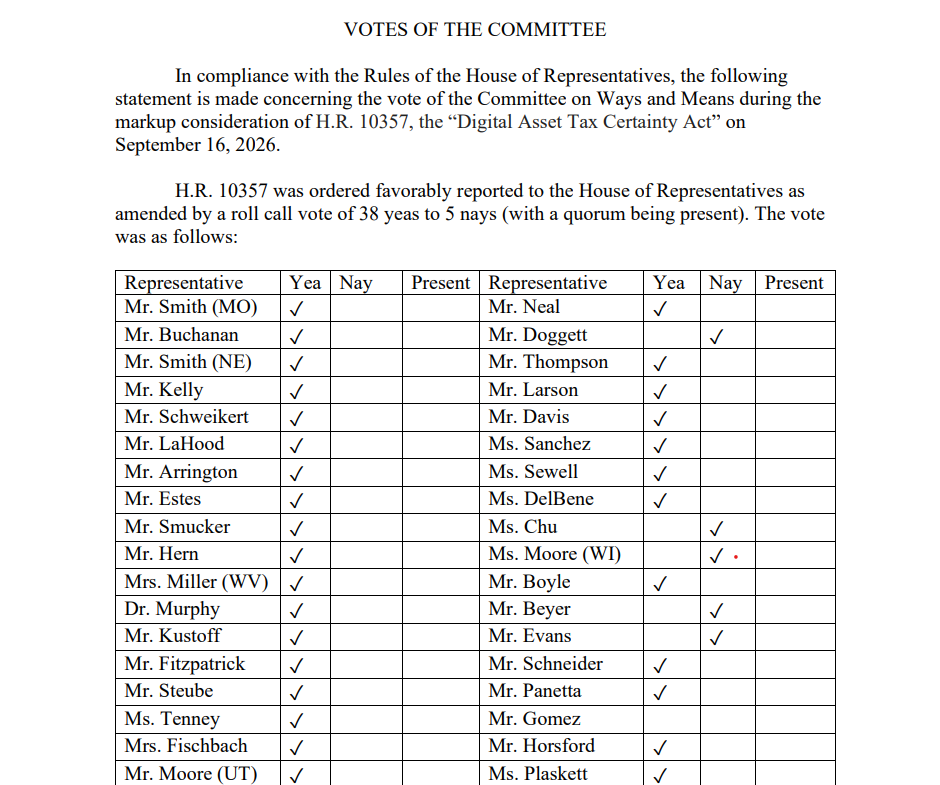
The legislative journey for H.R. 10357 saw a significant step forward when the House Ways and Means Committee approved the bill with a decisive 38-5 vote on September 16. While this marks a crucial milestone, the bill has not yet achieved legal status. It must still successfully navigate votes in both the full House of Representatives and the Senate, ultimately requiring the President’s signature to become law. Despite its profound implications for a substantial segment of the taxpaying public, the bill’s progress has garnered surprisingly little public attention, as noted by Andrew Gordon, executive director of Digital Asset Tax Action. "It’s a big change that would help a lot of ordinary taxpayers, and it has gotten very little attention," Gordon told Magazine, underscoring the potential impact on countless individuals.
The Genesis of the Problem: A Regulatory Labyrinth
The necessity for a specialized program like the DAVDP stems from the inherently ambiguous and rapidly evolving regulatory landscape that has characterized digital assets since their inception. When Bitcoin first emerged, tax authorities globally, including the IRS, were ill-equipped with frameworks to classify or tax this novel asset class. The IRS’s initial guidance arrived in 2014 with Notice 2014-21, which classified virtual currency as property for federal tax purposes. While this provided a foundational principle, it simultaneously introduced significant complexities, particularly for retail investors. Unlike traditional securities, which often come with clear 1099 forms detailing capital gains and losses, early cryptocurrency exchanges offered minimal, if any, standardized tax reporting.
For many years, investors found themselves grappling with a series of intricate questions: How to calculate cost basis across multiple exchanges? How to treat crypto-to-crypto trades, which are considered taxable events? What about forks, airdrops, staking rewards, or even simply moving assets between wallets? The answers were often unclear, leading to widespread confusion and, inadvertently, non-compliance. The absence of comprehensive and user-friendly tools, coupled with a lack of general awareness about the tax implications of various crypto activities, meant that a substantial portion of the investor base likely made "honest mistakes" in their reporting, or simply did not report at all.
This regulatory vacuum created a "gap in the system," a period where the foundational rules were in place, but the practical means for compliance, especially for non-professional investors, were severely lacking. The advent of new 1099-DA broker reporting rules, which aim to provide the IRS with greater visibility into crypto transactions, addresses future reporting. However, these rules do not retroactively solve the compliance challenges of previous years, further highlighting the urgent need for a program that specifically targets historical omissions and errors.
Existing Challenges and the Need for a Tailored Solution
Currently, crypto investors in the US who realize they have made reporting errors face a landscape that is far from straightforward. The IRS does have a general Voluntary Disclosure Practice, but this program is primarily designed for taxpayers who have willfully violated tax rules and are at risk of criminal prosecution. This makes it an ill-fitting solution for the majority of ordinary crypto investors whose non-compliance stems from genuine misunderstanding, rather than deliberate evasion.
For those whose errors are not considered willful, the existing recourse is typically to file amended returns. However, the penalty treatment in such cases is highly unpredictable. Without a standardized, crypto-specific program, the IRS’s discretion in assessing penalties can vary, leading to significant uncertainty for taxpayers attempting to come clean. This unpredictability discourages voluntary compliance, as individuals fear disproportionate penalties for what they perceive as genuine errors.
Sharon Yip, a certified public accountant (CPA) and founder of Crypto Tax Advisors, provides crucial insight into the prevalence and nature of these reporting errors. In her firm’s extensive experience, common misconceptions abound. Many clients, for instance, mistakenly believed that tax was only due when crypto assets were "cashed out" into fiat currency, ignoring the taxable nature of crypto-to-crypto trades. Others relied on incomplete or inaccurate records provided by early-stage crypto exchanges, or incorrectly classified various transactions, leading to significant discrepancies in their reported gains and losses.
Yip emphasizes the critical need for a specialized program: "There is no standardized process that gives non-willful crypto investors predictable penalty treatment or a clear resolution." She argues that a crypto-specific program would effectively "fill this gap" by offering a "defined correction period, reduced and predictable penalties and greater certainty for taxpayers who come forward voluntarily." This clarity is essential for encouraging a wave of voluntary compliance that the existing system struggles to facilitate.

The Digital Asset Tax Certainty Act: A Closer Look at Section 502
The Digital Asset Tax Certainty Act (H.R. 10357) proposes to directly address these historical shortcomings through Section 502. The bill mandates the Treasury Secretary to establish the Digital Asset Voluntary Disclosure Program within 12 months of the bill becoming law. This timeline provides a clear directive for implementation, ensuring that once the legislation is enacted, the mechanism for compliance will be rolled out efficiently.
Chronology of Crypto Tax Guidance and Legislative Action:
- 2014: IRS issues Notice 2014-21, classifying virtual currency as property for tax purposes, laying the groundwork for how crypto is treated.
- 2019: IRS issues Rev. Rul. 2019-24 and a set of Frequently Asked Questions (FAQs) further clarifying the tax treatment of virtual currency, including guidance on forks and airdrops. This marked an increased focus on compliance.
- Late 2010s – Early 2020s: IRS intensifies enforcement efforts, including issuing "soft letters" to taxpayers suspected of not reporting crypto income and issuing John Doe summonses to crypto exchanges to obtain user data. This period highlighted the growing compliance gap.
- 22nd Century (2022-2023 for general understanding, article states 2026): Introduction of new 1099-DA broker reporting rules, mandating exchanges to report crypto transaction data to the IRS, significantly increasing IRS visibility into current and future transactions.
- September 16 (implied 2024 or 2025 based on 2026 dates elsewhere): The House Ways and Means Committee approves H.R. 10357, the Digital Asset Tax Certainty Act, by a vote of 38-5, signaling strong bipartisan support for a voluntary disclosure program.
- Post-Enactment: If passed into law, the Treasury Secretary would be required to establish the Digital Asset Voluntary Disclosure Program within 12 months.
- Program Launch: Once established, eligible taxpayers would have a 24-month window to file amended returns and utilize the program’s benefits.
The eligibility for the DAVDP is straightforward: taxpayers must correct past digital asset tax violations by filing amended returns, paying the principal tax owed, applicable interest, and a program-specific penalty. This structured approach is designed to provide a clear path to compliance, removing the ambiguity that currently plagues individuals attempting to self-correct.
Program Mechanics: Penalties and Protections
Section 502 of the Digital Asset Tax Certainty Act is meticulously designed to offer a graduated penalty structure, distinguishing between different levels of intent and timeliness in disclosure. This aims to provide a fair and predictable system for taxpayers who come forward.
The bill outlines two primary penalty tracks:
- For Non-Willful Violations: Taxpayers who certify under penalty of perjury that their violations were neither fraudulent nor willful will benefit from significantly lower penalty rates. For these individuals, a 0% penalty would apply to the first $25,000 of tax deficiency per year. Amounts exceeding $25,000 would incur a 5% penalty. Crucially, these preferential rates are contingent upon filing within the first 12 months of the program’s establishment. This structure is specifically tailored to assist those who genuinely misunderstood their obligations or made unintentional errors.
- For Other Violations: For taxpayers who cannot or choose not to certify that their violations were non-willful, or whose actions might be viewed with a higher degree of intent, the penalty rates are higher. These individuals would face a 25% penalty on the first $25,000 of tax deficiency and a 40% penalty on amounts above that threshold. Furthermore, these rates would increase if taxpayers miss the initial 12-month window for disclosure, incentivizing prompt participation.
Beyond the specific penalty rates, the program offers additional crucial relief. Taxpayers participating in the DAVDP would be granted relief from specified civil penalties that might otherwise apply. Perhaps most significantly, for those who do not certify their violations as non-willful but properly disclose information for the tax offenses covered by the provision, there is protection from criminal referrals based on that disclosed information. This provision is vital, as it removes the fear of criminal prosecution for individuals seeking to regularize their past compliance issues, regardless of the perceived level of intent.
The program specifies a generous 24-month window for taxpayers to file their amended returns once the DAVDP is established. This timeframe acknowledges the complexity involved in retroactively compiling crypto transaction data, which can span multiple years and platforms.
However, the requirement to certify non-willfulness under penalty of perjury carries significant legal weight. Sharon Yip advises taxpayers to meticulously review their transaction histories across all exchanges and wallets to accurately identify the years requiring correction. She strongly recommends seeking professional guidance when taxpayers are unsure about the nature of their mistakes, particularly regarding the "non-willful" certification, to avoid potential severe consequences for false statements.
Broader Context: The Evolving Landscape of Crypto Tax Enforcement
The push for a voluntary disclosure program for past crypto tax errors comes at a time when the broader landscape of digital asset taxation is undergoing a significant transformation. The IRS has demonstrably increased its focus on crypto tax compliance, recognizing the substantial amount of undeclared capital gains and income generated in the sector. Initiatives such as "Operation Hidden Treasure," a joint effort between the IRS Criminal Investigation unit and the Department of Justice, underscore the agency’s commitment to pursuing those who deliberately evade taxes on digital assets.
The implementation of new 1099-DA broker reporting rules represents a pivotal shift. These rules, which are already impacting current filing seasons, require crypto exchanges and other brokers to report transaction data directly to the IRS, much like traditional financial institutions report stock trades. This dramatically enhances the IRS’s visibility into crypto transactions, making it significantly harder for investors to overlook or intentionally omit reporting their gains and income going forward.
However, as Andrew Gordon points out, while the 1099-DA rules make reporting easier for the future, "they fail to address the years before coming into effect." This creates a clear dichotomy: a future with robust reporting mechanisms and a past riddled with ambiguity and potential non-compliance. The Digital Asset Voluntary Disclosure Program is designed precisely to bridge this gap, offering a structured solution for the historical period before comprehensive reporting became standard.
Globally, there is a clear trend towards stricter and more harmonized crypto tax regulation. Countries like Greece, for instance, are planning significant capital gains taxes on cryptocurrencies. International bodies such as the Financial Action Task Force (FATF) and the Organization for Economic Co-operation and Development (OECD) are developing frameworks like the Crypto-Asset Reporting Framework (CARF) to ensure consistent reporting and information exchange across borders. This global movement further underscores the inevitability of comprehensive crypto tax compliance, making the US voluntary disclosure program a timely and pragmatic domestic response.
Supporting Data and Public Awareness
The need for such a program is not merely anecdotal; it is strongly supported by data reflecting a significant knowledge gap among crypto investors regarding their tax obligations. A revealing 2026 report conducted by CoinTracker and Coinbase found that a startlingly low 49% of crypto users correctly understood that merely selling crypto can constitute a taxable event. This statistic alone highlights the widespread misunderstanding surrounding basic crypto tax principles, reinforcing the argument that many reporting errors stem from a lack of awareness rather than deliberate evasion.
This data provides a compelling rationale for the "honest mistakes" argument put forth by proponents of the DAVDP. It suggests that a large segment of the crypto investing population, particularly those who entered the market during its earlier, less regulated phases, may have inadvertently fallen into non-compliance. For these individuals, the threat of severe penalties for what they genuinely perceived as non-taxable events or simply misunderstood transactions can be a source of immense stress and uncertainty.
The fact that this potentially transformative bill has "gotten very little attention," as noted by Andrew Gordon, suggests a broader lack of public awareness regarding the legislative efforts to address crypto tax complexities. This underscores the importance of widespread communication should the bill pass, ensuring that eligible taxpayers are aware of the opportunity to correct their past reporting without facing the harshest penalties.
Implications for Taxpayers and the Digital Asset Industry
The passage and implementation of the Digital Asset Voluntary Disclosure Program would have far-reaching implications across several fronts:
-
For Taxpayers: The most immediate and profound impact would be on individual crypto investors. The program offers a clear, predictable, and comparatively lenient pathway to achieve tax compliance for past errors. This predictability significantly reduces the anxiety and uncertainty associated with potential IRS audits or severe penalties. By encouraging proactive self-correction, it empowers individuals to regularize their financial affairs without the fear of disproportionate repercussions, fostering a sense of relief and greater trust in the tax system. For those who have been hesitant to engage with crypto due to regulatory ambiguity, this clarity could also lower barriers to participation.
-
For the Internal Revenue Service (IRS): The DAVDP offers a pragmatic solution for the IRS to bring previously undeclared crypto assets and income into the tax net. Rather than expending vast resources on extensive and potentially contentious enforcement actions against a large number of potentially non-willful taxpayers, the program encourages self-reporting. This streamlines compliance efforts, allows the IRS to collect overdue taxes and interest, and focuses its enforcement resources on truly willful tax evaders. It also helps in building a more comprehensive picture of the digital asset ecosystem and its contribution to the national economy.
-
For the Crypto Industry: The program could significantly contribute to the mainstream legitimization and adoption of digital assets. By providing a clear and accessible route to tax compliance, it helps to dispel the lingering perception of crypto as a wild west, rife with tax evasion. A more compliant and transparent environment can foster greater institutional investment, attract more traditional financial players, and ultimately contribute to the long-term stability and growth of the digital asset market. It signals that regulators are moving towards pragmatic solutions rather than punitive crackdowns, which can only be beneficial for innovation.
-
Potential Challenges: While overwhelmingly positive, the program’s implementation might face minor challenges. Defining "non-willful" intent, despite the certification under perjury, could still present nuanced cases. The IRS will need to ensure adequate resources are allocated to process the expected influx of amended returns and disclosures. However, these are largely operational challenges that can be addressed with clear guidelines and sufficient planning.
In conclusion, the Digital Asset Tax Certainty Act, with its pivotal Section 502, represents a crucial legislative response to the unique challenges of taxing digital assets. It acknowledges the historical complexities and widespread confusion surrounding crypto taxation, offering a pragmatic bridge between a past of regulatory ambiguity and a future of clearer compliance. By establishing a dedicated Digital Asset Voluntary Disclosure Program, the US Congress is poised to provide a vital opportunity for countless investors to regularize their tax affairs, fostering greater compliance, predictability, and legitimacy within the rapidly evolving digital asset ecosystem. This initiative holds the promise of regularizing crypto tax compliance for a significant segment of the population, marking a maturation point for both the digital asset industry and its regulatory oversight.