Gilang Muhammad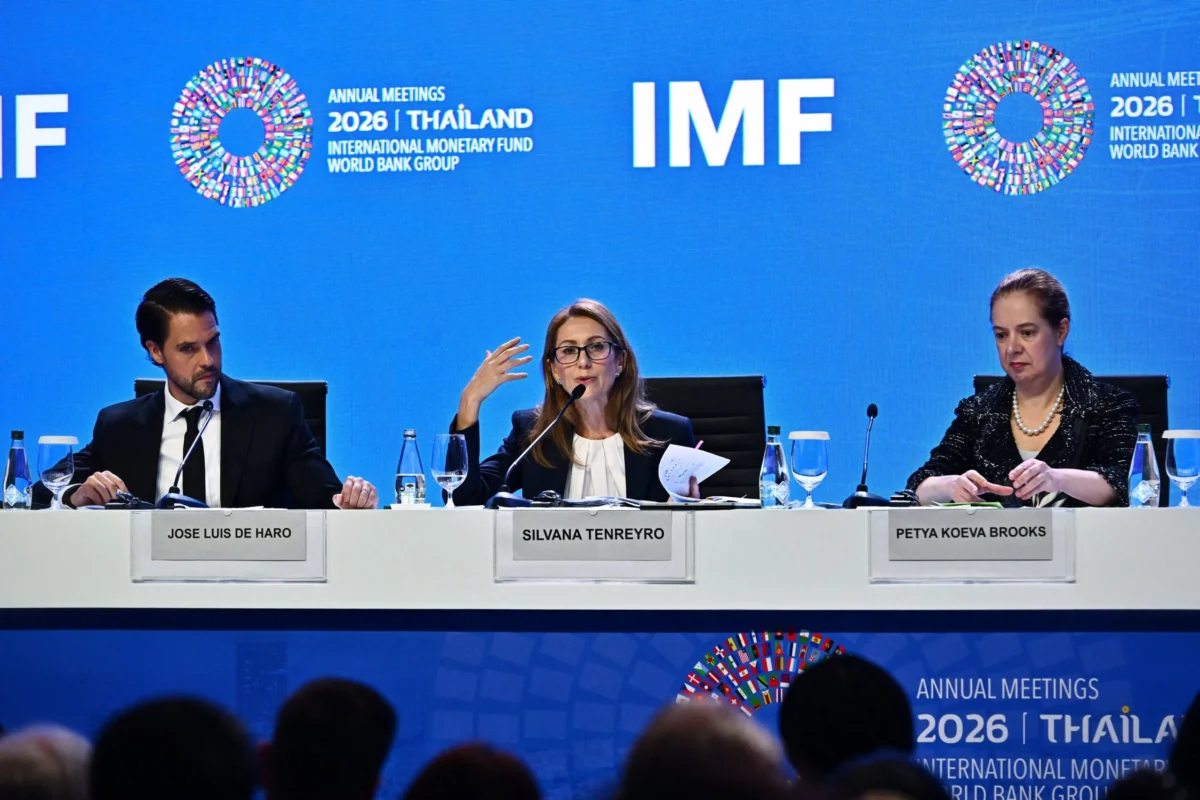
BANGKOK – The International Monetary Fund (IMF) has adjusted its global economic growth projections upwards for the current year, attributing the revised outlook primarily to a robust investment surge driven by artificial intelligence (AI). Despite this positive impetus, the multinational financial institution issued a stern caution that the global economy’s capacity for resilience might be approaching its breaking point, strained by escalating energy costs and persistent geopolitical instability. The announcement was made during the Annual Meetings of the IMF and the World Bank Group (WBG), convened at the Queen Sirikit National Convention Center (QSNCC) in Bangkok on October 13, 2026, where global finance ministers and central bank governors gathered to deliberate on pressing economic challenges.
The IMF now anticipates the global economy will expand by 3.1% in 2026, a modest but significant increase from its July projection of 3%. While an improvement, this rate still represents a deceleration from the 3.5% growth recorded in the preceding year. For 2027, the Fund maintained its forecast steady at 3.4%. Concurrently, the inflation outlook has seen an upward revision, with the IMF now expecting global inflation to reach 4.1% in 2027, up from the 3.9% previously estimated in July. The forecast for the current year’s inflation remains unchanged at 4.7%.
Silvana Tenreyro, the IMF’s economic counsellor and director of the research department, articulated the Fund’s nuanced position during a press briefing on Tuesday. "The global economy has been resilient, but that resilience is reaching its limits," Tenreyro stated, underscoring the delicate balance between burgeoning technological innovation and persistent systemic vulnerabilities. She urged policymakers worldwide to prioritize the restoration of fiscal buffers and to enhance supply-chain security to navigate the increasingly complex economic landscape.
The Dual Forces: AI-Driven Optimism Amidst Geopolitical Headwinds
The upward revision of the growth forecast is largely predicated on the "demand impulse" generated by AI-related investments. This phenomenon has demonstrably bolstered economic activity in the first half of 2026, exceeding earlier expectations even in the face of the ongoing Middle East conflict and simmering trade tensions. The IMF highlighted that financial markets have remained remarkably calm, a tranquility it suggested might partly reflect "AI-related exuberance." This surge in investment is channeling substantial capital into critical sectors such as semiconductor manufacturing, the construction and expansion of data centers, and the development of new power generation capacities to support the burgeoning AI infrastructure.
However, this technological optimism is juxtaposed against a backdrop of significant geopolitical instability, particularly the Middle East war, which continues to exert upward pressure on energy costs and disrupt global supply chains. The IMF’s assessment of the Strait of Hormuz situation, a critical chokepoint for global oil shipments, has been revised. The international body now anticipates the strait will reopen in March 2027, with conditions returning to pre-war levels by October of the same year. This marks a delay from its July projection, which had optimistically assumed a reopening by mid-July 2026 and a return to normalcy by March 2027. Despite the ongoing challenges, Gulf crude exports in September averaged 88% of pre-conflict levels, indicating a gradual pickup in traffic.
Eroding Buffers and Urgent Policy Prescriptions
The IMF noted that economies have thus far managed to "weather the negative shocks" through strategic measures such as diversifying fuel sources and drawing down strategic reserves, which have helped contain the energy-market turmoil. However, this cushion is "rapidly narrowing." The report revealed that global oil reserves are being depleted at an alarming rate of approximately 2.7 million barrels per day, nearing levels that could trigger abrupt and volatile price movements. Furthermore, the report warned that persistent energy constraints could impede the momentum generated by AI-led investment, thereby undermining future growth prospects. The mounting unease over governments’ fiscal health globally also contributes significantly to these headwinds.
In response to these converging challenges, Tenreyro reiterated the IMF’s stance on monetary policy, advocating for it to remain "sufficiently restrictive" to ensure inflation returns to target levels in a timely manner. She stressed the paramount importance of central bank independence, especially as governments face increasing pressure to finance their burgeoning public debts. On the fiscal front, the Fund urged policymakers to rebuild fiscal space, which has been eroded by pandemic-era spending and recent crises. It also advised that any government support for households grappling with higher energy and food costs should be "temporary, targeted, and nondistortionary" to avoid exacerbating inflationary pressures or creating long-term fiscal liabilities. The probability that global inflation will exceed 5% in 2027 now stands at approximately 35%, an increase from 30% in April, underscoring the persistent inflationary risks.
A Divergent Global Growth Landscape
The IMF’s latest analysis paints a picture of increasingly uneven global growth. The concentration of economic expansion is becoming more pronounced, with just 32 economies now accounting for a staggering 95% of global growth, a notable reduction from 54 economies in April. This shift highlights a significant reallocation of growth across countries, largely dictated by their exposure to war-induced supply shocks and their capacity to capitalize on AI-related demand.

The Beneficiaries of the Tech Boom: Countries with limited exposure to the war-led supply disruptions and those deeply integrated into the AI supply chain are either sustaining or strengthening their economic performance. Taiwan, a critical player in the semiconductor industry, is projected to achieve an impressive 10.7% growth this year. South Korea, another technological powerhouse, is forecast to grow by 3.3%, a significant rebound from 1.1% in 2025, primarily driven by robust semiconductor demand. The United States is expected to expand by 2.3% in both 2026 and 2027, underpinned by strong private consumption, supportive fiscal policies, and substantial tech investment. India continues to distinguish itself as the fastest-growing major economy, with the IMF forecasting a robust 7.0% growth in both 2026 and 2027. These figures represent upgrades of 0.6 percentage points and 0.3 percentage points from July, respectively, fueled by resilient domestic demand, vibrant services activity, and increasing AI-related investment.
Struggling Economies and Regional Contractions: In stark contrast, energy-importing economies outside the tech supply chain face a more challenging outlook. These nations are contending with higher import bills, eroded real incomes, and diminished fiscal flexibility. The Eurozone, for instance, is estimated to eke out a mere 1.1% growth this year, hampered by elevated energy costs and weak consumer confidence. The Middle East and Central Asia region is projected to contract by 0.3% this year, with several Gulf nations, including Bahrain, Iraq, Kuwait, and Qatar, facing double-digit declines before anticipated double-digit rebounds in 2027. China’s growth forecast has also been adjusted, with the IMF projecting 4.5% growth this year and 4.0% in 2027. The country’s economic activity is being weighed down by higher oil prices and persistent structural headwinds, including sluggish consumption and ongoing property market strains, which resulted in a weaker-than-expected 4.3% growth in the second quarter.
The Double-Edged Sword of AI: Risks and Vulnerabilities
While AI has been a linchpin of global economic resilience in the short term, the investment boom it has ignited also carries inherent risks, potentially contributing to inflationary pressures and financial fragility. The IMF characterized the current situation as a "large, front-loaded demand shock" where massive investments are pouring into specific sectors like semiconductors, data centers, and power generation, even before broad-based productivity gains from AI have fully materialized across the economy.
This scenario raises concerns about a potential overvaluation. The IMF warned that a significant reassessment of AI-related profitability and productivity prospects could trigger an abrupt pullback in excessive investment, leading to a sharp correction in equity markets. In a downside scenario where the promised productivity gains from AI fail to materialize as expected, the Fund projected that U.S. equities could plummet by 20%. Such an event could slash global growth by 1.1% below its baseline estimates by 2028, with Asia experiencing an even more severe impact, potentially seeing its growth reduced by 1.7%. This cautionary note echoes historical precedents of technology bubbles, where investor euphoria outpaced tangible returns, eventually leading to market corrections.
Mounting Fiscal Constraints and Global Debt Concerns
The global economic environment is further complicated by significant fiscal pressures. Benchmark yields in advanced economies have surged to multi-decade highs, driven by a confluence of resurgent inflation, the anticipated trajectory of policy interest rates, and growing concerns over fiscal sustainability. Adding to this pressure, technology firms are borrowing heavily to finance their extensive AI investments, further tightening credit markets.
The trajectory of public debt remains a major concern for the IMF. Public debt in advanced economies is projected to climb from 108% of GDP in 2025 to an alarming 115% by 2031. Emerging and developing economies face a similar uphill battle, with their public debt forecast to rise from 74% to 84% over the same period. The primary deficits in the world’s largest economies continue to be substantially larger than pre-pandemic levels. Governments are also grappling with higher real interest rates and shorter debt maturities, while simultaneously facing increased defense spending pressures stemming from heightened geopolitical tensions.
Rebuilding fiscal space is deemed "increasingly urgent" by the IMF. The Fund’s models indicate that the risks to the global economic outlook remain "tilted to the downside," emphasizing the imperative for prudent and coordinated policy responses to prevent a more significant downturn.
The Bangkok Conclave: A Barometer of Global Economic Sentiment
The Annual Meetings of the IMF and World Bank in Bangkok serve as a crucial platform for international economic dialogue. Bringing together finance ministers, central bank governors, private sector executives, academics, and civil society representatives from the Fund’s 191 member countries, these gatherings are vital for assessing the state of the global economy and forging consensus on collective actions. This year’s agenda was dominated by discussions on the escalating geopolitical tensions, the pervasive challenge of mounting public debt, and the transformative yet potentially disruptive impact of artificial intelligence. The decisions and policy recommendations emerging from such meetings often set the tone for global economic governance and cooperation in the months and years ahead.
In essence, the latest IMF outlook presents a complex and bifurcated global economic picture. While the transformative potential of artificial intelligence is undeniably providing a much-needed boost to investment and growth in specific sectors and economies, the broader global environment remains fraught with peril. The Fund’s stark warning about the limits of economic resilience, coupled with persistent inflationary pressures, geopolitical instability, and an alarming rise in public debt, underscores the critical need for vigilant, adaptive, and collaborative policymaking to steer the global economy through an increasingly uncertain future.