Gilang Muhammad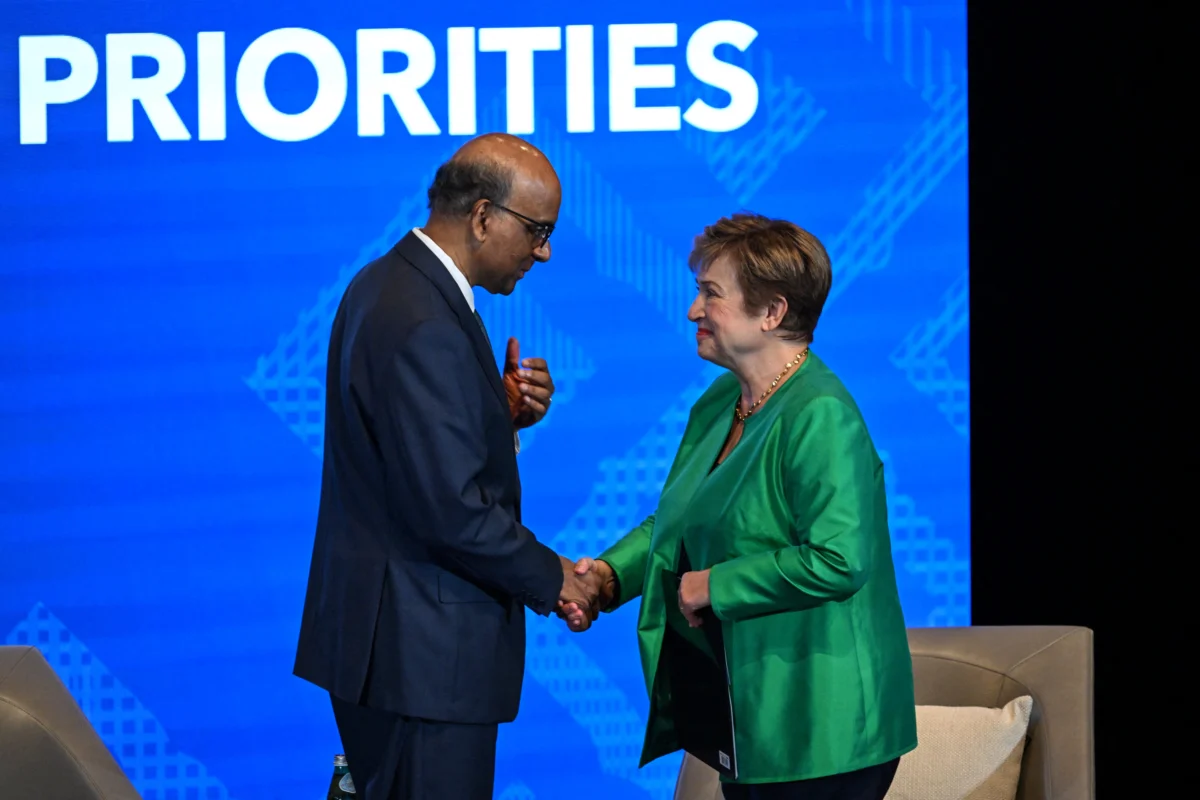
BANGKOK – As the global economy grapples with unprecedented technological shifts, top policymakers convened at the International Monetary Fund (IMF) Annual Meetings in Singapore in October 2026, delivering urgent warnings about artificial intelligence’s transformative, and potentially disruptive, impact on the global labor market. The consensus among leaders has shifted definitively from debating AI’s potential to acknowledging its inevitable disruption, with a stark call for governments to institutionalize "crisis-era" support measures as a permanent feature of economic policy.
The ‘Slow-Moving Tsunami’ and Its Immediate Targets
Kristalina Georgieva, Managing Director of the International Monetary Fund, painted a vivid picture on October 7, 2026, describing AI’s encroachment on the global labor market as a "slow-moving tsunami." Her most immediate concern, articulated during a high-level panel discussion, focused on the plight of young graduates entering the workforce. "People to worry about, first and foremost, [are] young people that are coming into the labor market," Georgieva stated. She highlighted a critical shift: traditionally, entry-level positions often involved routine, repetitive tasks that allowed graduates to gain experience and gradually ascend career ladders. However, these very roles are now prime targets for AI automation. "But if they’re gone, I don’t think any young person wants to be a barista in a coffee shop as… professional future." This blunt assessment underscores the existential crisis facing traditional career paths and the imperative for proactive intervention.
The IMF’s internal estimates further solidify these concerns, projecting that approximately 40% of jobs worldwide will eventually be "augmented, downgraded, or eliminated" by AI. The exposure varies significantly across economies, with advanced nations facing a higher proportion of 60% due to their greater reliance on information-intensive and service-oriented sectors. In contrast, low-income countries exhibit a lower exposure rate of 23%, a statistic Georgieva quickly clarified was not indicative of resilience but rather a reflection of AI’s slower penetration into less digitized economies. This geographical disparity highlights a crucial timeline challenge: while advanced economies are already feeling the immediate effects, developing nations have a window, albeit a shrinking one, to prepare for a technological wave that is still "further away."
Singapore’s President Calls for Permanent ‘Crisis-Era’ Support
Sharing the panel with Georgieva, Singapore’s President Tharman Shanmugaratnam, who also co-chairs the World Bank’s Jobs Council, echoed the urgency but focused on actionable policy responses. Shanmugaratnam advocated for a paradigm shift in governmental approach, urging nations to make "crisis-era" support measures a permanent fixture in their policy toolkit for integrating young people into the workforce. He referenced the swift, comprehensive interventions governments deployed during the COVID-19 pandemic and, in some cases, the global financial crisis. "What governments did during the Covid-19 pandemic and, in some cases, the global financial crisis ‘now has to be thought of not as a crisis measure, but as part of the structural, the menu of structural policies’," he asserted.
This means a proactive and sustained commitment to working collaboratively with the private sector. Shanmugaratnam emphasized the need to incentivize firms to hire fresh graduates, acknowledging that "the first rung in employment, your first job upon graduation, is now seeing less demand." Such incentives could take various forms, including wage subsidies, tax breaks for companies investing in training and upskilling new hires, or structured apprenticeship programs that bridge the gap between academic learning and real-world application. The underlying message is clear: the market alone cannot absorb the incoming talent pool without significant, ongoing governmental support and strategic partnerships.
The implications of inaction, Shanmugaratnam warned, are dire, particularly for the tech sector where the squeeze is most apparent. He cited data from the U.S., noting that "for the first time in a century, demand for graduates has gone down," accompanied by a shrinking wage premium for a college degree. Without decisive action, a generation of graduates risks losing more than just a year of skills; they risk "los[ing] trust in the future," a profound societal cost that could manifest in widespread disillusionment and economic instability.
Nuanced Perspectives: Opportunity Amidst Disruption
While the warnings were stark, not all perspectives were uniformly pessimistic. World Bank President Ajay Banga, speaking to CNBC on Tuesday following the meetings, offered a more nuanced outlook, particularly for developing economies. Banga conceded that "large language models are estimated probably to create some degree of disruption in jobs in the developed world." However, his optimism surged when considering middle-income and lower-middle-income countries, where he believes "the opportunity from small AI to build jobs and build productivity is enormous."

Banga’s perspective highlights the dual nature of AI. While it automates complex tasks in advanced economies, it can also act as an accelerant for growth and job creation in developing nations by democratizing access to information, automating basic administrative tasks, and enabling new service models that were previously inaccessible. This suggests that the impact of AI is not monolithic but varies significantly based on a country’s economic structure, technological readiness, and policy environment. For countries with nascent digital infrastructure, AI could provide a leapfrog opportunity, while for highly industrialized nations, it presents a challenge of re-skilling and re-allocating a sophisticated workforce.
AI as a Growth Engine: A Double-Edged Sword
Beyond its disruptive potential, AI has also emerged as a significant driver of economic growth. Georgieva noted that AI-related investments and trade have been a major factor "propping up growth" in the current year. Despite persistent global headwinds, including an energy supply shock, these AI-driven contributions have helped maintain global expansion near the 3% mark. "Love it, hate it, or fear it. It [AI] is here, and we are already seeing the first wave of impact," Georgieva declared. She estimated that widespread AI adoption could lift growth by 0.5 to 1 percentage point in advanced Asia and 0.2 to 0.8 percentage point in emerging Asia. Crucially, at the higher end, this "would more than offset the loss that comes from aging population," offering a potential counterweight to demographic pressures.
However, Shanmugaratnam quickly interjected with a critical caution: growth alone does not guarantee job creation. He pointed to major economies like China, India, and developing Southeast Asia, which are "growing quite well, but job creation is weak." This phenomenon, known as "jobless growth," is a significant concern, and AI "is going to widen that divergence if we are too passive about it." The challenge, therefore, is not merely to harness AI for economic expansion but to ensure that this expansion translates into inclusive opportunities and robust employment.
The Broader Context: Demographics and the Future of Work
These discussions at the IMF Annual Meetings are set against a backdrop of rapidly aging populations, particularly in Asia, which already threaten to shrink workforces and strain social security systems. The World Bank President, Ajay Banga, estimated that 1.2 billion young people will turn 18 over the next 15 years. The immense task of absorbing this demographic bulge falls primarily on the private sector, which currently generates 75% to 85% of jobs in any given country. The confluence of demographic pressure, technological disruption, and the imperative for inclusive growth presents a formidable challenge for global policymakers.
The shift in tone among policymakers reflects a crucial turning point. The debate is no longer speculative; it is about tangible policy responses. Shanmugaratnam’s assertion that AI-induced job displacement will occur "task by task" offers a glimmer of hope, suggesting that the transition will not be an abrupt, catastrophic event but a more gradual process. "And that gives us time," he emphasized, "provided workers can learn on the job and universities shift toward applied training." This highlights the critical role of continuous learning, lifelong education, and adaptive vocational training in mitigating the adverse effects of AI. Educational institutions must move beyond traditional curricula to focus on developing critical thinking, creativity, complex problem-solving, and socio-emotional skills—attributes less susceptible to automation.
Policy Implications and the Road Ahead
The call for permanent "crisis-era" support measures represents a significant evolution in economic policy thinking. It implies a recognition that labor market disruptions from technological advancement are not temporary anomalies but structural, ongoing challenges. Governments will need to invest heavily in public-private partnerships that facilitate skills development, job matching, and social safety nets. This could include:
- Universal Basic Skills Training: Government-funded programs offering accessible training in AI literacy, digital skills, and transferable soft skills.
- Wage Subsidies and Apprenticeships: Incentivizing companies to hire and train new graduates or displaced workers, effectively sharing the cost of upskilling.
- Portable Benefits: Developing systems that allow workers to carry benefits (like health insurance or retirement savings) between jobs, reducing the risk associated with career transitions.
- Active Labor Market Policies: Strengthening employment services, career counseling, and job placement agencies.
- Regulatory Frameworks: Crafting policies that encourage responsible AI development and deployment, ensuring ethical considerations and worker protections are integrated.
The discussions in Singapore in October 2026 underscore a global awakening to the profound implications of AI. While the technology promises unprecedented productivity gains and economic growth, it also poses an existential threat to traditional employment models and societal stability if left unaddressed. The proactive warnings from leaders like Georgieva and Shanmugaratnam are a clarion call for concerted, immediate, and sustained action. The future of work, and indeed the future of societies, hinges on how effectively governments, businesses, and educational institutions collaborate to navigate this complex, AI-driven landscape, ensuring that the "slow-moving tsunami" of automation ultimately serves humanity rather than overwhelming it. The challenge is immense, but the opportunity for a more productive and inclusive global economy remains within reach, provided policymakers act with foresight and determination.