Lina Wu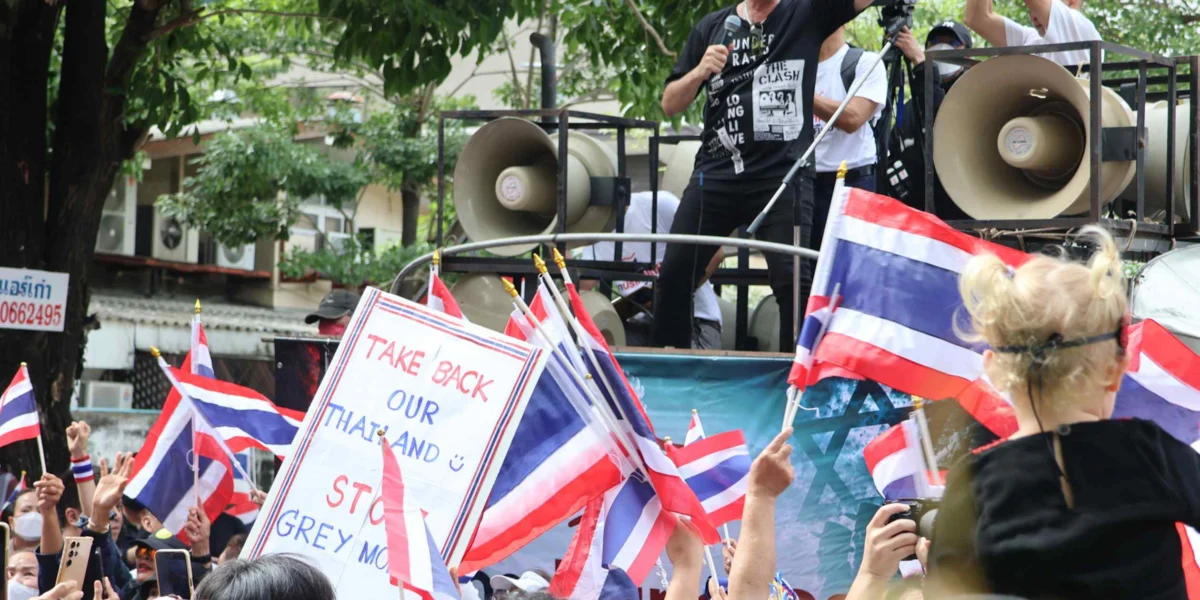
A protest movement is growing in Thailand against companies from China, Israel, and other countries for allegedly circumventing ownership rules, as sluggish economic growth leads to a shift in the nation’s traditionally open approach toward foreign business. The demonstration, which saw Thai activists gather at the Israeli embassy in Bangkok on September 30, 2026, highlighted growing concerns over foreign entities allegedly engaging in exploitative practices and legal violations, particularly in sectors that have historically been reserved for domestic ownership. This burgeoning activism signals a potential turning point in Thailand’s long-standing policy of attracting foreign investment, as domestic economic pressures intensify and nationalist sentiment gains traction.
The protest, documented by Kenya Akama and Yuiya Shibata for a report filed on October 4, 2026, centered on accusations that foreign companies are utilizing complex corporate structures and local proxies to bypass Thai regulations designed to protect national interests and domestic industries. While the specific allegations against the companies were not detailed in the initial report, the broader sentiment expressed by the activists points towards a perceived erosion of Thai economic sovereignty. This sentiment is increasingly resonating within a population grappling with a prolonged period of sub-optimal economic growth, which has exacerbated anxieties about job security, wealth distribution, and the long-term viability of local businesses.
Background: Thailand’s Economic Landscape and Foreign Investment
Thailand, a perennial favorite for foreign direct investment (FDI) in Southeast Asia, has historically prided itself on its open economy and welcoming stance towards international businesses. The nation’s strategic location, robust manufacturing base, and growing consumer market have attracted significant capital from around the globe, contributing substantially to its economic development over several decades. However, the past few years have been marked by a noticeable slowdown in economic growth, with official figures from the National Economic and Social Development Council (NESDC) indicating a GDP growth rate that has hovered below the projected targets for the past three fiscal years. This stagnation has fueled a sense of unease among Thai citizens and policymakers alike.
Key sectors that have been traditionally sensitive to foreign ownership include agriculture, media, and certain retail and service industries. Regulations are in place to limit foreign stakes in these areas, aiming to preserve cultural heritage, ensure food security, and foster domestic entrepreneurship. The recent protests suggest that a segment of the Thai populace believes these regulations are being systematically undermined. This is not a new phenomenon in Thailand; however, the current economic climate appears to have amplified existing grievances and given them greater political salience.
Chronology of Growing Concerns
While the protest at the Israeli embassy on September 30, 2026, serves as a prominent focal point, the concerns fueling it have been developing over a longer period.
- Early 2024: Anecdotal evidence and reports from local business associations begin to emerge regarding foreign entities allegedly using intricate legal loopholes to gain control of businesses in sensitive sectors. These reports often cite instances of companies being ostensibly owned by Thai nationals, but with ultimate control and beneficial ownership residing with foreign individuals or corporations.
- Mid-2025: The Thai Chamber of Commerce and other industry groups release statements expressing concerns about unfair competition and the impact of what they term "disguised foreign investment" on domestic businesses. These organizations begin to lobby the government for stricter enforcement of existing laws and potentially new legislative measures.
- Late 2025 – Early 2026: Public discourse intensifies, with social media platforms and local news outlets featuring discussions and exposés about alleged foreign malfeasance. Nationalist sentiments start to coalesce around the issue, framing it as a threat to national economic independence.
- September 2026: Several localized protests and demonstrations begin to occur in various parts of Thailand, targeting specific foreign-owned businesses or embassies of countries perceived to be involved in these practices. The protest at the Israeli embassy on September 30 marks a significant escalation, indicating a more organized and nationally recognized movement.
Supporting Data and Allegations
While specific details of the alleged violations by companies from China, Israel, and other nations were not elaborated upon in the initial report, the nature of the accusations often revolves around common strategies used to circumvent foreign ownership restrictions. These can include:
- Nominee Shareholding: Foreign investors may use Thai citizens as nominees to hold shares in their stead, thereby meeting the legal requirement for majority Thai ownership. While this practice is technically illegal, it can be difficult to prove and prosecute without substantial evidence of the underlying control.
- Complex Corporate Structures: Establishing intricate webs of holding companies, joint ventures, and subsidiary agreements across different jurisdictions can obscure the ultimate foreign ownership and control of an entity operating within Thailand.
- Dominant Influence through Contracts: Even without direct shareholding, foreign entities can exert significant control over Thai businesses through exclusive supply agreements, management contracts, or the provision of substantial loans that create dependency.
The specific mention of companies from China and Israel suggests particular focus on these origins. Chinese investment has been a significant driver of growth in Southeast Asia, and concerns about its scale and influence are not unique to Thailand. Similarly, Israeli companies, particularly those in technology and security sectors, have a growing presence globally, and their entry into specific Thai markets might be scrutinized under existing ownership laws.
Reactions and Official Responses
The growing tide of activism has inevitably drawn attention from government bodies and relevant embassies. As of the reporting date, official responses have been largely cautious, reflecting the delicate balance Thailand seeks to maintain between attracting foreign investment and addressing domestic concerns.
- Thai Government: The Ministry of Commerce and the Board of Investment (BOI) have typically reiterated their commitment to upholding Thai laws and regulations while also emphasizing the importance of FDI for economic development. Statements often suggest that any alleged violations would be investigated thoroughly and that legal avenues are available for redress. However, there have been calls from some government factions for increased vigilance and stricter enforcement mechanisms.
- Embassy of Israel: The Israeli embassy, being the site of a recent protest, would likely be monitoring the situation closely. While official statements from embassies often express respect for the host country’s laws and the rights of its citizens to peaceful protest, they would also be concerned about the potential impact on bilateral economic relations. It is plausible that discreet diplomatic channels would be engaged to seek clarification on the specific allegations and to ensure the safety and security of Israeli businesses and citizens in Thailand.
- Chinese Embassy: Similarly, the Chinese embassy would be keenly aware of any protests targeting Chinese companies. Beijing has a vested interest in protecting the investments of its companies abroad and ensuring a stable environment for trade and economic engagement. Official responses are likely to emphasize the mutually beneficial nature of Sino-Thai economic ties and express confidence in Thailand’s legal framework to address any disputes.
- Business Associations: Local Thai business groups, such as the Federation of Thai Industries and the Thai Chamber of Commerce, have been vocal in their support for the activists’ concerns, albeit often framing their arguments in terms of fair competition and the need for a level playing field. They have been actively pushing for policy reforms and more robust enforcement to protect domestic industries.
Broader Impact and Implications
The escalating protests against alleged foreign exploitation carry significant implications for Thailand’s economic future and its standing in the region.
- Shift in Investment Climate: A sustained period of public pressure and potential government crackdowns on perceived rule-bending by foreign investors could alter Thailand’s investment landscape. While this might appeal to nationalist sentiments and protect certain domestic sectors, it could also deter legitimate foreign investors who adhere to regulations, potentially slowing down much-needed capital inflows and technological transfer.
- Economic Policy Review: The government may be compelled to undertake a comprehensive review of its foreign investment policies, including ownership laws, regulatory oversight, and enforcement mechanisms. This could lead to either stricter regulations, making it more challenging for foreign businesses to operate, or to reforms aimed at improving transparency and fairness within the existing framework.
- Impact on Bilateral Relations: Depending on the countries targeted and the severity of the allegations, these protests could strain diplomatic and economic relations with key trading partners. Navigating these sensitivities will be crucial for Thailand’s foreign policy.
- Nationalism and Protectionism: The movement taps into a broader trend of rising economic nationalism in many parts of the world. If successful, it could embolden similar movements in other Southeast Asian nations facing similar economic challenges and anxieties about foreign influence.
- Enforcement Challenges: The core of the issue lies in enforcement. Thailand’s legal and administrative systems will be tested in their ability to investigate complex offshore ownership structures and prove deliberate circumvention of laws. Success will require significant resources, expertise, and political will.
The protest at the Israeli embassy, while specific in its immediate target, represents a broader societal unease. As Thailand navigates its economic challenges, the delicate equilibrium between embracing global capital and safeguarding national interests will be a defining characteristic of its policy decisions in the coming years. The voices of these activists, amplified by the current economic climate, are likely to shape that future trajectory, potentially ushering in a new era of scrutiny for foreign businesses operating within the Kingdom.