Lina Wu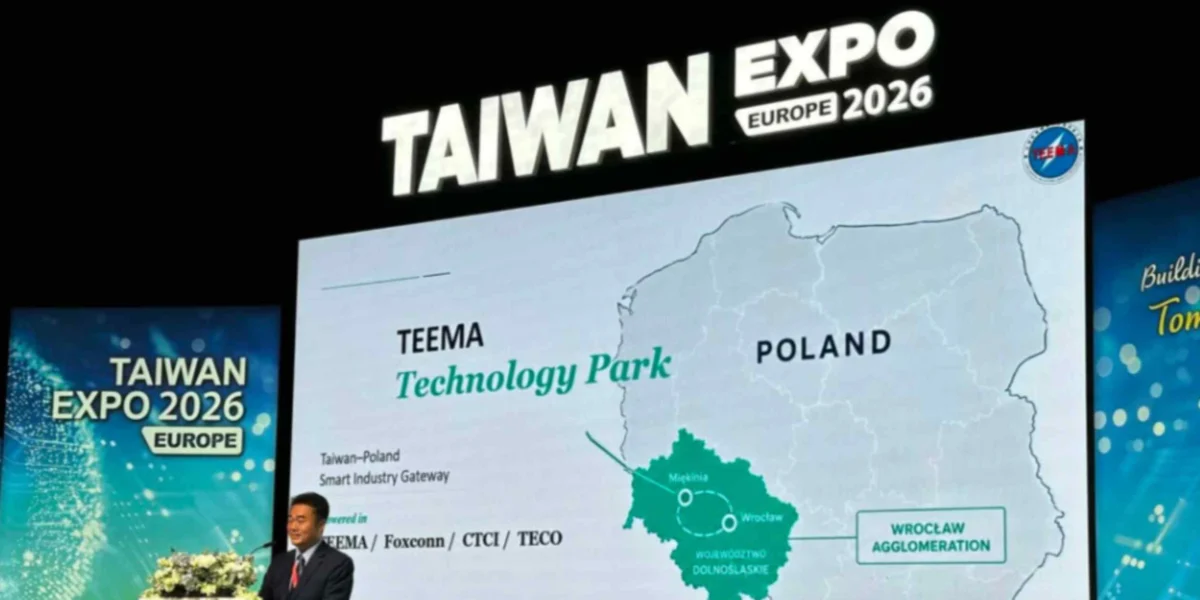
HAMBURG, Germany — Taiwanese technology powerhouses, spearheaded by the manufacturing titan Foxconn, are poised to establish a significant multibillion-dollar industrial hub in Poland. This ambitious undertaking, with a primary focus on the burgeoning sectors of Artificial Intelligence (AI) servers and electric vehicle (EV) components, is anticipated to catalyze substantial industrial advancement across the European Union and deepen the economic and technological linkages between the bloc and the self-governing island of Taiwan. The strategic placement of this hub in Poland signifies a crucial step in diversifying global supply chains and fostering advanced manufacturing capabilities within Europe.
The genesis of this strategic initiative can be traced back to recent high-level engagements and a concerted effort to strengthen economic ties. The Taiwan Expo 2026 Europe, held in June in the Polish capital, Warsaw, served as a pivotal platform for such discussions. This event, designed to showcase Taiwanese innovation and foster business-to-business connections, saw numerous Taiwanese enterprises participating in dedicated matchmaking sessions. These sessions were instrumental in identifying synergistic opportunities and laying the groundwork for substantial foreign direct investment. The presence of Invest in Wroclaw, an organization dedicated to promoting the city of Wroclaw as an investment destination, further underscores the specific geographical focus of these potential investments.
A Strategic Pivot: Taiwan’s Growing European Footprint
For years, Taiwan has been a dominant force in global electronics manufacturing, particularly in semiconductors. However, evolving geopolitical landscapes and a desire to mitigate supply chain risks have prompted many Taiwanese companies to explore strategic diversification of their manufacturing bases. Poland, with its relatively stable political environment, skilled workforce, advantageous geographic location within the EU, and supportive government policies for industrial investment, has emerged as a prime candidate for such expansion.
Foxconn, formally known as Hon Hai Precision Industry Co., Ltd., is no stranger to large-scale manufacturing operations. Its existing global footprint is vast, and a significant investment in Poland would represent a major expansion of its European presence. The company’s interest in AI servers is particularly noteworthy. The demand for AI infrastructure is skyrocketing, driven by advancements in machine learning, data analytics, and the increasing adoption of AI across various industries. Establishing a manufacturing base for these complex and high-value components within the EU would position Foxconn and its partners to more effectively serve the European market, reducing lead times and logistical complexities.
Similarly, the focus on EV parts aligns with the EU’s ambitious Green Deal and its commitment to transitioning away from fossil fuel-powered vehicles. The burgeoning European EV market requires a robust and localized supply chain for critical components, including batteries, power electronics, and other specialized parts. By investing in this area, Taiwanese companies can tap into a rapidly growing sector while contributing to the EU’s sustainability goals.
Timeline of Engagements and Potential Investment
While specific financial figures and timelines for the proposed hub are still under development, initial discussions and the tenor of engagements suggest a project of considerable scale. The Taiwan Expo 2026 Europe in Warsaw, held in June 2026, was a crucial inflection point. During the event, Taiwanese companies engaged in extensive matchmaking sessions with Polish business representatives and government officials. These sessions were not merely exploratory; they involved detailed discussions about potential factory locations, workforce training programs, and the regulatory framework.
Following the expo, there has been a discernible acceleration in the dialogue. Sources close to the Taiwanese business delegations indicated a strong interest in establishing operations within industrial zones that offer established infrastructure and access to skilled labor. Cities like Wroclaw, known for its burgeoning technology and manufacturing sectors, have been actively courting such investments. The "Invest in Wroclaw" initiative’s prominent role in disseminating information about the expo suggests that Wroclaw is a strong contender for a significant portion of this investment.
The projected timeline for the establishment of such a hub would typically involve several phases:
- Phase 1: Feasibility and Site Selection (Mid-2026 to Late 2026): Following initial interest and discussions, detailed feasibility studies would be conducted. This would involve assessing potential sites, analyzing labor costs and availability, evaluating logistical networks, and understanding the local regulatory environment.
- Phase 2: Planning and Permitting (Late 2026 to Mid-2027): Once a site is selected, the process of detailed planning, architectural design, and obtaining necessary permits and approvals from Polish authorities would commence. This phase can be complex and time-consuming, depending on the scale of the project.
- Phase 3: Construction and Infrastructure Development (Mid-2027 to Late 2028/Early 2029): The physical construction of manufacturing facilities and associated infrastructure would take place. This would involve significant capital expenditure and the mobilization of construction resources.
- Phase 4: Equipment Installation and Workforce Training (Late 2028/Early 2029 onwards): Advanced manufacturing equipment would be installed, and a comprehensive workforce training program would be implemented to ensure the availability of skilled personnel to operate the new facilities.
- Phase 5: Ramp-up and Full Production (2029 onwards): Production lines would be gradually brought online, with a ramp-up to full operational capacity over a period of time.
This timeline is subject to various factors, including regulatory approvals, supply chain availability for construction materials, and the pace of decision-making by the investing companies.
Supporting Data and Market Context
The strategic importance of AI servers and EV components cannot be overstated in the current global economic climate.
AI Server Market: The global AI server market is experiencing exponential growth. Projections indicate that the market, valued at an estimated $20 billion in 2023, could reach over $80 billion by 2030, exhibiting a compound annual growth rate (CAGR) of approximately 20-25%. This surge is driven by the increasing adoption of AI in data centers, cloud computing, and enterprise applications. Key components of AI servers, such as high-performance processors, specialized AI accelerators (GPUs and TPUs), and high-speed memory, represent a significant manufacturing opportunity. Taiwan’s expertise in electronics manufacturing makes it well-positioned to capture a substantial share of this market.
Electric Vehicle (EV) Market: The European Union has set aggressive targets for EV adoption, aiming for a complete phase-out of new internal combustion engine car sales by 2035. This policy direction has fueled massive investment in EV production within the bloc. The global EV battery market alone is projected to grow from approximately $50 billion in 2023 to over $200 billion by 2030. Beyond batteries, the demand for other EV components, including electric motors, power control units, charging systems, and advanced driver-assistance systems (ADAS) components, is equally robust. A localized manufacturing hub in Poland would directly address the growing demand for these components within the EU, potentially reducing reliance on Asian suppliers and mitigating supply chain vulnerabilities.
Poland’s Economic Landscape: Poland has consistently demonstrated strong economic performance within the EU. Its GDP growth rate has often outpaced the EU average, and it has attracted significant foreign direct investment, particularly in manufacturing and business services. The country boasts a well-educated workforce, with a growing number of graduates in STEM fields. Furthermore, Poland’s membership in the EU provides preferential access to a market of over 450 million consumers, making it an attractive base for companies seeking to serve the entire European continent. The Polish government has also been proactive in offering incentives and support to attract large-scale industrial investments, including tax breaks and grants for job creation and research and development.
Reactions and Inferred Implications
While official statements from Foxconn and other involved Taiwanese companies are likely to be measured until concrete agreements are finalized, the implications of such an investment are significant and can be inferred from the context.
From the Taiwanese Side: The move represents a strategic diversification of manufacturing operations, reducing reliance on single production locations and mitigating geopolitical risks. It also signals a deeper commitment to the European market, allowing for closer collaboration with European clients and faster response times to market demands. For companies like Foxconn, it’s an opportunity to expand their presence in high-growth sectors like AI and EVs, leveraging their manufacturing prowess in a strategically important region.
From the Polish Side: This potential investment would be a major boon for the Polish economy. It would translate into thousands of high-skilled jobs, significant capital inflow, and a substantial boost to the country’s industrial and technological capabilities. It would further solidify Poland’s position as a key manufacturing hub within the EU and attract further related investments in the supply chain and supporting industries. The presence of global technology leaders would also enhance Poland’s attractiveness for research and development initiatives.
From the European Union Perspective: A Taiwanese-led hub focused on AI servers and EV parts in Poland would be a significant development for the EU’s industrial strategy. It would contribute to:
- Supply Chain Resilience: Reducing dependence on non-EU suppliers for critical components, especially in strategic sectors like advanced computing and green technology.
- Technological Advancement: Fostering the development and manufacturing of cutting-edge technologies within the EU, potentially leading to greater innovation and competitiveness.
- Green Transition: Supporting the EU’s ambitious climate goals by bolstering the production capacity for components essential for electric vehicles and renewable energy infrastructure.
- Geopolitical Balancing: Strengthening ties with Taiwan, a key player in global technology, in a manner that is mutually beneficial and contributes to a more diversified global economic order.
Broader Impact and Future Outlook
The establishment of this hub is more than just a manufacturing expansion; it represents a strategic convergence of technological expertise and market opportunity. The synergy between Taiwan’s established manufacturing excellence and the EU’s burgeoning demand for advanced technologies in AI and electromobility could create a powerful engine for growth.
The long-term implications include:
- Skill Development: A significant investment in a manufacturing hub will necessitate a concerted effort in workforce training and development, potentially leading to the upskilling of the local Polish workforce and creating a talent pool attractive to other high-tech industries.
- R&D Collaboration: Beyond manufacturing, such a hub could become a focal point for research and development collaborations between Taiwanese companies, Polish institutions, and other European entities, accelerating innovation in AI and EV technologies.
- Supply Chain Ecosystem: The presence of major players like Foxconn will likely attract a network of smaller suppliers and service providers, creating a comprehensive industrial ecosystem that benefits the entire region.
- Economic Diversification: For Poland, this investment offers a pathway to further diversify its economy away from traditional industries and towards higher-value manufacturing and technology sectors.
As the global economy navigates complex geopolitical challenges and the imperative of sustainable development, strategic investments like the one being contemplated in Poland by Taiwanese technology leaders are becoming increasingly vital. This initiative, if realized, will not only reshape manufacturing landscapes but also forge deeper, more resilient economic and technological bonds between Europe and Taiwan. The coming months will be critical in observing the concrete steps taken to translate these ambitious plans into tangible industrial reality.