Lina Wu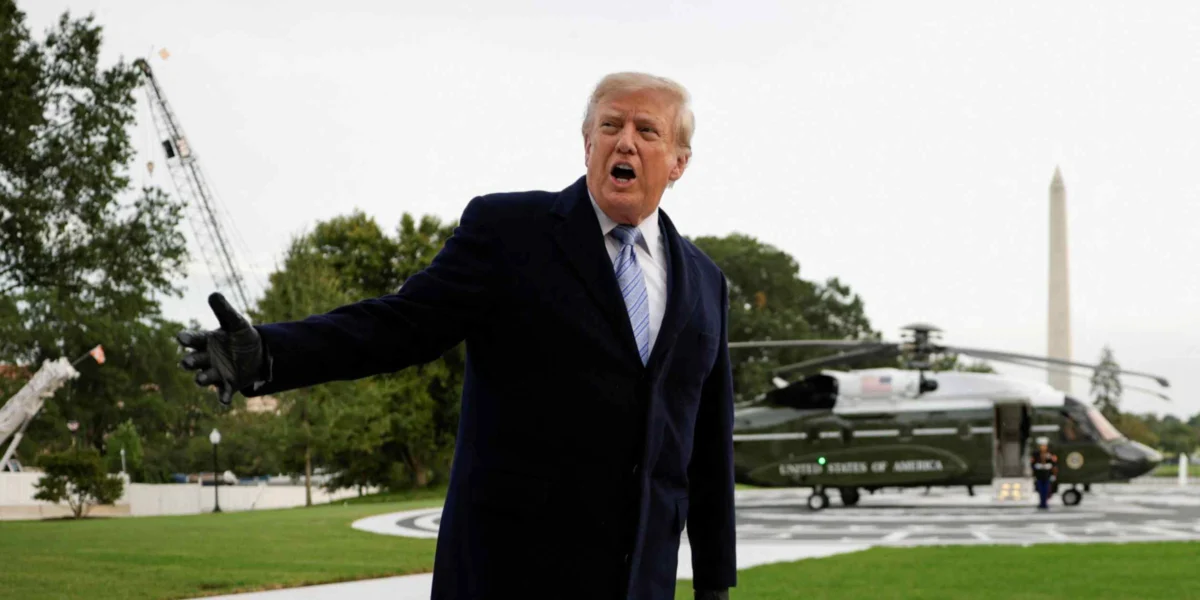
WASHINGTON/NEW YORK/TOKYO — The second summit of the year between Chinese President Xi Jinping and U.S. President Donald Trump commenced in Washington on September 23, 2026, with both leaders seeking to navigate a complex web of escalating trade disputes, critical rare earth material supply chain concerns, the burgeoning frontier of artificial intelligence, and enduring geopolitical fault lines. The White House orchestrated a meticulously staged welcome for the Chinese delegation, culminating in a state dinner, underscoring the high stakes of the diplomatic engagement.
Even before the substantive discussions began, a significant development emerged: an agreement to extend the existing trade truce between the two economic superpowers. This extension, initially slated to expire on November 10, 2026, has been pushed back to January 10, 2027. This move, announced shortly after President Xi’s arrival at Joint Base Andrews, signals a temporary de-escalation of tariff-related hostilities, a key objective for industries on both sides of the Pacific. However, the limited scope of this agreement has tempered broader expectations for breakthrough resolutions on the myriad of contentious issues that have characterized the bilateral relationship in recent years. Many analysts recall the May summit in Beijing, which, despite generating significant fanfare, was widely perceived by experts as prioritizing symbolism over substantial, tangible policy shifts.
Pre-Summit Landscape: A Volatile Global Environment
The backdrop to this crucial summit is one of heightened global uncertainty. Financial markets have been on edge, with U.S. Treasury yields reaching post-financial crisis highs. The 10-year U.S. Treasury yield touched 5.12%, while the 30-year yield climbed to 5.44%, its highest level since 2004. This volatility has been fueled by concerns over ongoing geopolitical conflicts, including the persistent threat of escalation in the Middle East and inflationary pressures impacting global economies. The price of oil, a critical indicator of global economic health, had nudged back above $105 a barrel, further contributing to market jitters.
This economic precariousness amplifies the significance of the U.S.-China economic relationship, the largest in the world. The ongoing trade tensions, particularly concerning China’s industrial overcapacity, are not confined to bilateral discussions. European automotive industry leaders have, for the first time, explicitly endorsed the consideration of new tariffs on Chinese imports. This sentiment reflects growing concern across developed economies regarding what they perceive as distorted competition driven by state subsidies and aggressive pricing strategies by Chinese manufacturers. Germany’s Chancellor Friedrich Merz has articulated this concern, stating that China "deliberately" combines market forces with state subsidies, overcapacity, aggressive pricing, and an undervalued currency. European companies operating in China have also urged Beijing to address these overcapacity issues ahead of crucial trade talks scheduled for the following month.
A Carefully Orchestrated Welcome
President Trump, breaking with diplomatic convention, personally greeted President Xi and First Lady Peng Liyuan at Joint Base Andrews upon their arrival on the afternoon of September 23rd. This tarmac welcome, a rare honor, set the tone for the three-day state visit. The U.S. administration meticulously planned an elaborate series of events, including an arrival ceremony featuring a 100-foot red carpet, a salute battery, an honor cordon, color teams, a U.S. Air Force band, military platoons, and flyovers.
The summit’s agenda, as released by the White House, indicated a packed schedule. The initial day, September 23rd, saw preliminary meetings, including a significant one between U.S. Treasury Secretary Scott Bessent and Chinese Vice Premier He Lifeng. This meeting reportedly focused on "unfinished business" from prior negotiations and aimed for "strategic stability" grounded in reciprocity and fairness. These discussions led to the agreement to extend the trade truce.
September 24th was dedicated to the core of the summit. The day began with a formal welcome ceremony at the White House, followed by welcoming remarks from both leaders. President Trump highlighted "tremendous strides" and emphasized discussions on security, technology, and what he termed "super intelligence" (AI), alongside efforts to balance trade and secure new market access for American farmers. President Xi, speaking at the White House for the first time since 2015, stressed the importance of partnership, mutual respect, and trust between the world’s two largest economies, stating, "Without our cooperation between the U.S. and China, it’d be hard to solve many of the world’s problems."
The afternoon featured a closed bilateral meeting in the Oval Office, followed by an expanded meeting in the Cabinet Room. The day’s proceedings were scheduled to conclude with further remarks and a state dinner attended by prominent business leaders, signaling an effort to engage the private sector in the bilateral dialogue. Notably, the summit schedule included no joint press conference, raising questions about the extent to which the leaders would engage with the press corps and address broader public concerns. This departure from past practices, such as President Obama’s 2015 joint press conference with Xi, suggests a deliberate strategy to control the narrative and limit unscripted interactions.
Key Discussion Points and Emerging Developments
Artificial Intelligence (AI): President Trump’s early morning Truth Social post on September 24th specifically mentioned "Super Intelligence (SI)" as a major topic, indicating AI’s prominence on the agenda. He expressed a desire to maintain the current status quo regarding AI development, a sentiment he claimed was shared by China. The mention of the "DOJ" (Department of Justice) as a "guardrail" remains open to interpretation, but it hints at potential discussions around regulatory frameworks or national security implications of advanced AI technologies. U.S. and Chinese officials have been exploring the possibility of establishing "guardrails" for AI development, despite an underlying technological rift, aiming to prevent potential misuse and ensure a degree of international cooperation in this rapidly evolving field.
Rare Earth Materials and Trade: The extension of the trade truce until January 10, 2027, provides a temporary reprieve from escalating tariff actions. However, underlying issues related to rare earth materials and supply chain vulnerabilities persist. The European Chamber of Commerce in China applauded the extension, noting that without it, "the implementation of the planned export controls on rare earths would have a crippling impact on industry." Yet, the chamber also raised concerns about the long-term uncertainty beyond the new expiry date and highlighted ongoing challenges in obtaining export licenses, citing a "lack of coordination" between Chinese commerce and customs authorities.
Taiwan and Geopolitical Concerns: The issue of Taiwan, which China claims as its own territory, remains a significant point of contention. President Trump has previously described arms sales to Taiwan as a "very good negotiating chip." China’s Ministry of Defense issued a call for "extremely cautious" U.S. arms sales to Taiwan in the early hours of September 24th, underscoring Beijing’s sensitivity on this matter. Taiwan’s cabinet spokesperson, Michelle Lee, expressed gratitude for U.S. support and affirmed cooperation with the U.S. in stabilizing the regional situation and managing the risks of authoritarian expansion. Japan’s chief cabinet secretary, Minoru Kihara, also stated that Japan would be monitoring the summit closely, given its own regional tensions with Beijing, and emphasized ongoing cooperation with the U.S. on economic security and China-related issues.
Human Rights and Cultural Repression: The summit is occurring against a backdrop of serious human rights concerns. The death of Chinese human rights activist Shi Tingfu in prison in Xinjiang on September 22nd, just days before the summit, has amplified calls for President Trump to press Xi on human rights issues. Shi, an advocate for freedom and democracy, was detained and sentenced for passing information to overseas media. His death, reportedly from multiple health conditions, has raised questions about the adequacy of medical care in Chinese prisons. Separately, the Tibet Action Institute reported a "complete information blackout across Tibet" following recent landslides and floods, accusing the Chinese regime of attempting to mask the truth of its occupation through censorship and the suppression of journalists and victims. Tibetan activists have been marching in Washington, urging President Trump to press Xi for access to Tibet and an end to its "relentless repression."
Panda Diplomacy: In a symbolic gesture of goodwill, President Xi announced that China would send two giant pandas to Zoo Atlanta. This follows the recall of four pandas from the same zoo in 2024 amidst rising U.S.-China tensions. The announcement, made during a bilateral meeting, highlighted the enduring appeal of these animals as "envoys of friendship."
Broader Context and International Reactions
The summit also occurs at a time when China’s global image has seen some improvement relative to the U.S., according to recent international surveys. A Gallup report indicated that China surpassed the U.S. in global approval ratings in 2025, a gap attributed partly to declining U.S. ratings during President Trump’s tenure. While confidence in both leaders remains generally low globally, a Pew Research Center survey found that people from 22 countries viewed Xi more favorably than Trump. However, the U.S. government still ranks higher than Beijing in terms of respect for personal freedom.
The diplomatic outreach from China, including Xi’s letter to U.S. university students, contrasts with the chilling effect on academic and people-to-people exchanges between the two nations. The number of American scholars going to China has significantly decreased, and the number of Chinese students in the U.S. has also fallen substantially due to tighter visa restrictions and increased immigration scrutiny.
Expert Analysis and Future Implications
Analysts at Oxford Economics characterized the trip as a sign of increasing predictability in the U.S.-China relationship, while also suggesting that both sides are essentially "buying time." China aims to preserve export access and reduce technological dependence, while the U.S. seeks to minimize supply chain disruptions and bolster domestic manufacturing. The firm anticipates "narrow" and potentially "reversible" outcomes, including limited tariff relief, expanded commitments for agricultural and aircraft purchases, and cooperation on issues like AI safety and Iran. However, more contentious issues such as technological rivalry, transshipments, and the status of Taiwan are likely to remain unresolved.
Retired Commander of U.S. Indo-Pacific Command, John Aquilino, warned of China’s significant military buildup, stating that its industrial base is on a "wartime footing" to alter the global order. Kurt Campbell, former U.S. Deputy Secretary of State, noted Xi’s efforts to undermine confidence in Taiwan and resist arms sales. Meanwhile, Lai I-Chung, president of the Prospect Foundation think tank, emphasized that Taiwan’s fate would not solely be determined by negotiations between these two powers.
Elon Musk, CEO of Tesla, offered a contrasting perspective, describing Xi as a "great leader" and praising China’s prosperity during his tenure, while denying rumors of Tesla’s withdrawal from the Chinese market.
The summit’s outcome will undoubtedly shape the trajectory of global trade, technological development, and geopolitical stability for the foreseeable future. While the extended trade truce offers a temporary respite, the fundamental challenges and strategic competition between the United States and China persist, demanding continued high-level engagement and careful navigation by both leaderships and the international community. The coming days will reveal whether this Washington summit can translate initial diplomatic courtesies into concrete steps toward managing the world’s most consequential bilateral relationship.