Clara Shinta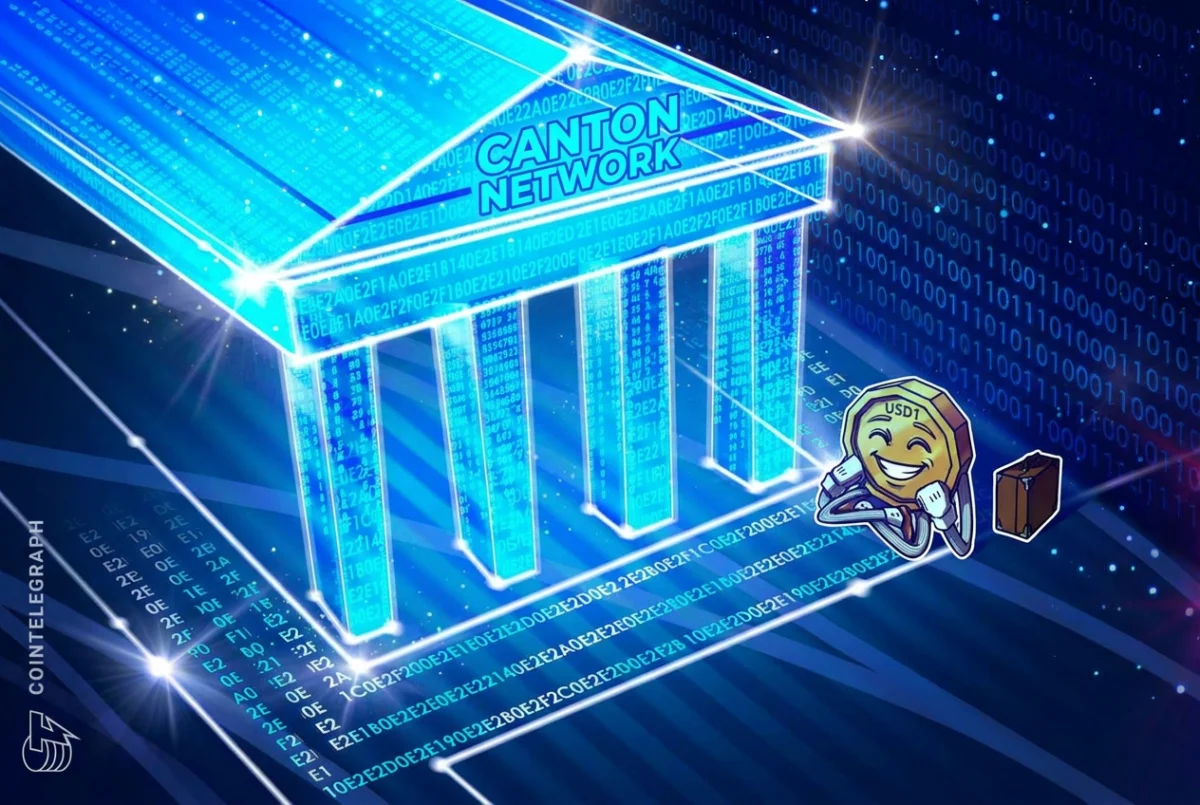
World Liberty Financial has announced the native integration of its USD1 stablecoin onto the Canton Network, a move poised to significantly enhance institutional capabilities for settling transactions involving tokenized real-world assets. This strategic development, revealed in a Tuesday announcement, positions USD1 as a crucial "cash leg" for a diverse array of financial operations, including derivatives collateral, institutional lending, and the issuance and redemption of tokenized assets within a private and permissioned blockchain environment. The integration underscores a growing trend in the financial industry towards leveraging blockchain technology for efficiency, transparency, and reduced counterparty risk in large-scale institutional transactions.
The decision to launch USD1 natively on Canton is particularly noteworthy for its implications for atomic settlement. Native issuance allows USD1 to settle alongside tokenized assets within the same transaction, a critical feature for ensuring the integrity and finality of complex financial operations. This capability is further bolstered by Canton’s inherent privacy and permissioning controls, which are essential for meeting the stringent compliance and confidentiality requirements of institutional finance. By providing a stable, dollar-pegged digital asset directly on a network designed for high-volume, regulated transactions, World Liberty Financial aims to streamline the cumbersome processes often associated with traditional asset transfers and settlements.
USD1, with a market capitalization currently standing at approximately $4.05 billion, holds its position as the sixth-largest stablecoin globally, according to data compiled by DeFiLlama. This significant market presence, especially for a relatively new entrant, highlights its rapid adoption and the trust it has garnered within the digital asset ecosystem. The stablecoin is meticulously backed by reserves comprising short-term US Treasurys, government money market funds, and dollar deposits, a structure designed to ensure its 1:1 peg to the U.S. dollar and instill confidence among institutional users. The issuance and reserve management of USD1 are handled by BitGo Bank & Trust, a regulated entity known for its robust custodial services and adherence to financial compliance standards, further solidifying the stablecoin’s reliability and institutional appeal.
The Rise of Institutional Digital Assets and Tokenization
The integration of USD1 into the Canton Network is emblematic of a broader paradigm shift occurring within global finance: the increasing convergence of traditional financial markets (TradFi) with blockchain technology and digital assets. Institutions are actively exploring and adopting tokenization, the process of converting rights to an asset into a digital token on a blockchain, for a wide range of real-world assets (RWAs). These can include anything from real estate, commodities, and equities to more complex instruments like bonds and private credit.
The appeal of tokenized RWAs for institutional players is multifaceted. Tokenization promises enhanced liquidity by enabling fractional ownership and easier transferability, potentially opening up new investment avenues for a wider pool of investors. It also offers greater transparency through immutable blockchain records, improved operational efficiency by automating processes like settlement and reconciliation, and reduced costs by disintermediating traditional financial intermediaries. The ability to settle these tokenized assets with a regulated, transparent, and efficient stablecoin like USD1 on a purpose-built institutional network like Canton represents a significant leap forward in realizing these benefits.
Globally, the market for tokenized assets is projected to grow substantially over the coming years, with some estimates placing it in the trillions of dollars. Major financial institutions, including leading banks and asset managers, are actively launching pilot programs and dedicated digital asset divisions to capitalize on this trend. The introduction of a robust stablecoin like USD1 on a high-throughput network tailored for institutions directly addresses the critical need for efficient and compliant on-chain settlement mechanisms that can handle the volume and complexity of institutional-grade transactions.
World Liberty Financial: A Trump Family-Backed Venture
World Liberty Financial, the entity behind the USD1 stablecoin, emerged onto the cryptocurrency scene in 2024 as a venture notably backed by the Trump family. This association has garnered significant attention, positioning the company at the intersection of evolving financial technology and prominent political figures. The company launched USD1 in March 2025, quickly establishing it as a contender in the competitive stablecoin market. The backing by high-profile individuals often brings increased scrutiny but also potentially wider reach and investor interest, particularly within specific market segments.
The company’s strategic vision appears to center on bridging traditional finance with the digital asset space, offering solutions that cater to institutional demands for security, compliance, and efficiency. By focusing on a stablecoin backed by highly liquid and low-risk assets like US Treasurys and government money market funds, World Liberty Financial is aligning with the preferences of conservative institutional investors seeking stability and regulatory clarity in their digital asset holdings. Their collaboration with BitGo Bank & Trust further reinforces this commitment to institutional standards, as BitGo is a state-chartered trust company regulated by the South Dakota Division of Banking, providing a layer of regulatory oversight crucial for enterprise adoption.
Canton Network: The Backbone for Institutional Digital Finance
The Canton Network itself is a critical component of this integration, serving as a public, permissionless blockchain specifically engineered to meet the rigorous demands of institutional finance. Unlike many public blockchains, Canton is designed with features that address the unique requirements of large financial institutions, including advanced privacy controls, granular permissioning systems, and the capacity for high-volume, secure transactions. These features are paramount for institutions that must comply with strict regulatory frameworks and maintain client confidentiality.
Canton boasts impressive statistics, reportedly processing and issuing more than $9 trillion in tokenized assets each month. Furthermore, it facilitates the daily movement of over $350 billion in on-chain US Treasurys, demonstrating its proven capability to handle significant institutional volume and complex financial instruments. Its architecture supports multi-party, atomic transactions, meaning that multiple steps of a transaction (e.g., asset transfer and payment settlement) can occur simultaneously and irrevocably, reducing counterparty risk and enhancing operational efficiency. The network’s design also emphasizes interoperability, allowing various financial applications and tokenized assets to interact seamlessly within its ecosystem.
The development and adoption of Canton have been spearheaded by Digital Asset, a leading provider of enterprise blockchain solutions. Digital Asset’s Daml smart contract language, which underpins Canton, allows for the creation of sophisticated, highly secure, and auditable financial workflows, making it an attractive platform for institutions looking to migrate traditional processes onto blockchain rails. The network’s ability to facilitate complex transactions with integrated privacy and permissioning makes it an ideal environment for stablecoins like USD1 to serve as the foundational settlement layer for tokenized real-world assets.
Chronology of Key Developments
The journey leading to this integration highlights a deliberate progression in the institutional digital asset landscape:
- 2024: World Liberty Financial, backed by the Trump family, is officially launched, signaling its entry into the crypto venture space. This marked the initial strategic move to establish a presence in the burgeoning digital asset market.
- March 2025: USD1 makes its debut. Positioned as a stablecoin backed by robust reserves, its launch aimed to provide a reliable digital dollar alternative for a variety of users, with an eye towards future institutional adoption.
- August 2026 (Last Week): The Canton Network announced a significant expansion, revealing plans for a pilot program in 2027 with Digital Asset and former US House Speaker Paul Ryan’s American Idea Foundation. This initiative focuses on developing a Canton-based system for distributing state-administered benefits across three US states, showcasing the network’s versatility beyond traditional finance to public sector applications. This pre-existing momentum for Canton undoubtedly contributed to the attractiveness of the network for World Liberty Financial.
- August 25, 2026 (Today’s Announcement): World Liberty Financial officially launches USD1 natively on the Canton Network. This crucial step solidifies USD1’s role as a primary settlement layer for institutional tokenized assets, leveraging Canton’s capabilities for privacy, permissioning, and atomic settlement.
This timeline demonstrates a clear strategic trajectory for both World Liberty Financial and the Canton Network, each progressively building capabilities and partnerships to solidify their positions in the evolving institutional digital asset ecosystem.
Implications and Future Outlook
The native integration of USD1 on the Canton Network carries significant implications for the future of institutional finance and the broader digital asset market.
- Enhanced Institutional Adoption: By providing a regulated, stable, and efficient settlement mechanism on a purpose-built institutional blockchain, this partnership significantly lowers the barrier for traditional financial institutions to engage with tokenized real-world assets. The ability to conduct "cash-leg" transactions directly on-chain reduces operational complexities and risks, making tokenization a more viable and attractive option for large-scale players.
- Increased Liquidity and Efficiency: The combination of USD1’s stability and Canton’s high throughput promises to unlock greater liquidity for tokenized assets. Faster settlement cycles and reduced intermediation can lead to more efficient capital markets and potentially lower transaction costs for institutions.
- Validation for Canton Network: The adoption of Canton by a prominent stablecoin issuer like World Liberty Financial further validates the network’s design and capabilities for institutional use cases. It reinforces Canton’s position as a leading infrastructure provider for digital asset transformation in TradFi.
- Strategic Growth for USD1: For USD1, this integration is a pivotal growth catalyst. By embedding itself into the core settlement layer of institutional RWA transactions on a high-volume network, USD1 is poised to capture a significant share of institutional digital dollar flows, potentially boosting its market capitalization and utility.
- Competitive Landscape: This move intensifies the competition among stablecoins vying for institutional adoption. While USDC and USDT currently dominate the market, specialized stablecoins like USD1, with targeted integrations into institutional-grade networks, could carve out significant niches. It also highlights the ongoing race among blockchain platforms to become the preferred infrastructure for tokenized finance.
- Regulatory Considerations: As institutional adoption of digital assets accelerates, regulatory clarity remains a critical factor. The robust backing of USD1 by traditional financial instruments and its issuance by a regulated entity like BitGo Bank & Trust are designed to address regulatory concerns. However, the broader regulatory framework for stablecoins and tokenized assets continues to evolve globally, and future legislative developments will undoubtedly shape the trajectory of such initiatives. The Paul Ryan Foundation’s pilot for distributing state benefits on Canton further hints at the network’s potential to navigate and even influence public sector digital asset initiatives, which often come with significant regulatory oversight.
In conclusion, the native integration of World Liberty Financial’s USD1 stablecoin on the Canton Network marks a significant milestone in the ongoing convergence of traditional finance and blockchain technology. By offering a secure, compliant, and efficient mechanism for settling tokenized real-world assets, this collaboration is set to accelerate institutional adoption of digital assets, streamline financial operations, and further cement the role of stablecoins as foundational elements in the future of global finance. This development not only underscores the strategic ambitions of World Liberty Financial but also reinforces Canton’s position as a critical infrastructure provider in the burgeoning institutional digital asset ecosystem.