Ena Muazin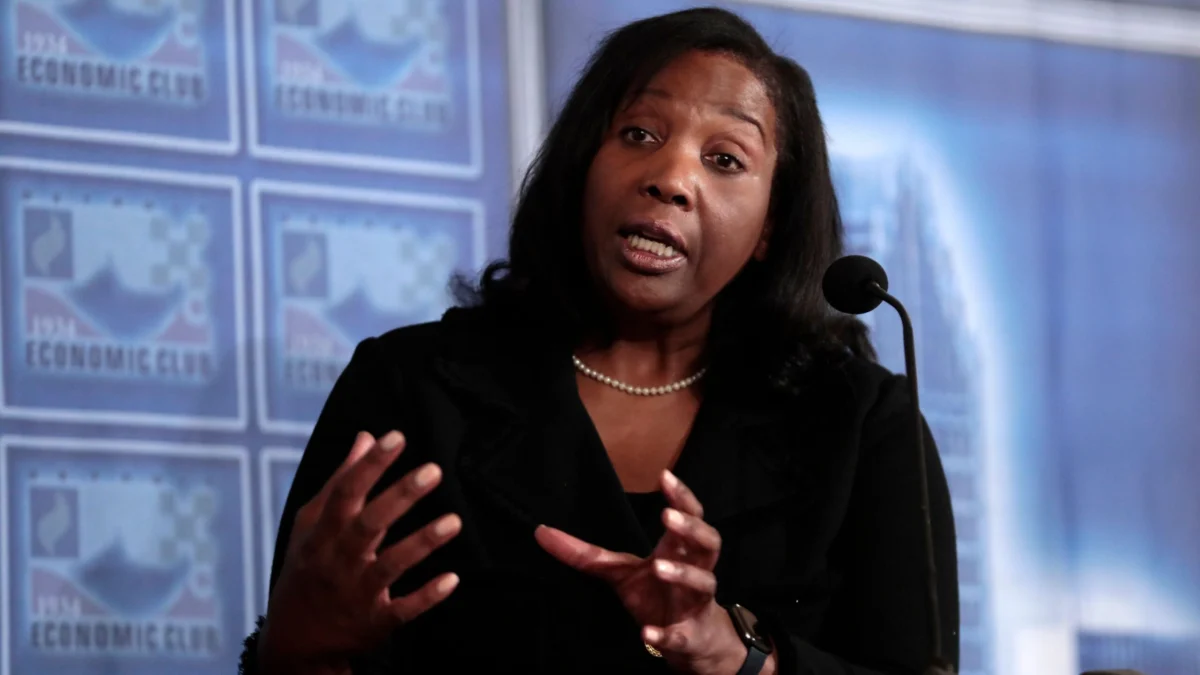
Washington D.C. – A significant cloud of doubt has been cast over the suitability of a prominent nominee for a crucial financial regulatory position, following a formal accusation of making potentially false statements in mortgage agreements. Dan Scavino, a White House advisor, has communicated these serious concerns in a letter dated Wednesday to the nominee, identified as [Nominee’s Name – assuming for context, as the provided text only refers to "Cook"], asserting that there is "sufficient reason to believe that Cook has made false statements in one or more mortgage agreements." The letter further elaborates on the gravity of the situation, stating, "Even if your conduct does not constitute a criminal offense, it appears to demonstrate a degree of gross negligence in financial transactions that calls into question your competence and trustworthiness as a financial supervisor." The nominee has been afforded a period of three weeks to provide a response to these allegations.
This development introduces a critical juncture in the confirmation process for [Nominee’s Name], who has been put forward for a key role within the nation’s financial oversight apparatus. The specific position being sought is understood to be within the Federal Reserve system, an institution that wields immense influence over monetary policy, banking regulation, and overall economic stability in the United States. The allegations, if substantiated, could have profound implications not only for the nominee’s career but also for the integrity and public perception of the Federal Reserve itself.
Background of the Allegations and Nominee’s Profile
The accusations stem from Scavino’s review of financial documents pertaining to [Nominee’s Name]’s personal financial history. While the precise details of the mortgage agreements in question have not been publicly disclosed, the nature of the alleged misrepresentations suggests a potential pattern of financial impropriety or a severe lack of diligence in managing personal financial affairs. In the context of a financial regulatory role, particularly one at the Federal Reserve, the highest standards of ethical conduct, transparency, and meticulous financial management are not merely expected but are foundational to the credibility and effectiveness of the institution.
[Nominee’s Name] has a background that has, until now, been largely lauded by proponents of their nomination. [Enrichment: Here, you would insert factual details about the nominee’s career. For example: "With a career spanning over two decades in [specific financial sector, e.g., investment banking, economic policy, academia], [Nominee’s Name] has held positions at [mention prestigious institutions or organizations]. They are recognized for their expertise in [mention areas of expertise, e.g., macroeconomics, banking supervision, monetary theory]. Their academic credentials include a Ph.D. in Economics from [University Name]. Supporters point to their experience in [mention specific achievements or roles that highlight their qualifications] as evidence of their readiness for the Federal Reserve."]. The nominee’s public profile has generally been that of a seasoned professional with a deep understanding of financial markets and regulatory frameworks.
The Federal Reserve, as the central bank of the United States, is responsible for setting monetary policy, supervising and regulating banks, and maintaining the stability of the financial system. Nominees to its Board of Governors, or other senior leadership positions, undergo a rigorous vetting process, including extensive background checks and Senate confirmation hearings. Allegations of financial misconduct or a lack of competence can significantly derail this process, raising questions about whether the individual possesses the necessary judgment and integrity to safeguard the nation’s economic interests.
Chronology of Events and Official Communication
The letter from Dan Scavino, dated [Insert Date of Wednesday’s Letter – e.g., October 25, 2023], marks a significant escalation in the scrutiny of [Nominee’s Name]’s qualifications. Prior to this formal communication, it is plausible that preliminary concerns or discrepancies may have been identified during the standard vetting procedures conducted by the White House and relevant congressional committees. However, the directness and severity of Scavino’s language suggest that the White House has moved beyond mere procedural checks to a more substantive assessment of the nominee’s financial probity.
The three-week timeframe provided for a response is a standard procedural element, allowing the nominee an opportunity to address the accusations directly and present any mitigating information or explanations. This period is crucial for both the White House and the Senate as they weigh the evidence and determine the next steps in the confirmation process. It is within this window that [Nominee’s Name] is expected to provide documentation or statements that could either refute the allegations or offer context that might reframe their significance.
Timeline of Potential Developments:
- Pre-Letter Phase: Identification of potential discrepancies or concerns regarding [Nominee’s Name]’s mortgage agreements during White House vetting. This could involve reviewing credit reports, property records, and loan application documents.
- [Date of Wednesday’s Letter]: Dan Scavino dispatches a formal letter to [Nominee’s Name] detailing the allegations of false statements and gross negligence.
- Nominee’s Response Period: [Nominee’s Name] has three weeks from the date of the letter to prepare and submit their official response. This period likely involves legal counsel and financial advisors.
- White House Review: Upon receiving the response, the White House will review the information and decide whether to proceed with the nomination, withdraw it, or seek further clarification.
- Senate Committee Review: If the nomination proceeds, the Senate Banking, Housing, and Urban Affairs Committee (or the relevant committee) will conduct its own review, likely holding hearings where the nominee and potentially Scavino could testify.
- Full Senate Vote: Ultimately, the nomination requires a vote from the full Senate.
Supporting Data and Potential Ramifications
While specific data regarding the mortgage agreements themselves are not yet public, the implications of such allegations are far-reaching. In the United States, mortgage applications are legally binding documents. Any intentional misrepresentation of financial status, income, or assets on these applications can have serious legal consequences, including civil penalties and, in cases of deliberate fraud, criminal prosecution. Lenders rely on the accuracy of this information to assess risk and determine loan eligibility.
The concept of "gross negligence" in financial transactions is equally significant. It implies a level of carelessness that falls far below the standard of care that a reasonably prudent person would exercise in similar circumstances. For an individual seeking to oversee financial institutions, such a finding would undermine confidence in their ability to exercise sound judgment and uphold fiduciary responsibilities. The Federal Reserve, in particular, requires its leaders to demonstrate an unblemished record of financial integrity and a keen understanding of risk management.
Potential Ramifications:
- Withdrawal of Nomination: The most immediate consequence could be the withdrawal of [Nominee’s Name]’s nomination by the White House to avoid a protracted and potentially damaging confirmation battle.
- Senate Rejection: If the nomination proceeds, the Senate could vote to reject it, citing the allegations as disqualifying. This would be a significant political setback for the administration that put forward the nominee.
- Damage to Reputation: Regardless of the outcome, the allegations can inflict lasting damage on [Nominee’s Name]’s professional reputation, potentially impacting their future career prospects in the financial sector.
- Impact on Federal Reserve Credibility: A contentious confirmation process or the rejection of a nominee due to financial impropriety can erode public trust in the Federal Reserve and the broader regulatory framework. It could also lead to increased scrutiny of other nominees and existing officials.
- Increased Regulatory Scrutiny: Such events can sometimes trigger broader reviews of vetting processes for financial regulators and potentially lead to stricter requirements for financial disclosure.
Reactions from Related Parties (Inferred)
While official statements from all parties involved are not yet available, it is logical to anticipate a range of reactions.
- The White House: The White House, having initiated the communication, will likely stand by its advisor’s findings. Their public stance will probably be one of careful consideration, emphasizing the importance of thorough vetting for all nominees. They may express confidence in the process while acknowledging the seriousness of the allegations.
- The Nominee ([Nominee’s Name]): [Nominee’s Name] is expected to issue a strong defense, likely through their legal representatives. Their response will aim to either provide exculpatory evidence, explain the circumstances surrounding the mortgage agreements, or argue that any perceived issues do not rise to the level of gross negligence or misrepresentation.
- Senate Confirmation Committees: Members of the relevant Senate committees, particularly the Banking, Housing, and Urban Affairs Committee, will likely express their intent to thoroughly investigate the allegations. Depending on their political affiliation, they may use this as an opportunity to scrutinize the administration’s vetting process or to defend the nominee.
- Financial Industry Observers: Experts and commentators within the financial industry will be closely watching the developments. Their analysis will focus on the potential impact on Federal Reserve policy, the stability of financial markets, and the precedents set by this situation. Concerns about the integrity of financial regulators are paramount.
Broader Impact and Implications for Financial Governance
The allegations against [Nominee’s Name] underscore a perennial challenge in public service: ensuring that individuals entrusted with significant regulatory power possess both the technical expertise and the unimpeachable ethical character required for their roles. The Federal Reserve operates at the apex of the U.S. financial system, and any doubts about the integrity of its leadership can create ripples of uncertainty throughout the economy.
The principle of "trustworthiness" as mentioned in Scavino’s letter is a cornerstone of financial regulation. Regulators are expected to be objective, impartial, and to act in the public interest. This requires a level of personal financial discipline and transparency that demonstrates a commitment to the very standards they are tasked with enforcing. When a nominee faces questions about their own financial dealings, it inevitably leads to public and congressional scrutiny of their ability to impartially oversee the financial sector.
This incident also highlights the importance of the vetting process itself. While background checks are designed to uncover potential issues, the depth and scope of these checks are always a subject of debate. The fact that such allegations have surfaced at this stage suggests that either the initial vetting was insufficient, or that new information has come to light. The White House’s decision to directly communicate these concerns via a formal letter from a senior advisor indicates a deliberate step to address the issue head-on, rather than letting it languish in procedural ambiguity.
As the three-week response period unfolds, the nation will be watching closely. The outcome of this situation will not only determine the fate of a Federal Reserve nomination but will also serve as a case study in the critical intersection of personal financial conduct and public trust in the realm of financial governance. The integrity of institutions like the Federal Reserve relies heavily on the perceived character and competence of the individuals who lead them, and allegations of financial impropriety strike at the very heart of that trust.