Putri Inara
The rapid ascent of pickleball from a niche backyard pastime to the fastest-growing sport in the United States has provided a wealth of data for market analysts, sociologists, and digital strategists alike. While the sport’s physical benefits are well-documented, its underlying structural mechanics and community-driven growth offer a sophisticated framework for modern content creators. By examining the tactical parallels between the pickleball court and the digital publishing landscape, professionals in the blogging industry can identify key drivers for engagement, retention, and long-term brand sustainability.
The Evolution of a Phenomenon: A Chronological Overview
To understand the strategic value of pickleball, one must first examine its historical trajectory. The sport was conceptualized in 1965 on Bainbridge Island, Washington, by Joel Pritchard, Bill Bell, and Barney McCallum. Facing a lack of proper equipment for a standard badminton game, the trio improvised with ping-pong paddles and a perforated plastic ball. This origin story serves as a primary lesson in resourcefulness and the "minimum viable product" (MVP) approach often cited in tech and content development.
From 1965 through the early 2000s, pickleball remained a localized activity, primarily popular among retirees due to its lower physical impact compared to tennis. However, the timeline of its expansion shifted dramatically between 2018 and 2023. According to the Sports & Fitness Industry Association (SFIA), pickleball participation grew by 158.6% over three years, reaching an estimated 8.9 million players in the United States by the end of 2022. This exponential growth mirrors the "viral" trajectory of successful digital platforms, where a combination of accessibility and social connectivity triggers a network effect.
For bloggers, this chronology highlights the importance of the long game. Much like the sport’s 50-year journey toward mainstream recognition, a blog often requires a foundational period of quiet growth before reaching a tipping point of mass visibility.
Strategic Simplicity: The Power of the ‘Dink’
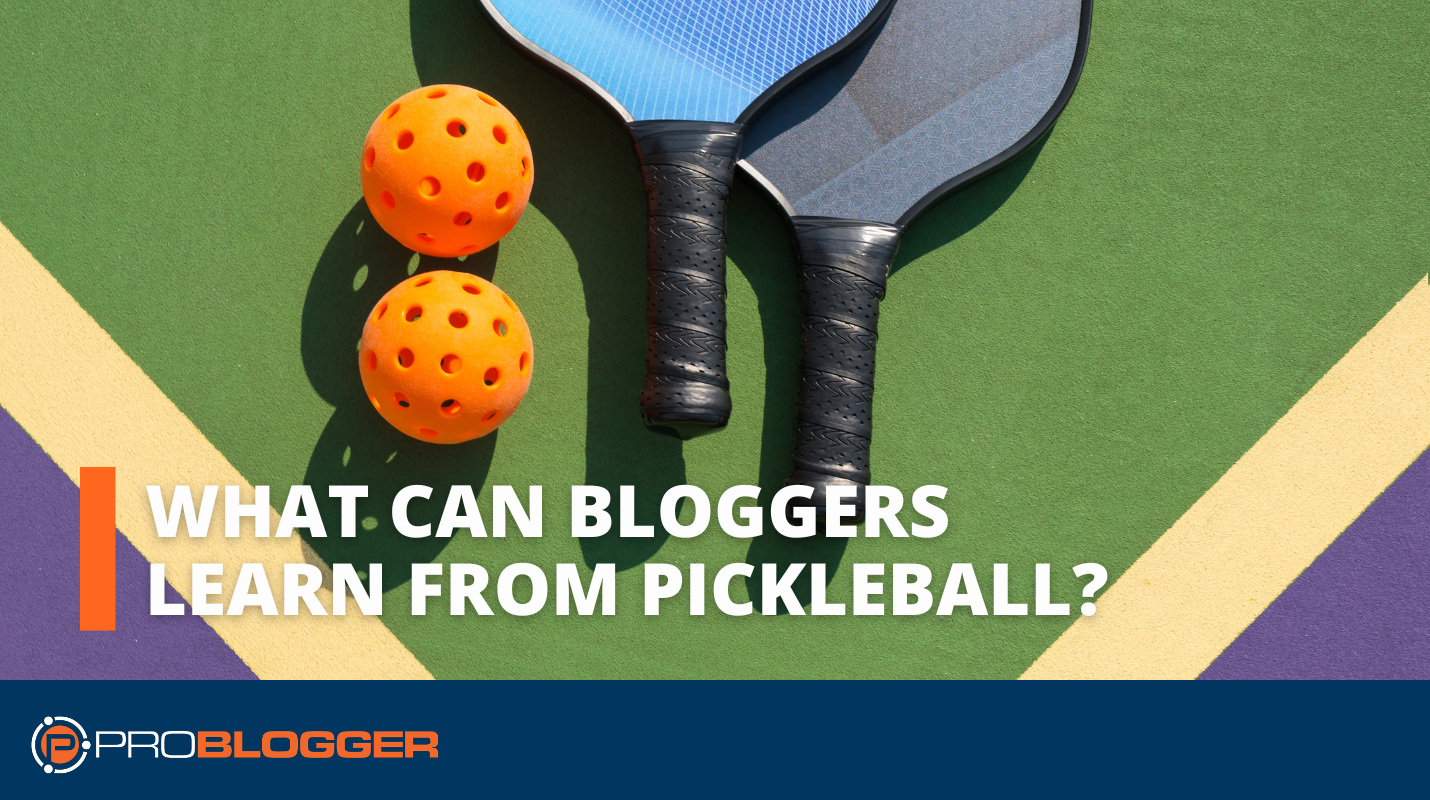
In the technical lexicon of pickleball, the "dink" is a soft shot hit from the non-volley zone (the "kitchen") that just clears the net and drops into the opponent’s kitchen. While beginners often focus on "power slams," advanced play is frequently dictated by the patience and precision of the dink.
In a journalistic and content creation context, "dinking" represents the art of simplicity. Data from the Nielsen Norman Group consistently shows that web users rarely read word-for-word; instead, they scan for key information. Strategic simplicity in blogging—minimizing jargon, utilizing white space, and focusing on clear, actionable insights—serves the same purpose as a dink: it controls the tempo of the interaction and keeps the "player" (the reader) engaged without overwhelming them.
Market research indicates that high-performing blogs often prioritize readability scores. Content that is easily digestible has a higher probability of being shared across social networks, thereby increasing the organic reach of the publication. The "dink" strategy suggests that a gentle, consistent approach to value delivery is often more effective than the "hard sell" of aggressive marketing copy.
The ‘Kitchen’ and the Sweet Spot of Engagement
Pickleball’s "non-volley zone," colloquially known as the kitchen, is a seven-foot area on both sides of the net where players are prohibited from volleying (hitting the ball out of the air). This rule is designed to prevent players from standing at the net and smashing every shot, thereby extending the rally.
In the realm of digital strategy, the "kitchen" represents the boundary of professional engagement. Bloggers must find their "sweet spot"—a balance between being overly promotional and being too detached. According to a 2023 HubSpot report, the most successful content creators are those who prioritize educational and entertaining content over direct sales pitches. By respecting the "non-volley zone" of their audience’s attention—refraining from intrusive pop-ups or aggressive affiliate linking—creators can foster a sense of trust and longevity.
Analyzing the ‘Whiff’: Resiliency in Content Iteration
Even professional athletes experience a "whiff"—a complete miss of the ball. In the context of blogging, a "whiff" is a post that fails to gain traction, an SEO strategy that yields no results, or a social media campaign that falls flat.
Statistical analysis of content performance often follows the Pareto Principle, where 80% of a blog’s traffic is generated by only 20% of its posts. This reality necessitates a high volume of attempts. Professional bloggers must adopt the athlete’s mindset toward failure: treating each unsuccessful post as a data point rather than a defeat. By analyzing "whiffs" through heatmaps, bounce rates, and engagement metrics, creators can refine their "swing" for future content.
Community Dynamics and the ‘Rally’ Effect
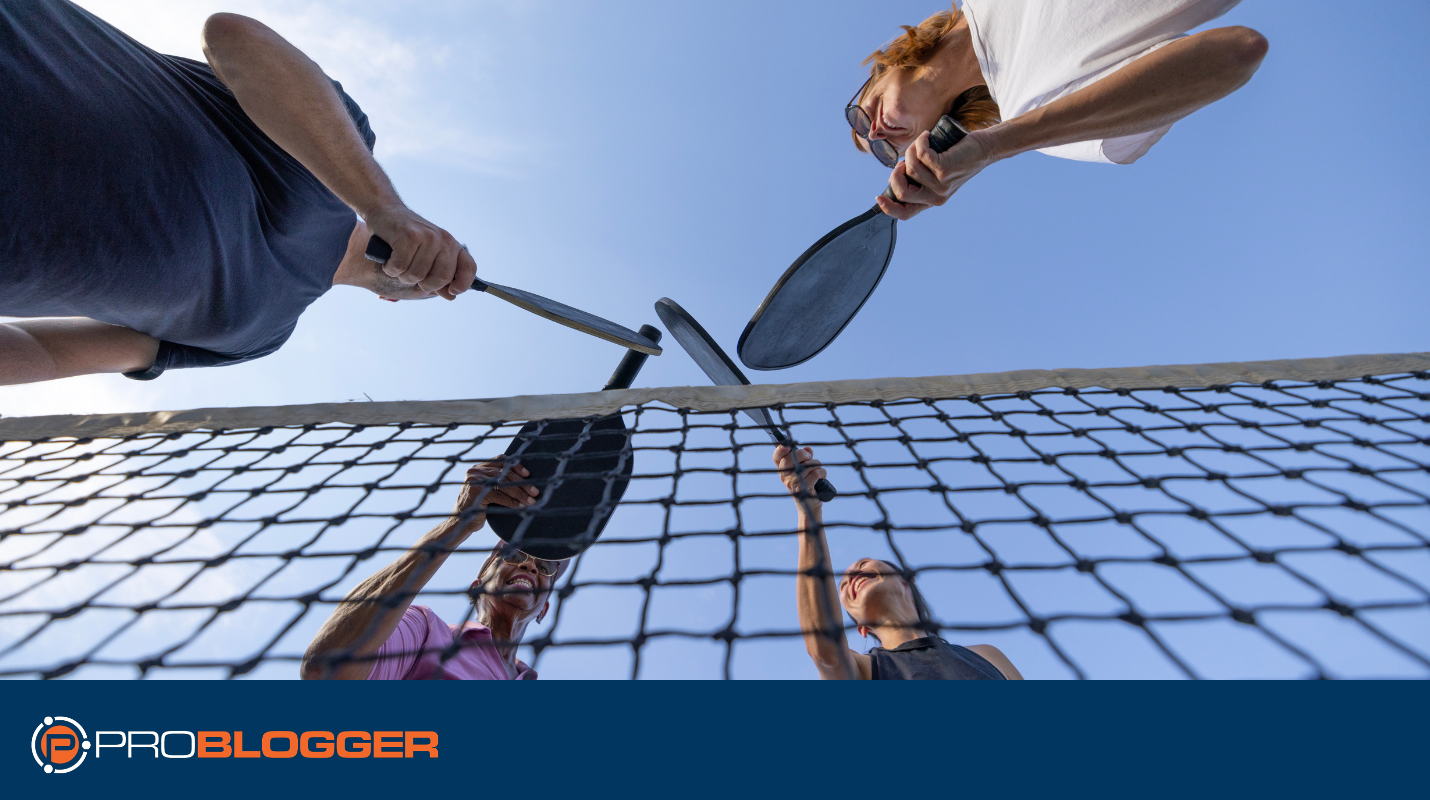
One of the primary drivers of pickleball’s success is its social infrastructure. Unlike tennis, which requires significant space and often involves a more formal atmosphere, pickleball courts are smaller, allowing for constant communication between players. This "rally" environment is what sustains the sport’s ecosystem.
For digital publishers, the "rally" is the comment section and social media discourse. Data suggests that blogs with active community management—where authors respond to comments and facilitate peer-to-peer discussion—see a 25% higher retention rate than those that function as one-way communication channels. Building a community is not merely a byproduct of good content; it is a strategic requirement. When readers feel they are part of a "rally," they transition from passive consumers to active brand advocates.
The Role of Positioning and Niche Domination
In doubles pickleball, positioning is the most critical element of the game. Partners must move in tandem, covering gaps and anticipating the opponent’s next move. This tactical positioning is directly applicable to market differentiation in blogging.
With over 600 million blogs currently active on the internet, "standing out" requires more than just quality; it requires strategic positioning within a niche. Just as a pickleball player identifies a gap on the court, a blogger must identify an "information gap" in their industry. According to data from SEMRush, long-tail keywords (specific, niche-focused phrases) have a 3-5% higher click-through rate than broad, competitive terms. Positioning a blog to serve a specific, underserved audience allows for a "monopoly of the niche," much like a well-positioned player controls the flow of the game.
Technical Adaptation and the Changing Digital Landscape
Pickleball equipment has seen significant technological advancement, from the original wooden paddles to modern carbon-fiber faces designed for maximum spin and control. Players who fail to adapt to these technical shifts often find themselves at a disadvantage.
Similarly, the digital landscape is currently undergoing a seismic shift driven by Artificial Intelligence (AI) and changes in search engine algorithms. The 2024 Google "Helpful Content" updates have placed a premium on firsthand experience and unique insights (EEAT: Experience, Expertise, Authoritativeness, and Trustworthiness). Bloggers must adapt their "equipment"—their SEO tools, CMS platforms, and AI integration strategies—to remain competitive. Stagnation in the digital space is the equivalent of playing a professional match with a 1965 wooden paddle.
Implications for the Creator Economy
The intersection of sport and strategy provides a compelling look at the future of the creator economy. The lessons derived from pickleball—accessibility, community-led growth, and tactical simplicity—are becoming the standard for successful digital entrepreneurship.
Industry analysts suggest that as the internet becomes increasingly saturated with AI-generated content, the "human element" found in sports like pickleball will become the primary differentiator for bloggers. Readers are seeking "the rally"—the authentic connection and the shared experience—rather than just the raw data.
Conclusion: The Game of Longevity
Who knew a sport with such a peculiar name could offer genuine pearls of blogging wisdom? Pickleball teaches that fun and strategy go hand in hand, a lesson that bloggers can take to heart. By injecting joy into the meticulous craft of blogging, creators can enhance their creative expression and connect more deeply with their audience.
The data is clear: the most successful ventures, whether on the court or on the screen, are those that prioritize the player experience, maintain strategic focus, and remain adaptable to change. As the digital economy continues to evolve, those who think like a pickleball player—staying focused, serving strong, and never losing sight of the "ball"—will be the ones who sustain their relevance in an increasingly crowded marketplace. The keyboard, much like the paddle, is a tool for connection; how it is wielded determines the success of the game.