Ena Muazin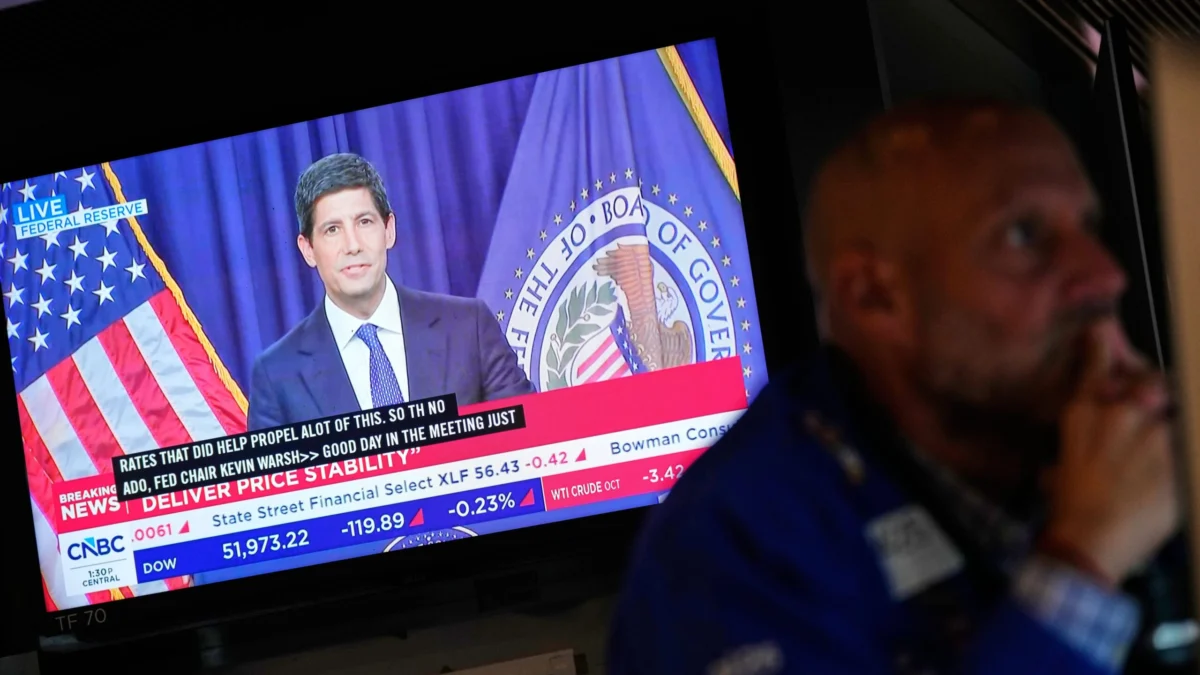
The decision by the U.S. Federal Reserve to implement another interest rate hike was widely anticipated by financial analysts, signaling a continued commitment by the central bank to curb persistent inflation. However, initial market reactions were subdued, with major stock market indices experiencing a downturn following a press conference by Fed Chairman Kevin Warsh. This move underscores the delicate balancing act the Fed faces as it navigates an economic landscape characterized by elevated price levels and a surprisingly resilient employment sector.
The Rationale Behind the Rate Hike: Inflation’s Grip and Labor’s Strength
The primary impetus for the Federal Reserve’s decision to raise interest rates stems from stubbornly high inflation. Official data released last week by the relevant statistical bureau indicated that inflation remained at a year-over-year rate of 3.4 percent in August. This figure, while showing some signs of moderation from previous peaks, continues to exceed the Fed’s target of 2 percent. Furthermore, the core inflation rate, which excludes volatile food and energy prices and is closely monitored by the Fed as a key indicator of underlying price pressures, also remains elevated at 2.4 percent. This persistence of inflation suggests that the initial inflationary surge, driven by a confluence of factors including supply chain disruptions, increased consumer demand fueled by pandemic-era stimulus, and the ripple effects of geopolitical events, has proven more entrenched than initially hoped.
Compounding the inflationary concerns is the robust performance of the U.S. labor market. The Fed operates under a dual mandate: to promote maximum employment and maintain price stability. In August, the labor market demonstrated significant strength, with job creation exceeding expectations. This sustained strength in employment is often seen as an indicator of a healthy economy, but in the current environment, it also contributes to inflationary pressures through increased consumer spending power and potential wage growth. The Fed’s assessment is that a tight labor market can create a wage-price spiral, where rising wages lead to higher business costs, which are then passed on to consumers in the form of higher prices, thus perpetuating inflation. Consequently, the strong employment figures further bolster the case for a policy tightening to cool down aggregate demand.
Market Reactions and Analyst Expectations
Leading up to the Federal Reserve’s announcement, financial analysts had largely factored in the likelihood of an interest rate increase. This expectation was built on a careful observation of economic data, including inflation reports and labor market statistics, as well as public statements from Fed officials. However, the market’s response after the decision was initially muted, indicating a degree of uncertainty about the Fed’s future policy path.
The subsequent press conference held by Fed Chairman Kevin Warsh appeared to introduce a note of caution. While the specifics of Warsh’s remarks are not detailed in the provided content, the fact that major stock market indices closed in negative territory following his address suggests that his commentary may have signaled a more hawkish stance than some investors had anticipated, or perhaps introduced ambiguity regarding the pace and magnitude of future rate hikes. Markets are highly sensitive to forward guidance from central banks, and any divergence from expectations or hints of a prolonged period of restrictive monetary policy can trigger sell-offs.
JP Morgan’s Analysis: Scenarios and Market Implications
Investment banks like JP Morgan play a crucial role in dissecting economic data and providing insights into the potential impact of central bank decisions. JP Morgan reportedly examined various scenarios surrounding the Federal Reserve’s interest rate decision. Their analysis, as highlighted by financial commentator Markus Koch, likely explored how different outcomes – such as a larger-than-expected rate hike, a more aggressive future tightening path, or a shift in the Fed’s economic outlook – could affect the equity market.
The implications of the Fed’s monetary policy extend beyond just interest rates. The central bank’s communication about its future intentions, often referred to as "forward guidance," is critical for shaping market expectations and influencing investment decisions. If the Fed signals a commitment to maintaining higher interest rates for an extended period to ensure inflation is definitively on a downward trajectory, this can lead to a reassessment of asset valuations, particularly for growth stocks that are more sensitive to borrowing costs. Conversely, signs of a Fed ready to pause or even reverse course could boost market sentiment. JP Morgan’s scenarios likely aimed to quantify these potential impacts, providing clients with a framework for navigating the evolving economic landscape.
Background and Chronology of Recent Monetary Policy
The current cycle of interest rate hikes by the Federal Reserve did not begin in isolation. It represents a significant shift from the accommodative monetary policy that characterized much of the preceding decade, and especially the period following the 2008 financial crisis and the initial phase of the COVID-19 pandemic.
- Pre-Pandemic Era: For years leading up to 2020, interest rates were kept at historically low levels to stimulate economic growth and support the recovery from the Great Recession.
- COVID-19 Pandemic (Early 2020 onwards): In response to the economic shock of the pandemic, the Fed slashed interest rates to near zero and implemented large-scale asset purchases (quantitative easing) to inject liquidity into the financial system and support businesses and households.
- Emergence of Inflationary Pressures (Late 2021 – Early 2022): As economies began to reopen and demand surged, coupled with persistent supply chain bottlenecks and the impact of stimulus measures, inflation started to rise significantly.
- Beginning of Rate Hikes (March 2022): Recognizing the growing threat of inflation, the Federal Reserve began its current cycle of interest rate increases in March 2022. This marked a decisive pivot in monetary policy.
- Subsequent Hikes (Throughout 2022 and into 2023): The Fed continued to raise rates aggressively throughout 2022, implementing a series of substantial hikes to bring inflation under control. The pace and magnitude of these increases were among the fastest in decades.
- Recent Decisions (Including the current one): The decision discussed in this article represents a continuation of this tightening cycle, albeit potentially at a more measured pace as the Fed assesses the impact of its previous actions and the evolving economic data.
The Fed’s dual mandate necessitates a careful balancing act. While taming inflation is a paramount concern, policymakers are also mindful of the potential for overly aggressive tightening to trigger an economic recession and lead to significant job losses. The recent strength of the labor market has provided the Fed with some room to continue its fight against inflation without immediate fears of widespread unemployment, but this situation is dynamic and subject to change.
Broader Economic Implications
The Federal Reserve’s interest rate decisions have far-reaching implications for the U.S. economy and the global financial system.
- Cost of Borrowing: Higher interest rates directly increase the cost of borrowing for businesses and consumers. This affects mortgage rates, car loans, credit card debt, and business investment. A sustained period of higher rates can lead to a slowdown in consumer spending and business expansion.
- Investment and Savings: Higher rates can make savings accounts and fixed-income investments more attractive, potentially drawing capital away from riskier assets like stocks.
- Asset Valuations: As mentioned, higher interest rates can put downward pressure on the valuation of assets, particularly those with future earnings streams that are discounted at a higher rate. This can impact stock markets, real estate, and other asset classes.
- Currency Strength: U.S. interest rate hikes can attract foreign capital seeking higher returns, which can strengthen the U.S. dollar. A stronger dollar can make U.S. exports more expensive and imports cheaper, impacting trade balances.
- Global Economic Impact: As the world’s largest economy and issuer of the primary reserve currency, U.S. monetary policy has a significant impact on global financial markets and economic conditions, particularly for countries with dollar-denominated debt.
The Federal Reserve’s ongoing efforts to achieve price stability are crucial for long-term economic health. However, the path to achieving this goal is fraught with challenges, and the central bank must remain vigilant in its monitoring of economic data and adaptable in its policy responses. The recent decision, and the market’s reaction to Chairman Warsh’s subsequent commentary, underscore the complexity of this task and the constant need for clarity and confidence in monetary policy communication. The coming months will be critical in determining whether the Fed’s actions are sufficient to bring inflation back to its target without tipping the economy into a recession.