Gilang Muhammad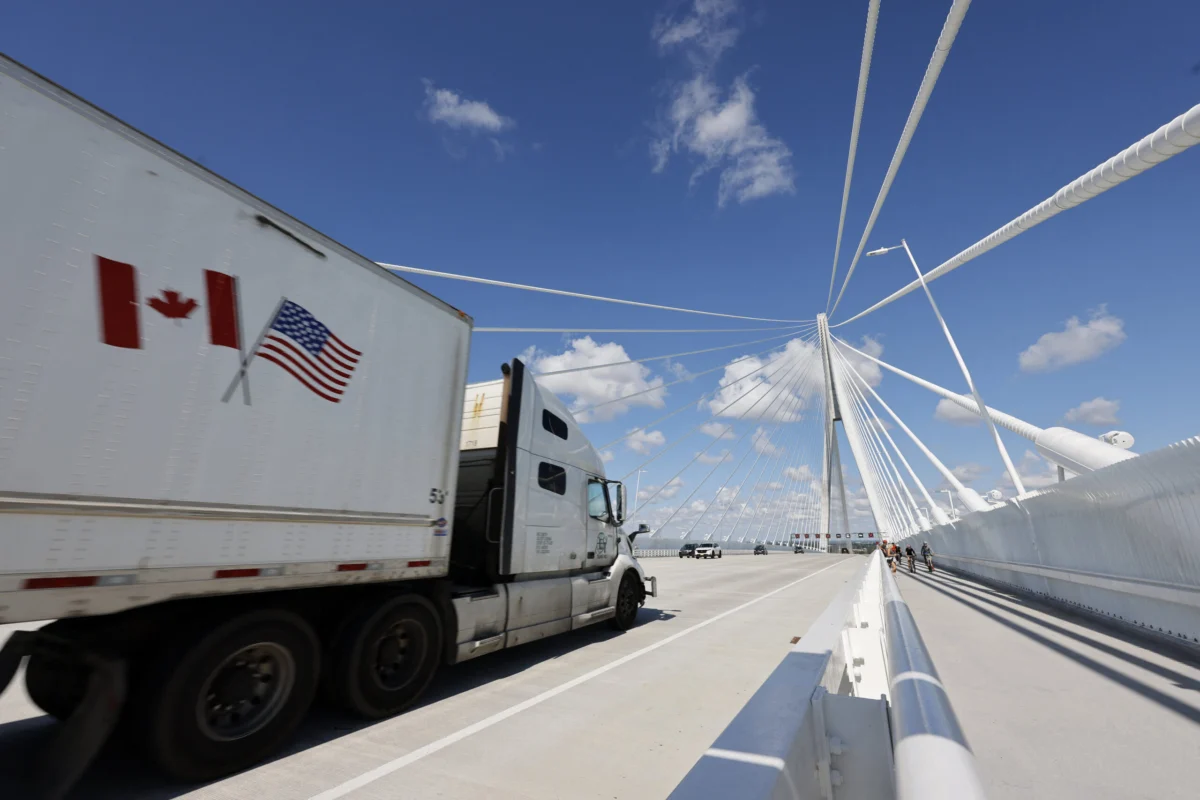
The White House on Tuesday enacted a broad prohibition on specific Canadian vehicles, dairy, and alcoholic beverages, marking a significant escalation in the ongoing trade tensions between the United States and its northern neighbor. This latest measure, following an announcement earlier this month by the Trump administration, targets an array of goods estimated to represent approximately $19.9 billion of Canadian imports, according to analysis by the American Action Forum. The move comes as officials on both sides of the border continue to send conflicting signals regarding the prospects of a comprehensive trade agreement.
A Deepening Rift: The Latest Sanctions
The extensive list of newly banned products underscores the widening scope of the dispute. Among the most prominent items are motorcycles and mopeds equipped with petrol engines exceeding 800cc, a category that includes a significant portion of recreational and touring bikes. In the agricultural sector, the ban impacts various whey products and molasses, critical components in food manufacturing and animal feed. The restrictions also extend to a broad spectrum of alcoholic beverages, primarily those packaged for direct consumption, encompassing everything from popular beers and ciders to wines, whiskeys, and vodkas. This targeted approach is designed to exert pressure on specific, economically vital Canadian industries.
This unilateral action follows a period of heightened rhetoric and retaliatory tariffs that have characterized U.S.-Canada relations for several months. While President Donald Trump expressed optimism on Monday, stating his expectation of a "fair deal" with Canada within weeks, his accompanying remarks maintained a decidedly combative stance. "They take advantage of us, they feel entitled… there’s nothing they have that we need," Trump told reporters in the Oval Office, asserting, "I think what’s going to happen is over the next three to four weeks they’re going to come to us and they’re going to say, ‘We’re going to get rid of all the tariffs.’ We’re going to win everything." Such pronouncements, however, stand in stark contrast to the apparent lack of progress reported by trade officials.
Chronology of Escalation: A Timeline of Trade Friction
The current trade dispute is rooted in a broader "America First" economic policy framework championed by the Trump administration, which has consistently sought to renegotiate or dismantle what it perceives as unfair trade agreements. The relationship with Canada, a historically close ally and the United States’ second-largest trading partner, has deteriorated significantly over the past year.
- August 2026: The U.S. initiated the most recent wave of tariffs, imposing a 50% levy on a range of Canadian goods, including cement, wine, and hockey sticks. These tariffs were justified under Section 232 of the Trade Expansion Act of 1962, citing national security concerns, a rationale widely disputed by Ottawa. This initial salvo affected sectors already reeling from earlier rounds of tariffs on steel and aluminum.
- September 6, 2026: A truck, emblematic of the robust cross-border trade, was photographed crossing into the United States from Canada on the newly constructed Gordie Howe International Bridge, connecting Windsor, Ontario, and Detroit, Michigan. This image, taken just days before the latest import ban, underscored the daily flow of goods that underpins the $715.5 billion annual bilateral trade relationship, even amidst growing political tensions.
- September 8, 2026: Canada retaliated swiftly and robustly, implementing its own "dollar for dollar" counter-tariffs. These measures, ranging from 15% to 50%, were applied to 27.6 billion Canadian dollars (approximately $19.45 billion USD) worth of U.S. goods. The targeted items included steel, dairy products, agricultural equipment, paper, household appliances, furniture, clothing, and electronics, designed to inflict economic pain on key American industries and electoral districts.
- Earlier This Month (September 2026): The White House announced its intention to ban certain Canadian imports, setting the stage for the Tuesday implementation. This announcement served as a clear signal of Washington’s willingness to intensify pressure beyond traditional tariffs.
- Tuesday (Late September/Early October 2026): The import ban on Canadian motorcycles, specific dairy products, and alcoholic beverages officially takes effect, adding a new dimension to the trade war by outright prohibiting market access for selected goods rather than merely taxing them.
Official Responses and Stances
The differing perspectives from Washington and Ottawa highlight the deep chasm that currently exists in their trade negotiations.

U.S. Trade Representative Jamieson Greer, speaking to CNBC on Friday, conveyed a distinct lack of urgency from the American side to finalize a deal. "There was no urgency on our side to strike an agreement," Greer stated, emphasizing that the U.S. continued to maintain "a lot of other trade" with Canada. He clarified, "We’re still getting what we need from them in terms of oil, gas, potash, all of these things… so there’s still a lot of strong trade between the two countries." This stance suggests that the U.S. believes it holds significant leverage and is not compelled to make concessions, confident in its ability to source essential commodities elsewhere or domestically.
Conversely, Canadian Trade Minister Dominic LeBlanc delivered a strong rebuke to the U.S. actions during a news conference on Friday. LeBlanc condemned the U.S. for "imposing illegal and unjustified tariffs on sectors of our economy that are causing considerable hardship to businesses and workers across the country." While acknowledging ongoing dialogue, he firmly reiterated Canada’s position: "We have said we will sign an agreement when we think there is one that is in the interests of Canada’s sovereignty and Canada’s economy… but we’re not waiting by the phone." This statement signals Ottawa’s refusal to be bullied into a disadvantageous agreement, emphasizing national interest and economic independence as non-negotiable principles. Despite the mounting pressure, Ottawa has refrained from announcing further retaliatory measures since its counter-tariffs took effect on September 8, suggesting a strategic pause or a desire to avoid an all-out trade war while keeping options open.
Broader Implications and Geopolitical Realignment
The escalating trade dispute carries significant economic and geopolitical implications for both nations. The direct impact of the latest import ban, while substantial at nearly $20 billion, represents a fraction of the total $715.5 billion annual trade in goods between the U.S. and Canada. However, the continuous escalation and the prolonged standoff are expected to inflict disproportionate damage on specific sectors and small-to-medium-sized enterprises (SMEs) on both sides of the border.
Canadian dairy farmers, already operating under a supply management system, will face new challenges in finding alternative markets for whey products and other derivatives. Similarly, Canadian manufacturers of large-engine motorcycles and various alcoholic beverage producers, many of whom have built robust export channels to the lucrative U.S. market, will be forced to pivot, incurring significant costs and potential job losses. In the U.S., while the ban aims to protect domestic industries, it could also lead to higher prices for consumers or reduced product variety, particularly for popular Canadian brands.
Beyond the immediate economic fallout, the trade war is prompting a strategic realignment in Canada’s foreign policy and trade diversification efforts. Canadian Prime Minister Mark Carney has actively spent the month cultivating closer ties with the European Union, signaling a deliberate pivot away from an increasingly unreliable U.S. market. In a recent speech, Carney sharply criticized the White House’s approach, accusing it of "weaponizing" economic policy as a form of "coercion" against other nations. This rhetoric reflects a growing sentiment in Ottawa that Canada must reduce its economic dependence on the U.S. and forge stronger alliances with other global trading blocs to safeguard its interests. The pursuit of enhanced trade agreements with the EU could offer Canadian businesses new avenues for growth, but it cannot fully offset the immediate disruption caused by the U.S. market closure.
The Bank of Canada has already sounded alarms regarding the domestic economic outlook. Earlier this month, the central bank warned that the new tariffs had introduced considerable uncertainty into the country’s growth prospects and amplified upside risks to inflation. Businesses, facing unpredictable trade barriers, may scale back investment, leading to slower job creation and economic contraction. For consumers, the impact could manifest in higher prices for imported goods, including those subject to Canadian counter-tariffs from the U.S., further eroding purchasing power.
The automotive and metals sectors, deeply integrated across the U.S.-Canada border, remain particularly vulnerable to further escalation. The threat of additional tariffs or non-tariff barriers in these areas could disrupt complex supply chains, leading to widespread layoffs and significant economic distress in both countries. The implications for small and medium-sized businesses, which often lack the resources of larger corporations to absorb tariff costs or pivot to new markets, are especially severe. Many of these businesses are deeply embedded in cross-border trade, relying on seamless logistics and predictable policy environments.
Looking ahead, the resolution of the U.S.-Canada trade dispute remains highly uncertain. President Trump’s optimistic yet confrontational stance, coupled with Canadian officials’ refusal to yield to what they perceive as unfair demands, suggests a protracted standoff. The upcoming midterm elections in the United States could serve as a turning point, potentially influencing the administration’s trade posture depending on the political outcomes. However, absent a significant shift in strategy from either side, the current trajectory points towards continued friction, challenging the long-standing economic partnership and potentially reshaping global trade dynamics. The Gordie Howe International Bridge, once hailed as a symbol of enduring bilateral cooperation, now stands as a stark reminder of the goods that continue to flow, albeit under an increasingly heavy cloud of uncertainty and protectionism.