Gilang Muhammad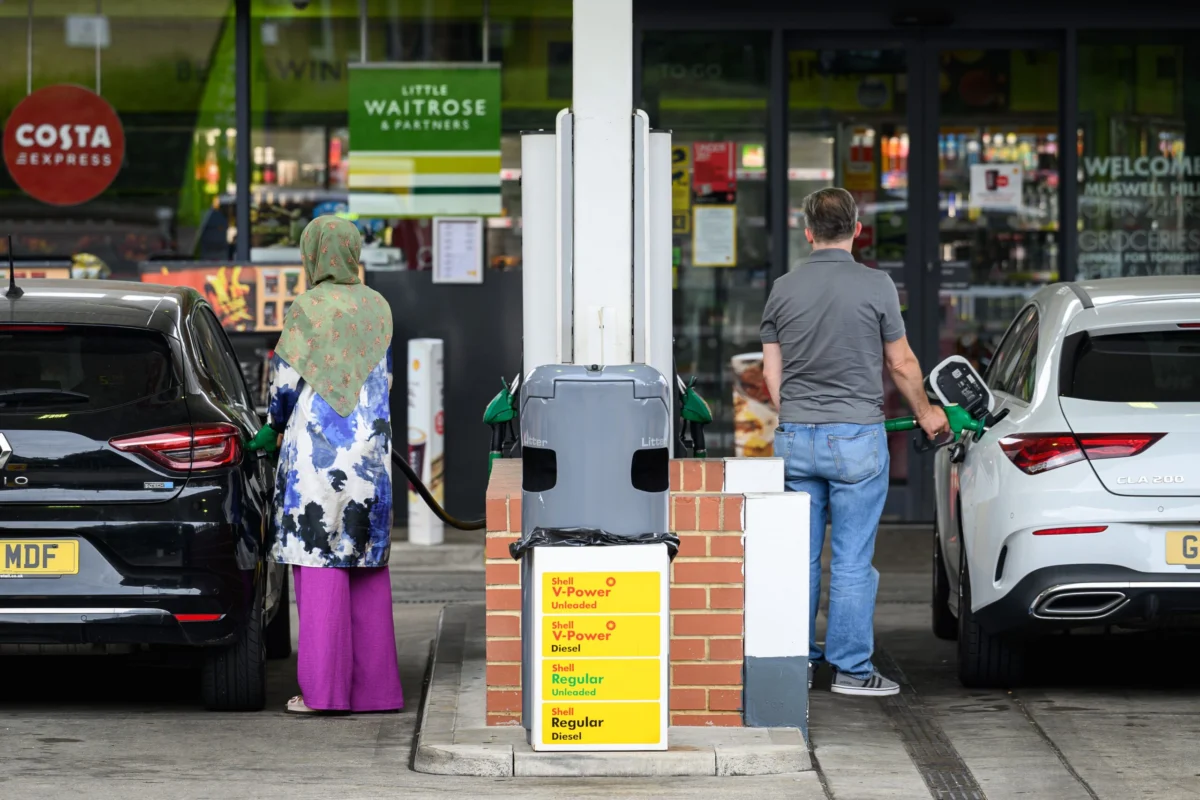
The United Kingdom’s annual inflation rate unexpectedly jumped to 3.1% in August, driven predominantly by a sharp escalation in gasoline and diesel prices, marking the first time the Consumer Price Index (CPI) has breached the 3% threshold since March of this year. This reading, while aligning with economists’ consensus forecasts, underscores the persistent inflationary pressures gripping the British economy and intensifies the complex challenges facing policymakers at the Bank of England and the government. The Office for National Statistics (ONS) confirmed on Wednesday that the significant uplift was primarily attributable to motor fuel costs, which saw a staggering 23% year-on-year surge, translating directly into higher expenses for households and businesses across the nation.
Fuel Prices Reach Multi-Year Highs, Igniting Inflationary Concerns
The granular data from the ONS painted a stark picture of the burden on motorists. The average price of gasoline experienced a notable increase of 9.1 pence ($0.12) per liter between July and August, pushing average prices to their highest point since November 2022. Diesel prices, often a bellwether for commercial transport costs, saw an even more pronounced rise of 14.2 pence per liter during the same period. This escalation reflects the turbulent global energy markets, with Brent crude oil prices having breached the $100 per barrel mark on July 23, 2026, for the first time since May, and consistently hovering above this critical psychological and economic benchmark since. The motoring body RAC recently highlighted that both petrol and diesel prices have now reached levels not observed in four years, a direct consequence of the ongoing conflict in Iran and its ripple effects on global supply chains.
The UK, by its very nature as a net importer of energy, remains acutely vulnerable to these external energy shocks. The impact extends beyond motor fuels, with the cost of electricity, gas, and other household fuels collectively jumping 6% year-on-year in August. This follows a previous revision in July, where a government-regulated price cap on energy costs was sharply adjusted upwards, passing on higher wholesale prices to consumers and contributing to the overall inflationary trajectory, which had already seen inflation at 2.9% in July. These persistent increases are not merely statistical points; they represent a tangible erosion of household purchasing power and a tightening squeeze on living standards that has defined the UK’s economic landscape for several years.
A Persistent Cost-of-Living Crisis: Tracing the Economic Headwinds
The current inflationary surge is the latest chapter in a protracted cost-of-living crisis that has beleaguered the UK economy since the immediate aftermath of the COVID-19 pandemic. Initially sparked by a confluence of factors including unprecedented global supply chain disruptions, a resurgence in demand post-lockdowns, and significant fiscal stimulus measures, inflation began its ascent in 2021. However, the crisis was dramatically exacerbated by Russia’s full-scale invasion of Ukraine in February 2022. This geopolitical event sent shockwaves through global energy markets, particularly natural gas prices, and severely impacted food security, driving up costs for essential goods and services across Europe and beyond.
For the UK, the reliance on imported energy meant that the spike in wholesale gas prices rapidly translated into exorbitant household energy bills, even with government intervention through mechanisms like the energy price cap. While there was a period of some moderation in inflation during late 2024 and early 2025 as energy prices cooled from their peaks and supply chains untangled, the emergence of the Iran conflict in early 2026 injected fresh volatility into the global oil market. The conflict, particularly concerns surrounding the Strait of Hormuz – a vital chokepoint for global oil transit – reignited fears of supply disruptions, pushing crude prices back towards triple digits. This latest geopolitical flashpoint, coupled with the lingering effects of previous crises, ensures that the UK economy remains in a precarious position, highly susceptible to external shocks. The timeline of escalating costs, from pandemic-induced supply issues to the Ukraine war’s energy ramifications and now the Iran conflict’s oil price pressures, paints a consistent picture of external forces dictating domestic economic realities.
Market Reaction and the Bank of England’s Imminent Decision
In the immediate aftermath of Wednesday’s inflation data release, financial markets displayed a nuanced reaction. Yields on UK government bonds, commonly known as gilts, saw a slight easing across the curve. The yield on the benchmark 10-year gilt, which serves as a key indicator for borrowing costs, declined by nearly 3 basis points to 5.365%. Similarly, the 30-year gilt yield, which had briefly surged to a 28-year high on Tuesday, edged down by almost 2 basis points to 5.907%. This modest decline in yields suggests that while the headline inflation figure was high, some market participants might be interpreting it as primarily energy-driven, possibly limiting its broader inflationary impact, or perhaps anticipating that the Bank of England might not rush into an immediate rate hike. The British pound, meanwhile, remained largely stable, trading flat against both the U.S. dollar and the euro, indicating that the inflation print did not significantly alter currency market sentiment.
The inflation data arrives just ahead of a critical meeting of the Bank of England’s Monetary Policy Committee (MPC) scheduled for Thursday. Markets are currently pricing in a more than 80% probability, according to LSEG data, that the central bank will opt to hold its key interest rate steady at 3.75%. This cautious approach reflects the ongoing debate among policymakers about the underlying drivers of inflation and the appropriate response. However, the consensus also points towards an increasing likelihood of a rate hike at the MPC’s subsequent meeting in November, suggesting that while the immediate reaction might be to observe and assess, the persistent inflationary pressures, especially from energy, are raising concerns about the longer-term outlook. The Bank’s primary mandate is to achieve and maintain price stability, targeting an inflation rate of 2%. With inflation now considerably above this target for an extended period, the pressure on the MPC to act remains intense, balancing the need to tame inflation against the risk of stifling an already fragile economic recovery.
Political Pressure Mounts on Prime Minister Andy Burnham
The latest inflation figures significantly amplify the pressure on new Prime Minister Andy Burnham. Having recently taken office, Burnham has publicly committed to alleviating the burden of the cost-of-living crisis on British households. However, this pledge must be balanced against the equally pressing need to restore fiscal credibility by "balancing the public books" and "placating the bond market," which has previously shown nervousness regarding the UK’s financial stability. The dual challenge of providing relief to struggling families while ensuring responsible public finances presents a formidable political tightrope walk for the new administration. Any perceived misstep could have severe repercussions, both economically and politically.
The government has limited tools to directly counter global energy price shocks, often resorting to measures like temporary fuel duty cuts or targeted support schemes for vulnerable households. However, such interventions come with a cost, potentially adding to the national debt and complicating efforts to reduce borrowing. The public, weary from years of economic hardship, will be looking for tangible actions, not just rhetoric, from Downing Street. Burnham’s ability to navigate these turbulent economic waters will be a defining feature of his early premiership, influencing public trust and the government’s mandate going forward.
Expert Analysis: Diverse Perspectives on Inflation’s Trajectory
Economists and analysts offer varied interpretations of the August inflation data and its implications for future policy. James Smith, a developed markets economist at ING, suggested in a note that there was "nothing in the latest UK inflation numbers that screams a need to hike interest rates." Smith’s analysis posits that the energy shock, while significant for headline inflation, may not be "broadening out to other parts of the inflation basket." He pointed to the relatively subdued inflation in food and non-alcoholic beverages, which actually slipped to 1.1% year-on-year in August, significantly below the overall CPI. Furthermore, Smith highlighted that inflation for categories defined by the ONS as having "high" or "very high" energy intensity – ranging from fruit to air fares and canteens – has actually fallen this year, even when stripping out distortions from previous water and car tax hikes. This suggests that the direct pass-through of energy costs might not be as widespread across the economy as feared, offering some potential reprieve for the Bank of England.
Conversely, Bogdan Toma, a partner at McKinsey & Company, offered a more cautious outlook, particularly for the retail sector. In an emailed note, Toma warned that gasoline prices at their highest level in nearly four years could signal "an uncertain ‘golden quarter’ for consumers and retailers." The "golden quarter," spanning from October to December, is traditionally critical for annual profitability for many non-food and some grocery retailers, driven by festive season spending. Toma emphasized that "with households absorbing back-to-school costs and facing the possibility of higher interest rates, demand heading into the fourth quarter may remain subdued." This scenario could lead to "intense competition for fewer and smaller baskets," further pressuring retailer margins from an already challenged starting point.
Scott Gardner, an investment strategist at J.P. Morgan Personal Investing, echoed the sentiment that the inflation increase was "unlikely to convince the Bank of England to hike interest rates just yet." However, he cautioned that it "could raise fresh concerns about the outlook for inflation among policymakers." Gardner underscored the pervasive impact of the US-Iran conflict, noting that "higher energy costs are still filtering through to business input prices and household spending" even six months after the conflict began. He highlighted that while core and services inflation showed relative resilience in August, "industry surveys suggest firms are facing renewed cost pressures, particularly in manufacturing and services sectors." Furthermore, Gardner pointed out that "wage growth is muted in the private sector and the U.K. labour market remains soft," factors that could collectively put pressure on consumer spending in the coming months.
Gardner and his team are closely monitoring potential "second and third round effects" from these higher costs across the economy. He noted that "food prices have started to eke upwards after fertilizer costs increased earlier this year," an indirect consequence of energy price spikes affecting agricultural inputs. Other pressures could emerge if businesses, facing their own increased operational costs, decide to pass these on to consumers. Gardner also introduced an often-overlooked factor: the role of Artificial Intelligence (AI). He explained that "AI is also an important but often overlooked factor at play in the inflation picture as demand for metals, semiconductors and other supply-chain goods grows." This burgeoning demand for critical components and raw materials for advanced technologies could add another layer of inflationary pressure. Ultimately, Gardner concluded that "for now, it is too early to tell if the energy price spike is evolving into a broader inflation shock but fears will be growing. Much still depends on the duration of the war in the Middle East."
Broader Economic and Societal Implications
The sustained period of high inflation, exacerbated by the latest surge, carries profound implications for the UK. For households, it translates into a tangible reduction in real incomes and purchasing power, forcing difficult choices between essential expenditures. Savings are eroded, and debt burdens become heavier, particularly for those on variable-rate mortgages or with unsecured loans. Businesses face increased operational costs, from fuel for transportation to energy for manufacturing and retail, potentially leading to reduced profitability, delayed investment, and in some cases, job losses. Smaller businesses, often operating on tighter margins, are particularly vulnerable.
From a macroeconomic perspective, the risk of stagflation – a combination of high inflation and low economic growth – looms large. The Bank of England’s dilemma is acute: raising interest rates too aggressively could tip the economy into recession, while failing to control inflation could embed higher price expectations, making the problem even harder to tackle in the long run. The UK’s international standing and attractiveness for foreign investment could also be impacted if economic stability is perceived to be consistently undermined by external shocks and domestic policy challenges. The August inflation figures serve as a stark reminder that the journey back to economic normalcy for the United Kingdom remains fraught with global uncertainties and domestic complexities.