Lina Wu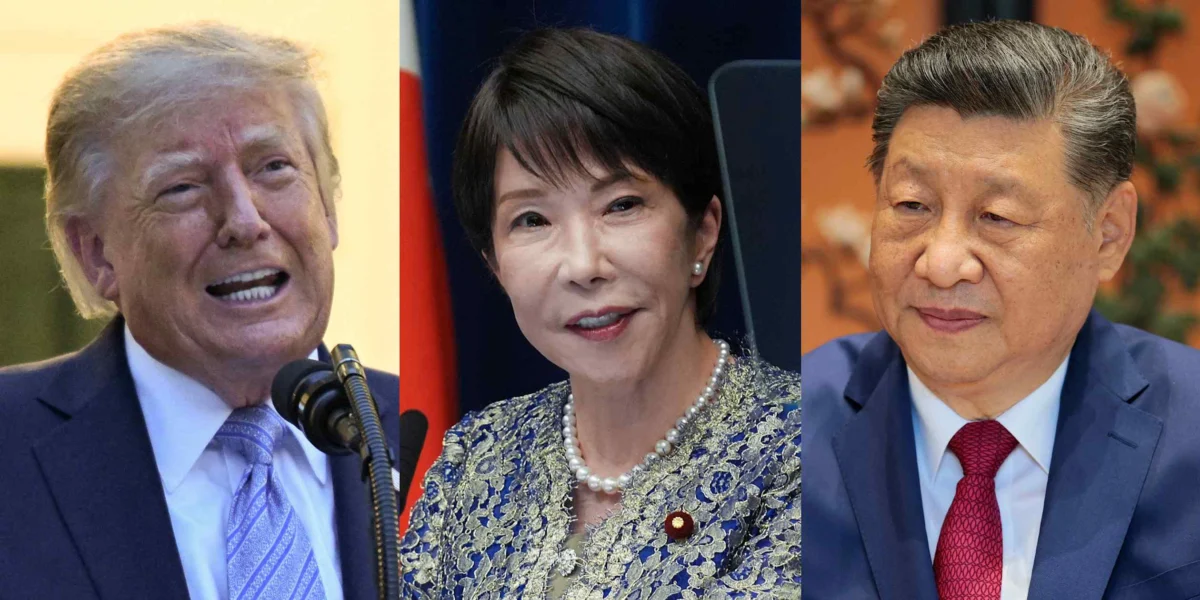
The United States is meticulously crafting an elaborate reception for Chinese President Xi Jinping’s upcoming visit to Washington later this week, a diplomatic overture that includes plans for an exceptional airport greeting by President Donald Trump and an opulent state dinner. This high-stakes summit, anticipated to be a focal point of international diplomacy, will be scrutinized with particular intensity by America’s key ally, Japan. Tokyo’s own bilateral relationship with Beijing is currently mired in a period of profound frostiness, creating a complex regional backdrop for the Washington-Beijing encounter. The forthcoming summit, scheduled to commence on [Insert Specific Date of Xi’s Arrival, e.g., September 24, 2026], represents a significant moment in the often-turbulent U.S.-China relationship, one that carries substantial implications for global economic stability, regional security, and the intricate web of international alliances.
Strategic Significance of the State Visit
The decision to accord President Xi Jinping a rare airport welcome by President Trump underscores the administration’s desire to signal a renewed emphasis on direct engagement with Beijing, despite ongoing areas of contention. This gesture, typically reserved for leaders with whom the U.S. enjoys particularly robust ties, suggests an effort to de-escalate tensions and foster a more constructive dialogue. The state dinner, a hallmark of diplomatic pageantry, further amplifies the importance the U.S. administration is placing on this engagement. Such events are designed not only to facilitate substantive discussions but also to project an image of stability and seriousness to both domestic and international audiences.
The timing of President Xi’s visit is particularly noteworthy. It follows closely on the heels of President Trump’s planned meeting with Japanese Prime Minister Sanae Takaichi. This juxtaposition of meetings highlights the delicate balancing act the U.S. is performing in its Asia policy. Engaging directly with China while simultaneously reassuring key regional partners like Japan is a central challenge for American foreign policy. Prime Minister Takaichi’s visit to Washington, reportedly on [Insert Specific Date of Takaichi’s Meeting, e.g., September 22, 2026], will provide an opportunity for the U.S. to brief its ally on the anticipated agenda and outcomes of the Xi summit, as well as to reaffirm the strength of the bilateral security alliance.
Deep Freeze in U.S.-Japan-China Relations: A Historical Perspective
Japan’s current strained relations with China are not a new phenomenon but rather a culmination of decades of simmering historical grievances, territorial disputes, and evolving economic and geopolitical competition. Since the normalization of diplomatic relations between Japan and the People’s Republic of China in 1972, the relationship has navigated periods of both cooperation and significant friction. Key flashpoints have included historical interpretations of wartime atrocities, territorial disputes over the Senkaku/Diaoyu Islands in the East China Sea, and China’s rapidly expanding military and economic influence in the region.
In recent years, under President Xi Jinping’s leadership, China’s assertive foreign policy has amplified these concerns for Japan. The increasing frequency of Chinese coast guard and maritime militia activities around the disputed islands has led to heightened tensions and a greater reliance by Japan on its security alliance with the United States. The economic dimension has also become increasingly complex, with Japan seeking to diversify its supply chains and reduce its dependence on China while still acknowledging the substantial trade interdependence. Data from the Japan External Trade Organization (JETRO) consistently shows China as a major trading partner for Japan, with bilateral trade volume reaching [Insert relevant trade volume data, e.g., approximately $300 billion in 2025], underscoring the economic stakes involved in any significant deterioration of relations.
U.S.-Japan Security Alliance: A Cornerstone of Regional Stability
The U.S.-Japan security alliance, formalized by the Treaty of Mutual Cooperation and Security, remains a linchpin of regional stability in the Indo-Pacific. This alliance, in place since 1960, has evolved to address contemporary security challenges, including the rise of China, North Korea’s nuclear program, and maritime security in the South China Sea. The upcoming meetings in Washington are expected to reaffirm the U.S. commitment to Japan’s security and explore strategies for enhanced deterrence and defense cooperation.
During Prime Minister Takaichi’s visit, discussions are likely to center on [mention potential discussion topics, e.g., joint military exercises, missile defense capabilities, and coordinated responses to regional security threats]. The U.S. Department of Defense has consistently allocated significant resources to maintaining its military presence in the Indo-Pacific, with [mention relevant data, e.g., over 50,000 U.S. troops stationed in Japan and South Korea], a testament to the strategic importance of the region. Any perceived weakening of this alliance could embolden regional adversaries and destabilize the existing security architecture.
The Agenda for the Xi-Trump Summit: Balancing Competition and Cooperation
The agenda for President Trump and President Xi’s summit is expected to be multifaceted, encompassing areas of both intense competition and potential cooperation. Key discussion points will likely include:
- Trade and Economic Relations: Persistent trade imbalances, intellectual property protection, market access, and the potential for further tariff impositions or reductions will be central. The U.S. administration has expressed concerns over China’s trade practices, while China has sought to portray itself as an advocate for free trade against protectionist tendencies. Recent trade data from [mention a relevant economic body, e.g., the U.S. Bureau of Economic Analysis] indicates that the bilateral trade deficit with China remained substantial in [mention a recent year, e.g., 2025], at approximately [insert deficit figure, e.g., $250 billion], a persistent point of friction.
- Geopolitical and Security Issues: The South China Sea, Taiwan Strait, and North Korea’s nuclear ambitions are perennial areas of tension. The U.S. is likely to reiterate its commitment to freedom of navigation and international law, while China will defend its territorial claims. Discussions on de-escalation and risk reduction mechanisms in these sensitive areas will be crucial.
- Technological Competition: The race for dominance in advanced technologies, including artificial intelligence, 5G networks, and semiconductors, is a defining feature of the U.S.-China rivalry. Issues surrounding technology transfer, cybersecurity, and the global supply chain for critical components will be on the table.
- Global Challenges: While competition is a dominant theme, the two leaders may also explore avenues for cooperation on transnational issues such as climate change, pandemic preparedness, and counter-terrorism, areas where collaborative efforts are arguably essential for global progress.
Reactions and Expectations from Key Parties
While official statements from Washington and Beijing have been carefully calibrated to project a measured optimism, underlying concerns and differing expectations are evident.
From Japan: Tokyo will be closely observing the U.S.-China summit for any indications of a potential realignment in U.S. foreign policy towards China. Prime Minister Takaichi’s government has consistently advocated for a strong U.S.-Japan alliance as a bulwark against regional instability. A softening of the U.S. stance towards China without adequate consultation with Japan could be viewed with apprehension. Following her meeting with President Trump, a statement from the Japanese Ministry of Foreign Affairs might express [inferred statement, e.g., "Japan’s expectation that the U.S.-China summit will contribute to regional peace and stability, and reaffirm the importance of close coordination between Japan and the United States in addressing shared challenges."].
From China: Beijing will likely view the elaborate welcome as an attempt by the U.S. to manage the relationship and avoid further escalation. President Xi will be seeking to project an image of China as a responsible global power, capable of engaging constructively with the U.S. while also defending its national interests. Chinese state media, such as [mention a relevant Chinese media outlet, e.g., Xinhua News Agency], might report on the visit with a focus on [inferred focus, e.g., "the mutual desire for stable U.S.-China relations and the potential for cooperation on global economic recovery, while also highlighting China’s commitment to its core principles and territorial integrity."].
From the United States: The Trump administration will be aiming to demonstrate its capacity to engage directly with adversaries and to pursue its national interests through a combination of assertive diplomacy and negotiation. The success of the summit will likely be judged by the administration on its ability to secure concessions from China on key economic issues and to establish clearer lines of communication on security matters.
Broader Implications for the Global Order
The outcomes of the Xi-Trump summit will reverberate far beyond the bilateral relationship, shaping the broader geopolitical landscape. A successful summit that de-escalates tensions and fosters greater predictability could have positive implications for global economic growth and investor confidence. Conversely, a breakdown in dialogue or a significant escalation of disputes could lead to increased market volatility, further supply chain disruptions, and heightened geopolitical risks.
For other regional players, such as South Korea, Australia, and the nations of Southeast Asia, the U.S.-China dynamic remains a critical factor in their own foreign policy calculations. These countries will be closely monitoring the Washington summit for signals about the future trajectory of U.S.-China relations and its impact on regional security and economic interdependence. The delicate dance between competition and cooperation, so evident in the upcoming U.S.-China engagement, will continue to define the intricate geopolitical fabric of the 21st century. The carefully orchestrated welcome for President Xi Jinping is not merely a diplomatic courtesy; it is a high-stakes maneuver in a complex global chess game, with ramifications that will be felt across continents.