Lina Wu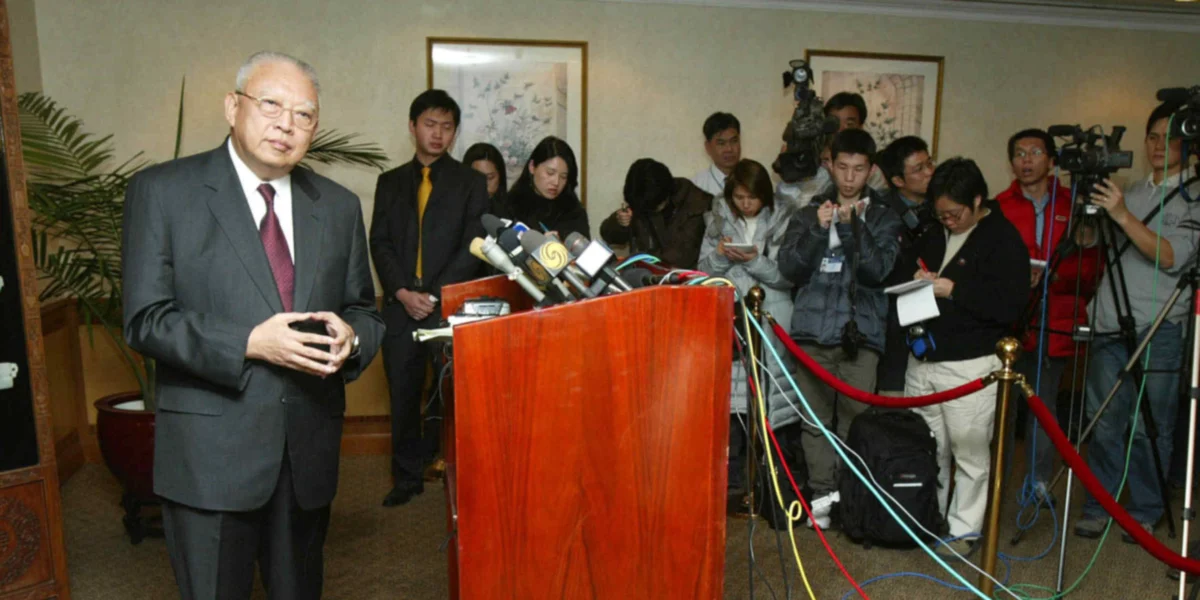
Hong Kong’s first chief executive following its handover from British to Chinese rule, Tung Chee-hwa, passed away on Tuesday at the age of 89, his office announced. The prominent businessman, who transitioned from a career in the global shipping industry to become a pivotal political figure in Hong Kong, died peacefully surrounded by his family. While the specific cause of death was not disclosed, his passing marks the end of an era for the city he led through a period of profound change and enduring political evolution.
Tung Chee-hwa, also widely known as C.H. Tung, was a consequential figure in the post-1997 political landscape of Hong Kong. His tenure as chief executive, from 1997 to 2005, was defined by both significant economic challenges and a controversial attempt to introduce a national security law, which ultimately galvanized widespread public opposition and foreshadowed future political tensions that would reshape the city’s trajectory. In his later years, Tung largely withdrew from public life, stepping down from influential roles such as chairman of the pro-Beijing think tank Our Hong Kong Foundation and as an independent director of Alibaba Group Holding. He concluded his service to the central government in March 2023, resigning as vice chairman of the Chinese People’s Political Consultative Conference (CPPCC).
A Legacy Defined by Transition and Controversy
The death of Tung Chee-hwa was met with official pronouncements from various levels of government. China’s state news agency, Xinhua, published a brief but significant obituary on Wednesday, eulogizing Tung as a "prominent patriot" and an "intimate friend of the Chinese Communist Party." The report, which noted his precise time of death as 9:57 p.m. local time on Tuesday, underscored Beijing’s recognition of his decades-long service and loyalty.
Hong Kong’s current Chief Executive, John Lee, expressed his condolences, acknowledging Tung’s leadership during his two terms. Lee credited Tung with successfully navigating Hong Kong through the "turmoil of the Asian financial crisis" and other "challenges." However, his statement notably omitted any specific mention of the controversial Article 23 national security legislation or Tung’s housing policies, which were significant points of contention during his administration. Former chief executives Donald Tsang Yam-kuen and Leung Chunying also issued statements honoring Tung’s contributions.
Tung’s political ascent and business acumen were deeply intertwined with his family’s storied history. Born in Shanghai on July 7, 1937, amidst the escalating Japanese invasion of China, he was the eldest son of Tung Chao-yung, a visionary shipping magnate who founded Orient Overseas, a company that would grow into a global shipping powerhouse. The family relocated to Hong Kong in 1948, just as the Chinese Communist Party consolidated its rule on the mainland. Their business interests maintained strong connections with the Kuomintang, the Nationalist Party that established its government in Taiwan after the Chinese Civil War. This familial and business legacy, with its deep roots in both mainland China and Taiwan, and its outward-looking global perspective, shaped Tung’s unique position in Hong Kong’s transition.
From Shipping Mogul to Chief Executive
Tung Chee-hwa’s early life and education laid the foundation for his multifaceted career. He pursued higher education in the United Kingdom, earning a bachelor’s degree in marine engineering from the University of Liverpool in 1960. His time in Liverpool instilled in him a lasting passion for the city’s famed football club. The University of Liverpool later recognized his achievements by conferring an honorary doctorate in law upon him in 1997.
Following his graduation, Tung spent nearly a decade in the United States, gaining valuable experience, including a period working for General Electric. He eventually returned to Hong Kong to join the family business, taking the helm of Orient Overseas in 1979, three years after his father’s death. For a considerable period, he operated under the shadow of his father’s considerable reputation, often referred to as "C.Y. Tung’s son."
A pivotal moment in his business career, and arguably a turning point that paved his way into politics, occurred in the mid-1980s. Orient Overseas faced a severe financial crisis. The company was ultimately rescued through a complex consortium that included major Japanese financial institutions, the Bank of China, and China Merchants Group, a Hong Kong-based state-owned conglomerate with significant shipping interests. This period of financial restructuring is widely believed to have deepened Tung’s ties with Beijing, positioning him as a potential leader for Hong Kong’s future.
The Stormy Years of the First Chief Executive
In 1995, Tung Chee-hwa was virtually hand-picked to become Hong Kong’s first chief executive, succeeding Chris Patten, the last British-appointed governor. His selection was seen by many as a strategic move by Beijing to ensure a smooth transition and a leader sympathetic to its interests. At the time, Lu Ping, then the head of the Hong Kong and Macao Affairs Office, had alluded to the likelihood of a "low-profile ‘dark horse’" emerging as the first chief executive.
Tung’s first term, which began on July 1, 1997, the day of the handover, was marked by significant economic headwinds. He was tasked with steering Hong Kong through the severe Asian Financial Crisis of 1997-1998, a period that saw the Hong Kong dollar and stock market plummet. His administration implemented various measures, including interventions in the stock market, which were credited by some with stabilizing the economy. However, his legacy remains indelibly linked to the controversial attempt to enact a national security law under Article 23 of the Basic Law, Hong Kong’s mini-constitution.
Article 23: A Defining Challenge
The proposed national security legislation, intended to prohibit treason, secession, sedition, and subversion against the Chinese government, ignited widespread public alarm and ignited a mass protest movement. On July 1, 2003, the sixth anniversary of the handover, an estimated half a million people took to the streets of Hong Kong, an unprecedented display of public dissent. The scale and intensity of the protests forced the government to shelve the legislation, a significant setback for Tung’s administration and a powerful demonstration of the city’s commitment to civil liberties and freedoms. This event is often viewed as a precursor to the more assertive political movements that would emerge in Hong Kong in subsequent years.
Following the defeat of the Article 23 bill, Tung continued his term but ultimately resigned in March 2005, citing health reasons. His resignation marked the end of his public service as chief executive, though he remained a prominent figure in Hong Kong and mainland Chinese political circles. On the day of his resignation, he was appointed vice chairman of the CPPCC, a key advisory body to the Chinese central government, a role he held for many years.
A Shifting Political Landscape and Enduring Influence
The ramifications of Tung Chee-hwa’s experience with Article 23 echoed through Hong Kong’s political development. Decades later, in June 2020, Beijing unilaterally imposed a comprehensive national security law on Hong Kong, a move that drastically altered the city’s political and social fabric, significantly curtailing freedoms and dismantling opposition movements. In March 2024, Hong Kong’s own government enacted its version of security legislation based on Article 23, this time with little public opposition, reflecting the profound shift in the city’s autonomy and civil society. The Safeguarding National Security Ordinance was passed unanimously by a Legislative Council that had been significantly reshaped by Beijing’s electoral reforms, ensuring its swift approval.
Beyond his political career, Tung Chee-hwa remained engaged in business and civic affairs. He served as an independent director for Alibaba Group Holding from September 2014, a period coinciding with the Chinese tech giant’s highly anticipated New York IPO. Upon his departure from the board, Alibaba’s directors acknowledged his contributions, stating he exemplified "the highest standards of care and committed service."
The family’s shipping empire underwent a significant transformation in 2018 when COSCO Shipping Holdings, a Chinese state-owned enterprise, acquired Tung Chee-hwa and his brother Chee-chen’s combined 68.7% stake in Orient Overseas in a deal valued at $6.3 billion. This transaction cemented COSCO’s position as the world’s third-largest shipping company. Alan Tung Lieh-sing, Tung’s son and an executive within the shipping firm, characterized the sale as a "solely a commercial decision."
Later Years and A Lingering Public Presence
In his final years, Tung Chee-hwa’s public appearances became less frequent, often signaling a decline in his health. In March 2021, he fell during the opening session of the National People’s Congress. He also missed the annual National Day celebration in Hong Kong in October of the same year, with reports later emerging that he had undergone undisclosed surgery. His absence was also noted at the official 25th handover anniversary ceremony in July 2022, which was attended by President Xi Jinping.
One of the more notable events of his later life occurred in September 2022, when city land registry records revealed that Tung, then 84 years old, had purchased the Mid-Levels flat he had been renting since becoming chief executive. The transaction, valued at 160 million Hong Kong dollars (approximately $20.4 million USD), made him a first-time homeowner late in life.
Tung Chee-hwa’s life story encapsulates a period of profound transformation for Hong Kong, from its colonial past to its integration within the People’s Republic of China. His journey from a prominent international businessman to the city’s first chief executive, and his subsequent role as a key figure in mainland China’s political advisory system, marked him as a central actor in the region’s complex modern history. His legacy, intertwined with both economic development and political contention, will continue to be debated and analyzed as Hong Kong navigates its evolving relationship with mainland China.