Gilang Muhammad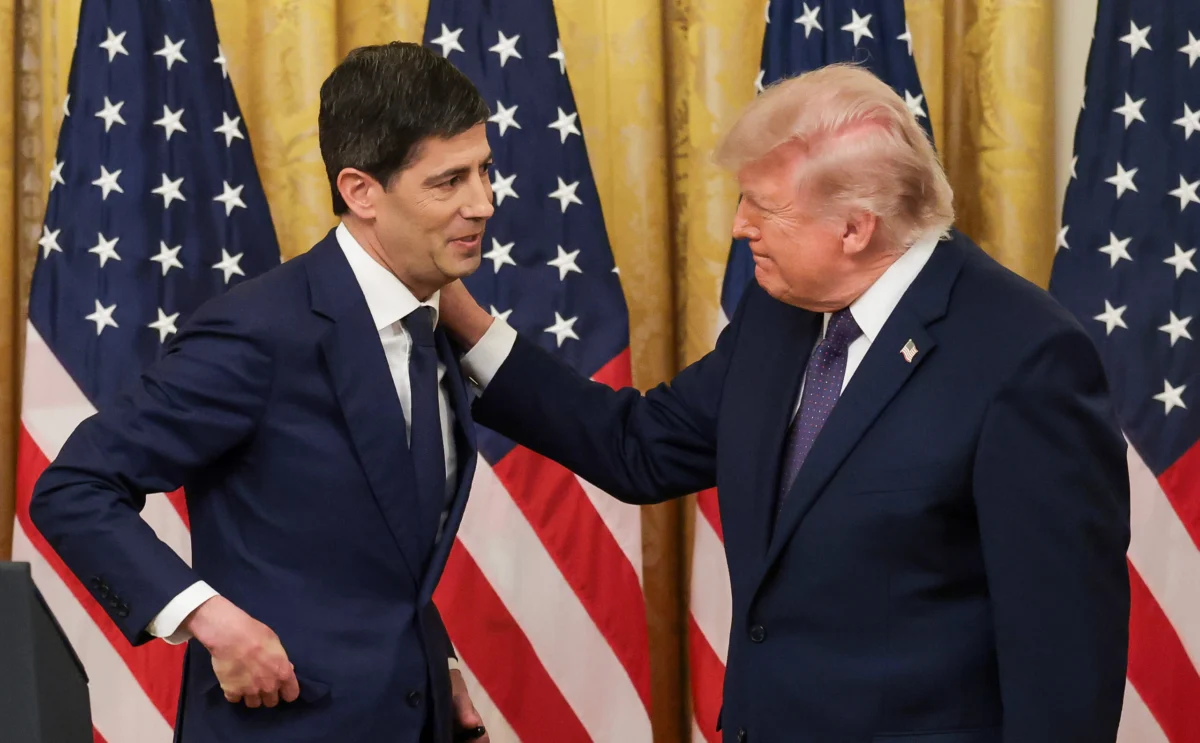
With a pivotal Federal Reserve meeting just ten days away, the Trump administration has launched an intensive and unusually broad public pressure campaign aimed at preventing an anticipated interest rate hike, and in some instances, advocating for rate cuts. This concerted effort, involving the President, Vice President, Treasury Secretary, and a senior economic counselor, marks a significant escalation in the administration’s long-standing critique of the central bank, raising profound questions about the sanctity of Fed independence and the trajectory of U.S. monetary policy.
A Coordinated Offensive on Monetary Policy
The past week has witnessed a cascade of statements from high-ranking administration officials, all converging on a singular message: the Federal Reserve should refrain from raising interest rates. This coordinated offensive began to crystallize as the September 15-16 Federal Open Market Committee (FOMC) meeting loomed, a session where markets are currently pricing in a roughly 60% probability of a rate increase. The timing places new Fed Chairman Kevin Warsh in a challenging position, balancing the central bank’s dual mandate of maximum employment and price stability against overt political influence.
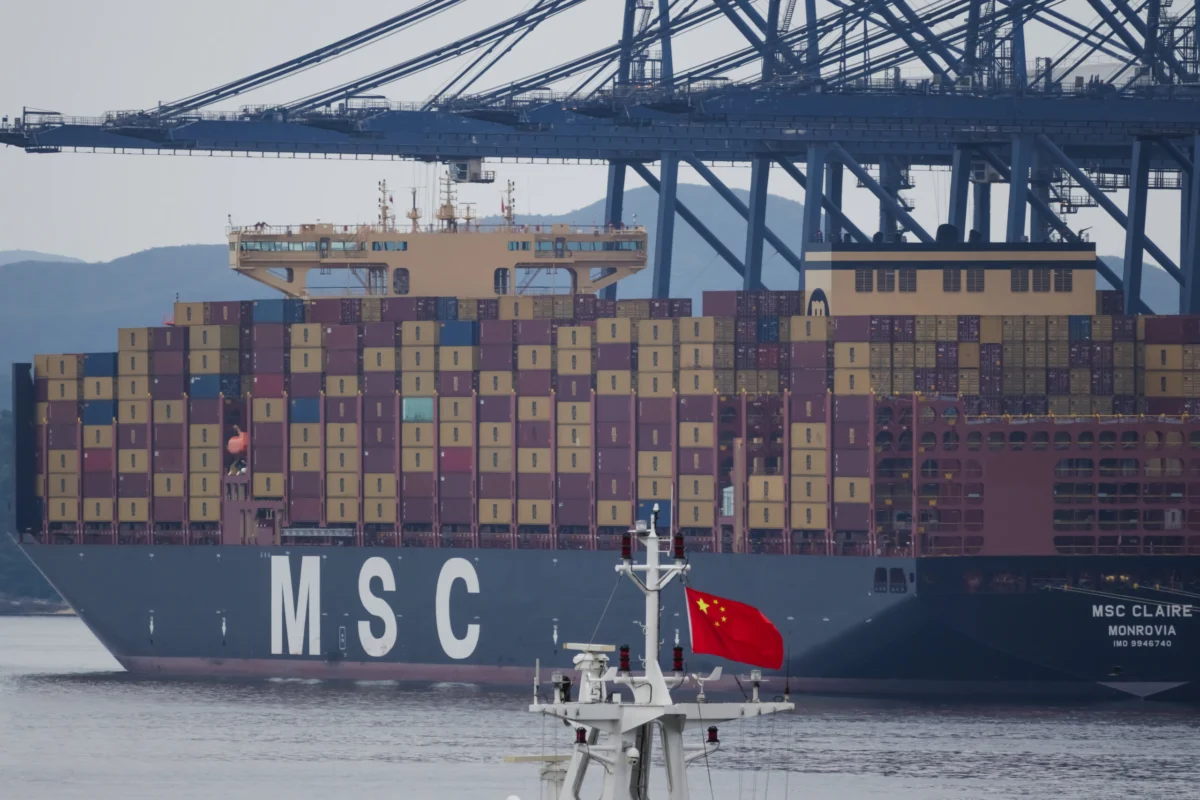
While President Donald Trump has notably steered clear of the direct, often caustic criticism he leveled against former Chair Jay Powell, his recent actions have introduced a new dimension to the pressure. On Friday, the President escalated the stakes by issuing an unprecedented threat via Truth Social: he would halt trade with countries running trade surpluses with the U.S. unless the Fed cuts interest rates. This marks a significant departure, directly linking trade policy, a core executive function, to the independent decisions of the central bank, a linkage never before explicitly made by a U.S. president.
Following the President’s online declaration, senior economic counselor Peter Navarro amplified the administration’s message in an interview with former Trump advisor Steve Bannon. Navarro, known for his hawkish stance on trade and critical views on traditional economic policy, characterized a potential rate hike as "careless" and warned it "would hit precisely the sectors America needs to prosper most." In a move that drew immediate attention, he controversially labeled members of the rate-setting Federal Open Market Committee as "clowns," while expressing confidence that Chairman Warsh was attempting to "do the right thing."
Earlier in the week, Vice President JD Vance joined the chorus, stating unequivocally, "We believe that the Fed should be lowering interest rates." He underscored the administration’s efforts to keep rates low through other means, adding, "but it would be nice to have some help from the Federal Reserve." Adding a more nuanced, but still critical, perspective, Treasury Secretary Scott Bessent, in a CNBC interview, pointed out that the Fed typically avoids raising rates during a supply shock unless significant second- or third-order inflationary effects are clearly evident. This argument implies that current inflationary pressures are primarily supply-driven and do not warrant a tightening of monetary policy.
The Federal Reserve’s Crossroads: Data and Independence
The administration’s intensified pressure arrives at a particularly sensitive juncture for Chairman Warsh and the FOMC. The upcoming meeting is not only critical for setting monetary policy but also for reaffirming the Fed’s long-cherished independence, a principle seen as vital for insulating economic decisions from short-term political expediency. Warsh himself has publicly stated that presidential communications have no bearing on his decisions and, in July congressional testimony, cited the Fed’s steady rates as evidence of its independence. Yet, reports, including one from The Wall Street Journal last month, suggest President Trump has engaged in repeated conversations with Warsh since his appointment, a claim publicly supported by several aides, though denied by the President himself. Warsh has, however, acknowledged that politicians have a right to comment on Fed policy.
Imminent Decision and Market Expectations

The financial markets are closely scrutinizing incoming economic data, which presents a mixed picture. The approximately 60% probability of a rate hike for the September meeting, as indicated by the CME FedWatch Tool, was somewhat bolstered by a strong jobs report released last Friday. This report painted a picture of robust employment growth, traditionally a factor that could prompt the Fed to consider tightening monetary policy to preempt inflationary pressures. However, other data points and the administration’s specific arguments present a counter-narrative.
The Economic Data Divide: Inflation vs. Growth
At the heart of the debate is the interpretation of current economic indicators, particularly inflation and employment figures. Administration officials have frequently highlighted the recent three-month annualized rate of the core Consumer Price Index (CPI), which stood at a modest 1.6%. They contrast this with the Federal Reserve’s preferred inflation gauge, the core Personal Consumption Expenditures (PCE) price index, which showed a three-month annualized rate of just over 3%. The distinction is crucial: CPI measures what urban consumers pay for a basket of goods and services, while PCE has a broader scope, includes more categories, and accounts for consumer substitution, making it generally preferred by the Fed for its more comprehensive view of price changes.
The administration’s argument posits that strong economic growth, rather than being inflationary, is a sign of an expanding productive capacity that can absorb demand without significant price increases. This view aligns with their broader supply-side economic philosophy, which emphasizes tax cuts and robust capital investment as drivers of economic expansion. On Friday, President Trump further articulated this stance on Truth Social, asserting that the U.S. economy’s exceptional growth should inherently lead to the lowest interest rates globally.
However, several Fed officials express a differing, more cautious view. They point to the fact that inflation has persistently run substantially above the Fed’s 2% target for five years. Moreover, they see signs of broad-based inflationary pressures extending beyond specific factors like Trump’s tariffs or rising energy costs attributed to the U.S. war with Iran. At the July FOMC meeting, where interest rates were left unchanged, three members—Beth Hammack, Neel Kashkari, and Lorie Logan—dissented, advocating for a quarter-point hike, underscoring internal concerns about persistent inflation.
Chairman Warsh, in his much-anticipated speech at Jackson Hole, reinforced the central bank’s primary focus on price stability. He noted a concerning statistic: 54% of the 199 components within the PCE price measure had risen by more than 3% over the preceding 12 months. This widespread price acceleration suggests that inflationary pressures are not isolated to a few sectors but are permeating the broader economy, a condition that typically warrants a monetary policy response.
Challenging Economic Orthodoxy: The Supply-Side Argument
The administration’s economic argument directly challenges a core tenet of modern macroeconomic theory: the idea that an economy growing beyond its productive capacity risks generating inflation. The most prominent articulation of this concept is the Phillips Curve, which posits an inverse relationship between unemployment and inflation. According to this theory, tight labor markets and rising wages act as major conduits for inflationary pressures. It is precisely this theoretical framework that leads markets and many economists to interpret a strong jobs report as increasing the probability of a Fed rate hike.
Last Friday’s jobs report, while showing robust employment gains, also presented a nuanced picture regarding wages. Average hourly earnings rose by 0.3% in August and 3.1% from a year earlier, while the unemployment rate remained steady at 4.1%. While a 4.1% unemployment rate is indicative of a tight labor market, the wage growth figures, particularly the year-over-year percentage, could be interpreted by some as contained rather than rapidly accelerating, providing a point of contention in the Phillips Curve debate.

The administration’s counter-argument hinges on the belief that increasing the supply side of the economy, through policies like tax cuts and fostering capital investment, fundamentally expands the economy’s capacity to grow without necessarily causing inflation. They contend that such measures effectively shift the aggregate supply curve outwards, allowing for higher output without a corresponding increase in the price level. This perspective suggests that current inflationary signals are either transient, supply-chain driven, or simply a misreading of a fundamentally healthy, expanding economy.
The AI Factor: Short-Term Demand, Long-Term Productivity
A contemporary example used to support the administration’s supply-side argument is the massive investment flowing into artificial intelligence (AI). The long-term projection is that AI will dramatically increase productivity across various sectors, thereby expanding the economy’s productive capacity and ultimately dampening inflationary pressures. However, there’s a significant "timing problem" with this argument. While AI promises future productivity gains, the current flood of investment into building AI infrastructure – including demand for specialized chips, data centers, and high-tech equipment – is itself a source of demand-side pressure, raising prices for the necessary components and services in the short term. This immediate inflationary impulse, driven by intense investment demand, complicates the administration’s long-term supply-side vision.
Monetary Policy Meets Electoral Politics
The intensified pressure on the Fed is inextricably linked to the political calendar. The September FOMC meeting comes just two months before the November midterm elections. Public opinion polls consistently show widespread voter dissatisfaction with higher prices and interest rates, two direct consequences of inflationary pressures and the Fed’s policy responses. For the incumbent administration, a rate hike, which would further increase borrowing costs for consumers and businesses, could exacerbate these voter concerns and potentially impact electoral outcomes. This political reality undoubtedly adds urgency to the administration’s desire for lower rates, framing the economic debate within a clear electoral context. The historical precedent of administrations seeking to influence the Fed before elections is not new, but the current administration’s public and direct approach is notable. For instance, in May 2019, during Trump’s first term, Vice President Mike Pence, Treasury Secretary Steve Mnuchin, and economic advisor Larry Kudlow all publicly called for the Fed to consider cutting rates. The Fed did not immediately respond to that pressure but did initiate a series of rate cuts two months later, highlighting the complex interplay between political rhetoric and central bank decisions.
Critical Indicators and Future Trajectories
As the deadline for the FOMC meeting approaches, markets and policymakers alike will be keenly focused on the upcoming Consumer Price Index (CPI) report, scheduled for release on Friday. Fed officials have explicitly stated that this report will serve as a critical gauge for assessing whether inflationary pressures are genuinely easing or continuing to accelerate. The data from this report could decisively influence whether the Fed opts for a rate hike or chooses to hold rates steady. It is noteworthy that no FOMC member has publicly discussed rate cuts recently, indicating that the internal Fed debate remains centered on whether to raise rates or maintain the current stance, rather than contemplating easing.
The implications of this ongoing standoff are far-reaching. For the Federal Reserve, the decision at the September meeting will not only shape the immediate economic outlook but also serve as a crucial test of its institutional independence in the face of overt political pressure. A decision to raise rates, despite the administration’s pleas, would reaffirm the Fed’s commitment to its mandate, regardless of political ramifications. Conversely, a decision to hold or even cut rates could be interpreted by some as yielding to political influence, potentially undermining the central bank’s credibility and increasing uncertainty in financial markets.
For the Trump administration, the success or failure of its pressure campaign could significantly impact its perceived control over economic policy, especially heading into the midterms. The administration’s argument—that economic growth does not inherently cause inflation and that supply-side reforms can expand capacity—represents a fundamental challenge to prevailing economic theories. The outcome of the Fed’s decision, and its subsequent impact on inflation and growth, will provide real-world data to either validate or refute this economic philosophy.
Ultimately, the confluence of economic data, political exigency, and the principle of central bank independence sets the stage for a momentous decision. The Federal Reserve’s actions in the coming days will not only determine the short-term trajectory of interest rates but also cast a long shadow over the future relationship between the nation’s political leadership and its independent monetary authority.