Lina Wu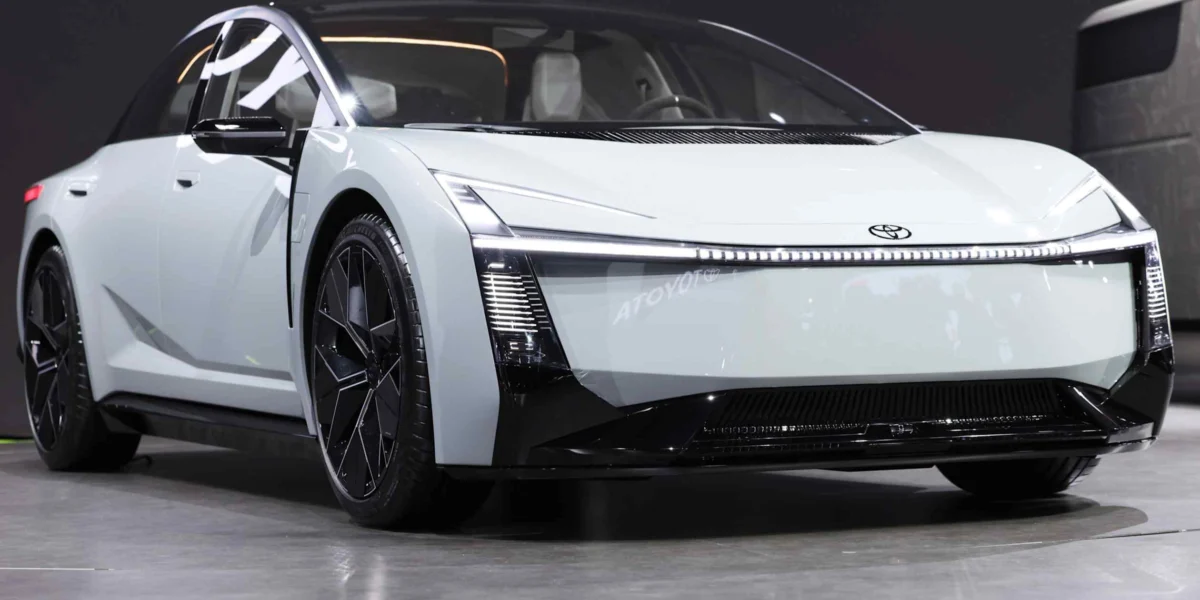
NAGOYA, Japan — Toyota Motor Corporation has announced its strategic intention to commence production of the next-generation Corolla in China in 2028. This significant move is underpinned by the adoption of a versatile vehicle platform designed to accommodate a range of powertrain technologies, a critical adaptation for the Japanese automaker as it navigates a decelerating Chinese market where its competitive standing has faced challenges. The decision underscores Toyota’s commitment to the world’s largest automotive market, even amidst evolving consumer preferences and intensifying competition.
Strategic Shift in a Maturing Market
The automotive landscape in China is undergoing a profound transformation. For years, it was the engine of global growth for many manufacturers, characterized by rapid expansion and a burgeoning middle class eager for personal mobility. However, recent years have witnessed a discernible slowdown in sales growth, coupled with an aggressive surge in the popularity of electric vehicles (EVs) and advanced intelligent technologies, primarily driven by domestic Chinese brands. Toyota, traditionally known for its robust hybrid technology and conservative approach to full electrification, has found itself in a more challenging competitive environment.
The Corolla, a nameplate synonymous with reliability and widespread appeal globally, has been a consistent performer for Toyota in China. However, to maintain its market share and appeal to a broader spectrum of consumers in the coming years, a fundamental evolution of its offerings is required. The decision to embrace a flexible powertrain platform for the next-generation Corolla is a direct response to this dynamic. This adaptability will allow Toyota to offer variants that include traditional internal combustion engines (ICE), advanced hybrid electric vehicles (HEVs), and potentially plug-in hybrid electric vehicles (PHEVs) or even fully electric (BEV) versions, depending on market demand and regulatory shifts.
A Timeline of Adaptation and Investment
The announcement, made by Nikkei staff writers on October 17, 2026, places the commencement of production at a crucial juncture. The year 2028 signifies a deliberate timeframe, allowing ample opportunity for the development, testing, and refinement of the new platform and its associated powertrain options. This period also allows for the necessary adjustments within Toyota’s Chinese joint venture operations, ensuring that manufacturing processes are optimized for the new technologies.
The journey to this decision likely began years prior, with extensive market research, feasibility studies, and technological development. Toyota has historically prided itself on meticulous planning and a phased approach to new technologies. The Tokyo Mobility Show in the fall of 2025, where the company showcased elements of its future vehicle designs and technological ambitions, likely served as an important public preview and a platform for gauging industry and consumer reaction to its forward-looking strategies. The "new Corolla" alluded to in the initial report would have been a central piece of that showcase, hinting at the platform flexibility that is now being confirmed.
Supporting Data and Market Context
China’s automotive market, while slowing in overall growth rate, remains the largest in the world. In 2025, for instance, new vehicle sales in China are projected to have reached approximately 27 million units, a slight increase from the previous year, but significantly lower than the double-digit growth rates seen in the past decade. Within this market, the share of new energy vehicles (NEVs), which includes EVs and PHEVs, has surged dramatically. By the end of 2025, NEVs are estimated to have accounted for over 30% of all new car sales in China, a figure that is expected to continue its upward trajectory.
This shift poses a significant challenge for traditional automakers like Toyota, whose core strengths have historically resided in ICE and hybrid technologies. While Toyota’s hybrid sales have remained strong, the pace of electrification adoption by domestic Chinese brands, such as BYD, NIO, and XPeng, has been remarkable. These companies have not only captured significant market share but have also set new benchmarks for in-car technology, connectivity, and autonomous driving features, areas where Toyota has historically been perceived as more cautious.
The Corolla’s traditional appeal has been its balance of affordability, fuel efficiency, and reliability. However, in the current Chinese market, consumers are increasingly seeking vehicles that offer advanced digital experiences, intelligent driver-assistance systems (ADAS), and a clear commitment to sustainable mobility. The flexible platform strategy for the Corolla is designed to address these evolving demands by enabling Toyota to offer a broader spectrum of powertrains and potentially integrate more advanced digital features more seamlessly.
Inferred Reactions and Industry Implications
While official statements from Toyota’s Chinese joint venture partners, such as FAW Toyota and GAC Toyota, have not been explicitly detailed in the initial report, their role in the production and distribution of the next-generation Corolla is paramount. These partnerships are crucial for navigating the local regulatory environment, supply chains, and consumer preferences. It is logical to infer that these entities have been deeply involved in the strategic planning and will be integral to the successful implementation of the new production strategy. Their operational readiness and investment in new manufacturing capabilities will be key.
The broader implications of Toyota’s move are significant for the global automotive industry. It signals a strategic pivot for one of the world’s largest automakers, acknowledging the accelerating shift towards electrification and digital integration, particularly in a market as influential as China.
- Competitive Landscape: This strategy aims to shore up Toyota’s position against rapidly advancing domestic Chinese competitors. By offering powertrain diversity, Toyota can cater to a wider range of consumer needs and price points, from those still prioritizing fuel efficiency with hybrids to those embracing full electric mobility.
- Technological Adoption: The emphasis on a flexible platform suggests a pragmatic approach to technological adoption. Instead of committing solely to one future, Toyota is building in the ability to adapt as the market matures and consumer preferences solidify. This could involve leveraging its established hybrid expertise while simultaneously developing and integrating advanced battery electric technologies.
- Supply Chain Adjustments: The production shift will necessitate adjustments in Toyota’s global and local supply chains. Sourcing of battery components, electric motor technology, and advanced electronic systems will become increasingly important, potentially leading to new partnerships and investments in China’s robust battery manufacturing ecosystem.
- Global Rollout Potential: While the immediate focus is China, the lessons learned and the platform developed for the next-generation Corolla could very well influence future models released in other markets. This could accelerate Toyota’s global electrification and diversification efforts.
Future Outlook and Challenges
The success of the next-generation Corolla in China will hinge on several factors. Firstly, the execution of the flexible powertrain strategy must be seamless, offering genuine advantages in terms of performance, efficiency, and cost. Secondly, Toyota must enhance its appeal in areas where Chinese competitors currently lead, such as in-car connectivity, infotainment systems, and the integration of advanced driver-assistance technologies. The company’s recent investments in software development and digital services are likely intended to address these gaps.
Furthermore, the fluctuating regulatory landscape in China, particularly concerning emissions standards and EV incentives, will require continuous monitoring and adaptation. Toyota’s ability to remain agile and responsive to these changes will be crucial. The production of the Corolla in China by 2028 is not merely a manufacturing decision; it is a strategic imperative for Toyota to secure its future in a market that is increasingly defining the direction of the global automotive industry. The coming years will be a critical test of Toyota’s ability to blend its heritage of quality and reliability with the innovative spirit demanded by the modern Chinese consumer.