Lina Wu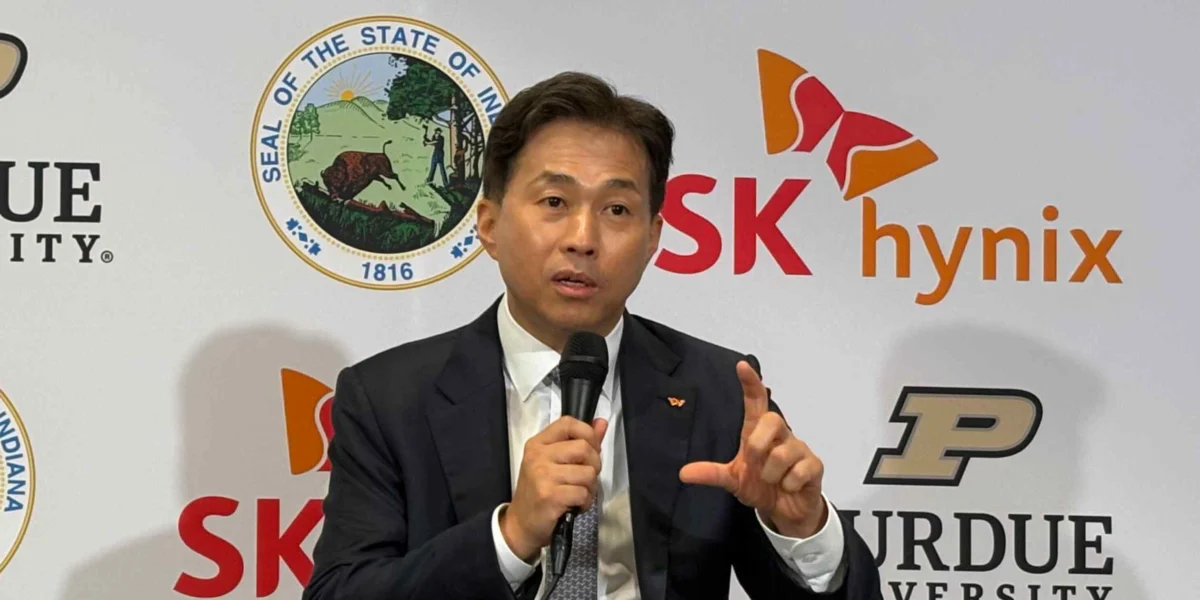
WEST LAFAYETTE, Indiana — South Korean chipmaker SK Hynix, a critical supplier of advanced memory chips to artificial intelligence leaders like Nvidia, has signaled a potential for further investment in the United States following the recent launch of its state-of-the-art manufacturing facility in Indiana. The company’s chief executive, Kwak Noh-Jung, expressed optimism regarding the future of the memory chip market, projecting a sustained period of robust demand driven by the burgeoning artificial intelligence sector, and anticipates that the global memory chip shortage will persist until the end of 2030. This outlook contrasts with some industry predictions that have hinted at a potential oversupply in the coming years.

SK Hynix’s new plant in West Lafayette represents a significant commitment to American soil, a move that aligns with broader U.S. government initiatives to bolster domestic semiconductor manufacturing capabilities. The facility, which is expected to create thousands of jobs and inject billions of dollars into the local and national economy, specializes in producing High Bandwidth Memory (HBM) chips, a crucial component for AI accelerators such as Nvidia’s graphics processing units (GPUs). These chips are indispensable for the intensive computations required by advanced AI models, from large language models to sophisticated machine learning algorithms.
The strategic importance of this investment cannot be overstated. The U.S. has been actively seeking to reduce its reliance on foreign semiconductor production, particularly in light of geopolitical tensions and supply chain disruptions that have become increasingly apparent in recent years. The CHIPS and Science Act, signed into law in 2022, provides substantial incentives for companies to establish and expand semiconductor manufacturing operations within the United States. SK Hynix’s Indiana facility is a direct beneficiary of this policy push, underscoring the effectiveness of such government support in attracting major foreign investment.

The Evolving Memory Chip Landscape
Kwak Noh-Jung’s assessment of the memory chip market’s trajectory is rooted in a fundamental shift in how these components are perceived and utilized. Historically, memory chips, particularly DRAM and NAND flash, were often viewed as commodity products subject to cyclical booms and busts driven by consumer electronics demand. However, the advent of AI has fundamentally altered this dynamic. The insatiable appetite of AI workloads for processing power and rapid data access has transformed memory chips into strategic enablers of technological advancement.
"We see no signal for chip oversupply risk or a potential downturn to come as demand from AI customers remains strong," Kwak stated, underscoring the persistent and growing demand for high-performance memory solutions. This strong demand is directly correlated with the exponential growth in AI model complexity and the increasing deployment of AI across various industries, from cloud computing and autonomous vehicles to scientific research and healthcare.

The projected duration of the memory chip shortage, extending to 2030, suggests a long-term imbalance between supply and demand. This forecast is likely influenced by several factors: the significant lead times required to build and ramp up new semiconductor fabrication plants (fabs), the ongoing innovation in AI that continuously pushes the boundaries of required computational power, and the potential for unforeseen demand surges.
A Timeline of Investment and Expansion
SK Hynix’s commitment to the U.S. did not materialize overnight. The company has been a significant player in the global semiconductor market for decades, but its recent focus on AI-specific memory has accelerated its strategic planning for U.S. expansion.

Early Engagements and Policy Influence: Discussions and exploratory meetings between SK Hynix executives and U.S. government officials likely began years prior to the Indiana announcement, aligning with the growing U.S. concern over semiconductor supply chain vulnerabilities. The passage of the CHIPS Act in August 2022 provided a crucial legislative framework and financial incentives that solidified these plans.
The Indiana Announcement: In December 2022, SK Hynix officially announced its intention to build a state-of-the-art semiconductor packaging facility in West Lafayette, Indiana. This initial announcement detailed plans for a significant capital investment and the creation of a substantial number of jobs. The facility was envisioned as a critical hub for advanced packaging technologies, which are essential for integrating HBM chips with CPUs and GPUs.

Construction and Development: Following the announcement, the company proceeded with the design, planning, and construction of the Indiana plant. This phase involved extensive collaboration with local and state authorities, as well as the development of a skilled workforce pipeline. The project timeline was ambitious, reflecting the urgency of increasing domestic chip production capacity.
Facility Launch and Operationalization: The recent launch of the Indiana plant marks a significant milestone. While the initial focus is on advanced packaging, the company has indicated that this facility could be a precursor to further investments, potentially including wafer fabrication in the future. The operationalization of the plant signifies the commencement of HBM chip production and packaging for the U.S. market and its global partners.

Supporting Data and Market Dynamics
The demand for HBM chips is a key indicator of the AI-driven memory market surge. According to industry analysis firms, the global HBM market is projected to experience a compound annual growth rate (CAGR) of over 50% in the coming years. This rapid expansion is driven by the increasing adoption of AI in data centers, which are the primary consumers of AI accelerators.
- HBM Market Growth: Projections from various market research firms indicate that the HBM market could reach tens of billions of dollars by the end of the decade, with SK Hynix and Samsung Electronics being the dominant players.
- Nvidia’s Role: Nvidia’s GPUs, which are heavily reliant on HBM technology for optimal performance in AI tasks, have seen unprecedented demand. The company’s market capitalization has surged, reflecting the critical role of its hardware in the AI revolution.
- Global Semiconductor Market Trends: While the broader semiconductor market experiences cyclical fluctuations, the segment dedicated to AI and high-performance computing is exhibiting sustained, strong growth. This divergence highlights the structural shift in demand.
- Capacity Expansion Challenges: Building new semiconductor fabs is an enormously capital-intensive and time-consuming process. A single advanced fab can cost upwards of $20 billion, and it can take several years from planning to full production. This inherent constraint contributes to the projected shortage.
Official Responses and Broader Implications
The U.S. government has consistently championed efforts to onshore semiconductor manufacturing. The SK Hynix investment is viewed as a significant win for the Biden administration’s industrial policy objectives.

U.S. Government Reaction: Secretary of Commerce Gina Raimondo has been a vocal advocate for the CHIPS Act and has actively engaged with semiconductor companies worldwide to encourage U.S. investment. The launch of the Indiana facility is likely to be met with positive reinforcement, highlighting the success of the administration’s strategy. Similar sentiments are expected from Indiana state officials, who have been instrumental in facilitating the project.
Industry Analyst Perspectives: Semiconductor analysts generally view SK Hynix’s move as a strategic imperative for both the company and the U.S. industry. It diversifies supply chains, fosters technological innovation, and creates high-skilled employment opportunities. However, some analysts may also caution that the long-term profitability of memory chip production remains subject to market dynamics and competitive pressures.

Geopolitical Considerations: The U.S. push for domestic chip production is also intertwined with national security concerns. Reducing reliance on potential adversaries for critical technologies like semiconductors is a key objective. SK Hynix’s investment, while primarily driven by market opportunities, contributes to this broader strategic goal.
Implications for the AI Ecosystem:

- Enhanced Supply Chain Resilience: The establishment of advanced memory manufacturing in the U.S. will contribute to a more resilient and diversified global AI supply chain, reducing the risk of disruptions that could hinder AI development and deployment.
- Accelerated Innovation: Proximity between chip manufacturers, AI developers, and end-users can foster closer collaboration, potentially leading to faster innovation cycles and the development of next-generation AI hardware.
- Economic Growth and Job Creation: The Indiana plant is expected to generate thousands of direct and indirect jobs, contributing significantly to regional economic development and providing opportunities for skilled labor in the high-tech sector.
- Technological Leadership: By attracting and supporting advanced semiconductor manufacturing, the U.S. aims to maintain and enhance its technological leadership in critical areas like artificial intelligence.
SK Hynix’s CEO’s forward-looking statements and the company’s substantial investment in Indiana underscore a significant turning point in the global semiconductor industry. As AI continues its transformative trajectory, the demand for sophisticated memory solutions is set to remain robust, making strategic manufacturing investments in key markets like the United States a critical component of future success. The company’s openness to further U.S. investment suggests a long-term vision that aligns with the nation’s strategic goals for semiconductor independence and technological advancement.