Lina Wu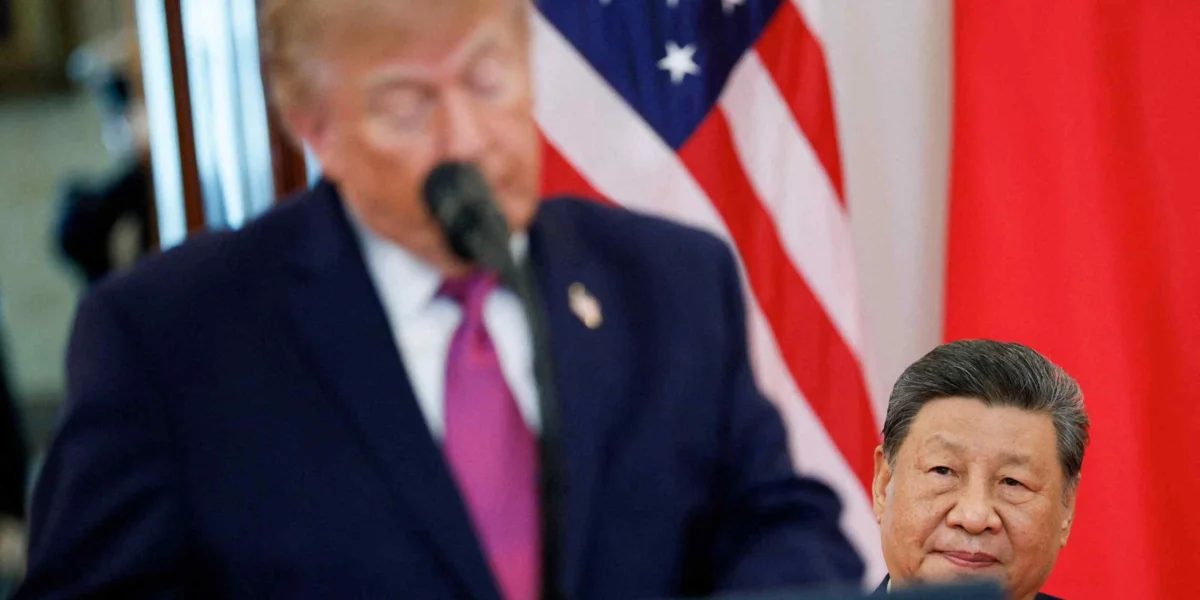
Japan on Friday emphasized its postwar reconciliation and unwavering commitment to its close partnership with the United States, a day after U.S. President Donald Trump’s remarks at a summit with Chinese President Xi Jinping were interpreted by some observers as potentially bolstering Beijing’s position relative to Tokyo. In a carefully worded statement that aimed to project stability and reaffirm long-standing alliances, Japanese officials underscored the nation’s dedication to peace and its role as a responsible member of the international community, implicitly pushing back against any suggestions that its defense posture could be misconstrued as aggressive.

The subtle but significant diplomatic maneuver came in the wake of the highly anticipated meeting between President Trump and President Xi at the White House on September 24, 2026. While the specifics of their discussions remain partially undisclosed, initial reports and analyses suggested a focus on trade imbalances, technological competition, and regional security dynamics. It was President Trump’s public pronouncements during these engagements that appeared to draw particular attention from Tokyo. While the official readout of the summit did not explicitly detail any concessions or shifts in U.S. policy that would directly disadvantage Japan, the nuances of presidential rhetoric can carry considerable weight in the intricate geopolitical landscape of East Asia.
Background: A Shifting Geopolitical Landscape

The Trump-Xi summit occurred against a backdrop of escalating tensions between the United States and China across multiple fronts. The economic relationship, once characterized by significant interdependence, had become increasingly contentious, marked by escalating tariffs, trade disputes, and a broader competition for global economic and technological dominance. In parallel, strategic concerns regarding China’s growing assertiveness in the South China Sea, its expanding military capabilities, and its assertive foreign policy initiatives, such as the Belt and Road Initiative, had fostered a sense of unease among regional allies, including Japan.
Japan, in particular, has navigated a complex strategic environment. For decades, its security has been underpinned by the U.S.-Japan Security Treaty, a cornerstone of regional stability. However, Tokyo has also sought to maintain a pragmatic and economically beneficial relationship with China, its largest trading partner. This dual approach has often required delicate diplomatic balancing, especially as China’s economic and military power has grown.

The remarks made by President Trump, while not overtly critical of Japan, were perceived by some analysts as potentially signaling a U.S. willingness to engage with China on terms that might not fully align with Japan’s security interests. This perception was amplified by the fact that the summit followed a period of heightened bilateral friction between the U.S. and China, and any perceived détente or shift in U.S. rhetoric could be interpreted by Beijing as an opening to assert its regional influence more forcefully.
Tokyo’s Posture: Reconciliation and Partnership

Japan’s response on Friday was a clear articulation of its core foreign policy principles. The emphasis on "postwar reconciliation" served as a powerful reminder of Japan’s commitment to peaceful development and its renunciation of militarism following its defeat in World War II. This historical context is crucial, as it frames Japan’s current defense capabilities as purely defensive and aimed at safeguarding its own territory and the stability of the region, rather than representing any form of outward aggression.
The reaffirmation of its "close partnership with the U.S." was equally significant. This alliance remains the bedrock of Japan’s national security strategy. By highlighting this enduring bond, Tokyo sought to assure Washington of its continued reliability as an ally and, by extension, to underscore that its own security interests are inextricably linked to those of the United States. This message was intended to resonate not only within the U.S. political establishment but also among other allies in the Indo-Pacific region who rely on the U.S.-led security architecture.

Furthermore, the explicit rejection of "Beijing’s accusations of ‘neo-militarism’" was a direct counter to any narrative that might seek to portray Japan’s modern Self-Defense Forces as a resurgence of pre-war militaristic tendencies. Japan has, in recent years, incrementally increased its defense spending and expanded the scope of its military operations, driven by the evolving security environment, particularly the perceived threat from North Korea and China’s increasing military activities. These measures have been framed domestically and internationally as necessary adaptations to maintain regional security and deter potential adversaries, not as preparations for offensive actions.
Chronology of Key Events and Statements

- September 24, 2026: U.S. President Donald Trump hosts Chinese President Xi Jinping at the White House for a summit. Discussions are understood to cover a range of bilateral and global issues. Public statements made during and after the summit are closely scrutinized by international observers.
- September 25, 2026 (Morning): Initial analyses and media reports emerge regarding the implications of the Trump-Xi summit, with some suggesting potential shifts in U.S. regional policy that could impact Japan. Concerns are raised about the tone and substance of President Trump’s remarks concerning China.
- September 25, 2026 (Afternoon/Evening): The Japanese government, through official channels and statements from senior officials, articulates its position. Emphasis is placed on Japan’s postwar reconciliation, its strong alliance with the U.S., and a clear rejection of any accusations of "neo-militarism."
Supporting Data and Analytical Context
Japan’s defense budget, while increasing in recent years, remains a relatively small percentage of its GDP compared to many other developed nations. In fiscal year 2026, Japan’s defense spending was projected to be approximately ¥5.5 trillion (around $50 billion USD at prevailing exchange rates), representing roughly 1.1% of its GDP. This figure, while an increase from previous years, is often contrasted with the significantly larger defense expenditures of China, which has been steadily modernizing its military and expanding its global reach.

The concept of "postwar reconciliation" in Japan is not merely a rhetorical flourish; it is deeply embedded in its post-1945 constitution, which renounces war and the threat or use of force as means of settling international disputes. While constitutional interpretations have evolved to allow for a broader interpretation of self-defense, the fundamental pacifist orientation remains a guiding principle.
The U.S.-Japan Security Treaty, first signed in 1951 and subsequently revised, obligates the United States to defend Japan if it is attacked and allows for the stationing of U.S. forces in Japan. This alliance has been instrumental in maintaining regional stability and deterring potential aggression. Any perceived weakening of this alliance, or any indication of U.S. policy shifts that might unilaterally alter the regional security balance, would be a cause for significant concern in Tokyo.

Reactions and Broader Implications
While specific official reactions from other regional players were not immediately available, the diplomatic signaling from Tokyo is likely to be observed with interest by countries such as South Korea, Australia, and Southeast Asian nations, all of whom share varying degrees of concern regarding China’s rise and the future of regional security architecture.

The implications of the Trump-Xi summit, and Japan’s subsequent response, are multifaceted.
- Regional Stability: Japan’s strong stance aims to reinforce the existing U.S.-led security framework and deter any actions that might destabilize the region. By emphasizing its defensive posture and its commitment to its alliance, Tokyo seeks to provide a counterweight to any assertive moves by Beijing.
- U.S.-Japan Alliance: The statement serves to reassure the United States of Japan’s unwavering commitment as an ally. It also implicitly signals that Japan expects its security interests to be taken into account in U.S. foreign policy decisions, particularly concerning China.
- China’s Perceptions: Beijing will undoubtedly monitor Japan’s statements closely. The rejection of "neo-militarism" accusations suggests that Japan is sensitive to how its defense modernization is perceived and seeks to frame it within a context of responsible international behavior.
- Economic Diplomacy: While the summit’s focus was partly on security, the underlying economic competition between the U.S. and China, and the role of trade in regional dynamics, remains a critical factor. Japan’s emphasis on its reconciliation and partnership also implies a desire for continued economic stability and predictable international trade relations.
In conclusion, Japan’s carefully calibrated response following the Trump-Xi summit underscores its commitment to a stable and rules-based international order. By highlighting its postwar legacy of peace, its robust alliance with the United States, and its defensive security posture, Tokyo seeks to navigate the complexities of a rapidly evolving geopolitical landscape, ensuring that its own security interests and those of its allies are safeguarded against any potential miscalculations or shifts in regional power dynamics. The ongoing dialogue and diplomatic maneuvering between these major global powers will continue to shape the future of East Asian security for years to come.