Ena Muazin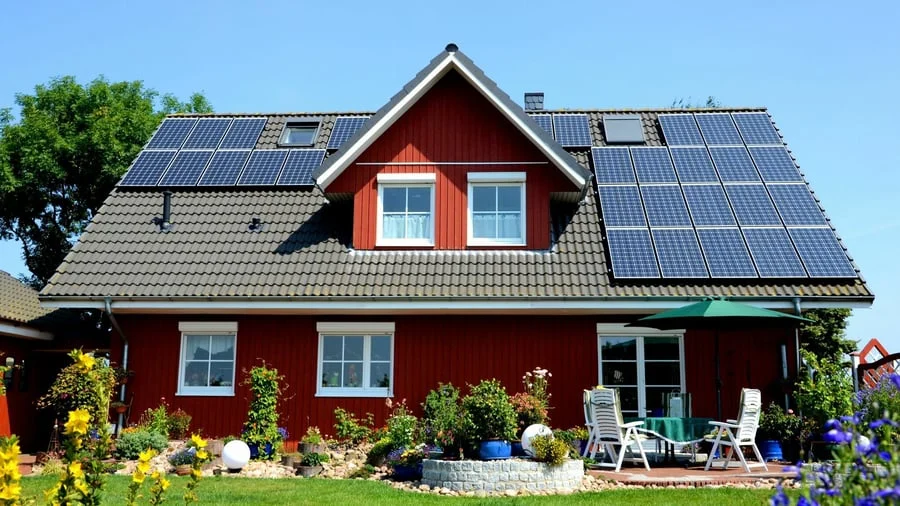
For individuals considering the installation of a photovoltaic system on their rooftops, now is a pivotal moment to act. The German government, through a series of policy adjustments, is reshaping the landscape of renewable energy incentives, creating a window of opportunity for those looking to harness solar power. Initially, Federal Minister for Economic Affairs, Katherina Reiche (CDU), had proposed significant cuts to renewable energy subsidies. However, following widespread discussion and reassessment, these plans have been softened in several key areas, offering a more nuanced approach to supporting solar energy adoption.
The most significant development for prospective solar panel owners is the confirmation of a stable feed-in tariff for systems commissioned by the end of the year. This means that installations put into operation before December 31st will benefit from a fixed feed-in remuneration for up to 20 years. This certainty provides a crucial financial incentive for homeowners to invest in solar technology before potential reductions take effect. The Federal Network Agency (Bundesnetzagentur) has since published detailed specifications regarding the exact remuneration rates, permissible system sizes, and the timeline for future adjustments, providing clarity for stakeholders.
Understanding the New Feed-in Tariffs
As of August 1st, new rates for feeding solar power into the public grid have been implemented. These tariffs are determined by the commissioning date and the installed capacity of the solar system. For instance, a new installation with a nominal output of up to ten kilowatts (kW) will see its remuneration based on whether a portion of the generated electricity is consumed by the household or entirely fed into the grid. This distinction is crucial for homeowners looking to maximize their return on investment.

Research from the Hochschule für Technik und Wirtschaft (HTW) Berlin highlights a significant trend: on average, private households are now self-sufficient with solar power for approximately 70 percent of their energy needs. This statistic underscores the growing effectiveness of residential solar installations and the potential for homeowners to significantly reduce their reliance on conventional energy sources. The HTW study provides valuable data for understanding the practical implications of these new incentive structures.
Differentiating Between Partial and Full Feed-in
The current tariff structure reveals a clear distinction between partial and full feed-in for systems up to ten kW. For partial feed-in, where some of the generated electricity is used domestically and the rest is exported to the grid, the rate is 7.7 cents per kilowatt-hour (kWh). In contrast, full feed-in, where all generated electricity is supplied to the public grid, commands a higher rate of 12.2 cents per kWh. These rates are set to decrease for larger installations, with different thresholds at 40 kW and 100 kW. Importantly, systems exceeding these capacities will no longer be eligible for support under the Renewable Energy Sources Act (Erneuerbare-Energien-Gesetz – EEG).
The Gradual Transition to Reduced Incentives
While an outright subsidy freeze for newly installed systems, as was initially contemplated, has been averted for the upcoming year, a phased transition is indeed underway. Starting from next year, the focus will shift from a permanent feed-in tariff to a temporary transitional payment. This transitional payment will be phased in progressively: from 2027 for systems under 50 kW, from 2028 for those under 25 kW, and finally for systems under seven kW in 2029 and 2030. By 2031, these transitional payments will cease altogether. The initial transitional payment will be set at 5.2 cents per kWh, with subsequent reductions occurring every six months, signaling a clear governmental direction towards reducing direct financial incentives for grid feed-in.
The underlying objective of this policy shift is to make feeding electricity into the grid less attractive for homeowners, thereby encouraging greater self-consumption of solar energy. Furthermore, the government aims to boost direct marketing – selling electricity directly via the wholesale market – particularly for smaller systems below 25 kW. To incentivize this, a direct marketing bonus of 1.5 cents per kWh will be offered, valid for 48 months.

It is crucial to note that while the Federal Cabinet approved the EEG amendment on July 29th, this decision does not yet constitute legally binding legislation. The Bundestag and Bundesrat will deliberate on the proposal after the summer recess, and the European Commission must also provide its approval regarding state aid regulations. Therefore, some aspects of the legislation could still undergo changes before its intended enactment on January 1, 2027.
Beyond Feed-in Tariffs: Financing and Additional Benefits
The feed-in tariff is not the sole determinant for individuals considering a photovoltaic system. The current financial climate offers a compelling combination of attractive loan options and regional subsidies that should be factored into any investment decision.
KfW Loans: A Cornerstone of Solar Financing
A flagship financing product in this sector is the KfW (Kreditanstalt für Wiederaufbau) loan program, specifically the number 270. This program enables the financing of the entire project cost, encompassing not only the acquisition of the system but also the expenses related to planning, project development, and installation. Crucially, the KfW program also covers the cost of battery storage systems, which are becoming increasingly important for homeowners who prioritize self-consumption of their generated solar power.
The current most favorable interest rate available through the KfW program 270 for financing photovoltaic systems stands at a compelling 4.07 percent. This effective annual interest rate is contingent upon factors such as the loan term, interest rate commitment period, and any grace periods for repayment. In the most advantageous scenario, this rate applies to a five-year loan with a corresponding five-year fixed interest period. A particularly attractive feature of the program is the possibility of financing an entire solar project over a period of 20 years with a similarly long interest rate commitment. Without a repayment-free grace period, the effective annual interest rate currently stands at 4.99 percent. These competitive rates significantly reduce the upfront financial barrier for adopting solar technology.

Tax Advantages and the Rise of Battery Storage
In addition to attractive financing, significant tax benefits further enhance the financial appeal of acquiring a photovoltaic system. For smaller installations with a capacity of up to 30 kW, both the purchase and installation costs have been exempt from value-added tax (VAT) for the past three years. This exemption also extends to battery storage systems. The prices of these storage solutions have seen a substantial decline in recent years, making them an increasingly common addition to photovoltaic systems for homeowners aiming for maximum energy independence.
Regional and Municipal Support for Solar Adoption
While direct federal subsidies for the installation of photovoltaic systems are not currently available, numerous federal states (Länder) and municipalities offer regional programs designed to reduce the acquisition costs. For example, Berlin’s "Solar Plus" program provides support for solar installations on private homes, including the integration of battery storage. Hamburg’s "Hamburger Dachbegrünung" program encourages the combination of solar installations with green roofs. Baden-Württemberg supports homeowners through low-interest loans under its "Wohnen mit Zukunft" (Living with the Future) initiative. Similar programs are also in place in states like Hesse, Mecklenburg-Vorpommern, and North Rhine-Westphalia, demonstrating a widespread commitment to renewable energy at the regional level.
Many municipalities also offer financial support for the adoption of solar energy. Stuttgart, for instance, provides subsidies through its "Solaroffensive" program, while Hanover offers support via its "Pro Klima" funding program. These local initiatives further amplify the financial incentives available to homeowners, making solar energy a more accessible and attractive investment across Germany.
The continued development and refinement of solar energy incentives, coupled with declining technology costs and accessible financing, indicate a strong and sustained push towards a renewable energy future in Germany. Homeowners who are considering the installation of photovoltaic systems are well-advised to investigate the current incentive landscape and act promptly to capitalize on the available benefits before they potentially change. The combination of feed-in tariffs, transitional payments, favorable loan conditions, tax advantages, and regional subsidies presents a multifaceted opportunity for individuals to invest in a sustainable and cost-effective energy solution.