Ena Muazin
The global demand for food is projected to surge dramatically, with the United Nations’ Food and Agriculture Organization (FAO) forecasting a nearly 50% increase in agricultural production by 2050 compared to 2012 levels. This imperative to feed a growing world population is occurring against the backdrop of an increasingly volatile climate, which poses significant threats to agricultural systems through extreme heat, unpredictable rainfall patterns, and other adverse weather events. The entire agricultural value chain, from machinery manufacturers and seed developers to fertilizer producers and food processors, finds itself at the nexus of these converging trends. For investors, the agricultural sector presents a compelling opportunity, not only due to its structural tailwinds from demographic shifts but also as a vital component for portfolio diversification.
A Sector Under Pressure: The Dual Challenge of Demand and Climate
The agricultural sector is grappling with a monumental task: to significantly boost output while simultaneously adapting to and mitigating the impacts of climate change. The FAO’s projections underscore the sheer scale of the challenge. By mid-century, the world will need to produce substantially more food to sustain an estimated global population of close to 10 billion people. This requires not only increased efficiency but also innovative approaches to farming and food production.
Simultaneously, the intensifying effects of climate change are creating unprecedented pressures. Heatwaves can scorch crops and stress livestock, while extreme rainfall events can lead to flooding, soil erosion, and crop damage. These climatic shifts disrupt traditional growing seasons, affect crop yields, and can lead to significant price volatility in global food markets. The agricultural industry, a cornerstone of the global economy and human sustenance, is therefore a critical area of focus for both policymakers and investors seeking to understand and address these complex issues.
Investment Opportunities in a Resilient Sector
The agricultural sector offers a unique proposition for investors. Stephan Werner, a portfolio manager at DWS Asset Management, highlights the sector’s potential for diversification. "The agricultural investment universe primarily encompasses the raw materials, consumer staples, and industrial sectors, with very few IT companies," Werner explains. "This can lead to an improvement in portfolio risk diversification."
Furthermore, the inherent demand for food makes the agricultural sector relatively resilient to economic downturns. Unlike many other industries that are highly sensitive to the business cycle, the fundamental need for food ensures a consistent demand stream. However, this stability is not absolute. External factors, including geopolitical conflicts that disrupt export markets, and climate-induced events like droughts and floods that depress harvest yields, can significantly impact agricultural commodity prices and company revenues.
The effects of these price fluctuations are not uniform across the agricultural value chain. While companies involved in agricultural machinery and seed production may benefit from higher food prices, producers of food and meat often face increased input costs. "The extent to which such cost increases can be passed on depends, among other factors, on competition, demand, regulation, and consumer price sensitivity," Werner elaborates. This dynamic interplay of supply, demand, and external pressures creates a complex but potentially rewarding investment landscape.
Agricultural Equities Outperform Global Markets in the Short Term
In the first half of the current year, equities within the agricultural sector demonstrated robust performance, outperforming broader global equity benchmarks. The S&P Commodity Producers Agribusiness Index, which tracks the performance of the largest publicly traded companies in the agribusiness sector, recorded a twelve percent gain in U.S. dollar terms. This performance edged out the MSCI World Index, which achieved an eight percent increase over the same period. This short-term outperformance signals a potential shift in investor sentiment towards the resilience and fundamental drivers of agricultural businesses.
However, a longer-term perspective reveals a more nuanced picture. Over five and ten-year periods, the S&P Commodity Producers Agribusiness Index delivered more modest returns of three percent and just under six percent per year, respectively. Despite these longer-term figures, Simon Frank, a financial advisor at Pictet Asset Management, views this disparity as an entry point for investors. "Despite solid fundamental data, defensive business models, and relatively low volatility, many stocks across the entire food value chain have significantly lost valuation in recent years," Frank observes. This suggests that current market valuations may not fully reflect the long-term potential and intrinsic value of companies within the agricultural sector.
Structural Trends Driving Business Growth
Simon Frank is optimistic about the future trajectory of agricultural sector investments, believing that long-term performance will be significantly shaped by several key structural trends. He identifies the ongoing shift towards healthier diets as a particularly promising area. "This trend is driven by growing health and wellness awareness, increasing life expectancies, aging populations, new dietary recommendations with higher protein content, and rising healthcare costs," Frank explains.
This growing emphasis on health and nutrition is influencing consumer choices and, consequently, corporate strategies. Companies that align with these evolving preferences are well-positioned for future growth. For instance, the "Pictet Nutrition Fund" includes French food conglomerate Danone (ISIN: FR0000120644) as one of its largest individual holdings. Danone, with brands such as Activia, Alpro, and Evian, is recognized for its portfolio of products perceived as healthier options by consumers. This strategic focus on health-conscious products underscores the adaptation of established food companies to changing market demands.
Technological Innovation and Climate Resilience
Beyond dietary shifts, technological innovation is emerging as a critical factor in addressing the challenges posed by climate change within the agricultural sector. Nedialko Nedialkov, a portfolio manager at Allianz Global Investors, emphasizes the importance of technology in mitigating the impacts of extreme weather events such as heat, droughts, floods, and irregular precipitation.
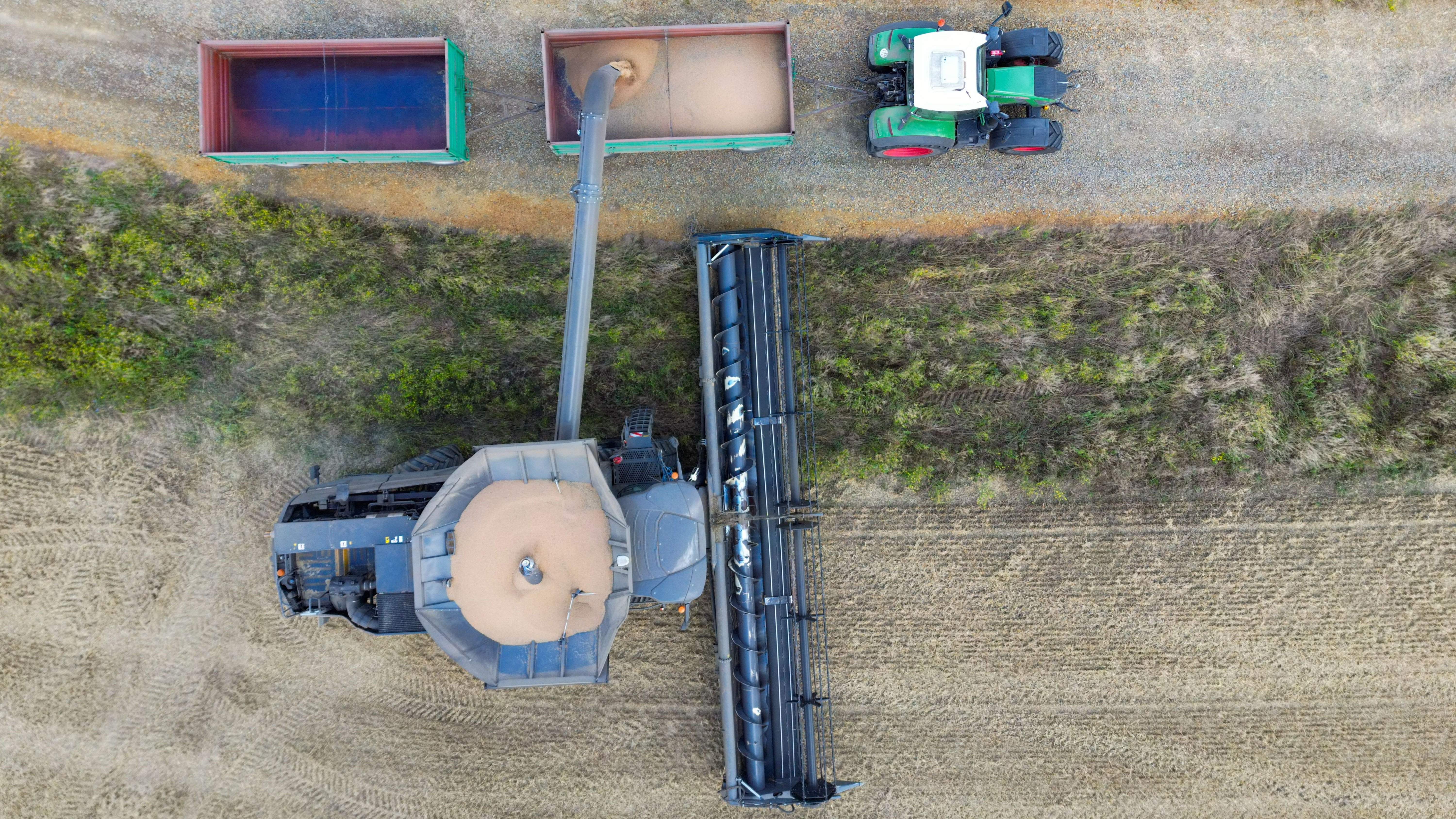
"One of the greatest opportunities lies in precision agriculture and automation," Nedialkov states. This encompasses advanced techniques like camera-guided individual plant treatment and data analytics for optimized farm management. A prominent player in this domain is Deere & Company (US2441991054), a manufacturer of agricultural machinery that also operates a platform for precision agriculture. By integrating technology into farming practices, companies like Deere are enabling farmers to increase efficiency, reduce resource waste, and enhance crop yields even in challenging environmental conditions.
Nedialkov also sees significant potential in seed companies that are developing more resilient plant varieties. For example, U.S. seed producer Corteva (US22052L1044) is a key player in this space, offering robust corn varieties designed to withstand adverse environmental conditions. The development of climate-resilient crops is crucial for ensuring food security in a world increasingly affected by climate change.
Diversified Investment Avenues in Agribusiness
For investors seeking broader exposure to the agricultural sector without the need to select individual stocks, Exchange Traded Funds (ETFs) offer a viable solution. The "iShares Agribusiness ETF" (IE00B6R52143) provides diversified exposure to major companies within the agricultural industry. Top holdings in this ETF include Corteva and agricultural commodities trader Archer Daniels Midland. This ETF offers a basket of 103 positions, providing a relatively broad diversification within the agribusiness landscape. With a fund volume of $492 million, it represents a substantial and liquid investment vehicle for those looking to capitalize on the sector’s growth potential.
An alternative for investors interested in agricultural innovation is the "Global X AgTech & Food Innovation ETF" (IE000EBFYWX3). This ETF specifically focuses on innovations aimed at transforming the agricultural sector. Deere & Company is the largest individual holding in this fund, reflecting its significant role in advancing precision agriculture technologies. However, this ETF is more concentrated, featuring only 31 holdings, which could lead to higher volatility compared to broader sector ETFs. Furthermore, with a fund volume of only $5.8 million, it is considerably smaller than the iShares offering, which might be a consideration for larger institutional investors.

The Evolving Landscape of Agricultural Investment
The agricultural sector is undergoing a profound transformation, driven by the dual imperatives of feeding a growing global population and adapting to the realities of climate change. These challenges are creating significant opportunities for innovation and investment across the entire food value chain.
Historical Context and Future Projections:
The FAO’s projection of a nearly 50% increase in agricultural production by 2050 is not merely a statistical forecast; it represents a critical challenge for global food security. This projected demand growth is unprecedented in human history and necessitates a fundamental rethinking of how food is produced, distributed, and consumed. Historically, agricultural productivity has increased through technological advancements, mechanization, and the development of high-yield crop varieties. However, the current era presents a unique set of obstacles, with climate change acting as a significant impediment to sustained growth.
The period between the mid-20th century and the early 21st century saw significant gains in agricultural output, often referred to as the "Green Revolution." This era was characterized by the widespread adoption of new farming techniques, fertilizers, and pesticides, which dramatically increased crop yields. However, these advancements also came with environmental consequences, including soil degradation, water pollution, and biodiversity loss. The current challenges are compounded by the need to achieve further production increases while simultaneously addressing these environmental concerns and adapting to a changing climate.
Timeline of Challenges and Responses:
- Early 21st Century Onward: Growing awareness of climate change impacts on agriculture, including increased frequency of extreme weather events. Initial research into climate-resilient crops and sustainable farming practices.
- 2010s: Intensification of climate change effects, leading to more frequent droughts, floods, and heatwaves impacting agricultural output globally. Increased focus on water management, soil health, and precision agriculture technologies.
- 2020s: Heightened urgency to address food security concerns amidst ongoing climate volatility. Significant investment in agricultural technology (AgTech), including AI-driven farm management, vertical farming, and alternative protein sources. Policy discussions around climate adaptation in agriculture gain prominence.
- By 2050: Projected need for nearly 50% more food production, requiring a confluence of technological innovation, sustainable practices, and global cooperation to ensure food security in a climate-challenged world.
Data Supporting the Trends:
- Population Growth: The United Nations projects the world population to reach approximately 9.7 billion by 2050. This demographic shift is a primary driver of increased food demand.
- Climate Impact Data: Reports from the Intergovernmental Panel on Climate Change (IPCC) consistently highlight the increasing risks of extreme weather events, with direct implications for agricultural yields. For instance, studies have shown that rising temperatures can significantly reduce yields for staple crops like maize, wheat, and rice in many regions.
- Investment in AgTech: Venture capital investment in AgTech has seen a substantial increase in recent years, indicating growing investor confidence in the sector’s ability to innovate and address critical challenges. Reports from organizations like AgFunder have documented billions of dollars invested annually in agricultural technology startups.
- Commodity Price Volatility: Global food commodity prices have exhibited significant volatility in recent years, influenced by a combination of supply chain disruptions, geopolitical events, and climate-related weather anomalies. This volatility underscores the inherent risks and opportunities within the agricultural markets.
Broader Implications and Future Outlook:
The confluence of rising food demand and climate change presents a complex set of challenges and opportunities. The agricultural sector is not merely an economic engine; it is foundational to human well-being and global stability. Innovations in precision agriculture, the development of climate-resilient crops, and the promotion of sustainable farming practices are crucial for ensuring future food security.
Investors who strategically position themselves within this evolving landscape stand to benefit from the sector’s fundamental growth drivers and its increasing importance in addressing global challenges. The agribusiness sector, encompassing everything from the seeds planted to the food on our tables, represents a vital area for both economic growth and societal progress. As the world navigates the complexities of the 21st century, the agricultural industry will undoubtedly play a pivotal role in shaping our collective future. The ongoing investment in research and development, coupled with a growing understanding of the sector’s resilience and adaptability, suggests that agribusiness will remain a key area of interest for investors and a critical component of global sustainability efforts for decades to come.