Clara Shinta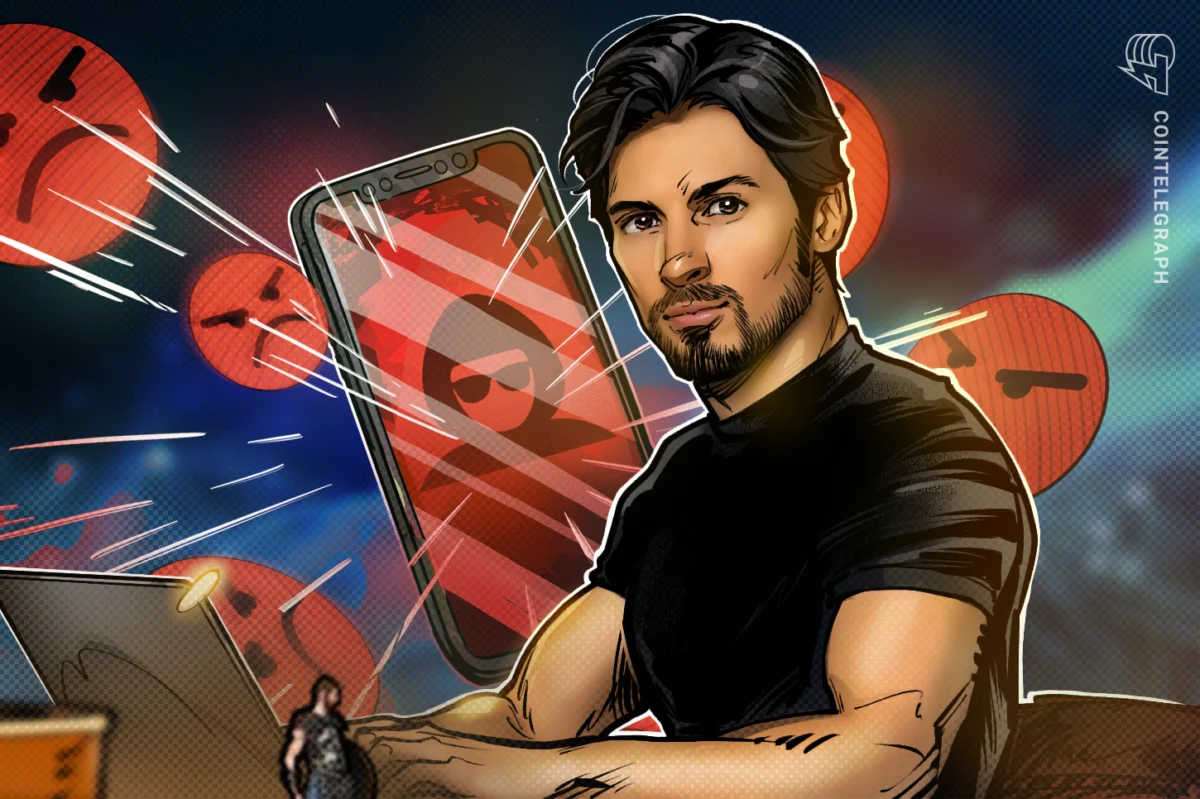
Pavel Durov, the enigmatic founder of the popular encrypted messaging application Telegram, has been placed on an international wanted list by Russian authorities, who accuse him of facilitating terrorist activity. This significant development, reported by Russia’s Federal Security Service (FSB) via local news agency Interfax on Wednesday, marks a severe escalation in the long-standing tensions between the Kremlin and one of the world’s most widely used communication platforms. The FSB has reportedly charged Durov with "facilitating terrorist activity" and subsequently issued an international warrant for his arrest, transforming a domestic criminal probe into a global legal pursuit that could significantly impact Durov’s movements and the future operations of Telegram.
The core of the FSB’s allegations centers on Telegram’s purported failure to adequately police its platform. Russian authorities claim that numerous channels, chat groups, and automated bots on Telegram have been exploited by Ukrainian intelligence services, designated terrorist organizations, and extremist groups. These entities are accused of leveraging Telegram’s robust privacy features to coordinate attacks, recruit operatives, and execute various forms of cyber fraud without sufficient intervention from the platform’s administrators. The charges underscore Russia’s persistent demand for greater control over digital communication channels, particularly those that offer end-to-end encryption, which authorities frequently argue impede national security investigations.
This latest move by the FSB follows earlier reports in February that Russian authorities had initiated a criminal case against Durov. At that time, Durov himself acknowledged the existence of the investigation in a post on X (formerly Twitter), vehemently asserting that the Russian authorities were using the probe as a pressure tactic against Telegram. He wrote, "Each day, the authorities fabricate new pretexts to restrict Russians’ access to Telegram as they seek to suppress the right to privacy and free speech." His statement highlighted the ideological battle between Telegram’s commitment to user privacy and the Russian state’s increasing efforts to exert control over digital information flows and online discourse.
Compounding Durov’s legal challenges, he also faces an ongoing criminal investigation in France. This separate probe concerns alleged illegal activities conducted on Telegram’s platform, although French authorities had, earlier this year, lifted previous travel restrictions, allowing him to leave the country. The dual legal pressures from both Russia and France underscore the complex regulatory environment faced by global technology platforms, particularly those that prioritize user anonymity and encryption.
The Genesis of Telegram and its Tumultuous Relationship with Russia
Pavel Durov’s journey into the world of social media and secure communication began in Russia. He first rose to prominence as the founder of VKontakte (VK), often dubbed "Russia’s Facebook," which he launched in 2006. VK quickly became the dominant social network in Russia and several other post-Soviet states. However, Durov’s fiercely independent stance and his refusal to cooperate with government demands for user data, particularly during political protests, led to escalating conflicts with Russian authorities. In 2014, under immense pressure, Durov was ousted as CEO of VK and subsequently left Russia, selling his remaining stake in the company. He cited concerns over the lack of freedom and the increasing state control over the internet as his primary reasons for departure.
Soon after leaving Russia, Durov, along with his brother Nikolai, launched Telegram in 2013. The application was designed with a strong emphasis on privacy and security, offering end-to-end encrypted messaging, a feature that quickly attracted a global user base disillusioned with perceived surveillance on other platforms. From its inception, Telegram positioned itself as a bulwark against government intrusion, a philosophy deeply rooted in Durov’s experiences with the Russian state.
A Decade of Digital Cat and Mouse: Telegram vs. Russian Authorities
The relationship between Telegram and Russian authorities has been marked by a decade of persistent conflict, characterized by legal battles, blocking attempts, and political maneuvering. The core of the dispute has always been Telegram’s refusal to provide encryption keys or backdoors to the FSB, citing its commitment to user privacy and the technical impossibility of complying without compromising its security architecture.
- 2017: The FSB first demanded Telegram provide access to its encryption keys, asserting that the information was necessary to prevent terrorist attacks. Telegram refused, citing Article 23 of the Russian Constitution, which guarantees privacy of correspondence.
- 2018: A Moscow court ordered Telegram to be blocked in Russia after it failed to comply with the FSB’s demands. Roskomnadzor, Russia’s media watchdog, attempted to enforce the ban by blocking millions of IP addresses, including those of Google and Amazon Web Services, which Telegram used to circumvent the block. However, the ban proved largely ineffective. Telegram remained widely accessible to Russian users through VPNs and other circumvention tools, highlighting the technical challenges of enforcing such bans on resilient, encrypted platforms. During this period, Telegram’s user base in Russia continued to grow, demonstrating the public’s desire for secure communication.
- 2020: In a surprising reversal, Russian authorities officially lifted the ban on Telegram, citing the platform’s agreement to "counter terrorism and extremism." However, it remained unclear whether Telegram had made any fundamental concessions regarding encryption keys or data access. Many observers believed the lifting of the ban was a pragmatic recognition by the Kremlin that the block was ineffective and counterproductive, pushing Russian users towards less controllable foreign services.
- Post-2020: Despite the lifting of the ban, the underlying tensions persisted. Russian legislation continued to tighten its grip on internet services, introducing laws requiring data localization and increasing the penalties for platforms that failed to remove "illegal content," broadly defined to include content critical of the government, calls for unsanctioned protests, or anything deemed extremist.
The current charges against Durov, framing his alleged non-compliance as "facilitating terrorist activity," represent a significant escalation from previous administrative or technical disputes. It transforms the issue from a regulatory challenge into a criminal matter with severe personal consequences for Durov.
The Allegations: Facilitating Terrorism and Extremism
The FSB’s specific allegations against Telegram and Durov revolve around the platform’s alleged use by various groups deemed hostile by the Russian state. Interfax reported that the FSB explicitly named "Ukrainian intelligence services, terrorist groups, and extremist organizations" as beneficiaries of Telegram’s unmonitored environment.
These allegations are not entirely new. Globally, encrypted messaging platforms like Telegram have faced scrutiny for their potential misuse by various actors, ranging from criminal organizations to extremist groups. The very features that make Telegram attractive to privacy-conscious users – end-to-end encryption, anonymous channels, and robust group chat functionalities – can also be exploited. For instance, reports from various cybersecurity firms and government agencies have, at different times, documented the use of Telegram by ISIS and other terrorist organizations for propaganda dissemination, recruitment, and operational coordination. Similarly, in the context of the ongoing conflict in Ukraine, both Ukrainian and Russian forces, as well as affiliated groups, are known to utilize Telegram extensively for communication, intelligence sharing, and public information campaigns.
However, the key point of contention is not merely the presence of such content, but Telegram’s responsibility to actively remove or prevent it. Durov and Telegram have consistently argued that they do actively moderate public channels and remove content that violates their terms of service, especially in cases related to terrorism or incitement to violence. Yet, they draw a firm line at compromising the end-to-end encryption of private communications, arguing that doing so would undermine the fundamental privacy rights of all users. The FSB’s stance, however, implies that Telegram’s current moderation efforts are insufficient and that its refusal to grant access to private communications amounts to complicity.
International Reach of Russian Warrants and Legal Challenges Abroad
The issuance of an international arrest warrant for Pavel Durov has profound implications for his personal freedom and travel. An international warrant typically means that law enforcement agencies in countries that have agreements with Russia, or those that cooperate with Interpol, could potentially detain Durov if he enters their jurisdiction. While the specifics of Russia’s cooperation with Interpol can be complex and politically charged, such a warrant generally restricts an individual’s ability to travel freely across borders.
Interpol, the international police organization, plays a crucial role in facilitating such warrants. Member states can issue "Red Notices" through Interpol, which are requests to law enforcement worldwide to locate and provisionally arrest a person pending extradition. However, Interpol’s constitution strictly prohibits it from undertaking "any intervention or activities of a political, military, religious or racial character." This provision often leads to debates and challenges when member states use Interpol’s mechanisms for cases that are perceived to be politically motivated. Durov’s supporters and human rights organizations would likely argue that the charges against him fall into this category, potentially leading to challenges against any Interpol Red Notice.
The separate ongoing criminal investigation in France adds another layer of legal complexity. While the nature of the French allegations is distinct, focusing on "illegal activity" rather than direct "facilitation of terrorism," it highlights the global scrutiny Telegram faces. The lifting of travel restrictions in France earlier this year offered Durov some temporary relief, but the Russian international warrant immediately reignites concerns about his mobility and legal exposure. These simultaneous legal battles across different jurisdictions demonstrate the growing trend of nation-states attempting to assert their legal frameworks over global tech companies, often leading to a clash of sovereignties and legal principles.
Broader Context: Russia’s Tightening Grip on Digital Spaces
The pursuit of Pavel Durov and Telegram is not an isolated incident but rather a prominent example of Russia’s broader strategy to establish comprehensive control over its digital landscape. Over the past decade, Russia has enacted a series of increasingly stringent laws aimed at regulating the internet, restricting freedom of speech, and enhancing state surveillance capabilities.
Key legislative measures include:
- Data Localization Laws: Requiring internet companies to store the personal data of Russian citizens on servers located within Russia, theoretically allowing easier access for intelligence agencies.
- "Sovereign Internet" Law: Designed to enhance Russia’s ability to operate its internet infrastructure independently, potentially isolating it from the global internet and granting the state more control over traffic filtering and censorship.
- Laws Against "Fake News" and "Extremism": Broadly worded legislation that has been used to criminalize reporting that contradicts official narratives, criticism of the government, and support for opposition movements.
- VPN Bans: Attempts to outlaw or restrict the use of Virtual Private Networks (VPNs) and other circumvention tools that allow users to access blocked content.
These measures have led to a significant contraction of digital freedoms in Russia. Many international tech companies, including Meta (Facebook, Instagram) and X, have faced severe restrictions or outright bans, particularly since the full-scale invasion of Ukraine in February 2022. Telegram, due to its resilience and widespread adoption, has remained one of the few international platforms still largely accessible and popular in Russia, despite the ongoing pressures. This unique position makes it a prime target for Russian authorities seeking to consolidate their information control.
Implications for Telegram, Durov, and Digital Freedom
The international warrant for Pavel Durov carries significant implications:
- For Pavel Durov: His personal freedom and ability to travel globally will be severely curtailed. While he holds citizenship in several countries (including France and the UAE), an international warrant could lead to his arrest in many jurisdictions, making him a perpetual legal target. This could force him to operate from countries with which Russia has strained diplomatic relations or limited extradition treaties.
- For Telegram: The ongoing legal pressure, particularly the international dimension, could impact Telegram’s operational stability, its ability to attract and retain talent, and its global reputation. While Telegram’s user base, estimated to be over 900 million globally, is vast and diverse, such legal battles can create uncertainty. It also highlights the inherent conflict between a platform’s commitment to privacy and the demands of nation-states for access and control.
- For Digital Freedom: This case serves as a stark reminder of the escalating global battle over internet governance, privacy, and freedom of expression. It underscores the challenges faced by platforms that champion encryption and user privacy in an era where governments worldwide are increasingly seeking to regulate and control digital communication, often citing national security concerns. The weaponization of legal processes, such as international arrest warrants, against tech founders sets a dangerous precedent for the autonomy of digital services.
- The Dual-Edged Sword of Encryption and Anonymity: The case also reignites the perennial debate about the "dual-use" nature of strong encryption and anonymity tools. While essential for protecting dissidents, journalists, and everyday citizens from surveillance, these same features can unfortunately be exploited by malicious actors. Finding a balance between robust privacy protections and legitimate law enforcement needs remains one of the most complex challenges for policymakers, tech companies, and civil society worldwide.
The Russian FSB’s move to place Pavel Durov on an international wanted list marks a critical juncture in the long-running saga between Telegram and the Kremlin. It transforms a domestic regulatory dispute into a global legal pursuit with far-reaching consequences for Durov, Telegram, and the broader landscape of digital freedom and government control. As the international community grapples with the implications of such actions, the future of encrypted communication platforms and the personal liberties of their founders remain firmly in the crosshairs of geopolitical power struggles.