Farhan Pambudi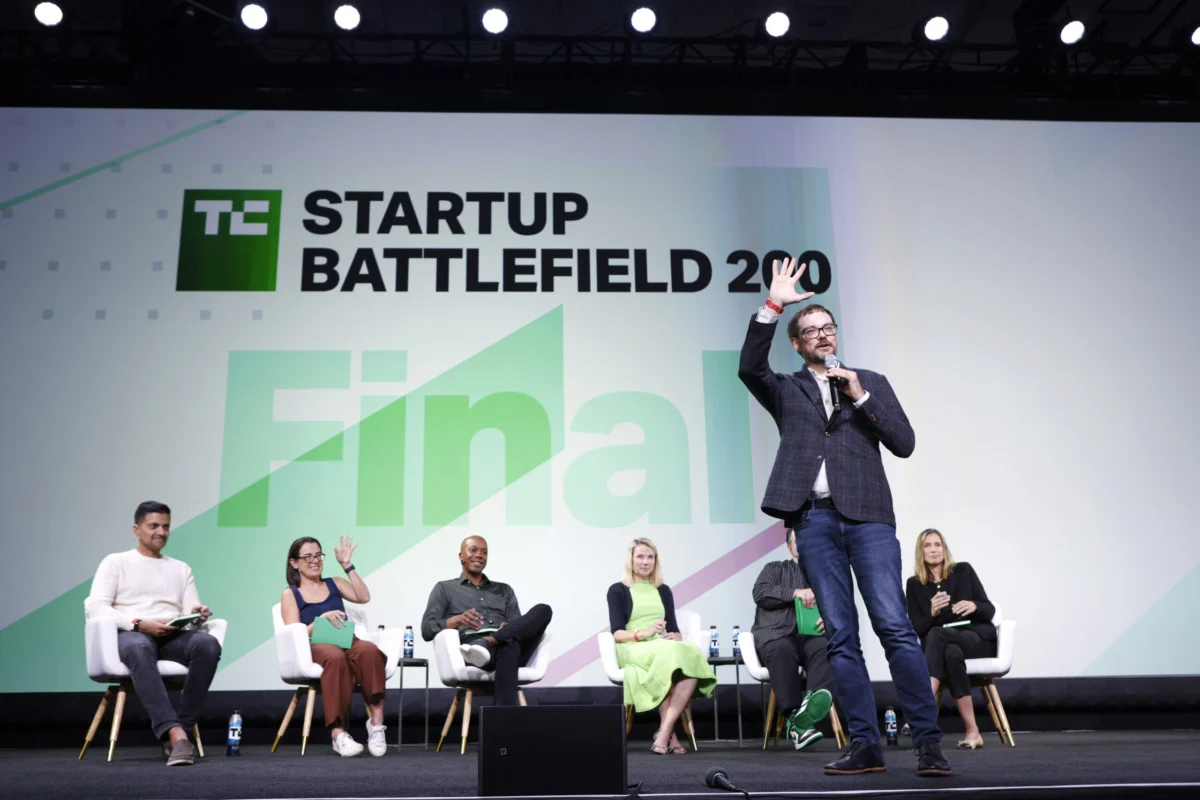
TechCrunch Disrupt 2026 is set to return to San Francisco’s Moscone West from October 13 to 15, marking another pivotal year for the global startup ecosystem. At the heart of this three-day summit is the Startup Battlefield 200, a premier competition that has, for nearly two decades, served as a springboard for some of the world’s most influential technology companies. Organizers have officially introduced the next five venture capital experts who will occupy the judges’ seats, tasking them with identifying the next generation of category-defining businesses. These judges represent a diverse cross-section of the investment community, bringing expertise in artificial intelligence, financial technology, enterprise software, and social impact.
The Startup Battlefield 200 is not merely a showcase of polished presentations; it is a rigorous vetting process designed to separate sustainable business models from ephemeral trends. The newly announced judges—Aditi Maliwal, Michael Palank, Nell Daly, Grace Ge, and Crystal Huang—are expected to apply a level of scrutiny that goes beyond the surface-level aesthetics of a pitch. Their objective is to evaluate the fundamental clarity, execution capabilities, and market endurance of the 200 selected startups. This group was winnowed down from thousands of global applicants, representing the top 2% of early-stage innovation across multiple sectors.
Profiles of the Newly Appointed Judges
The selection of judges for the 2026 cohort reflects the current priorities of the venture capital landscape, particularly the shift toward foundational technologies and inclusive investment strategies.
Aditi Maliwal, General Partner at Upfront Ventures
Aditi Maliwal joins the panel as Upfront Ventures’ first San Francisco-based partner. Her investment focus lies at the intersection of fintech and developer tools, with a specific interest in the practical applications of AI within enterprise SaaS. Having previously held positions at Google and Deutsche Bank, Maliwal brings a dual perspective of corporate strategy and institutional finance. Her track record includes leading the Series A investment in Chime, a leader in the digital banking space, and managing a portfolio that includes high-growth firms like Writer and Arcade.

Michael Palank, General Partner at MaC Ventures
Michael Palank represents MaC Ventures, a majority Black-owned firm that utilizes a culturally driven investment thesis to identify seed-stage opportunities. Palank’s background is unique among the panel; prior to his career in venture capital, he worked in Hollywood talent representation at William Morris and Overbrook Entertainment. This experience provides him with a distinct lens through which to view consumer engagement and media-tech convergence. MaC Ventures focuses on sectors ranging from aerospace and defense to healthcare, seeking founders who understand the cultural shifts driving market demand.
Nell Daly, Co-founder and Managing Partner at Revenge Capital
Nell Daly brings a specialized "founder-first" approach to the 2026 panel. As a former psychotherapist, Daly utilizes her clinical background to assess the psychological resilience and leadership potential of entrepreneurs. Revenge Capital is an evergreen, sector-agnostic fund dedicated to backing overlooked founders, including women, BIPOC, LGBTQIA+, and neurodiverse entrepreneurs. Her presence on the panel underscores a growing recognition within the industry that the personal attributes and diverse perspectives of a founding team are critical indicators of long-term success.
Grace Ge, Partner at Amplify Partners
Grace Ge focuses on the technical infrastructure of the modern economy. At Amplify Partners, she concentrates on the "middle layer" of the AI stack—the bridge between foundation models and enterprise applications. Her portfolio includes Pinecone, a vector database essential for AI development, and Orb. Named to the Forbes 30 Under 30 list for Venture Capital, Ge’s participation signals a focus on technical viability and developer-led growth strategies, areas that have become increasingly central to the Silicon Valley investment thesis.
Crystal Huang, General Partner at Google Ventures (GV)
Crystal Huang rounds out the group with a focus on enterprise SaaS and AI infrastructure. With a background in technology mergers and acquisitions at Blackstone and prior investment roles at NEA and GGV Capital, Huang possesses a deep understanding of the exit landscape and product-led go-to-market strategies. Her portfolio includes Typeface and Roboflow, companies that are currently at the forefront of the generative AI and computer vision sectors.
The Evolution and Impact of Startup Battlefield
Since its inception in 2007, Startup Battlefield has evolved from a small pitch event into a global institution. The competition’s history is a timeline of the digital age’s most significant breakthroughs. Early participants and winners include Dropbox, which revolutionized cloud storage; Mint, which redefined personal finance; and Fitbit, which pioneered the wearable technology market. To date, more than 900 companies have participated in the Battlefield, collectively raising over $9 billion in follow-on funding and achieving more than 120 successful exits.

The 2026 iteration of Disrupt arrives at a time when the venture capital market is recalibrating. Following the hyper-growth period of 2021 and the subsequent market correction in 2023, investors are now prioritizing "capital efficiency" and "real-world problem solving" over "growth at any cost." The judges for this year’s competition are expected to reflect this shift, looking for startups that demonstrate a clear path to profitability and a robust defensive moat against competitors.
Chronology of the Disrupt 2026 Selection Process
The road to the Disrupt stage is a multi-month journey for participating founders. The timeline for the 2026 event began early in the year with a global call for applications.
- Application Phase (Q1 – Q2 2026): Thousands of startups from over 40 countries submitted detailed business plans, financial projections, and product demos.
- The Battlefield 200 Selection (July 2026): TechCrunch editors and independent analysts reviewed applications to select the 200 companies deemed most likely to disrupt their respective industries. These companies receive free exhibition space at the event and access to exclusive workshops.
- Judge Announcement (September 2026): The introduction of the VC panel allows founders to research the specific interests and investment philosophies of the people they will be pitching to.
- The Live Competition (October 13-15, 2026): The Battlefield 200 companies are narrowed down to a group of finalists who pitch live on the Disrupt Stage. The winner receives the coveted Disrupt Cup and a $100,000 equity-free cash prize.
Market Context: Why San Francisco Remains the Epicenter
Despite ongoing debates regarding the decentralization of tech, the decision to host Disrupt 2026 at Moscone West reinforces San Francisco’s status as the global hub for venture capital and AI innovation. In 2025 and the first half of 2026, the Bay Area accounted for more than 40% of all venture capital investment in the United States. The concentration of talent, particularly in large language models (LLMs) and robotics, has created a "gravity well" effect, drawing international founders to the city to compete in events like Startup Battlefield.
Industry analysts suggest that the 2026 cohort will likely be dominated by "Applied AI"—startups that are moving beyond basic chatbot interfaces to integrate AI into specific industrial, legal, and medical workflows. The presence of judges like Grace Ge and Crystal Huang, who specialize in infrastructure and enterprise applications, suggests that the competition will favor founders who are building the "plumbing" of the next industrial revolution rather than just the "fixtures."
Supporting Data and Financial Implications
The financial stakes for the Startup Battlefield 200 are significant. Data from previous years indicates that being selected for the top 200 increases a startup’s likelihood of securing a seed or Series A round within 12 months by approximately 35%. Furthermore, the "Battlefield Effect" often results in an immediate spike in inbound interest from angel investors and corporate venture arms.

For the judges, the event serves as a high-efficiency deal-sourcing platform. While the $100,000 prize is a major draw for founders, the real value lies in the visibility. Historically, even companies that do not win the final prize often leave the event with term sheets in hand. The 2026 event expects to host over 10,000 attendees, including approximately 1,200 qualified investors, creating a high-density networking environment that is difficult to replicate in a virtual setting.
Broader Impact and Industry Implications
The inclusion of firms like Revenge Capital and MaC Ventures on the judging panel highlights an industry-wide effort to address the "funding gap." Statistics consistently show that less than 3% of venture capital goes to female-led teams, and even less to founders from underrepresented backgrounds. By placing Nell Daly and Michael Palank in judging positions, TechCrunch Disrupt is signaling that "disruption" also applies to the traditional demographics of the tech elite.
Furthermore, the focus on psychotherapist-led investment strategies (as seen with Daly) reflects a growing concern regarding founder burnout and the sustainability of the "hustle culture." Investors are increasingly looking for founders who possess the emotional intelligence to lead large organizations through the volatility of the modern market.
As the September 25 deadline for early-bird registration approaches, the tech community’s attention is firmly fixed on San Francisco. The upcoming competition will not only crown a winner but will also provide a definitive look at the technologies that will dominate the late 2020s. With a panel of judges equipped to challenge every assumption, Startup Battlefield 200 remains the ultimate litmus test for the world’s most ambitious entrepreneurs.