Farhan Pambudi
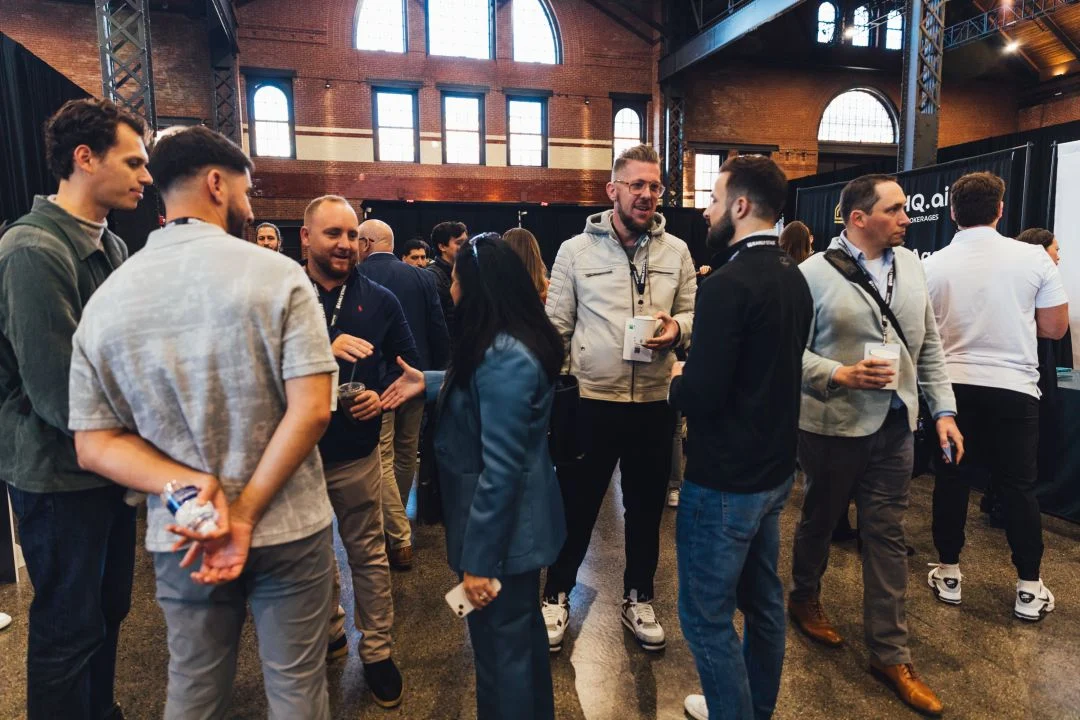
The TechCrunch Founder Summit 2026 is set to commence on November 4 at the SoWa Power Station in Boston, marking a significant gathering of the nation’s most prominent entrepreneurs, venture capitalists, and industry strategists. Designed as a high-intensity, one-day educational and networking intensive, the summit arrives at a pivotal moment for the global startup ecosystem. As capital markets continue to recalibrate and artificial intelligence shifts from a speculative technology to a core operational requirement, the event aims to provide founders with the tactical frameworks necessary to navigate an increasingly complex business environment.
The selection of Boston as the host city underscores the region’s enduring status as a primary hub for technological innovation. While Silicon Valley remains the traditional epicenter of venture capital, the Boston-Cambridge corridor has maintained its position as a global leader in deep tech, life sciences, and enterprise software. By gathering at the SoWa Power Station—a historic venue that symbolizes the intersection of industrial heritage and modern creative enterprise—attendees will engage in a curriculum divided between immediate operational "building" and long-term "impact" strategies.
The Strategic Framework of the 2026 Summit
The architecture of the TechCrunch Founder Summit is built upon the recognition that the modern founder must manage two distinct timelines simultaneously: the immediate requirements of product development and the long-term demands of organizational scaling. To address this, the summit is organized into two primary tracks—the Build Stage and the Impact Stage—complemented by interactive roundtables and live pitch evaluations.
The Build Stage: Operational Excellence and Distribution
The Build Stage is dedicated to the fundamental mechanics of company creation. In the 2026 landscape, the "build" phase is no longer solely about writing code; it is increasingly defined by the ability to secure distribution in a crowded marketplace. Hunter Worland of NEA is scheduled to open the track with a critical analysis of distribution as a startup’s primary competitive advantage. Worland’s thesis suggests that in an era where high-quality technology is more accessible than ever, the winner is often determined not by the code itself, but by the efficiency and novelty of the go-to-market strategy.

Complementing this focus on distribution, Kristen Craft of Fidelity Private Shares will provide an updated outlook on the fundraising environment. Data from the first three quarters of 2025 and early 2026 indicates a shift toward more rigorous due diligence and a preference for "capital-efficient" growth. Craft’s session is expected to detail how founders should adjust their narratives to meet these heightened investor expectations. Additionally, Dave Balter of True Ventures and Edisyl will lead a session titled "Does Your Pitch Earn the Next Conversation?", focusing on the psychological and tactical elements of storytelling that move investors from initial interest to formal commitment.
The Impact Stage: Scaling and Sustainable Growth
While the Build Stage addresses the "how" of starting, the Impact Stage focuses on the "what next" of scaling. This track is designed for founders who have achieved initial traction and are now facing the challenges of leadership, market expansion, and organizational maturity. Steve Fredette, co-founder and president of Toast, will offer a keynote perspective on scaling one of Boston’s most successful modern tech companies. His insights into the transition from a local startup to a publicly traded enterprise provide a rare playbook for founders aiming for unicorn status.
The tension between growth and stability will be further explored by Rudina Seseri of Glasswing Ventures. Seseri’s session will investigate the critical decision points where hitting the brakes may be more beneficial for long-term health than aggressive expansion. This is a particularly relevant topic in 2026, as the "growth at all costs" model has largely been replaced by a focus on unit economics and path-to-profitability. Kent Bennett of Bessemer Venture Partners will reinforce this by discussing the nuances of product-market fit (PMF) before scaling, helping founders identify whether their early success is a repeatable pattern or a localized anomaly.
Regional Dynamics: The Boston Founder Playbook
A significant portion of the summit is dedicated to the unique advantages of building companies outside the traditional San Francisco bubble. Chase Garbarino, CEO and co-founder of HqO, will lead a discussion on the "Boston Founder Playbook." This session will analyze how the city’s dense concentration of academic institutions, specialized talent, and institutional capital creates a distinct environment for ambitious companies. Analysis of venture capital flows suggests that while total deal volume in 2025 remained concentrated in major hubs, the "quality of exit" in the Boston market remains disproportionately high, particularly in the B2B and SaaS sectors.
Tactical Learning and the Role of Artificial Intelligence
Beyond the main stages, the summit incorporates a series of highly focused roundtables. These smaller, interactive sessions are designed to move beyond theory and into the granular details of specific industry challenges.

One of the most anticipated technical sessions features Shishir Tewari of Procore Technologies, who will address the practicalities of implementing artificial intelligence in an enterprise context. As AI hype begins to settle, the industry’s focus has shifted toward reducing "hallucinations" and ensuring data privacy. Tewari’s session will offer a roadmap for founders to build trust with enterprise clients by providing high-context, reliable AI solutions.
In a similar vein, Linden Tibbets of IFTTT will explore how AI-driven automation is fundamentally changing the assumptions founders make about team size. His analysis suggests that the "lean startup" of 2026 can accomplish with ten employees what a 2016 startup required fifty to achieve. This shift has profound implications for equity distribution, burn rates, and the speed of product iteration.
Other roundtable highlights include:
- Vertical Integration: Chirag Shah of Define Ventures on entering difficult, regulated markets.
- Global Enterprise Sales: Merve Kitapci of ADIN.AI on landing major global customers before a Series A raise.
- Market Creation: Andy Tang of Draper Associates on the challenges of building in categories that do not yet have a formal market name.
Live Pitch Evaluation: "So You Think You Can Pitch?"
The summit will also feature a live pitch competition, "So You Think You Can Pitch?", where selected founders will present their business models to a panel of seasoned investors. The 2026 panel includes Dave Balter, Chirag Shah, and Simran Suri of Maveron.
This segment serves as a live laboratory for the advice shared throughout the day. Observers will see firsthand how investors react to various business models, which metrics they prioritize in the current economy, and where founders frequently lose momentum in their presentations. For the broader audience, this provides a rare "behind-the-curtain" look at the decision-making process of top-tier venture capitalists.

Structured Networking via Braindate
Recognizing that the most valuable outcomes of a conference often occur in the hallways, the summit has partnered with Braindate to power its Networking Lounge. This platform allows attendees to schedule specific one-on-one or small-group conversations based on shared interests or challenges. This intentional approach to networking is designed to replace the serendipity of traditional mixers with a more efficient, goal-oriented system. Founders can hear a session on the Impact Stage regarding product-market fit and immediately find a peer or mentor in the Braindate lounge to discuss the application of those concepts to their specific company.
Chronology of the Event and Industry Implications
The TechCrunch Founder Summit 2026 follows a rigorous one-day schedule:
- Morning: Focus on the Build Stage, distribution strategies, and fundraising mechanics.
- Mid-day: Specialized roundtables and technical deep-dives into AI and enterprise sales.
- Afternoon: Impact Stage keynotes on scaling, leadership, and the Boston ecosystem.
- Late Afternoon: The "So You Think You Can Pitch?" live competition.
- Evening: A closing reception presented by Fidelity Private Shares, facilitating final connections and debriefs.
The implications of this summit extend beyond the immediate attendees. As the tech industry continues to grapple with the aftermath of the high-interest-rate environment of the mid-2020s, the strategies emerging from the 2026 summit will likely serve as a bellwether for the next wave of startup development. The emphasis on "impact" over "noise" and "efficiency" over "excess" reflects a maturing industry that is increasingly focused on building durable, sustainable businesses.
Economic and Strategic Context
Data from the 2025 venture landscape indicates that while the "mega-round" has become less common, seed and Series A activity remains robust for companies that can demonstrate clear utility and a path to revenue. The TechCrunch Founder Summit 2026 addresses this reality by providing founders with the tools to survive the "valley of death" between initial funding and scalable growth.
The event’s structure also acknowledges the importance of co-founder alignment. By offering group bundles and a "buy one, get one" pass incentive, the summit encourages entire leadership teams to attend. This ensures that the strategic lessons learned are shared across the organization, reducing the friction that often occurs when a founder attempts to implement new strategies in isolation.

As the doors open at the SoWa Power Station on November 4, the collective focus will be on the future of innovation. In a year defined by rapid technological shifts and a more disciplined capital market, the TechCrunch Founder Summit 2026 stands as a critical forum for the people and ideas that will define the next decade of the global economy. Attendees will leave not just with a network of peers, but with a refined playbook for building, scaling, and leading in the new era of technology.