Farhan Pambudi
TechCrunch Disrupt, the cornerstone event for the global startup ecosystem, has officially announced the return of the Builders Stage for its 2026 edition, scheduled to take place from October 13 to 15 at the Moscone Center in San Francisco. This specialized stage is designed to provide a tactical roadmap for founders, operators, and investors who are navigating the increasingly complex landscape of building and scaling technology companies in a post-hypergrowth era. As the venture capital environment continues to shift toward a focus on sustainable unit economics and efficient scale, the Builders Stage aims to move beyond high-level theory to offer actionable case studies and candid conversations from those currently leading the industry’s most influential organizations.
The 2026 event is expected to draw more than 10,000 participants, ranging from early-stage entrepreneurs to seasoned technology leaders and global institutional investors. By positioning the Builders Stage as one of six industry-focused tracks, TechCrunch Disrupt continues its tradition of dissecting the operational decisions that separate breakout successes from the thousands of startups that fail to reach Series A. The agenda for 2026 reflects a tech landscape dominated by artificial intelligence but also one that is rediscovering the importance of fundamental business discipline.
Historical Context and the Evolution of TechCrunch Disrupt
TechCrunch Disrupt has long served as the primary launching pad for the world’s most recognizable technology brands. Since its inception, the conference has been the site where companies like Dropbox, Mint, and Cloudflare first gained international attention through the Startup Battlefield competition. Historically, the event has mirrored the prevailing winds of the tech industry—from the mobile revolution of the early 2010s to the fintech and crypto booms of the early 2020s.
In 2026, the context of the conference is defined by the maturation of the generative AI sector and a more discerning venture capital market. Following the "zero interest rate policy" (ZIRP) era, where growth was often prioritized over profitability, the current market demands a different set of skills from founders. The Builders Stage was specifically revitalized to address this "builder" ethos, focusing on the mechanics of the "Zero-to-One" phase and the subsequent jump to institutional scale. The move to the Moscone Center, a venue synonymous with major industry shifts, underscores the event’s scale and its importance to the San Francisco economic recovery.
Navigating the AI Dominance and Competitive Defensibility
A significant portion of the Builders Stage agenda is dedicated to the existential questions posed by the rapid advancement of large language models (LLMs). As giants like OpenAI and Anthropic continue to expand their product roadmaps, many startups find their core value propositions at risk of being "feature-ized" by platform updates.
The session titled "What Happens When OpenAI Ships Your Roadmap" features Michel Tricot of Airbyte, Rob Toews of Radical Ventures, and Linda Tong of Webflow. This panel is set to explore the concept of "defensibility" in an era where software can be generated in seconds. Analysis suggests that the most resilient companies in 2026 are those building deep workflow integrations or proprietary data moats that cannot be easily replicated by general-purpose AI.

Conversely, the agenda also makes space for the "non-AI" founder. In a session featuring Shan Shan of Baillie Gifford and Yuri Sagalov of General Catalyst, the discussion will center on how companies can still capture investor interest without an AI-centric pitch. This reflects a broader market correction where investors are beginning to look for "boring" but profitable businesses in sectors like logistics, manufacturing, and traditional SaaS that have been overlooked during the AI hype cycle.
The New Metrics of Fundraising and the Path to Series A
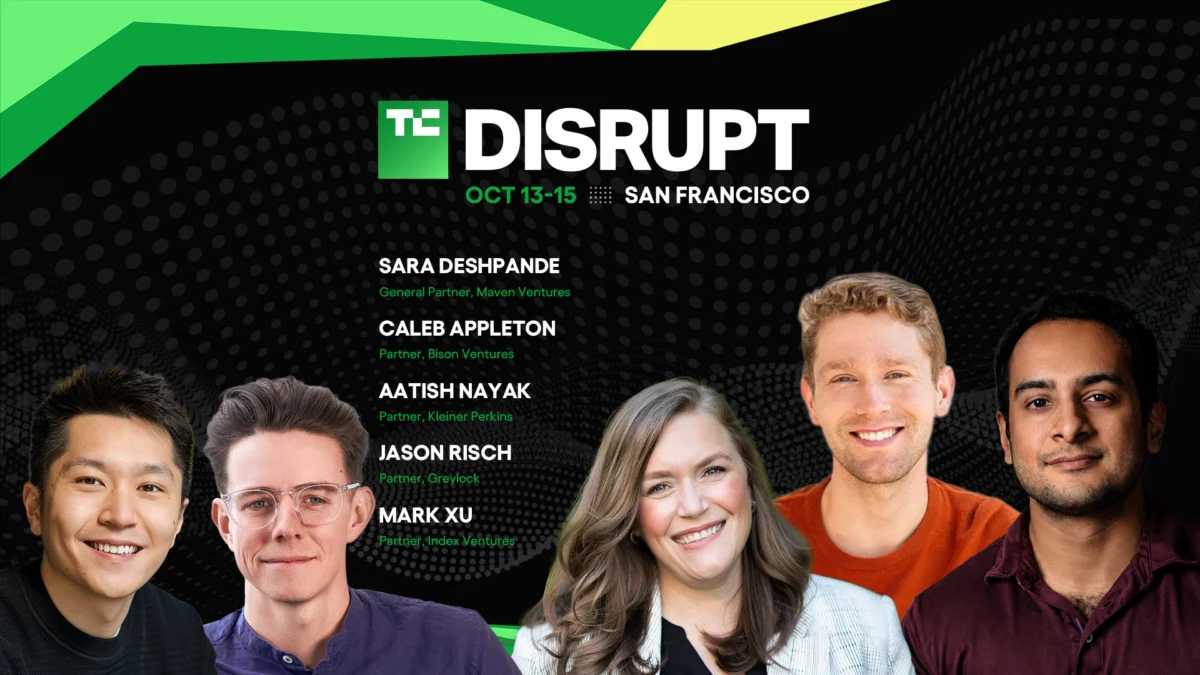
The fundraising landscape has undergone a radical transformation, and the Builders Stage aims to demystify the new requirements for securing capital. Data from 2024 and 2025 indicated a widening gap between seed rounds and Series A, often referred to as the "Series A Crunch." To address this, the 2026 agenda includes a forward-looking session titled "The Series A in 2027," featuring partners from Index Ventures, Peak XV, and Bessemer Venture Partners.
Industry analysts note that while seed funding remains relatively accessible for strong teams, the bar for Series A has shifted. Investors are now looking for more than just a minimum viable product (MVP); they are seeking evidence of a repeatable sales motion and a path to $10 million in Annual Recurring Revenue (ARR). The session "The 90-Day GTM" will explore why the timeline from zero to $10M ARR is being compressed and how AI-enabled tools allow smaller teams to achieve distribution at a velocity previously reserved for well-funded corporations.
For those at the earliest stages, the session "Winning Pre-Seed Without a Product" will provide a tactical guide on how founders can leverage "founder-market fit" and narrative-driven fundraising. Speakers such as Puneet Agarwal of True Ventures and Austin Clements of Slauson and Co. will discuss the psychology of the first check and how to build credibility before a single line of code is written.
Operational Excellence and Product Management at Scale
Scaling a product from its first thousand users to a billion is a recurring theme of the 2026 Builders Stage. Robby Stein, VP of Product at Google, will lead a fireside chat on how product decision-making must evolve as a company grows. The "instincts" that serve a founder in a garage can often become liabilities in a multi-billion-user environment where reliability and trust are as important as innovation.
The agenda also tackles the "multi-product" challenge. Many startups stall after their initial success because they fail to build a "Second Act." Filip Kaliszan of Verkada and Aaron Jacobson of New Enterprise Associates will share a playbook for capital allocation and internal innovation, showing how to engineer compounding growth before the core product’s growth curve begins to flatten. This is particularly relevant in the 2026 market, where "single-feature" companies are increasingly being consolidated or outcompeted.
The Human Infrastructure: Hiring and Founder Resilience
The definition of a "startup team" is being rewritten by the integration of AI agents into the workforce. The session "Hiring When AI Is a Co-Founder," featuring Gusto CEO Josh Reeves, will explore the hybrid team models of the future. As AI takes over engineering, support, and basic operations, the role of the human employee is shifting toward high-level strategy and creative problem-solving. This change has profound implications for compensation, culture, and retention.

Furthermore, the Builders Stage will break the silence on the psychological toll of entrepreneurship. "Yes, It’s Hard to Be a Founder: An Honest Conversation" brings together mental health experts and active founders to discuss burnout, decision fatigue, and the identity strain of leadership. In an industry that often glorifies "the hustle," this session represents a maturing tech culture that recognizes sustainable performance requires mental resilience.
M&A and Exit Strategies in a Tightening Market
With the IPO window remaining selective, M&A (Mergers and Acquisitions) has moved from an "afterthought" to a core early-stage strategy. A panel featuring Aklil Ibssa of Coinbase and Karl Alomar of M13 will discuss how founders can build with an acquisition in mind from day one. By focusing on strategic partnerships and product interoperability, startups can create "exit optionality," providing a safety net for founders and investors alike in a volatile economic climate.
This strategic shift is backed by data showing that "tuck-in" acquisitions—where a larger company buys a startup for its team or a specific technology—are becoming the primary liquidity event for the majority of successful startups. Understanding how to navigate these deals without distracting from core growth is a critical skill for the modern founder.
Event Timeline and Participation Details
The October event in San Francisco serves as the culmination of a year-long cycle of startup activity. TechCrunch Disrupt 2026 will follow a structured three-day timeline:
- Day 1 (October 13): Focus on "Zero-to-One" mechanics, pre-seed fundraising, and initial product-market fit.
- Day 2 (October 14): Scaling operations, GTM strategies, and the transition to Series A and B.
- Day 3 (October 15): Long-term sustainability, M&A, and the "High-Conviction Filter" debrief from the Startup Battlefield judges.
Registration for the event is currently open, with "Early Bird" pricing offering savings of up to $330. As ticket prices are structured on a tiered basis, early commitment is encouraged for founders looking to maximize their professional development budget.
Broader Impact and Industry Implications
The return of the Builders Stage at TechCrunch Disrupt 2026 signals a broader shift in the technology sector toward "substance over hype." By focusing on the "how" of company building, TechCrunch is positioning itself as an essential resource for the next generation of resilient entrepreneurs. The insights shared on this stage are expected to influence startup strategies well into 2027 and beyond, particularly as the industry navigates the transition from experimental AI to integrated, value-driven technology.
As San Francisco continues to reinforce its status as the world’s AI capital, the gathering at the Moscone Center will serve as a barometer for the health of the global startup ecosystem. For the 10,000 attendees, the Builders Stage offers more than just information; it provides a community of peers and mentors dedicated to the difficult, often unglamorous work of building the future. The strategies discussed here—ranging from AI orchestration to founder mental health—will likely define the operational standards for the next decade of tech innovation.