Gilang Muhammad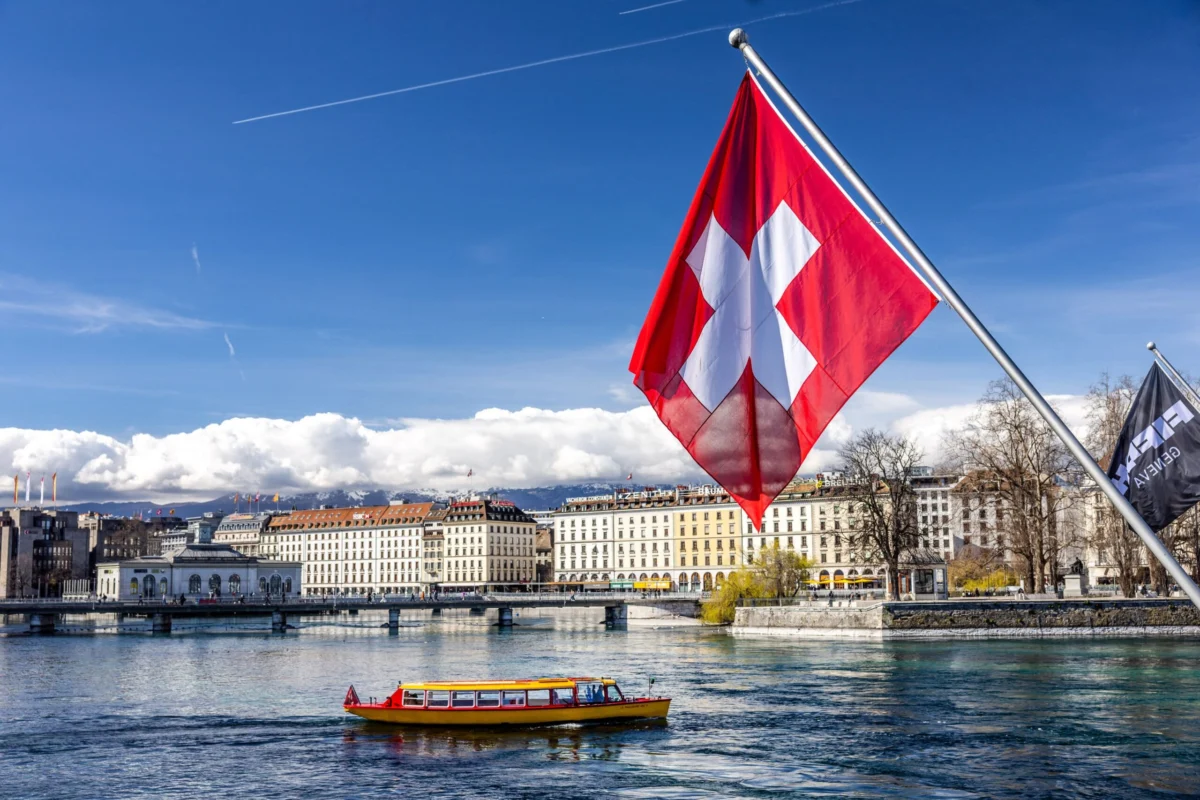
The Swiss National Bank (SNB) announced on Thursday its decision to maintain its key interest rate at 0%, a move that distinctly sets it apart from a global landscape dominated by central banks aggressively raising rates to combat persistent inflation. This latest policy pronouncement, following its quarterly monetary assessment, underscores Switzerland’s exceptional economic stability and its comparatively subdued inflationary pressures, even as analysts and market participants increasingly anticipate an eventual shift in the SNB’s dovish stance.
This decision marks a significant divergence from the monetary policy trajectories of Switzerland’s principal trading partners and economic peers. Central banks such as the European Central Bank (ECB), the U.S. Federal Reserve (Fed), and the Bank of Japan (BoJ) have all embarked on, or are contemplating, tightening cycles, primarily in response to inflation rates that have soared to multi-decade highs. The Bank of England (BoE) and the Bank of Canada (BoC), also crucial partners for Switzerland, are widely expected to follow suit with further rate hikes later in the year, cementing a broad global trend of monetary normalization.
However, Switzerland’s economy, often described as an anomaly, has demonstrated remarkable insulation from the inflationary surge witnessed across much of the developed world. In August, the nation’s annual inflation rate gently nudged up to 0.8%. This modest increase was primarily attributed to rising costs in specific energy categories, namely gasoline, diesel, and heating oil. Yet, this figure pales in comparison to the significantly elevated inflation levels observed in the United States, the United Kingdom, and the Eurozone, where rates have frequently hovered between 2% and 10% over the past two years. While major central banks typically target an inflation rate of 2%, the SNB’s objective is to maintain price stability within a narrow band of 0% to 2%, a target it has comfortably met for an extended period.
Despite its current position, market watchers and economists largely concur that it is only a matter of time before the SNB is compelled to join its international counterparts in a tightening cycle. Traders are currently pricing the odds of a rate hike versus a hold in December at roughly 50-50, with a more substantial 90% probability of the SNB commencing its hiking cycle by early 2027. Data compiled by LSEG further indicates that market participants are betting on the SNB’s key rate ascending to at least 0.75% by September of next year, signaling a clear expectation of future policy adjustments.
The Unique Pillars of Swiss Economic Resilience
Several intertwined factors contribute to Switzerland’s distinctive economic landscape and its ability to maintain low inflation amidst global price pressures. Foremost among these is the Swiss franc’s enduring status as a global safe-haven currency. In times of international market volatility, geopolitical uncertainty, or economic downturns, investors flock to the franc, driving up its value. This appreciation of the currency exerts a powerful deflationary pressure on the domestic economy. Given that imports constitute a significant component of Swiss consumption and industrial input, a stronger franc translates directly into cheaper imported goods and services, thereby mitigating imported inflation.
For instance, amidst widespread market volatility in recent years, the Swiss franc experienced a notable appreciation, rising by more than 12% against the U.S. dollar. While the greenback has since recovered some ground, clawing back approximately 4% against the franc this year, the underlying strength of the Swiss currency remains a crucial buffer against external price shocks. The SNB actively monitors exchange rates as part of its mandate to maintain "appropriate monetary conditions," recognizing the franc’s potential to curb both inflation and economic activity if it appreciates too suddenly or excessively.
Beyond currency dynamics, Switzerland benefits from a highly diversified and high-value export economy, specializing in pharmaceuticals, precision machinery, luxury goods, and financial services. These sectors are less susceptible to the cyclical swings that impact commodity-dependent economies, contributing to overall stability. Furthermore, the country’s robust fiscal discipline, enshrined in its constitutional "debt brake" mechanism, ensures balanced budgets and prevents the need for higher yields to attract bond investors, which in turn supports lower interest rates.
SNB’s Measured Outlook and Global Interdependencies
Speaking to CNBC on Thursday, SNB Chairman Martin Schlegel reiterated that the policymakers’ decision to keep rates unchanged was firmly anchored in the prevailing inflation picture. SNB forecasts indicate that inflation is expected to "continue to rise somewhat in the fourth quarter, before declining again over the course of 2027." This anticipated decrease is largely attributed to the expectation that "energy inflation, which is currently significantly elevated, is likely to decline again in the coming quarters," before the conditional inflation forecast subsequently rises slightly. The SNB projects average annual inflation to reach 0.7% in 2026, and then stabilize at 0.8% for both 2027 and 2028, well within its target range.
However, Schlegel also acknowledged the persistent "very high" level of general uncertainty and highlighted the influence of a weaker Swiss franc. He recalled the SNB’s increased willingness to intervene in the foreign exchange (FX) market in early March, a period marked by significant geopolitical tensions, such as the outbreak of war in Iran, which triggered substantial safe-haven flows. At that time, the SNB acted to prevent the franc from "appreciating strongly and abruptly." While the franc has since weakened over the past few months, Schlegel affirmed the SNB’s continued readiness to intervene in the FX market "if necessary," underscoring the currency’s pivotal role in its monetary policy toolkit.
When pressed on whether the SNB was taking cues from other central banks’ hiking cycles, Schlegel firmly stated, "We make monetary policy for Switzerland." Yet, he conceded that the inherently open nature of the Swiss economy necessitates careful consideration of global developments. "Of course, Switzerland is a small open economy, so what happens abroad really matters quite a lot for Switzerland. Therefore, when we take our decisions, we always take what happens abroad into our considerations," he explained, emphasizing that a 0% rate was deemed appropriate "at the moment."
Historical Context: A Legacy of Unconventional Policy
The SNB has a well-documented history of implementing unconventional monetary policies to safeguard its economy and maintain price stability. From 2015 until a series of gradual exits starting in 2022, Switzerland maintained negative interest rates, plunging its policy rate to as low as -0.75% to counter persistent deflationary pressures and curb excessive franc appreciation. This aggressive stance, aimed at discouraging capital inflows and stimulating the domestic economy, was a hallmark of its policy for nearly eight years.
Throughout this period, the SNB also engaged in significant foreign exchange interventions, accumulating a massive balance sheet of foreign currency assets to prevent the franc from strengthening too much, which would harm its export-oriented economy. This proactive approach underscores the SNB’s flexibility and willingness to deploy a broad range of tools beyond conventional interest rate adjustments. The current environment, while different, still sees the SNB leveraging the franc’s characteristics as a primary policy lever, albeit with a different emphasis.
Analyst Perspectives and the "Safe Haven Dividend"
Economists at UBS had initially projected a preliminary hike from the SNB no earlier than June 2027. However, recent developments have prompted a reassessment. In a note published earlier this month, UBS economists highlighted the falling value of the franc, alongside elevated global oil prices and the unexpected resilience of the U.S. and Eurozone economies, as factors raising the likelihood of an earlier-than-anticipated SNB hike. "Swiss franc depreciation of more than 2% against the euro and more than 1% against the US dollar since the last SNB meeting in June could increase concerns that inflation will accelerate more than previously anticipated," they noted. While acknowledging that "inflation is quite unlikely to exceed 2% over the next 12-18 months," they cautioned that "the SNB has a history of surprising markets."
Gedeon Tumong, head of finance specialization at Switzerland’s HIM Business School, articulated what he terms a "safe haven dividend" enjoyed by the Swiss economy. "Unlike the U.S., the U.K. and the euro zone, Switzerland imports credibility as much as it imports goods," Tumong explained. This unique characteristic means that foreign capital inflows, attracted by Switzerland’s stability and strong institutions, inherently bolster the Swiss franc. The robust franc, in turn, acts as a natural curb on imported inflation, providing the central bank with ample justification to maintain lower interest rates compared to its counterparts like the Fed, BoE, or ECB.
Tumong further elaborated on the SNB’s "highly flexible monetary policy that actively boosts the Swiss Franc." He explained that when global energy and commodity prices surge, the franc’s natural appreciation effectively "absorbs the shock," making imported goods significantly cheaper for Swiss consumers. Moreover, Switzerland’s energy mix provides additional insulation. Energy accounts for only about 3.5% of the Swiss inflation basket, compared to roughly 7% in the Eurozone. This lower exposure is largely due to the country’s substantial reliance on alternative energy sources, particularly hydropower and nuclear power, which shields it from the full brunt of regional and global energy price shocks. The nation’s stringent fiscal debt brake, requiring balanced budgets, also obviates the need for higher yields to attract bond investors, contributing to its lower rate environment.
Antonio Fatás, a professor of economics at INSEAD business school in France and an external consultant for the IMF, emphasized Switzerland’s long-standing history of low inflation, which critically anchors inflation expectations. "When a shock hits, a central bank that can rely on low inflation expectations will have an easier time managing inflation and keeping it low — that’s the case [for the likes of] Switzerland or Japan," he observed. This ingrained expectation of price stability among economic agents allows the SNB greater flexibility in its policy responses.
However, Fatás also provided a crucial perspective on real interest rates, which adjust nominal rates for inflation. He pointed out that when considering Switzerland’s real interest rate, the country is not an outlier. "[An] interest rate at 0% and inflation around 0.8% means a real interest rate of -0.8%," he stated. Comparing this to the Eurozone, where an interest rate of 2.5% and inflation of approximately 3.2% results in a real interest rate of -0.7%, Fatás concluded, "so very similar. The U.K. and U.S. numbers are also similar even if slightly higher." This analysis suggests that while Switzerland’s nominal rate appears exceptionally low, its real monetary stance is broadly consistent with other major economies, reinforcing the idea that "this is a story of low inflation that persists through the years and anchors the expectations of all economic players."
Broader Implications and Future Outlook
The SNB’s continued divergence in monetary policy has several broader implications. For Swiss exporters, a strong franc, while curbing inflation, can make their goods more expensive abroad, potentially impacting competitiveness. However, the high-value nature of Swiss exports often makes them less price-sensitive. For the financial sector, a stable, low-inflation environment with predictable monetary policy fosters confidence, attracting foreign direct investment and supporting its role as a global financial hub.
Looking ahead, the SNB faces a delicate balancing act. While its current strategy is sustainable given Switzerland’s unique economic characteristics, external pressures are mounting. A persistent global inflation environment, further weakening of the franc, or a significant shift in international capital flows could force its hand. The ongoing vigilance over exchange rates and the readiness for FX market interventions will remain critical tools for the SNB as it navigates the complex interplay of domestic stability and global economic realities. The question is not if, but when, Switzerland will finally succumb to the global trend, and how swiftly the "land of cheese and chocolate" will adapt its zero-rate policy to the evolving economic landscape.