Reynand Wu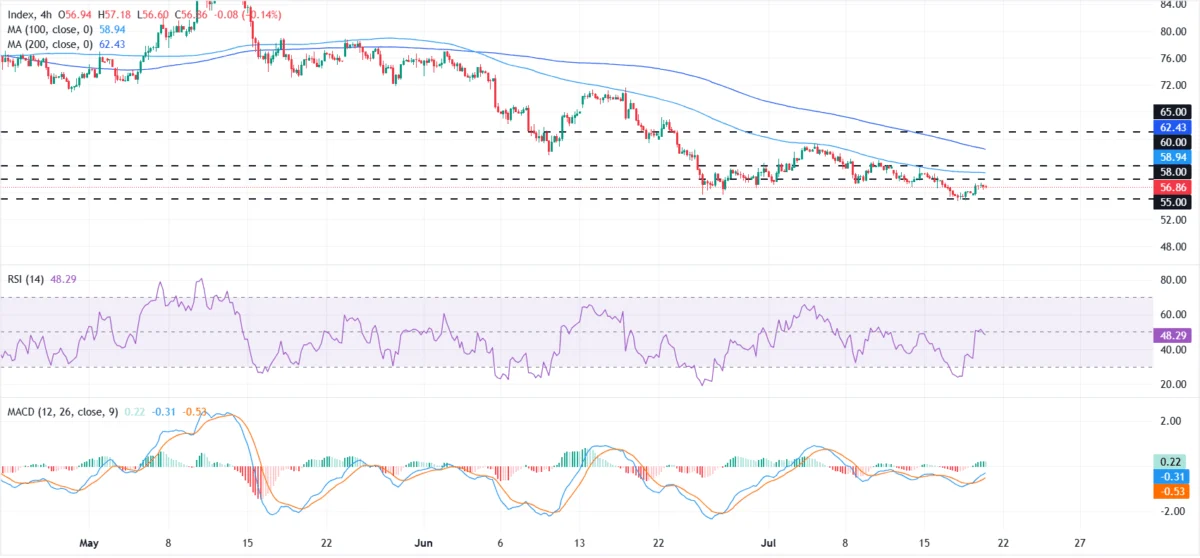
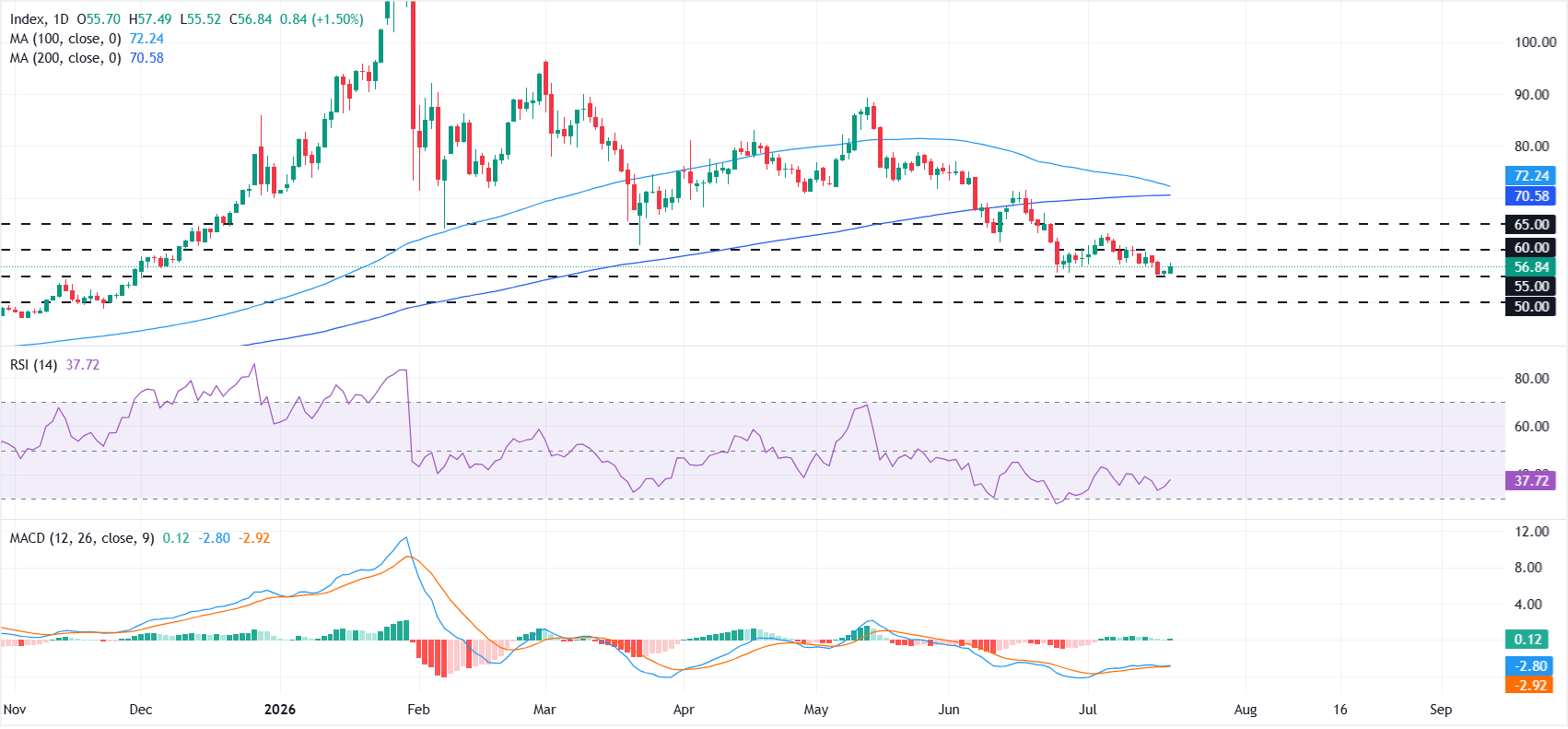
Silver (XAG/USD) began the trading week on a positive note, with buyers successfully defending the critical $55.00 support level after the precious metal briefly dipped below it on Friday, reaching its lowest point since December 2025. As of early Monday trading, XAG/USD was observed around $56.85, registering an increase of approximately 1.50% on the day. Despite this immediate rebound, the broader market sentiment remains cautiously optimistic, as the metal grapples with a confluence of geopolitical uncertainties, persistent inflationary pressures, and a firm stance from the US Federal Reserve, all of which continue to bolster the US Dollar. The technical landscape, while showing early signs of a slowdown in selling momentum, largely retains a bearish tilt, suggesting that any sustained upside will require a significant shift in fundamental drivers.
Market Fundamentals: The Dollar, Fed, and Geopolitics
The current market dynamics for silver are intricately linked to several macroeconomic and geopolitical factors that collectively exert pressure on its price trajectory. While silver often benefits from its dual role as a safe-haven asset and an industrial commodity, the prevailing environment appears to favor alternative safe havens and disincentivize non-yielding assets.
The US Dollar’s Dominance
A primary headwind for silver, as with most commodities priced in the greenback, is the strengthening US Dollar. Escalating tensions in the Middle East have historically driven investors towards the perceived safety and liquidity of the US Dollar, often at the expense of other traditional safe havens like gold and silver. When the Dollar strengthens, it makes dollar-denominated assets more expensive for international buyers, thereby reducing demand and typically putting downward pressure on prices. The current geopolitical landscape, marked by persistent regional instability, reinforces the Dollar’s appeal, creating an uphill battle for silver to gain substantial traction. Market participants closely monitor geopolitical developments, understanding that any intensification could further cement the Dollar’s strength and constrain silver’s upside potential.
Inflationary Pressures and Federal Reserve Policy
Another significant factor shaping silver’s outlook is the ongoing concern about energy-driven inflation. Elevated global energy prices have a cascading effect across economies, fueling broader inflationary risks. In response to persistent inflation, central banks, most notably the US Federal Reserve, are expected to maintain a hawkish monetary policy stance. Hawkish Fed expectations, which imply higher interest rates or a prolonged period of restrictive policy, tend to weigh heavily on non-yielding assets such as silver. Higher interest rates increase the opportunity cost of holding assets that do not generate income, making interest-bearing alternatives like government bonds more attractive. This dynamic siphons capital away from precious metals, dampening investment demand. Investors are keenly watching upcoming inflation reports and any pronouncements from Federal Reserve officials for clues regarding the future path of interest rates, as these will directly influence silver’s attractiveness as an investment. The anticipation of delayed rate cuts or even the possibility of further rate hikes in the face of stubborn inflation continues to cast a shadow over the precious metals complex.
Geopolitical Undercurrents
Beyond the immediate impact on the US Dollar, broader geopolitical uncertainties contribute to market volatility and investor caution. While silver can act as a safe haven, its industrial demand component makes it more susceptible to global economic slowdowns than gold. Heightened geopolitical risks can disrupt supply chains, impact manufacturing output, and temper global economic growth prospects, all of which indirectly affect industrial silver consumption. The ongoing situation in key regions, coupled with broader macroeconomic uncertainties, compels investors to adopt a more risk-averse posture, leading to a general reduction in speculative exposure to commodities.
Shifting Market Sentiment: Industrial and Investment Demand
The fundamental underpinnings of silver’s price are derived from both its industrial utility and its role as an investment vehicle. Recent analyses suggest a weakening in both these pillars, contributing to the current bearish sentiment.
TD Securities’ Analysis and Speculative Positioning
According to a recent assessment by TD Securities, speculative appetite for silver is notably fading. The bank highlighted that "money managers have also reduced their long silver exposure, which will apply downward pressure on prices due to weakening industrial and investment demand." This observation is critical, as large institutional positioning often dictates market trends. A reduction in "long silver exposure" signifies that these professional investors are decreasing their bets on higher silver prices, either by selling existing long positions or refraining from opening new ones. This retrenchment reflects a more cautious stance, indicating that major market players foresee limited upside potential or anticipate further declines. The collective unwinding of long positions by money managers can create significant selling pressure, reinforcing a bearish trend. This shift in speculative positioning underscores a broader lack of conviction among institutional investors regarding silver’s near-term prospects.
Industrial Demand Outlook
Silver’s extensive industrial applications, particularly in electronics, solar energy, and medical technology, make its demand sensitive to the global economic cycle. A significant portion of mined silver is consumed by industries, making global manufacturing output and technological advancements key drivers. As global economic growth forecasts are revised downwards or as uncertainties persist, industrial demand for silver tends to soften. Reports of slowing industrial activity in major economies, particularly China and the United States, can directly translate into reduced demand for raw materials like silver. For instance, a deceleration in the production of consumer electronics or a slowdown in the expansion of solar panel manufacturing could notably impact silver consumption. This weakening in industrial demand removes a crucial pillar of support for silver prices, allowing supply-demand dynamics to tilt towards an oversupply in the market.
Investment Appetite and Safe-Haven Appeal
Beyond industrial use, silver also serves as a store of value and an inflation hedge, attracting investment demand, particularly during periods of economic uncertainty or currency debasement. However, in the current environment, where the US Dollar is strengthening and real interest rates are firming up due to hawkish Fed expectations, silver’s appeal as a safe haven or inflation hedge is somewhat diminished compared to alternatives. While physical demand for silver coins and bars can provide some floor, the broader investment landscape, including Exchange Traded Funds (ETFs) that track silver prices, appears to be experiencing outflows or reduced inflows. When investors perceive better risk-adjusted returns elsewhere, or when the opportunity cost of holding a non-yielding asset increases, investment interest in silver naturally wanes. This softening of both industrial and investment demand creates a challenging environment for silver to mount a sustained rally.
Technical Landscape: Navigating Key Price Levels
The technical analysis provides a roadmap of potential price movements, indicating key support and resistance levels that traders and investors are closely monitoring. Despite the recent bounce, the overarching technical picture for silver remains bearish, albeit with some signals of potential short-term stabilization.
Daily Chart: A Long-Term Bearish Stance with Signs of Stabilization
On the daily chart, XAG/USD is trading significantly below both its 200-day and 100-day Simple Moving Averages (SMAs). These long-term moving averages are widely regarded as indicators of the prevailing trend, and trading below them unequivocally signals a bearish market bias over the medium to long term. The 200-day SMA, currently around $70.58, and the 100-day SMA, at $72.24, represent formidable barriers that would need to be decisively overcome to signal a reversal in the long-term downtrend.
The Relative Strength Index (RSI), a momentum oscillator, is currently hovering around 38. This reading, staying below the neutral 50 line, confirms that bearish momentum is dominant but suggests it might be easing. An RSI below 30 typically indicates oversold conditions, so a reading of 38 implies that while sellers are still in control, the selling pressure is not as intense as it could be, potentially paving the way for a relief bounce. Concurrently, the Moving Average Convergence Divergence (MACD) indicator shows a slightly positive reading. While not a strong bullish signal, a positive MACD hints at tentative attempts by buyers to stabilize the price after the recent slide, suggesting that the immediate downside momentum might be losing steam.
Looking at key price levels, initial resistance for silver on the daily chart emerges at a horizontal barrier near $60. A more substantial resistance zone is identified around $65. A sustained break above these levels would be crucial to alleviate selling pressure and could potentially open the path towards the 200-day SMA at $70.58, followed by the 100-day SMA at $72.24 as the next significant hurdles. On the downside, immediate support is found at the psychological and technical level of $55. A decisive breach of this floor would be a significant bearish development, potentially opening the way towards the $50 zone, a critical area where buyers are expected to mount a strong defense to prevent deeper losses. The $50 level often acts as a major psychological and technical support, having historically served as a pivot point.
Four-Hour Chart: Short-Term Corrective Bounce Amidst Bearish Bias
Zooming into the 4-hour chart reveals a near-term bearish bias for XAG/USD, as it continues to trade below its 100-period Simple Moving Average (SMA) at $58.94 and its 200-period SMA at $62.43. These shorter-term moving averages underscore the persistent selling pressure on a more immediate timeframe.
The metal has indeed bounced off its recent lows, demonstrating some resilience. However, this recovery is currently capped by a nearby horizontal barrier at $58. The Relative Strength Index (RSI) on the 4-hour chart is around 47, staying near the neutral 50 line. This indicates a relatively balanced short-term momentum but no strong bullish conviction. The Moving Average Convergence Divergence (MACD) has turned mildly positive, which, similar to the daily chart, suggests that the recent recovery is more likely a corrective bounce within a broader downtrend rather than a definitive trend reversal. For a genuine reversal to be confirmed, silver would need to break above key resistance levels with significant volume and sustained momentum.
On the topside, immediate resistance is located at $58.00. Should silver overcome this, the next challenge lies at the 100-period SMA near $58.94, followed by the psychological $60.00 mark. Further overhead, the 200-period SMA at $62.43 and the prior horizontal cap at $65.00 reinforce a broader supply zone, indicating strong selling interest at these higher levels. On the downside, initial support is identified at the horizontal level of $55. A break below this crucial floor would likely expose the metal to deeper losses, reinforcing the prevailing bearish structure and potentially targeting lower support zones.
Broader Market Context and Silver’s Dual Nature
Silver’s unique position as both a precious metal and an industrial commodity makes its market dynamics more complex than gold’s. This dual nature means its price is influenced by a wider array of factors, from inflation expectations and interest rates to manufacturing output and technological advancements.
Silver vs. Gold: The Ratio’s Insights
The Gold/Silver ratio, which expresses how many ounces of silver are needed to buy one ounce of gold, is a widely used indicator for assessing the relative valuation of the two metals. Historically, a high ratio suggests that silver is undervalued relative to gold, or conversely, gold is overvalued relative to silver, potentially signaling a buying opportunity for silver. Conversely, a low ratio might suggest the opposite. Given silver’s recent weakness and struggle for momentum compared to gold’s more stable performance (even if under pressure), the Gold/Silver ratio might be trending higher, indicating that silver is currently underperforming its yellow counterpart. This divergence can attract investors who seek relative value plays, but only if the underlying fundamentals for silver improve.
Global Economic Influences
Beyond specific industrial sectors, the overall health of the global economy significantly impacts silver. Robust global GDP growth typically translates into higher industrial output and increased demand for raw materials. Conversely, economic slowdowns or recessions can severely depress industrial demand. Major economies like the US, China, and India play crucial roles. China, as a manufacturing powerhouse, is a significant consumer of industrial silver. India’s demand for silver, driven by jewelry and investment, also holds considerable sway. Any shifts in economic policy, consumer sentiment, or manufacturing data from these regions can ripple through the silver market.
Supply-Side Considerations
While the article primarily focuses on demand-side factors, supply dynamics also play a role. Silver is often a byproduct of mining other metals like copper, lead, and zinc. Therefore, its supply is less responsive to its own price movements compared to metals primarily mined for their own sake. Disruptions in base metal mining can inadvertently affect silver supply. Recycling rates also contribute to the overall supply, with higher prices often incentivizing more recycling. However, compared to demand fluctuations driven by macroeconomic shifts and speculative positioning, supply-side changes tend to be more gradual.
Outlook and Implications
The immediate outlook for silver appears to be a delicate balance between short-term technical bounces and persistent fundamental headwinds. While the metal has shown resilience in defending the $55.00 mark, a sustained upward trend requires a significant shift in market sentiment. Key catalysts for such a shift would include a clear pivot in Federal Reserve policy towards rate cuts, a de-escalation of geopolitical tensions, or a robust resurgence in global industrial activity.
In the absence of these major shifts, silver is likely to remain under pressure, with rallies potentially being seen as opportunities for sellers to re-enter the market. Investors and traders will continue to monitor a range of indicators, including inflation data, central bank communications, geopolitical headlines, and global manufacturing Purchasing Managers’ Index (PMI) readings, for directional clues. The $55.00 level remains a critical near-term support, with a break below it opening the door for further declines towards the $50.00 psychological barrier. Conversely, reclaiming and holding above $60.00 would be the first step in alleviating the immediate bearish pressure and signaling a potential for a more meaningful recovery. Until then, silver’s path appears constrained by the prevailing macroeconomic and geopolitical climate.