Reynand Wu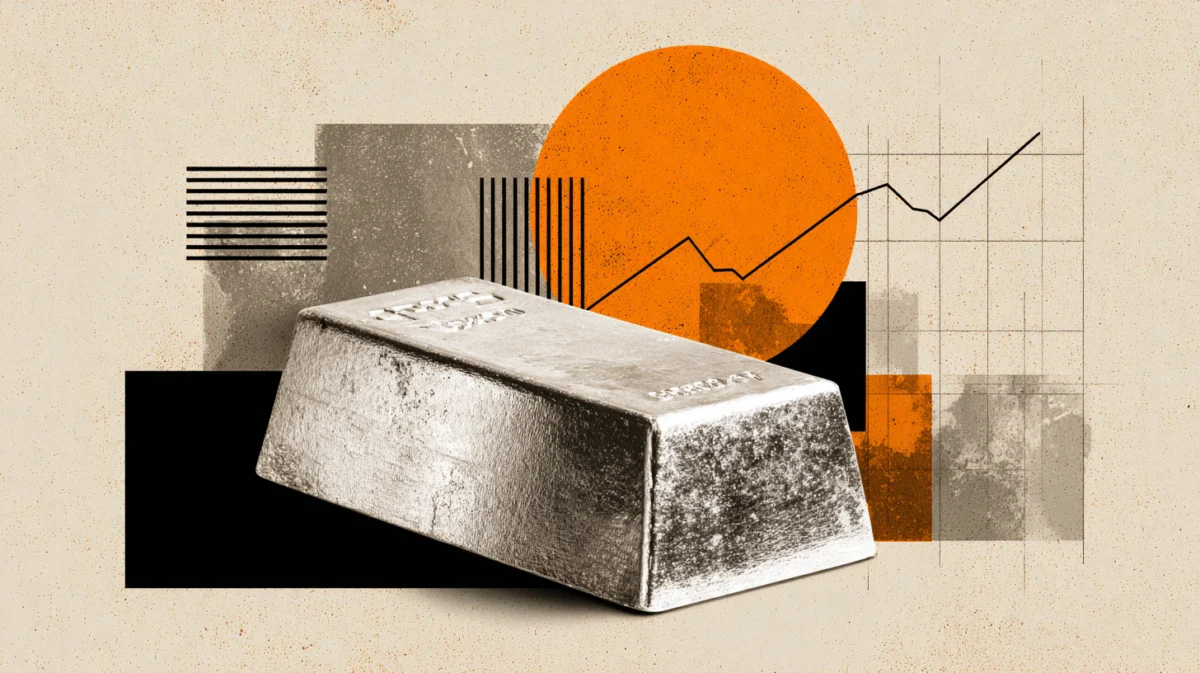
Silver prices experienced a modest rally, registering gains of over 1% in recent trading sessions, yet the precious metal continues to grapple with significant technical resistance, notably trading below a critical "head and shoulders" neckline. This technical formation, widely recognized in market analysis, suggests that the overall trend in the short-term may be tilted to the downside, despite the day’s positive movement. The XAG/USD pair, representing the spot price of silver against the US Dollar, was observed trading at $64.24, having demonstrated resilience by bouncing off earlier daily lows of $62.94. This intraday recovery, while notable, comes amidst a broader landscape of market uncertainty and complex macroeconomic indicators that continue to shape the trajectory of precious metals.
The current market dynamics for silver present a nuanced picture for investors and analysts alike. While a 1% daily gain might signal renewed interest, the underlying technical structure points to persistent challenges. The "head and shoulders" pattern is a classic bearish reversal formation, typically observed at market tops, indicating a potential shift from an uptrend to a downtrend. Its "neckline" is a crucial support level, and trading below it often confirms the pattern’s bearish implications. For silver, this neckline is identified in the range of $64.10-$64.15, making the current trading position precariously close to, but still below, this critical threshold.
Technical Outlook: A Battle for Momentum
The white metal finds itself at a pivotal juncture, poised for a potential sideways trading pattern if it fails to decisively clear the aforementioned neckline. The inability to break above this resistance could further solidify bearish momentum, which, despite the daily gains, is already building. This sentiment is corroborated by the Relative Strength Index (RSI), a popular momentum oscillator. The RSI is currently positioned below the 50 neutral level, a key indicator often interpreted as bearish momentum, even though it shows signs of aiming higher. This divergence between price action and momentum indicator suggests a cautious approach is warranted for short-term traders.
Should the XAG/USD manage to gather sufficient bullish impetus and rise past the significant psychological mark of $65.00, it could open the door for a more sustained recovery. Such a breakthrough would target the 100-day Simple Moving Average (SMA), currently resting at $66.94. A clear violation of this moving average would be a strong bullish signal, potentially paving the way for further strength towards the $67.00 figure. Beyond this, bulls could then test the $70.00 psychological resistance level, a significant hurdle that, if overcome, would bring the 200-day SMA at $73.05 into focus. The 200-day SMA is widely regarded as a long-term trend indicator, and a move above it would imply a fundamental shift in silver’s long-term outlook.
Conversely, the downside risks remain palpable. Silver’s immediate technical support is identified at the $64.00 mark, a level that has proven to be a crucial battleground for buyers and sellers. If bearish momentum intensifies, sellers could push the price towards the 50-day SMA, situated at $62.55. A breach of this intermediate moving average would expose the July 22 high-turned-support at $61.01. This level is particularly significant as prior resistance often acts as future support, and its breakdown would signal considerable weakness. A failure to hold $61.01 would likely expose the psychologically important $60.00 figure, a level that, if broken, could trigger a more significant downward correction.
Broader Economic Context and Influencing Factors
Silver’s price movements are not isolated events; they are intricately linked to a complex web of global economic, financial, and geopolitical factors. As a precious metal, silver shares many characteristics with gold, often acting as a safe-haven asset during times of economic uncertainty or geopolitical instability. However, its significant industrial demand component distinguishes it, making it sensitive to global economic growth cycles.
Global Macroeconomic Environment: The current backdrop of elevated inflation, aggressive monetary tightening by central banks globally (particularly the US Federal Reserve), and lingering fears of a potential recession casts a long shadow over asset markets. Higher interest rates typically weigh on non-yielding assets like silver, as the opportunity cost of holding them increases relative to interest-bearing alternatives. The strength of the US Dollar (USD) also plays a crucial role; as silver is priced in dollars (XAG/USD), a stronger dollar makes silver more expensive for holders of other currencies, dampening demand. Conversely, a weaker dollar tends to propel silver prices higher. Recent shifts in central bank rhetoric and economic data releases have often triggered volatility in the USD, directly impacting silver.
Industrial Demand Dynamics: Unlike gold, which is primarily an investment and jewelry asset, a substantial portion of silver’s demand comes from industrial applications. Its unparalleled electrical and thermal conductivity, reflectivity, and antibacterial properties make it indispensable in various high-tech sectors. Key industries include:
- Electronics: Used in switches, contacts, conductors, and printed circuit boards. The proliferation of consumer electronics, from smartphones to electric vehicles, drives consistent demand.
- Solar Energy: Silver paste is a critical component in photovoltaic (PV) cells, enhancing their efficiency. The global push towards renewable energy sources, particularly solar power, has significantly boosted silver consumption in this sector. Projections for solar capacity expansion suggest this demand will only grow.
- Automotive: Found in various electrical components, sensors, and even anti-corrosion applications, especially with the rise of electric and hybrid vehicles which typically use more silver than traditional internal combustion engines.
- Medical and Photography: Its antibacterial properties are utilized in medical instruments and dressings, while traditional photography, though diminished, still accounts for some demand.
The health of major industrial economies like the United States, China, and India therefore directly impacts silver prices. China, as a global manufacturing hub, is a colossal consumer of industrial silver. India, on the other hand, is a significant market for silver jewelry and cultural demand. Any slowdown in these economies, or shifts in industrial policy, can have pronounced effects on silver’s supply-demand balance.
Timeline of Recent Silver Performance
Over the past few months, silver has experienced a roller coaster of price movements, reflecting the oscillating market sentiment. Following a period of significant gains earlier in the year, driven by inflation concerns and safe-haven buying, the metal began to face headwinds as central banks signaled more aggressive rate hikes.
- Early Year Rally: Silver saw a strong upward trend, breaking past several key resistance levels, fueled by expectations of persistent inflation and geopolitical tensions.
- Mid-Year Correction: As the Federal Reserve and other central banks began hiking interest rates more aggressively, the US Dollar strengthened considerably. This, coupled with fears of an impending global economic slowdown, put downward pressure on silver. Prices retreated from their highs, testing critical support levels.
- Recent Volatility: The period leading up to the current situation has been marked by increased volatility. Specific economic data releases, such as inflation reports (CPI, PPI) and employment figures, have often triggered sharp intraday swings. For instance, a stronger-than-expected jobs report might reinforce expectations of further rate hikes, boosting the dollar and weighing on silver. Conversely, signs of economic weakness or cooling inflation could spark a rally in precious metals. The rebound from the July 22 low, which now serves as a significant support level, illustrates the market’s sensitivity to these evolving narratives. The current attempt to bounce off daily lows of $62.94 reflects this ongoing battle between macroeconomic pressures and underlying demand.
Expert Insights and Market Sentiment
Market analysts generally concur on the importance of the technical levels currently in play for silver. Sarah Chen, a Senior Precious Metals Strategist at Global Capital Markets, commented, "Silver’s current position below the ‘head and shoulders’ neckline at $64.10-$64.15 is a significant technical concern for the short term. While the daily gain is positive, we need to see a decisive break and hold above $65.00 to invalidate this bearish pattern. Until then, the path of least resistance technically appears to be downwards, especially with the RSI signaling weak momentum."
Echoing this cautious sentiment, David Miller, a commodities analyst at Apex Investments, added, "The industrial demand narrative for silver remains compelling in the long run, particularly with the global push for green energy. However, in the immediate future, silver is highly susceptible to dollar strength and the Fed’s hawkish stance. Investors should monitor upcoming inflation data and central bank speeches closely. A sustained rally would likely require a pivot in monetary policy or a significant weakening of the dollar."
Some analysts also highlight the Gold/Silver ratio as an important indicator. This ratio, which shows how many ounces of silver are needed to buy one ounce of gold, currently suggests silver might be undervalued relative to gold. Historically, a high ratio often indicates silver’s undervaluation, tempting investors to buy silver in anticipation of a catch-up rally. Conversely, a low ratio might suggest gold is undervalued. This metric often serves as a guide for investors seeking to determine the relative valuation between the two precious metals.
Broader Impact and Implications
The current technical and fundamental outlook for silver has several implications:
For Investors:
- Short-Term Traders: The technical setup suggests heightened risk and the need for precision. A clear break above or below key levels will dictate short-term strategies. Volatility presents opportunities for those with robust risk management strategies.
- Long-Term Investors: For those with a longer time horizon, the current technical weakness might be viewed as a potential buying opportunity, particularly given the strong fundamental drivers from industrial demand (e.g., solar energy). However, patience may be required to navigate short-term price fluctuations. Diversification benefits of silver within a portfolio remain relevant.
For Industries:
- Manufacturers: Industries heavily reliant on silver, such as electronics and solar panel manufacturers, will closely monitor price volatility. Significant upward price spikes can increase production costs, potentially impacting profitability and product pricing. Conversely, lower prices offer a cost advantage.
- Mining Companies: Silver mining companies are directly impacted by price movements. Higher prices can boost revenues and profitability, incentivizing increased exploration and production. Sustained lower prices can lead to reduced output and delayed projects.
Overall Market Sentiment: Silver’s performance can sometimes act as a leading indicator for broader commodity markets or even economic health. Its dual role as a safe-haven and industrial metal means its price reflects both risk aversion and economic growth expectations.
Conclusion
Silver’s recent gains offer a glimmer of hope for bulls, yet the technical landscape, dominated by the ‘head and shoulders’ pattern and a cautious RSI, points to an ongoing struggle for upward momentum in the short term. The metal remains at a critical juncture, with key resistance levels needing to be decisively overcome to signal a recovery, while significant support levels must hold to prevent further downside. The broader economic environment, characterized by inflation concerns, central bank policies, and the US Dollar’s strength, continues to exert powerful influence. However, the long-term fundamental demand from burgeoning industrial sectors, particularly renewable energy, provides a compelling bullish narrative that could underpin silver’s value once the immediate technical and macroeconomic headwinds subside. Investors and market participants will undoubtedly keep a close watch on these evolving dynamics as silver navigates its complex path forward.