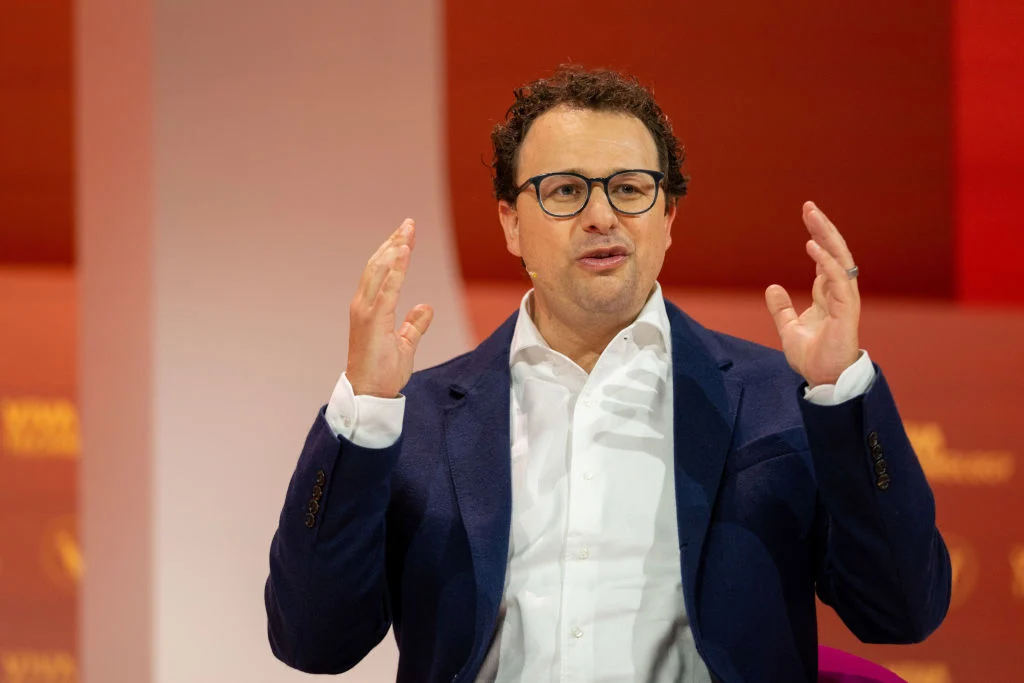
Farhan Pambudi
Ryan Breslow, the controversial entrepreneur who reclaimed the CEO seat at Bolt last year following a period defined by protracted legal battles and public friction with investors, is launching an aggressive effort to stabilize the checkout processing startup he co-founded a decade ago. The company, which once served as a poster child for the hyper-valuation era of venture capital, is currently in the process of raising a bridge round of up to $27 million, according to disclosures made by Breslow. This financing represents a critical juncture for a firm that has seen its internal valuation crater from a peak of $11 billion in early 2022 to approximately $300 million today—a precipitous 97% decline that mirrors the broader cooling of the fintech sector.
The new capital is being sourced primarily from existing investors and is structured as a convertible note. In the world of venture finance, a convertible note serves as a short-term debt instrument that eventually converts into equity, typically at a discounted rate, once a formal funding round is finalized. However, this specific round carries a punitive "pay-to-play" provision. This aggressive legal mechanism mandates that existing shareholders must participate in the new round or face a significant dilution of their current equity holdings. Such provisions are often utilized by distressed companies as a "carrot-and-stick" approach to force the hands of wavering backers who might otherwise be inclined to walk away from their investment.
The Mechanics of Survival: Bridge Rounds and "Pay-to-Play" Provisions
A bridge round is traditionally designed to provide a company with enough "runway"—the amount of time before it runs out of cash—to reach a specific operational milestone or to finalize a larger institutional fundraise. For Bolt, this $27 million infusion is intended to act as a precursor to a planned Series E2 round. Breslow has framed the bridge as a strategic move to capitalize on recent operational gains and to "clear legacy obligations," though the specific nature of those obligations remains undisclosed.
In the broader context of the startup ecosystem, bridge rounds are usually a sign of one of two things: a company is performing exceptionally well and wants to delay a larger round to achieve a higher valuation, or it is in a state of crisis. Given Bolt’s recent history, industry analysts largely view this as a restructuring effort. The inclusion of the pay-to-play clause suggests a degree of urgency and a need to consolidate the cap table. By forcing investors to either double down or lose their stake, Breslow is effectively thinning the ranks of Bolt’s roughly 100 investors, ensuring that only those with continued conviction in the company’s pivot remain on the board.
Breslow has signaled his own confidence by personally committing $5 million to the round. This "skin in the game" is a common tactic used by founders to reassure external backers, though it comes at a time when Breslow’s personal financial dealings, including a previously scrutinized $30 million personal loan, have been a point of contention with his board and the SEC.
From $11 Billion to $300 Million: A Chronology of Turbulence
The rise and fall of Bolt is a cautionary tale of the "Zero Interest Rate Policy" (ZIRP) era of venture capital. Founded in 2014 by Breslow, then a 19-year-old Stanford dropout, Bolt aimed to revolutionize online commerce by offering a "one-click" checkout experience that could compete with Amazon’s proprietary system.
By early 2022, Bolt had reached an $11 billion valuation, fueled by a frenzy of investment into e-commerce infrastructure. However, the company’s trajectory shifted sharply as the global economy tightened. The following timeline illustrates the company’s volatile journey:
- January 2022: Bolt raises $355 million at an $11 billion valuation, making Breslow one of the wealthiest young founders in tech.
- May 2022: Amid a broader tech downturn, Bolt lays off one-third of its staff (roughly 250 people) as Breslow steps down as CEO to become executive chairman.
- 2023: Reports surface of a SEC probe into whether Bolt and Breslow made misleading statements during the $11 billion fundraise. Simultaneously, the company enters a period of litigation with major investors, including BlackRock and Hedosophia.
- January 2024: A proposed $450 million funding round at a $14 billion valuation collapses. The deal was mired in controversy after it was revealed that a supposed lead investor was actually offering "marketing credits" rather than cash, leading to a legal standoff with existing shareholders.
- March 2025: Breslow returns as CEO, promising a "reimagining" of the company and the introduction of a new "super app."
- Present: Bolt initiates the $27 million bridge round to keep operations afloat.
The collapse of the $450 million round in early 2024 was particularly damaging to the company’s reputation. Existing investors sued to block the deal, alleging that the terms were opaque and the valuation was divorced from reality. While that lawsuit was eventually dismissed, the bridge round currently under negotiation is seen as a more realistic, albeit much smaller, attempt to stabilize the ship.
The Operational Pivot: From 900 Employees to 60
One of the most striking aspects of Bolt’s current state is its radically reduced footprint. At its peak in 2021, the company employed over 900 people across various global offices. Today, that headcount has plummeted to approximately 60. This 93% reduction in staff is part of what Breslow describes as a transition to a "lean, AI-driven" operation.
Breslow claims that despite the skeletal staff, the company is "shipping 10 times faster" than it did during its high-growth years. He attributes this efficiency to the integration of generative AI into the company’s coding and product development workflows. While many startups are making similar claims about AI-driven productivity, for Bolt, it is a necessity for survival. With only 60 employees, the company must maintain a complex checkout infrastructure that services thousands of merchants, a task that traditionally requires hundreds of engineers and support staff.
Furthermore, Breslow asserts that the company is nearing profitability and returning to growth. If true, this would mark a significant turnaround for a firm that saw its revenue shrink for several consecutive quarters during its period of leadership instability. However, without audited financial statements, these claims remain a point of skepticism for many in the venture community.
The "Super App" Vision: Competing with Stripe and PayPal
Breslow’s strategy for a Bolt resurgence hinges on the concept of a "super app." Introduced last year, this platform aims to integrate traditional one-click checkout with peer-to-peer payments, cryptocurrency transactions, and various financial services. Breslow has explicitly stated his desire for Bolt to become the "Lyft to Stripe’s Uber."
This comparison acknowledges Stripe’s dominance in the payment processing space while positioning Bolt as the scrappy, specialized alternative. The "super app" model is popular in Asian markets—exemplified by WeChat and Alipay—but has struggled to gain traction in the United States, where consumers tend to use fragmented apps for specific tasks. Bolt is betting that by owning the checkout button, it can cross-sell other financial services to the millions of shoppers who have already used its platform.
The competitive landscape, however, is formidable. Stripe and PayPal have entrenched relationships with merchants, and Shopify’s "Shop Pay" has become the de facto standard for millions of small-to-medium businesses. For Bolt’s super app to succeed, it must offer a value proposition that neither the incumbents nor the credit card networks can match.
Broader Implications for the Fintech Sector
The struggle of Bolt is emblematic of a broader "reckoning" in the fintech industry. During the 2020-2021 boom, companies were valued based on growth at all costs. In the current high-interest-rate environment, the market now prioritizes unit economics and sustainable paths to profitability.
Bolt’s 97% valuation drop is extreme, but it is not unique. Other "unicorns" from the same era have faced similar down-rounds or liquidations. The "pay-to-play" nature of Bolt’s current bridge round may become a more common feature in the coming year as companies with high burn rates and dwindling cash reserves are forced to accept draconian terms to stay alive.
Moreover, the personal brand of the founder continues to be a central theme in Bolt’s narrative. Breslow’s refusal to walk away—despite reportedly being offered millions by friends to start a new, cleaner venture—underscores a "founder-led" mentality that is both a strength and a liability. To his supporters, Breslow is a resilient visionary; to his detractors, he is a figure whose presence complicates the company’s ability to attract institutional capital.
Conclusion: A High-Stakes Gamble
The success of the $27 million bridge round is not yet guaranteed. While Breslow expects to raise at least $15 million from the company’s existing 100 investors, the outcome depends on whether those backers believe the "super app" and the AI-driven lean model are viable paths forward.
For Bolt, the stakes could not be higher. If the round fails, the company faces the very real prospect of insolvency or a fire sale. If it succeeds, Breslow buys himself another year to prove that Bolt can indeed be the "Lyft to Stripe’s Uber." Regardless of the outcome, the saga of Bolt serves as a definitive marker of the end of the hyper-growth era and the beginning of a much harder, more disciplined chapter in the history of Silicon Valley fintech.
The transition toward the Series E2 round will be the ultimate test. It will require not just the support of existing, pressured investors, but the validation of new, outside capital—something that has eluded Bolt for nearly three years. As the checkout startup navigates this precarious bridge, the tech industry will be watching to see if a 97% valuation drop is a terminal blow or merely a very expensive lesson in the volatility of the modern startup economy.