Clara Shinta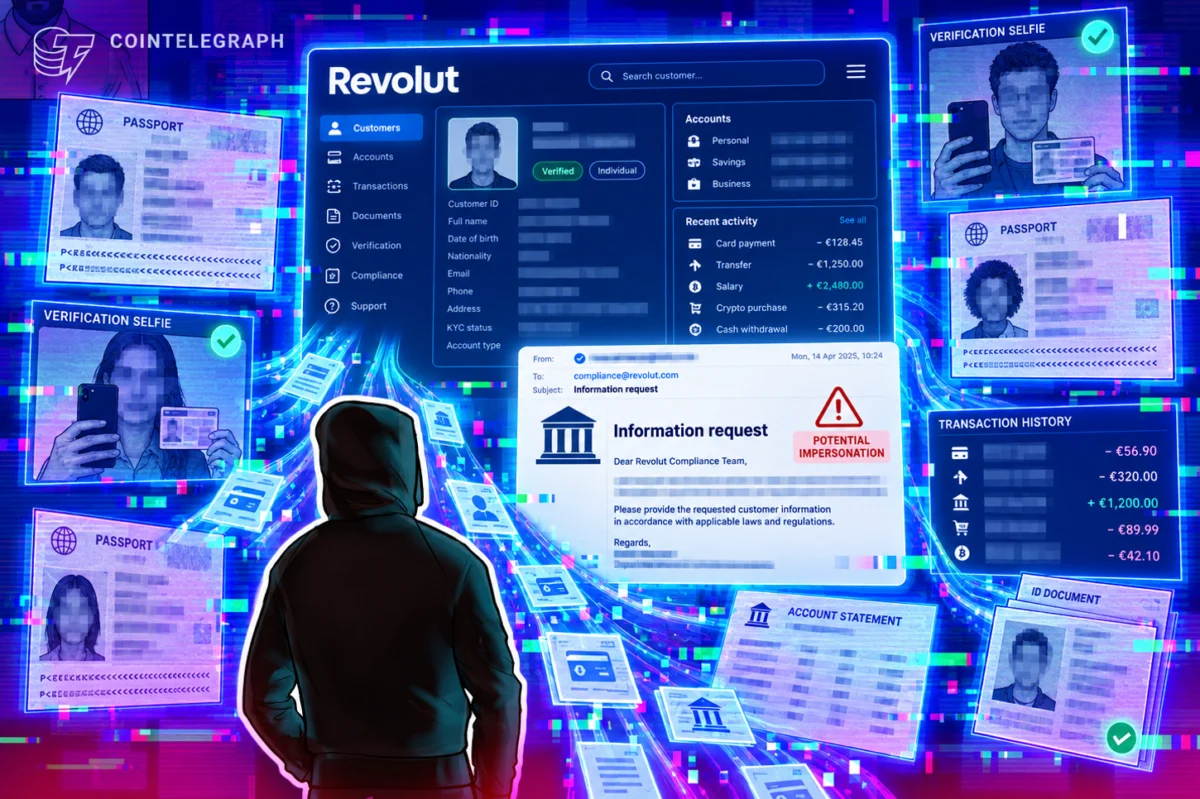
Financial technology and banking giant Revolut has been thrust into a significant data security incident, confirming the release of highly sensitive customer data, including copies of passports, verification selfies, and full transaction histories. The breach stemmed from a sophisticated fraudulent request that meticulously mimicked communications from a legitimate government agency, effectively bypassing the company’s authentication checks. This incident underscores the persistent and evolving threat of social engineering attacks, even against robust financial institutions entrusted with vast amounts of personal and financial data.
The Anatomy of the Breach: A Sophisticated Impersonation
The core of the incident lies in an "external impersonation scam" that leveraged a legitimate government agency email domain. This crucial detail suggests a high level of sophistication on the part of the unauthorized third party. By utilizing an email domain that would typically pass initial scrutiny, the attackers managed to circumvent Revolut’s internal authentication protocols designed to verify the legitimacy of information requests. The fact that requests originating from this seemingly authentic domain were initially processed highlights a critical vulnerability in the human and procedural layers of security, rather than a direct technical hack of Revolut’s core systems or customer funds.
The data compromised in this breach is among the most sensitive a financial institution can hold. Copies of passports provide national identification numbers, dates of birth, full names, and photographic identification, which are foundational elements for identity theft. Verification selfies, often required during Know Your Customer (KYC) processes, link an individual’s face to their identity documents, making deepfake or advanced identity fraud a more potent threat. Furthermore, full transaction histories offer a granular view into an individual’s financial life, revealing spending habits, income sources, and connections to other entities, which can be exploited for targeted phishing, financial fraud, or even blackmail. The aggregation of these data types presents a significant risk to the affected individuals, potentially enabling comprehensive identity impersonation.
The initial report on this alarming development came from International Cyber Digest, which posted details on X, stating that requests for customer information sent from a legitimate government agency email domain had successfully passed Revolut’s authentication checks. This public disclosure on X served as the initial alert to the wider cybersecurity community and the public, preceding Revolut’s official confirmations.
Chronology of Events
While specific dates for the initial fraudulent request and data release remain undisclosed by Revolut, a timeline of discovery and notification can be reconstructed:
- Undisclosed Period (Prior to Detection): An unauthorized third party successfully initiated fraudulent requests for customer information using an email domain belonging to a legitimate government agency. These requests passed Revolut’s internal authentication checks, leading to the release of sensitive customer data.
- Detection of Fraud: Revolut subsequently identified the requests as unauthentic, signaling the discovery of the breach. The exact date of this discovery has not been made public, but it occurred prior to the customer notifications.
- Immediate Mitigation Actions: Upon detection, Revolut took swift action to block the fraudulent address. The company also immediately alerted the relevant government agency whose domain had been impersonated.
- Regulatory and Law Enforcement Notification: Revolut promptly notified relevant enforcement agencies and financial regulators about the incident, adhering to its legal and ethical obligations regarding data breaches.
- Customer Notification (Friday): Customers whose information was compromised were directly notified by Revolut on a Friday. This direct communication is a crucial step in allowing affected individuals to take protective measures.
- Public Confirmation and Statement (Saturday): A company spokesperson confirmed the incident to Cointelegraph on a Saturday, publicly acknowledging the "sophisticated external impersonation scam." This statement provided the first official details to the broader public and media.
- Public Reaction on X (Ongoing): Following the initial reports and customer notifications, the incident caused a significant stir on social media platforms, particularly X, with users expressing concerns about data privacy and the efficacy of mandatory information sharing protocols.
Revolut’s Official Response and Mitigation Efforts
In its official statement, Revolut emphasized the sophisticated nature of the attack, describing it as an "external impersonation scam where an unauthorised third party utilised a legitimate government agency domain email to submit fraudulent requests for information." This framing highlights the targeted and advanced methodology employed by the attackers, distinguishing it from a general system hack.
The spokesperson reiterated that "Revolut systems and customer funds are unaffected." This clarification is vital, aiming to reassure the broader customer base that the integrity of their accounts and the security of their money within Revolut’s infrastructure remain intact. The breach, in this context, is characterized as a data disclosure incident rather than a direct financial loss event from within Revolut’s core banking systems. However, the indirect financial implications for affected customers due to potential identity theft or fraud are significant.
Revolut detailed its immediate response actions:
- Blocking the Source: The fraudulent email address was promptly blocked to prevent further unauthorized requests.
- Alerting the Impersonated Agency: The legitimate government agency whose domain was misused was informed, allowing them to take their own preventative measures against potential abuse of their domain.
- Notifying Authorities: Enforcement agencies and financial regulators were alerted, initiating official investigations and ensuring compliance with data protection laws.
- Direct Customer Support: The company confirmed that it "contacted the limited number of impacted individuals directly to inform them and provide support." This personalized approach is critical for helping affected users understand the breach’s implications and navigate potential risks.
The company’s emphasis on a "limited number of impacted individuals" suggests that the scope of the breach, while severe for those affected, was not widespread across its entire customer base. Crypto sleuth ZachXBT reportedly suggested that the incident was indeed limited in size and potentially aimed at high-net-worth users, aligning with the idea of a targeted attack rather than a broad, indiscriminate data dump. Such targeted attacks often seek individuals with higher financial profiles, making the compromised data more valuable for sophisticated financial fraud schemes.
The Broader Context: KYC, Data Security, and Fintech Vulnerabilities
This incident casts a critical spotlight on several interconnected issues within the financial technology sector: the necessity and inherent risks of Know Your Customer (KYC) protocols, the persistent challenge of data security, and the specific vulnerabilities faced by digital-first financial institutions.
What is KYC?
Know Your Customer (KYC) refers to the mandatory process of identifying and verifying the identity of clients when opening an account and periodically throughout the business relationship. This process is a cornerstone of anti-money laundering (AML) and counter-terrorism financing (CTF) regulations globally. To comply, financial institutions like Revolut collect a vast array of personal data, including names, addresses, dates of birth, national identification numbers, copies of identity documents (like passports), and often biometric data such as verification selfies. The intent behind KYC is noble: to prevent illicit financial activities by ensuring that financial services are not used anonymously by criminals.
The Double-Edged Sword of KYC:
While essential for regulatory compliance and combating financial crime, KYC creates a significant concentration of highly sensitive personal data within financial institutions. This centralization, while necessary, also makes these institutions attractive targets for malicious actors. As Marc Zeller, a prominent voice on X, critiqued, "Sharp reminder that KYC hasn’t produced meaningful upside and has put many in harm’s way." His statement reflects a growing sentiment among some users that the security risks associated with collecting and storing such extensive personal data might, in certain instances, outweigh the intended benefits, particularly when such data is subsequently compromised. The Revolut incident starkly illustrates this paradox: data collected for security purposes becomes a vector for insecurity when breached.
The Value of Leaked Data:
The types of data compromised – passports, verification selfies, and full transaction histories – are goldmines for cybercriminals.
- Passports and Verification Selfies: These enable sophisticated identity theft. With these, criminals can open new accounts in the victim’s name, apply for loans, access other services, or even bypass biometric authentication systems, leading to severe financial and reputational damage for the individual. The ability to link a face to an official ID document provides a high degree of credibility for fraudsters.
- Full Transaction Histories: This data provides a detailed financial profile. It can be used for highly targeted phishing attacks (spear-phishing) where emails are crafted with precise details of past transactions to trick victims into revealing further information or authorizing fraudulent payments. It can also be used to identify high-value targets, understand financial vulnerabilities, or even for extortion.
Fintech Security Landscape:
Fintech companies, by their nature, are digital-first and often rely on streamlined, automated processes to onboard customers and manage transactions. While this offers unparalleled convenience, it also means that their attack surface can be extensive. They are prime targets for various cyber threats, from sophisticated nation-state actors to organized criminal groups. Social engineering, as demonstrated in the Revolut case, remains one of the most effective attack vectors, exploiting human trust and process vulnerabilities rather than purely technical flaws. Training employees to recognize and resist such sophisticated impersonation attempts is a continuous challenge. The rapid growth and adoption of fintech services also mean that new security challenges emerge constantly, requiring continuous adaptation and investment in advanced security measures.
Prevalence of Impersonation Scams:
Impersonation scams, particularly those involving government or official entities, are on the rise globally. Attackers frequently leverage the authority and trust associated with government bodies to coerce individuals or organizations into revealing sensitive information or performing actions they wouldn’t otherwise. According to various cybersecurity reports, social engineering tactics, including impersonation, account for a significant percentage of successful cyberattacks, often bypassing even the most robust technological defenses by exploiting the "human element." This incident serves as a stark reminder that even large, well-funded fintech companies are not immune to these pervasive and evolving threats.
Reactions from Experts and the Public
The incident prompted immediate reactions from various quarters, highlighting concerns about data privacy and the future of financial security.
Crypto sleuth ZachXBT’s assessment that the breach was "limited in size and aimed at high-net-worth users" offers a potential perspective on the attackers’ strategy. If true, it suggests a targeted operation designed to extract maximum value from a smaller, more lucrative pool of victims, rather than a broad-spectrum attack. This could also imply a higher level of reconnaissance by the attackers to identify suitable targets before initiating the fraudulent requests.
Marc Zeller’s strong criticism of KYC on X – "Sharp reminder that KYC hasn’t produced meaningful upside and has put many in harm’s way" – resonated with many users. This sentiment reflects a growing discomfort with the vast amounts of personal data collected by financial institutions and the potential for severe consequences when that data is compromised. It fuels the ongoing debate about whether the current KYC framework, while well-intentioned, adequately balances security requirements with individual privacy and data protection.
Beyond these specific reactions, the incident sparked broader discussions on social media regarding:
- Data Sovereignty: Who truly owns and controls personal data, especially when it’s mandated for collection by third parties?
- Responsibility: Where does the ultimate responsibility lie when data collected under regulatory mandate is breached?
- Alternative KYC Solutions: Calls for more privacy-preserving KYC methods, such as zero-knowledge proofs or decentralized identity solutions, have intensified, though their widespread adoption in regulated financial services remains nascent.
- Trust in Fintech: The incident inevitably impacts user trust in Revolut and, potentially, the broader fintech sector, highlighting the need for absolute transparency and robust security practices.
From a cybersecurity expert’s perspective, this incident would likely prompt recommendations for enhanced employee training on social engineering detection, multi-factor authentication for sensitive internal requests, and more rigorous validation processes for all data requests, regardless of the apparent legitimacy of the source domain. Regulators, on the other hand, would likely initiate investigations into Revolut’s data handling practices and security protocols to ensure compliance with data protection laws like GDPR (General Data Protection Regulation) in Europe, which mandates strict requirements for personal data processing and breach notification.
Implications and Future Outlook
The Revolut data breach carries significant implications for various stakeholders, shaping the immediate future for those affected and influencing broader trends in fintech security and regulation.
For Impacted Customers:
The immediate and most severe implication is the heightened risk of identity theft and financial fraud. Affected individuals should be advised to:
- Monitor Financial Accounts: Closely scrutinize bank statements, credit card transactions, and credit reports for any suspicious activity.
- Enable Credit Freezes/Alerts: Consider placing a fraud alert or freezing their credit with major credit bureaus to prevent new accounts from being opened in their name.
- Change Passwords: Update passwords for all financial accounts, email, and other sensitive online services, especially if they reuse passwords.
- Beware of Phishing: Be extremely vigilant against highly targeted phishing attempts that might leverage the leaked transaction history.
- Review Identity Documents: Consider renewing passports if there is a significant concern about their continued validity for secure identification.
- Seek Support: Utilize the support and resources offered by Revolut to understand the extent of the compromise and take appropriate steps.
For Revolut:
The company faces a multi-faceted challenge following this incident:
- Reputational Damage: Even with a "limited" number of affected users, any data breach involving sensitive PII can severely damage a financial institution’s reputation and erode customer trust, which is paramount in the fintech sector.
- Regulatory Scrutiny and Potential Fines: Data protection authorities and financial regulators are likely to launch investigations. Depending on the jurisdiction and the specifics of the breach, Revolut could face substantial fines under regulations like GDPR, which imposes penalties up to 4% of global annual turnover or €20 million, whichever is higher, for severe infringements.
- Review of Internal Protocols: The incident necessitates a thorough review and enhancement of Revolut’s internal security protocols, particularly those pertaining to verifying requests from external entities and handling sensitive customer data. This includes strengthening technical controls, improving employee training on social engineering, and potentially revising data access policies.
- Legal Challenges: Affected customers might consider legal recourse, potentially leading to class-action lawsuits seeking compensation for damages incurred due to the breach.
For the Fintech Industry:
This incident serves as a stark reminder for the entire fintech industry about the persistent and evolving nature of cyber threats. It underscores:
- The Human Element as a Vulnerability: Technology alone cannot fully secure data; human vigilance and robust processes are equally critical in defending against social engineering.
- Continuous Investment in Security: Fintech companies must continually invest in advanced cybersecurity measures, threat intelligence, and employee training to stay ahead of sophisticated attackers.
- Standardization of Security Practices: The incident may prompt calls for more stringent industry-wide security standards, particularly concerning the verification of official requests for sensitive data.
- Crisis Management and Transparency: The handling of the breach, from detection to public notification and customer support, will be closely watched by peers and regulators as a case study in crisis management.
Regulatory Scrutiny:
Data protection authorities and financial regulators worldwide will likely intensify their scrutiny of how fintech companies handle and protect sensitive customer data. This could lead to:
- Stricter Guidelines: New or updated guidelines on data access controls, verification processes for third-party data requests, and incident response protocols.
- Enhanced Enforcement: Increased enforcement actions against companies found to have inadequate security measures.
- Focus on Supply Chain Security: Given that the attack leveraged an external domain, regulators might also focus on the broader ecosystem of third-party interactions and their security implications.
The Future of KYC:
The incident reignites the debate around the future of KYC. While its regulatory mandate is unlikely to disappear, there may be increased pressure to explore and adopt more secure, privacy-preserving methods for identity verification. Decentralized identity solutions, where users control their own verifiable credentials without a central repository, or homomorphic encryption, which allows computation on encrypted data, could gain more traction as potential long-term solutions, though their practical implementation in the current regulatory landscape remains a significant challenge.
In conclusion, the Revolut data breach, triggered by a sophisticated impersonation scam, is a critical event that highlights the complex and persistent challenges in securing sensitive financial data in the digital age. While Revolut has affirmed the integrity of its systems and customer funds, the exposure of passports, verification selfies, and transaction histories for a subset of its users represents a severe privacy breach with potentially long-lasting consequences for the affected individuals. The incident serves as a powerful cautionary tale for the entire financial technology sector, emphasizing the imperative for continuous vigilance, robust security protocols that account for both technical and human vulnerabilities, and unwavering commitment to customer data protection in an increasingly interconnected and threat-laden digital landscape.