Reynand Wu
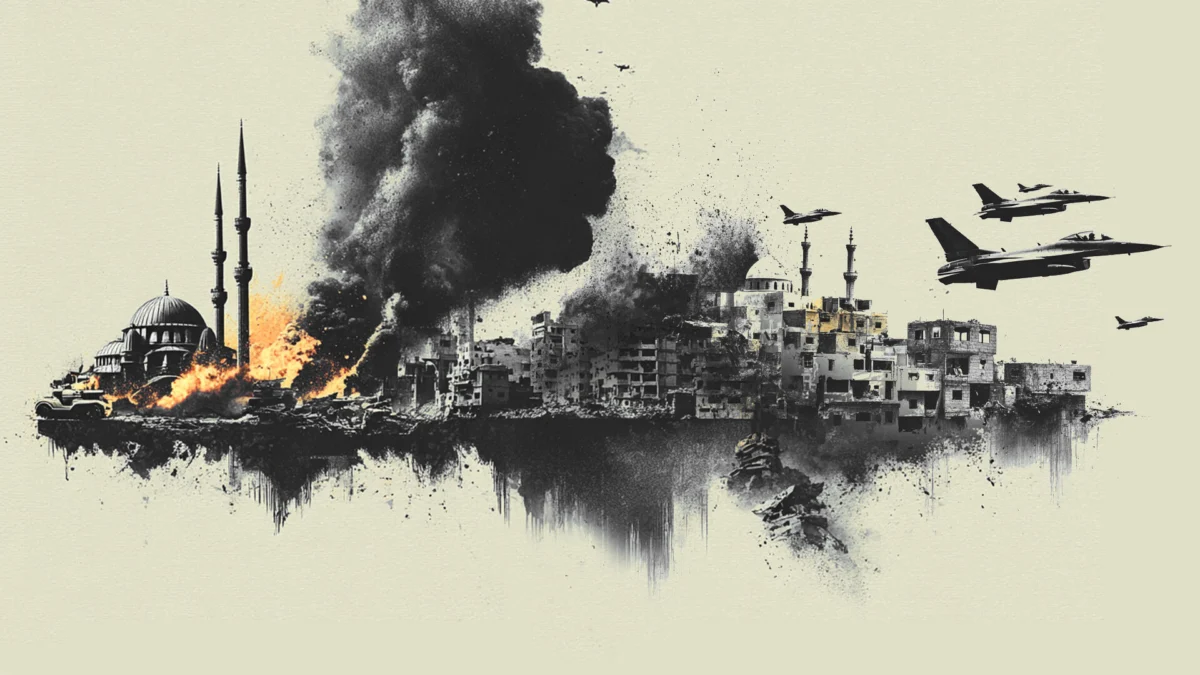
A CBS News report, citing multiple sources, has brought to light the possibility of a substantial joint military campaign by the United States and Israel against Iran, with a primary focus on targeting the Islamic Republic’s critical energy infrastructure. This potential operation is reportedly slated to occur over a forthcoming weekend, specifically preceding the opening of Asian financial markets the following week, a timing that underscores the anticipated significant economic reverberations.
According to US sources cited in the report, Israel has been thoroughly informed of the plans and is actively "coordinating with the United States." However, these same sources cautioned that the US president had not yet issued the final "go orders" for these proposed strikes, indicating that the decision remains at a critical juncture. This assertion of close coordination stands in contrast to an immediate denial from an Israeli official, who told CBS News that "Israel is unaware of a decision to restart full military operations, nor has been requested of Israel to join any military actions against Iran." The conflicting accounts highlight the extreme sensitivity and volatile nature of the discussions surrounding such a high-stakes military undertaking. The military strike plan itself reportedly surfaced during a cabinet meeting convened by then-President Trump at Camp David on a Friday, as revealed by sources briefed subsequent to the meeting. Notably, some White House aides, particularly those focused on political ramifications, were described as being "strongly opposed" to the proposed action, underscoring internal divisions within the administration regarding the potential escalation. The primary targets of this campaign, according to two sources, would encompass vital energy infrastructure, specifically including power plants and oil refineries, essential components of Iran’s economic lifeline.
A Decades-Long Standoff: Background to US-Iran and Israel-Iran Tensions
The specter of a military confrontation between the United States, Israel, and Iran is not a new phenomenon but rather the culmination of decades of deeply entrenched animosity and geopolitical friction. Relations between Washington and Tehran have been hostile since the 1979 Islamic Revolution, which saw the overthrow of the US-backed Shah and the subsequent hostage crisis at the US embassy. For Israel, Iran represents an existential threat, primarily due to its pursuit of a nuclear program, its development of ballistic missiles, and its extensive network of regional proxy forces, including Hezbollah in Lebanon and various militias in Syria and Iraq, which directly threaten Israeli security.
Over the years, international efforts, primarily led by the United States and European powers, have focused on containing Iran’s nuclear ambitions through sanctions and diplomatic negotiations. The landmark 2015 Joint Comprehensive Plan of Action (JCPOA), or Iran nuclear deal, aimed to curb Iran’s nuclear program in exchange for sanctions relief. However, the deal proved contentious, particularly in the US and Israel. Israel vehemently opposed the agreement, viewing it as insufficient to prevent Iran from eventually developing nuclear weapons.
Escalation Under the Trump Administration
Tensions sharply escalated following the United States’ unilateral withdrawal from the JCPOA in May 2018 under the Trump administration. This move ushered in a "Maximum Pressure" campaign, a strategy designed to cripple Iran’s economy through stringent sanctions, particularly targeting its oil exports and financial sector. The goal was to force Iran back to the negotiating table for a more comprehensive deal addressing its nuclear program, ballistic missiles, and regional activities.
The "Maximum Pressure" campaign had a profound impact on Iran’s economy, leading to a significant contraction of its GDP, rampant inflation, and a dramatic decrease in oil revenues, which are the lifeblood of the Iranian state. In response, Iran began to incrementally scale back its commitments under the JCPOA, enriching uranium beyond agreed limits and increasing its stockpiles. This period was also marked by a series of regional flashpoints, including attacks on oil tankers in the Gulf of Oman, the downing of a US surveillance drone by Iran, and the unprecedented drone and missile attacks on Saudi Aramco oil facilities in September 2019, which the US and Saudi Arabia attributed to Iran. These incidents underscored the fragility of regional stability and the constant risk of direct confrontation. The Camp David meeting referenced in the CBS News report would have taken place within this highly charged atmosphere, with the US administration actively exploring options to counter Iranian actions and deter further escalation. The debate among White House aides, with some opposing military action on political grounds, reflects the inherent risks and complexities perceived within the administration regarding a direct military engagement.
The Alleged Strike Plan: Targets, Timing, and Strategic Rationale
The reported targeting of Iran’s energy infrastructure—specifically power plants and oil refineries—suggests a strategic objective aimed at crippling the country’s economic capacity and its ability to sustain its military and regional operations. Iran is one of the world’s largest oil producers, and its energy sector is the cornerstone of its economy, accounting for a significant portion of government revenue and export earnings.
Targeting refineries would disrupt Iran’s ability to process crude oil into refined products for domestic consumption and export, potentially leading to fuel shortages within the country and hindering its economic activity. Strikes on power plants would cripple electricity supply, affecting industries, public services, and daily life, further exacerbating economic hardship and potentially generating domestic unrest. Beyond these, a comprehensive campaign could also target oil export terminals, pipelines, and associated infrastructure, aiming to completely shut down Iran’s ability to generate revenue from its most vital commodity. Such actions would be a direct assault on the Iranian state’s financial stability and its capacity to fund its military apparatus and proxy networks.
The specified timing of the alleged operation—"over the weekend ahead of next week’s Asian open in the financial markets"—is particularly telling. Weekends typically offer a window for military actions before global markets can fully react, but specifically targeting the period before the Asian open suggests an attempt to mitigate immediate panic or to create maximum impact when markets resume. Financial analysts often observe a lag in full market reaction to major geopolitical events that occur outside of trading hours, though futures markets can offer early indications. The objective might be to deliver a decisive blow before international diplomatic pressure or market reactions could fully materialize, or to give markets some time to process the news before a full trading week begins, albeit likely with extreme volatility.
Conflicting Reports and Official Responses
The stark divergence between the US sources’ claims of Israeli coordination and the Israeli official’s denial underscores the profound geopolitical sensitivities surrounding the potential operation. US sources painting a picture of close collaboration might be aimed at projecting a united front against Iran, while the Israeli denial could serve multiple purposes: maintaining strategic ambiguity, avoiding pre-emptive Iranian retaliation, or reflecting genuine internal disagreement or lack of final approval within Israel’s own security establishment.
In the event of such a significant report, various official bodies would likely issue carefully worded statements. The Pentagon would predictably state that it does not comment on future or hypothetical military operations but would reiterate its commitment to regional security. The US State Department would likely emphasize its continued preference for diplomatic solutions while reserving the right to defend US interests and allies. From the White House, statements would likely focus on national security priorities and the ongoing assessment of threats.
On the Iranian side, any confirmed or even credibly reported strike would be met with swift and forceful condemnation from the Foreign Ministry and the Islamic Revolutionary Guard Corps (IRGC). Iran would likely issue severe warnings of retaliation, emphasizing its right to self-defense and potentially threatening to disrupt oil shipping in the Strait of Hormuz, a critical chokepoint for global energy supplies. Internationally, the United Nations Secretary-General would undoubtedly call for immediate de-escalation and a peaceful resolution, warning against the catastrophic consequences of a wider conflict. The European Union, Russia, and China, all signatories to the JCPOA and proponents of diplomacy with Iran, would express deep concern and urge all parties to exercise maximum restraint and avoid military action.
Strategic Considerations and Political Dynamics
The internal dissent reported within the White House during the Camp David meeting—with "White House aides who focus on politics strongly opposed"—highlights the immense political and strategic risks associated with a direct military confrontation with Iran. Political aides would be acutely aware of the potential for a protracted conflict, mounting casualties, and the significant economic fallout, all of which could severely impact public opinion and electoral prospects.
A military strike against Iran carries the immense risk of miscalculation, potentially spiraling into a wider regional conflict that could draw in other actors, including Saudi Arabia, the UAE, and other Gulf states. Such an escalation would have profound implications for US alliances in the Middle East, testing their resolve and potentially fracturing regional stability. Moreover, a military intervention could inadvertently strengthen hardliners within Iran, undermine any future prospects for diplomatic engagement, and potentially push Iran to accelerate its nuclear program in response to perceived external threats. For the US president, initiating such a campaign would be a legacy-defining decision with unpredictable long-term consequences for global security and America’s standing on the world stage.
Economic Repercussions: Energy Markets and Global Stability
The economic fallout from a large-scale military campaign targeting Iran’s energy infrastructure would be immediate and severe, particularly for global energy markets. Iran, despite sanctions, remains a significant oil producer, and any disruption to its supply or the stability of the Persian Gulf region would send crude oil prices soaring. Analysts estimate that a major conflict could push Brent crude prices well above $100 per barrel, potentially even higher, depending on the scope and duration of the disruption and the impact on shipping lanes like the Strait of Hormuz, through which roughly one-fifth of the world’s oil supply passes.
Such an event would almost certainly trigger a global "risk-off" scenario in financial markets. In a "risk-off" environment, investors become highly pessimistic about the future and seek to divest from risky assets, opting instead for safer havens.
- Safe-Haven Assets: Gold would shine as a traditional store of value during uncertainty, experiencing significant price surges. Major government bonds, particularly US Treasuries, German Bunds, and Japanese Government Bonds, would see increased demand, driving yields down.
- Safe-Haven Currencies: The US Dollar (USD), Japanese Yen (JPY), and Swiss Franc (CHF) would strengthen considerably. The USD benefits from its status as the world’s primary reserve currency and the perception of US government debt as a safe investment. The JPY often gains due to Japan’s status as a net creditor nation and a high proportion of its bonds being held by domestic investors. The CHF is bolstered by Switzerland’s strict banking laws and its reputation for political neutrality.
- Riskier Assets: Stock markets globally would likely experience sharp declines as investor confidence plummets. Most commodities, with the exception of gold, would also face downward pressure due to fears of diminished global growth and demand.
- Risk-On Currencies: Currencies of nations heavily reliant on commodity exports, such as the Australian Dollar (AUD), Canadian Dollar (CAD), New Zealand Dollar (NZD), as well as minor FX like the Russian Ruble (RUB) and South African Rand (ZAR), would weaken significantly. This is because these economies depend on a positive global growth outlook and high commodity prices, both of which would be severely undermined by a major conflict in the Middle East.
Beyond immediate market reactions, a prolonged conflict could disrupt global supply chains, exacerbate inflationary pressures worldwide, and potentially push vulnerable economies into recession. The cost of such an operation, both in terms of direct military expenditure and broader economic impact, would be astronomical.
Humanitarian and Long-Term Consequences
Beyond the immediate military and economic ramifications, a large-scale strike on Iran’s energy infrastructure would carry immense humanitarian and long-term consequences. Civilian casualties, while unintended, would be a high probability given the nature of the targets. Damage to critical infrastructure could lead to widespread power outages, water shortages, and a breakdown of essential services, creating a humanitarian crisis within Iran. Environmental damage from strikes on oil refineries and power plants, including potential oil spills and atmospheric pollution, could have devastating effects on the region’s fragile ecosystems and public health.
In the long term, such an intervention would likely entrench anti-Western sentiment within Iran, potentially galvanizing public support for the hardline regime and making future diplomatic engagement even more challenging. It could also fuel a new wave of regional instability, potentially leading to increased proxy conflicts and a refugee crisis. The decision to embark on such a path carries profound ethical considerations and could have lasting repercussions for regional stability and global peace for generations to come.
In conclusion, the CBS News report of a potential US-Israel military campaign against Iran’s energy infrastructure highlights the extremely perilous state of US-Iran relations and the ever-present risk of military escalation. While the conflicting reports underscore the uncertainty surrounding such a grave decision, the strategic context, historical tensions, and the potential for devastating economic and humanitarian consequences make this a matter of utmost international concern. The world watches with bated breath, hoping that diplomacy and restraint will ultimately prevail over the ominous drumbeat of war.