Gilang Muhammad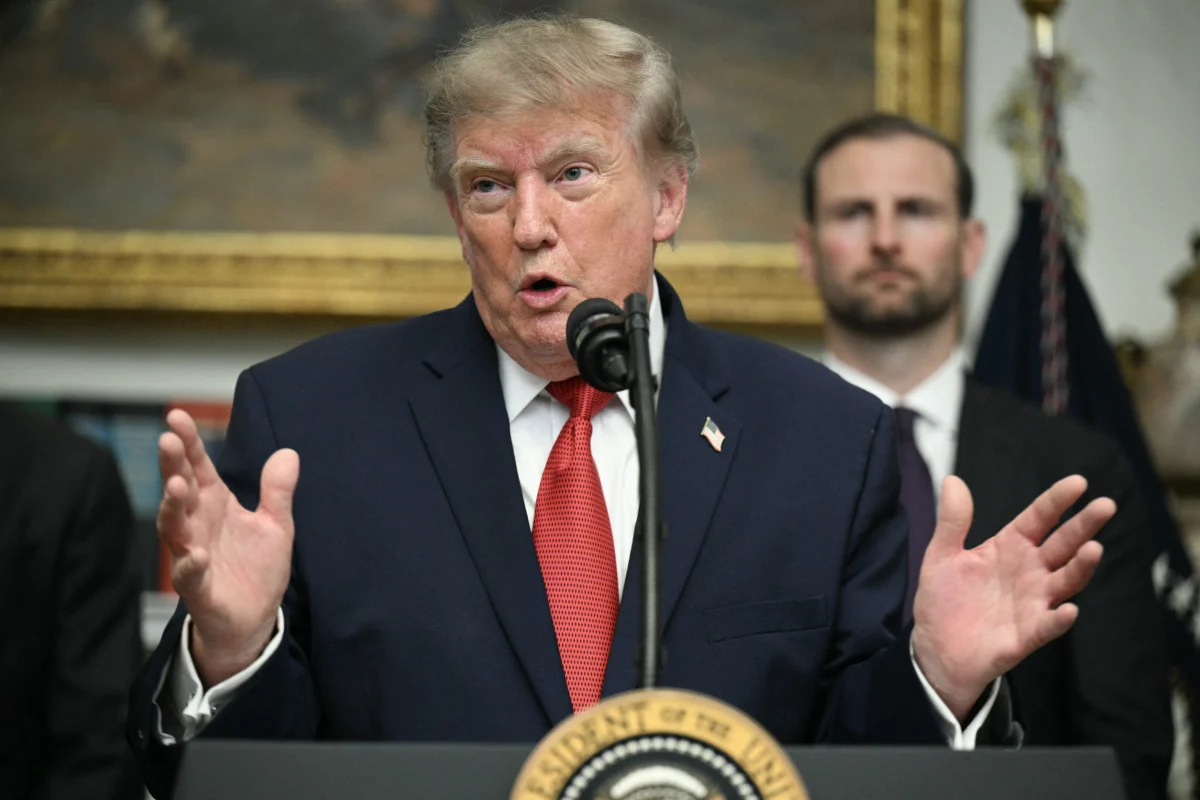
President Donald Trump on Wednesday, August 19, 2026, delivered a forceful critique of the Federal Reserve’s monetary policy, expressing profound frustration over its perceived reluctance to implement more aggressive interest rate reductions. Speaking from the Roosevelt Room of the White House in Washington, President Trump insisted that robust economic indicators should not serve as a deterrent for the central bank to adopt a more accommodative stance, arguing instead for policies that would further stimulate growth and alleviate the nation’s burgeoning debt burden.
A History of Presidential Scrutiny and the Fed’s Independence
The relationship between the U.S. President and the Federal Reserve has historically been one of carefully guarded independence, a cornerstone of the central bank’s ability to make decisions free from short-term political pressures. However, President Trump’s tenure has been marked by an unprecedented level of public criticism directed at the institution responsible for setting the nation’s monetary policy. This latest outburst echoes a pattern established during his previous administration, where he frequently assailed then-Chairman Jerome Powell for not lowering rates faster. This dynamic underscored a fundamental tension between the executive branch’s desire for rapid economic expansion and the Fed’s mandate to maintain price stability, maximize employment, and moderate long-term interest rates.
During his remarks, President Trump accused certain Fed officials of harboring political motivations, a claim he has made repeatedly in the past. Notably, he excluded the current Chairman, Kevin Warsh, from this criticism, whom he nominated to the top position earlier this year. "The problem is he has a board, and it’s a political board," Trump told reporters, referring to the Federal Open Market Committee (FOMC). "People put in by Obama, Biden, and me, and there are quite a few members still left, as you understand, and so they vote to raise interest rates. I don’t know if they’re doing it because they think they’re doing a good thing or because they like the politics of it." This statement highlights the staggered nature of Fed Board of Governors appointments, where members serve 14-year terms, leading to a blend of appointees from various administrations.
The Warsh Era and the Path of Monetary Policy
Kevin Warsh assumed the chairmanship of the Federal Reserve in May 2026, succeeding Jerome Powell, who now remains on the board as a governor. President Trump lauded Warsh’s performance, stating he is doing a "great job," a stark contrast to his often-contentious relationship with Powell. Market analysts at the time of Warsh’s nomination had largely anticipated a potential shift towards more dovish policies, given Trump’s consistent advocacy for lower rates.
Despite the President’s public dissatisfaction, the Federal Open Market Committee (FOMC) has, in fact, implemented several rate reductions in recent years. The Fed last voted to raise its benchmark interest rate more than three years ago. In 2025, the FOMC executed three rate cuts in the latter half of the year, building on three previous reductions in 2024. These actions were primarily aimed at stimulating economic activity and combating disinflationary pressures that emerged in the post-pandemic recovery, albeit a recovery marked by uneven global growth and persistent supply chain challenges. However, for President Trump, the pace and magnitude of these reductions have been insufficient to meet what he perceives as the nation’s economic imperatives.
Economic Imperatives: Growth, Inflation, and the National Debt
President Trump’s call for deeper rate cuts is rooted in his belief that such measures are essential to sustain economic growth and, critically, to alleviate the financing burden of the nation’s colossal $40 trillion debt. "My point is, years ago, 25 years ago, when the country announced good numbers, interest rates went down because we had a stronger country," Trump articulated. "Now, when we announce good numbers, the better they are, the worse it is for interest rates." This perspective challenges conventional economic theory, which often links strong economic data to inflationary pressures, prompting central banks to consider tightening monetary policy.
The economic backdrop to these remarks presents a mixed picture. The U.S. economy grew at an annualized rate of 1.5% in the second quarter of 2026, a deceleration from the 2.1% growth rate observed in the first three months of the year and below many economists’ expectations. While this growth rate indicates a slowing, it remains positive. Concurrently, inflation data, though showing some positive trends since the July FOMC meeting, continues to pose a challenge, with the annual rate remaining stubbornly above the Fed’s long-term 2% target. The core Personal Consumption Expenditures (PCE) price index, the Fed’s preferred inflation gauge, has hovered in the 3.0-3.5% range for much of 2026, indicating persistent underlying price pressures.
Indeed, the President’s comments coincided with the release of the FOMC minutes from its July 2026 meeting. These minutes revealed that "many" officials expressed the view that higher interest rates would likely be necessary unless there was more convincing evidence of progress in bringing inflation down towards the target. This internal deliberation within the FOMC directly contradicts the President’s demand for further cuts, underscoring the divergence in policy priorities and economic assessments between the White House and significant segments of the central bank.
International Comparisons and Diplomatic Flashpoints
Adding another layer to his critique, President Trump drew comparisons between the U.S. interest rate environment and that of global competitors, specifically citing Switzerland. He noted Switzerland’s benchmark rate anchored around a historically low 0.5%, in stark contrast to the U.S. rate of 3.5%. Switzerland’s unique economic situation, characterized by very low inflation rates and an unusually strong safe-haven currency, often necessitates a different monetary policy approach than larger economies like the United States, which battle different macroeconomic forces.
The President went further, issuing a veiled threat: "I see countries like Switzerland where they’re the number one lowest interest rates, a half a percent, and we pay three and a half percent. I have the absolute right to cut off all business with a country like Switzerland." Such a statement, if acted upon, could trigger significant diplomatic and economic repercussions, potentially escalating trade tensions and disrupting global financial markets. While presidents wield broad executive authority in matters of trade and international relations, the practical implementation and long-term consequences of unilaterally "cutting off all business" with a nation like Switzerland, a major global financial hub, would be immense and likely unprecedented in modern economic history.
The Bond Market and Treasury’s Strategic Moves
Despite his concerns about "unfairly high rates," President Trump maintained that he did not believe the U.S. was facing a bond market problem. This assertion came on the same day the Treasury Department announced an upscaled bond buyback program. This initiative specifically targets longer-maturity debt, those with durations of at least 10 years, and aims to enhance market liquidity and efficiency in the Treasury securities market. The move followed a period of increased volatility and upward pressure on yields for longer-term government debt, a phenomenon often associated with higher investor demand for compensation for holding debt over extended periods, particularly in an environment of persistent inflation expectations and significant government borrowing.
While the Treasury’s bond buyback program is distinct from the Federal Reserve’s monetary policy, both influence the broader interest rate environment and the cost of government borrowing. The Treasury’s actions are designed to manage the national debt and its market functionality, whereas the Fed’s decisions are primarily focused on macroeconomic stability. However, they operate within the same financial ecosystem, and their combined effects can shape market sentiment and yield curves.
Broader Implications: Fed Independence, Market Stability, and Fiscal Health
President Trump’s renewed and intensified pressure on the Federal Reserve carries significant implications across several fronts.
Firstly, it reignites debates over the central bank’s cherished independence. The Fed’s ability to set monetary policy without direct political interference is widely regarded as crucial for its credibility and effectiveness in managing the economy over the long term, insulating it from election cycles and short-term political expediency. Public admonishments from the President, regardless of their direct impact on voting, can erode public and market confidence in that independence, potentially leading to increased volatility as investors try to anticipate political rather than purely economic influences on policy.
Secondly, the comments could introduce further uncertainty into financial markets. While markets are accustomed to presidential rhetoric, direct threats against foreign nations or accusations of political motives within the Fed can unsettle investors, who crave stability and predictability. This uncertainty can translate into higher borrowing costs for businesses and consumers, counteracting the very goal of lower rates the President advocates.
Finally, the discussion highlights the precarious state of U.S. fiscal health. With a national debt approaching $40 trillion, the cost of servicing that debt becomes a substantial line item in the federal budget. Lower interest rates would indeed reduce these costs, freeing up resources for other government priorities or deficit reduction. However, relying solely on monetary policy to address a fiscal challenge can create moral hazard and may not be sustainable if it compromises the Fed’s primary mandate of price stability. The confluence of slowing economic growth, persistent inflation above target, and an ever-expanding national debt presents a complex challenge for both monetary and fiscal policymakers as the nation navigates the mid-2020s.