Reynand Wu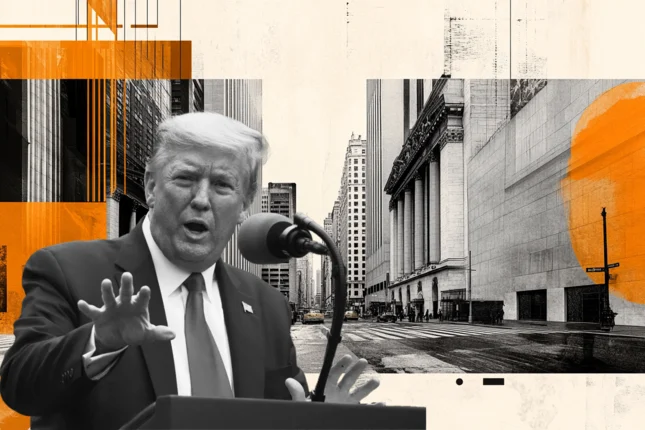
In a significant diplomatic overture, then-US President Donald Trump stated in an interview with ABC News that he could trust Iranians, announcing that direct talks between American and Iranian representatives were slated to commence over the upcoming weekend, exclusively in Islamabad. The declaration marked a potential shift in the highly fraught relationship between Washington and Tehran, which had been characterized by escalating tensions, sanctions, and rhetorical exchanges following the US withdrawal from the Joint Comprehensive Plan of Action (JCPOA).
President Trump downplayed the anticipated differences between the two nations, suggesting they were not "many significant differences." A key agenda item for the proposed discussions, according to Trump, would be the United States working with Tehran to facilitate the removal of its enriched uranium. Crucially, Trump refuted reports of a substantial financial incentive for this exchange, specifically labeling claims of a $20 billion payment as "fake news," affirming that Iran would not receive money for the uranium removal.
The President also outlined the composition of the potential US delegation, mentioning close associates Steve Witkoff and Jared Kushner, with a possible inclusion of J.D. Vance, though Trump noted he had not yet consulted Vance about the trip. The choice of Islamabad as the sole venue for the talks was underscored by Trump’s explicit statement: "Islamabad only. I’m not interested in going to countries that didn’t help." This remark hinted at a specific grievance or strategic preference regarding past or potential intermediaries. He further elaborated on Iran’s motivations, stating, "They want to make a deal. They want to make some money, you know. … They’re not making any money as long as I have the blockade," indicating the perceived leverage of US-imposed sanctions. In a seemingly unrelated but notable comment made during the same wide-ranging interview, Trump also recounted a conversation with NATO, stating, "NATO called me and said, ‘Is there anything we can do?’ And I said, ‘Yeah, stay away.’" This snippet highlighted his often unilateral approach to international relations.
A Tumultuous History: US-Iran Relations Leading to Potential Dialogue
The relationship between the United States and Iran has been fraught with complexities and animosity since the 1979 Islamic Revolution, which saw the overthrow of the US-backed Shah and the subsequent hostage crisis. Decades of mistrust deepened, particularly over Iran’s nuclear program, which Western powers and allies like Israel suspected of having military dimensions, despite Tehran’s consistent claims of peaceful intent.
A landmark moment came in 2015 with the signing of the Joint Comprehensive Plan of Action (JCPOA), a multilateral agreement between Iran, the P5+1 group (China, France, Germany, Russia, the United Kingdom, and the United States), and the European Union. Under the JCPOA, Iran agreed to significant restrictions on its nuclear program, including caps on uranium enrichment levels and quantities, enhanced inspections by the International Atomic Energy Agency (IAEA), and redesign of nuclear facilities, in exchange for relief from international sanctions. The deal was widely hailed by its proponents as a diplomatic triumph that prevented Iran from developing nuclear weapons.
However, President Trump consistently criticized the JCPOA, labeling it the "worst deal ever." On May 8, 2018, the Trump administration officially withdrew the United States from the agreement, arguing that it did not adequately address Iran’s ballistic missile program, its regional destabilizing activities, or the sunset clauses that would allow certain nuclear restrictions to expire over time. Following the withdrawal, Washington re-imposed and significantly expanded a regime of crippling economic sanctions targeting Iran’s oil exports, financial sector, and other key industries. This "maximum pressure" campaign was designed to compel Iran to negotiate a new, more comprehensive agreement addressing all US concerns.
Escalation and Retaliation: The Road to Islamabad
The re-imposition of US sanctions had a devastating impact on the Iranian economy, leading to sharp declines in oil revenues, a weakening currency, and widespread economic hardship. In response, Iran initially pursued a strategy of "strategic patience," adhering to its JCPOA commitments for a year, while calling on European signatories to mitigate the effects of US sanctions. When these efforts largely failed to materialize significant economic relief, Tehran began a phased reduction of its own commitments under the JCPOA starting in May 2019.
This included exceeding limits on its stockpile of low-enriched uranium, enriching uranium to higher purities than permitted (though still well below weapons-grade), and restarting centrifuges. These actions were framed by Iran as reversible steps aimed at pressuring the remaining JCPOA parties to uphold their end of the deal and to counter the US "economic warfare."
The period between the US withdrawal from the JCPOA and Trump’s announced talks was marked by several alarming incidents that brought the US and Iran to the brink of conflict. These included attacks on oil tankers in the Gulf of Oman, the downing of a US surveillance drone by Iran, and retaliatory cyberattacks. Amidst this backdrop of heightened tensions, there were persistent, albeit often indirect, efforts by various nations, including Oman, Qatar, Iraq, and European powers, to mediate a de-escalation and facilitate dialogue. It is within this context that President Trump’s statement about countries that "didn’t help" likely refers to these perceived insufficient efforts or a lack of alignment with US pressure tactics.
Pakistan, a long-standing US ally and a Muslim-majority nation with historical ties to Iran, has often played a role in regional diplomacy. Its willingness to host talks, particularly given its strategic location and its own complex relationship with both the US and Iran, would have positioned it as a neutral and potentially effective intermediary.
The Nuclear Core: Removing Enriched Uranium
The central point of negotiation highlighted by President Trump – the removal of Iran’s enriched uranium – is critical for non-proliferation efforts. Uranium enrichment is the process of increasing the concentration of the fissile isotope uranium-235, which is necessary for both nuclear power generation and nuclear weapons. The JCPOA specifically limited Iran to enriching uranium to 3.67% purity, a level suitable for power reactors but far below the roughly 90% required for weapons. It also capped Iran’s stockpile of enriched uranium to 300 kilograms (in hexafluoride form).
By the time of Trump’s statement, Iran had already exceeded both these limits as part of its reciprocal measures. The removal of this enriched uranium would signify a significant step back from its non-compliance with JCPOA limits and reduce its "breakout time" – the theoretical period it would take to produce enough weapons-grade material for a nuclear weapon. For the US, securing the removal of enriched uranium would be a tangible win, addressing a core proliferation concern without necessarily reinstating the full JCPOA.
Trump’s explicit denial of a $20 billion payment for this exchange directly countered earlier reports, possibly aimed at managing domestic political blowback or reinforcing the administration’s stance that Iran was negotiating from a position of weakness due to sanctions. The idea of "paying" Iran for compliance would have been highly controversial in Washington.
The Leverage of Sanctions and Economic Pressures
President Trump’s assertion that Iran wants to "make a deal" because "they’re not making any money as long as I have the blockade" underscores the US strategy of using economic pressure as its primary diplomatic tool. The "maximum pressure" campaign had severely crippled Iran’s economy.
Key impacts of US sanctions included:
- Oil Exports: Iran’s primary source of revenue, oil exports, plummeted from over 2.5 million barrels per day before sanctions to as low as a few hundred thousand barrels per day, significantly reducing foreign currency earnings.
- Banking and Finance: Sanctions on Iran’s central bank and other financial institutions largely cut off Iran from the international financial system, making it difficult to conduct trade, even for humanitarian goods.
- Foreign Investment: Major international companies withdrew from Iran to avoid secondary sanctions, stifling investment and economic growth.
- Humanitarian Concerns: While humanitarian goods were theoretically exempt, banking restrictions often made it difficult for Iran to import essential medicines and food, leading to severe shortages.
This economic pressure was clearly intended to bring Iran to the negotiating table on US terms. Iran, in turn, sought sanctions relief as its core demand for any new or modified agreement. The prospect of "making some money" for Iran was therefore directly tied to the lifting or easing of these economic restrictions.
International Reactions and Broader Implications
The announcement of potential direct talks between the US and Iran, particularly on the removal of enriched uranium, would have been met with a mix of cautious optimism and apprehension globally.
- European Allies (France, Germany, UK): These nations had consistently advocated for de-escalation and the preservation of the JCPOA. They would likely welcome direct dialogue but might also be wary of a purely bilateral US-Iran deal that could undermine the multilateral framework of the existing agreement. Their primary goal remained the full return of both the US and Iran to JCPOA compliance.
- Russia and China: As signatories to the JCPOA, Russia and China had also criticized the US withdrawal and sought to maintain the deal. They would likely view direct talks as a positive step towards de-escalation, but would also emphasize the importance of international law and multilateral agreements.
- Regional Allies (Israel, Saudi Arabia, UAE): These nations, long-standing adversaries of Iran, would likely express concerns. Israel, in particular, views Iran’s nuclear program as an existential threat and has consistently advocated for a tougher stance. Any deal perceived as lenient or not sufficiently comprehensive could raise alarms in Jerusalem and Riyadh.
- Iran: While signaling a willingness to talk to "make a deal," Iranian officials would likely maintain a firm stance on sanctions relief and their right to a peaceful nuclear program. They would aim to leverage any talks to secure tangible economic benefits and ensure their security interests.
The involvement of high-profile, non-traditional diplomats like Jared Kushner and Steve Witkoff reflected President Trump’s preference for direct, often personal, diplomacy, sometimes bypassing established State Department channels. This approach, while potentially agile, also carried risks of lacking institutional memory or established diplomatic procedures. The mention of J.D. Vance, a political commentator at the time (who later became a Senator), further highlighted the unconventional nature of the proposed delegation.
The broader implications of such talks, if successful, could have included a significant de-escalation of tensions in the Persian Gulf, potentially paving the way for a more stable regional security environment. However, the deep-seated mistrust, the complexity of the issues, and the domestic political considerations in both Washington and Tehran meant that any path to a lasting agreement would be fraught with challenges. The prospect of direct engagement, even with significant preconditions and a narrow focus, represented a notable diplomatic shift in a period otherwise dominated by confrontation.