Clara Shinta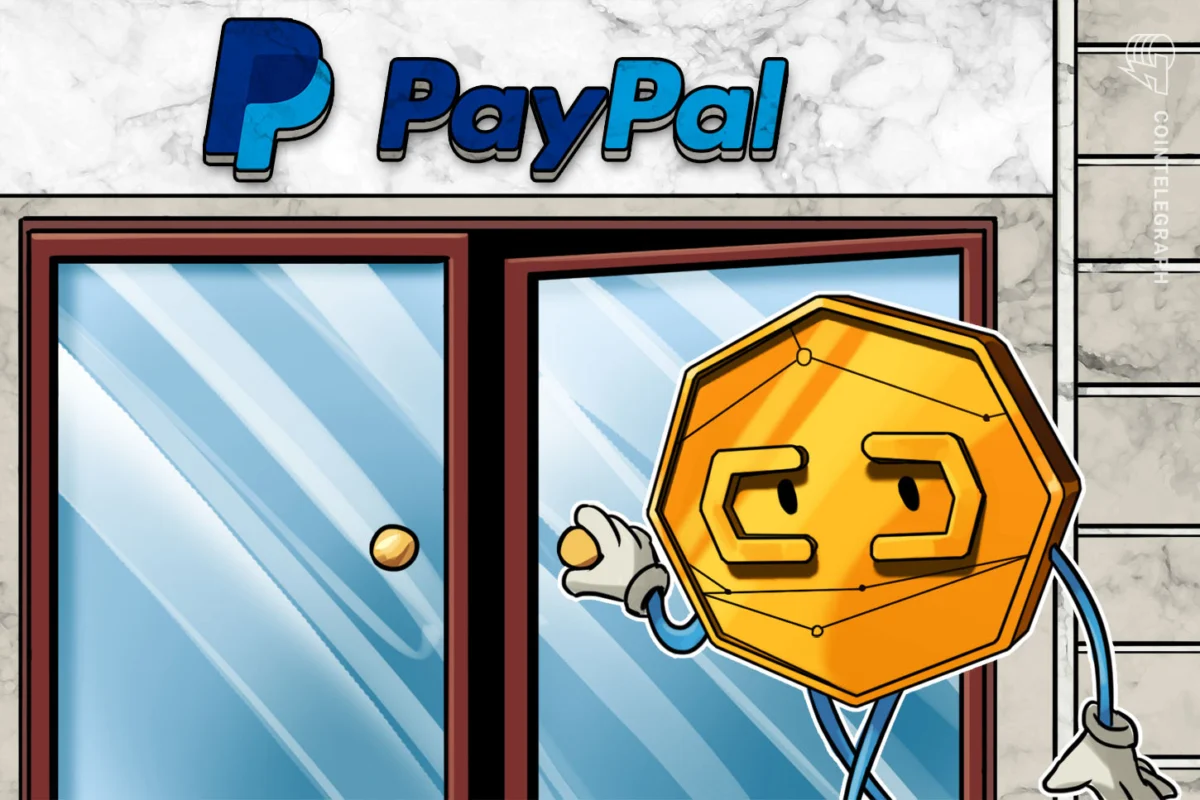
Global payments giant PayPal announced its strategic focus on stablecoins and artificial intelligence-driven payment tools as a cornerstone of its second-quarter strategy, even as crypto assets continued to feature in its earnings reconciliation process. This forward-looking approach comes as the company presented a mixed financial performance for the second quarter, signaling both resilience in revenue growth and challenges in profitability.
On Tuesday, following the close of the second quarter, PayPal reported earnings of $1.26 per share. This figure represented a slight decline compared to the $1.30 per share recorded in the corresponding period last year and fell short of analysts’ consensus estimate of $1.28 per share. Despite the earnings per share (EPS) miss, the company demonstrated robust top-line growth, with revenue reaching $8.68 billion. This marked a notable increase from $8.29 billion in the same quarter of the previous year and surpassed the analyst consensus of $8.47 billion, indicating strength in its core payment processing volumes. The divergence between revenue growth and EPS performance highlights the operational complexities and investment demands faced by a mature fintech enterprise in a highly competitive market.
Detailed Q2 Financial Performance and Strategic Investment Adjustments
PayPal’s second-quarter financial disclosures provided deeper insights into its operational health and accounting practices. The reported revenue growth, which exceeded analyst expectations, underscores the continued expansion of digital payment adoption globally and PayPal’s significant footprint within this ecosystem. This growth can be attributed to an increase in total payment volume (TPV) facilitated across its platforms, including PayPal and Venmo, driven by an expanding user base and higher engagement. However, the slight dip in earnings per share, coupled with the miss on analyst estimates, suggests pressures on profit margins, potentially due to increased operating expenses, strategic investments, or a shift in revenue mix.
A notable aspect of PayPal’s financial reporting was an $81 million non-GAAP adjustment. This adjustment pertained to gains and losses derived from strategic investments and crypto assets held for investment purposes. PayPal clarified its rationale for excluding these figures from its non-GAAP results, stating that these assets are not actively traded and are not relied upon to fund the company’s ongoing operational activities. This distinction is crucial for investors, as non-GAAP metrics aim to provide a clearer picture of a company’s core operational profitability by excluding items deemed non-recurring or non-operational. The consistent presence of crypto assets within this reconciliation, despite their exclusion from core operational metrics, indicates PayPal’s ongoing, albeit measured, engagement with the digital asset space. It signals a recognition of cryptocurrencies as a distinct asset class that warrants specific accounting treatment, separate from the everyday transaction processing that forms the bedrock of its business.
The Strategic Imperative: Stablecoins and AI-Driven Innovation
Beyond the immediate financial figures, PayPal’s Q2 investor presentation illuminated its strategic roadmap, emphasizing a significant expansion into cutting-edge payment technologies. The company articulated a clear vision to leverage its extensive payments network, robust risk infrastructure, and established trust capabilities to venture into agentic payments, stablecoins, and advanced identity and biometric technologies. This strategic pivot is a direct response to the rapidly evolving digital finance landscape, where innovation in speed, security, and cost-efficiency is paramount.
Embracing Stablecoins: A New Frontier for Digital Payments
PayPal’s focus on stablecoins represents a significant step for a mainstream financial giant. Stablecoins are a type of cryptocurrency designed to maintain a stable value, typically pegged to a fiat currency like the U.S. dollar, or to a basket of assets. Their inherent stability, combined with the underlying blockchain technology’s efficiency, positions them as a potential game-changer for digital payments, particularly for cross-border transactions.
The company’s commitment to stablecoins was further solidified with the launch of its own U.S. dollar-pegged stablecoin, PayPal USD (PYUSD), in August 2023, shortly after the conclusion of the second quarter. While the Q2 earnings call highlighted stablecoins as a strategic pillar for the period, the subsequent launch of PYUSD underscored the tangible execution of this strategy. PYUSD is issued by Paxos Trust Company and is fully backed by U.S. dollar deposits, short-term U.S. treasuries, and similar cash equivalents, regulated by the New York Department of Financial Services (NYDFS). This regulatory oversight is critical for establishing trust and widespread adoption, differentiating PYUSD from many other stablecoins.
For PayPal, stablecoins offer several compelling advantages:
- Reduced Transaction Costs: By leveraging blockchain rails, stablecoins can potentially lower the fees associated with traditional payment processing, especially for international transfers.
- Faster Settlement Times: Transactions using stablecoins can settle almost instantly, a significant improvement over conventional banking systems that often take days.
- Enhanced Financial Inclusion: Stablecoins can provide access to digital dollar services for individuals in regions with unstable local currencies or limited access to traditional banking.
- Programmable Money: The underlying blockchain technology allows for "programmable money," enabling smart contracts and automated payment flows, which could unlock new business models.
PayPal’s move into stablecoins is not without its challenges. The regulatory landscape for digital assets, particularly stablecoins, remains fragmented and evolving globally. Concerns around anti-money laundering (AML), know-your-customer (KYC) compliance, and consumer protection require robust frameworks. However, by launching a regulated stablecoin like PYUSD, PayPal aims to navigate these complexities while positioning itself at the forefront of the next generation of digital payments.
The Rise of AI in Payment Tools: Agentic Payments and Beyond
Parallel to its stablecoin initiatives, PayPal is heavily investing in artificial intelligence-driven payment tools, with a specific emphasis on "agentic payments." Agentic finance refers to a paradigm where AI agents can autonomously initiate, manage, and optimize financial transactions on behalf of users, often learning from user behavior and preferences. This goes beyond mere automation, moving towards intelligent, predictive, and proactive financial services.
As highlighted in the broader industry, including by Coinbase CEO Brian Armstrong, agentic finance represents a significant shift in how individuals and businesses interact with financial services. The concept suggests a future where AI systems can, for instance, automatically pay bills, optimize spending across different accounts to maximize rewards, manage investments based on real-time market data, or even negotiate prices during online purchases.
For PayPal, the application of AI extends across multiple facets of its operations:
- Enhanced Fraud Detection: AI algorithms can analyze vast datasets of transaction patterns in real-time to identify and prevent fraudulent activities with greater accuracy and speed than traditional rule-based systems.
- Personalized User Experiences: AI can tailor payment options, offers, and financial advice based on individual spending habits, financial goals, and risk profiles, leading to increased user engagement and satisfaction.
- Optimized Risk Management: AI can assess creditworthiness, predict potential defaults, and manage exposure more effectively for both consumers and merchants.
- Automated Customer Service: AI-powered chatbots and virtual assistants can handle routine inquiries, resolve common issues, and provide instant support, freeing up human agents for more complex tasks.
- Streamlined Operations: AI can automate back-office processes, improve reconciliation, and optimize operational efficiency, leading to cost savings.
By embedding AI across its platform, PayPal aims to make payments more seamless, secure, and intelligent, ultimately enhancing the user experience and driving greater adoption of its services. The company’s vast repository of transaction data and user behavior insights provides a fertile ground for training sophisticated AI models, giving it a competitive edge.
Identity and Biometric Technologies: Fortifying Trust and Convenience
Integral to PayPal’s strategic expansion is its focus on advanced identity and biometric technologies. In an increasingly digital world, robust identity verification and secure authentication are paramount for preventing fraud and building user trust. Biometric technologies, such as fingerprint scanning, facial recognition, and voice authentication, offer a higher level of security and convenience compared to traditional password-based systems.
PayPal, with its established trust capabilities and extensive user base, is uniquely positioned to leverage these technologies. By integrating biometrics, the company can:
- Simplify User Login and Authorization: Eliminating the need for complex passwords and two-factor authentication steps, making transactions quicker and more user-friendly.
- Enhance Security: Biometric data is inherently more difficult to compromise than passwords, significantly reducing the risk of unauthorized access and account takeovers.
- Streamline Onboarding: Expedite the customer verification process, reducing friction for new users.
- Combat Identity Theft: Provide a more secure method of confirming a user’s identity across various platforms and services.
This strategic direction aligns with broader industry trends where companies are moving towards passwordless authentication and multi-factor security solutions to protect sensitive financial data.
The PayPal World Platform: Fostering an Internal Ecosystem
PayPal’s investor presentation also highlighted the growing synergy within its internal ecosystem, specifically mentioning that its PayPal World platform facilitated approximately $200 million in total payment volume between Venmo and PayPal. This figure, while a segment of PayPal’s overall TPV, underscores the importance of fostering interoperability and seamless money movement between its distinct platforms.
Venmo, popular among younger demographics for peer-to-peer payments, and the traditional PayPal platform, widely used for online shopping and business transactions, serve different but often overlapping user needs. By facilitating transactions between these two platforms, PayPal strengthens its overall network effect, encourages user retention, and captures a broader spectrum of digital payment activities. This internal synergy is critical in an environment where competition for user engagement is fierce, and the ability to offer a comprehensive suite of interconnected services can be a significant differentiator.
Background and Chronology of PayPal’s Evolution in the Digital Asset Space
PayPal’s journey into the digital asset space has been characterized by a gradual, deliberate approach, moving from initial skepticism to active participation.
- Early Years (Pre-2020): PayPal largely kept its distance from cryptocurrencies, citing volatility and regulatory uncertainty as primary concerns. The focus remained on its core fiat-based digital payment services.
- October 2020: A pivotal moment occurred when PayPal announced that U.S. customers would be able to buy, hold, and sell cryptocurrencies – specifically Bitcoin (BTC), Ethereum (ETH), Litecoin (LTC), and Bitcoin Cash (BCH) – directly within their PayPal accounts. This move marked a significant validation for the crypto industry, bringing digital assets to a massive mainstream audience.
- March 2021: PayPal expanded this functionality, allowing users to pay with crypto at millions of online merchants globally. The "Checkout with Crypto" feature automatically converts a user’s crypto holdings to fiat currency at the point of sale, simplifying the process for both consumers and merchants.
- August 2023: The launch of PayPal USD (PYUSD) represented the company’s deepest dive into the crypto space, moving beyond merely facilitating crypto transactions to issuing its own digital asset. This move underscored a strategic belief in the long-term potential of stablecoins for payments.
- Ongoing: The continued inclusion of crypto assets in its non-GAAP earnings reconciliation reflects PayPal’s sustained, albeit carefully managed, exposure to the digital asset market.
This chronology illustrates PayPal’s methodical strategy: first, by providing access to popular cryptocurrencies, then enabling their use in commerce, and finally, by creating its own regulated stablecoin to directly participate in the programmable money ecosystem.
Broader Impact and Implications
PayPal’s strategic pivot carries significant implications for the broader digital payments industry, its competitive landscape, and its long-term growth trajectory.
- For the Fintech Industry: PayPal, as a legacy fintech giant, validating stablecoins and agentic AI sends a powerful signal. It could accelerate the adoption of these technologies across the financial sector, encouraging other established players to explore similar innovations.
- Competitive Landscape: The digital payments market is highly competitive, with challengers ranging from traditional banks and credit card networks to tech giants (Apple Pay, Google Pay) and other fintech innovators (Block/Square, Stripe). By focusing on stablecoins and AI, PayPal aims to carve out new competitive advantages, potentially differentiating itself by offering more advanced, efficient, and cost-effective payment solutions.
- Regulatory Scrutiny: As PayPal delves deeper into stablecoins and AI, it will inevitably face increased regulatory scrutiny. Governments worldwide are grappling with how to regulate digital assets and AI, particularly concerning financial stability, consumer protection, data privacy, and algorithmic fairness. PayPal’s adherence to regulatory frameworks, such as the NYDFS oversight for PYUSD, will be crucial for maintaining trust and enabling widespread adoption.
- Global Reach and Cross-Border Payments: Stablecoins, with their potential for faster and cheaper cross-border transactions, could significantly enhance PayPal’s global reach and competitiveness in international money transfers, a market currently dominated by traditional remittance services and SWIFT.
- Future of Commerce: Agentic payments could fundamentally transform online and offline commerce by making transactions more intelligent, personalized, and seamless. This could lead to new business models and revenue streams for PayPal beyond its traditional transaction fees.
Analyst Perspectives and Market Sentiment
While specific analyst reactions to this particular Q2 report were mixed due to the EPS miss, the overarching sentiment regarding PayPal’s strategic direction generally leans towards cautious optimism. Many analysts view the company’s embrace of stablecoins and AI as necessary and forward-thinking moves to ensure long-term relevance in a rapidly evolving market. However, execution risk remains a significant factor. The success of these initiatives will depend on PayPal’s ability to effectively integrate these technologies, attract users and merchants to new offerings, and navigate the complex regulatory environment.
Investors often scrutinize PayPal’s ability to drive active account growth and increase engagement per user. The company’s strategic investments in innovation are seen as critical for reigniting growth and defending its market share against agile startups and deep-pocketed tech giants. The mixed Q2 results underscore the transitional phase PayPal is navigating, balancing the demands of current profitability with significant investments in future growth drivers.
Conclusion
PayPal’s second-quarter strategy announcement, juxtaposed with its mixed financial performance, paints a picture of a major fintech player in a dynamic phase of adaptation and innovation. By explicitly prioritizing stablecoins and artificial intelligence-driven payment tools, alongside investments in identity and biometric technologies, PayPal is signaling its intent to remain at the forefront of digital finance. While the immediate financial results present challenges, the long-term strategic vision is clear: to leverage its foundational strengths to build the next generation of intelligent, efficient, and secure payment solutions. The successful execution of this ambitious strategy will be key to PayPal’s continued leadership in the global digital payments landscape and its ability to capitalize on the transformative potential of Web3 and AI technologies.