Ella Zulfa
When new creative talent joins the ranks at Oatly, the company’s onboarding process begins with a seemingly counterintuitive directive: “Unlearn everything you know about marketing.” This instruction, delivered by Oatly’s creative director Michael Lee, is not a rhetorical flourish but a foundational principle designed to cultivate a truly distinctive brand voice. It challenges conventional marketing wisdom, urging creatives to operate without the rigid guidelines that typically govern decision-making, team structures, and brand definition within established corporations.
Unlike the vast majority of large companies, which rely on comprehensive brand books to ensure consistency across all touchpoints, Oatly deliberately eschews such a document. Lee explains that this absence of a codified style guide is a strategic choice, fostering the freedom to innovate and deviate from established norms when inspiration strikes. "We’ve always kind of refused to do kind of brand books," Lee stated. "Whenever we work with a partner, they’re always asking us about our brand book. And we don’t have one because as soon as you do one, you feel like you have to stick to it, and we’d rather have the freedom to just do something completely different if we felt like it.” This commitment to creative liberation has been instrumental in Oatly’s evolution from a niche dairy alternative to a global brand celebrated for its provocative marketing and inherently human tone. Lee’s perspective offers a compelling insight into the true requirements for building a brand with authentic perspective, especially as a company scales.
The Genesis of an Unconventional Brand: From Quiet Beginnings to Global Provocateur
Oatly’s journey began in Sweden in 1994, initially as a straightforward oat-based alternative to dairy. Its early branding was characterized by a quiet, almost unassuming presence in the market. The significant shift in the brand’s trajectory commenced in 2012 with the appointment of Toni Petersson as CEO. Under his leadership, John Schoolcraft was brought on board as Chief Creative Officer. Their immediate and impactful action was to dismantle the existing marketing department and rebuild it with a focus on placing creatives at the core of the business. The ambitious objective was to transform Oatly into a brand possessing a strong personality and significant international appeal.
Schoolcraft’s innovative organizational model was notably unconventional. The newly formed creative team, which self-identified as the “Department of Mind Control,” was granted a high degree of autonomy. This empowered team was responsible for generating its own creative briefs, defining its own strategic direction, and executing its own projects, largely independent of traditional corporate oversight. Although Schoolcraft departed in 2025, this foundational structure of creative empowerment has persisted.
Michael Lee, who joined Oatly as creative director in 2017, the same year the brand entered the United States market, underscored the significance of this autonomous structure. "No one really can veto what we’re doing," Lee commented. "It’s not like we’re presenting to any marketing director or sales guys.” This operational framework is exceptionally rare within the corporate landscape, but Lee champions it as essential for cultivating a distinct brand voice. He argues that simply hiring creative individuals is insufficient; a company must actively dismantle the layers of approval processes that tend to dilute provocative ideas and instead empower creatives with true ownership and operational control over their work.
However, this considerable creative latitude comes with an equally significant burden of responsibility. "When things go well, great. But you also have to take it in the chin when things don’t go well," Lee acknowledged. "Then you must have the wherewithal and courage to continue being at that edge.” This duality highlights the high-stakes nature of Oatly’s creative strategy.
Defining a Brand Voice Through Feeling, Not Formula
The unconventional organizational design at Oatly has demonstrably translated into a product with a uniquely resonant voice. The brand is characterized by a series of creatively distinct decisions and communicates with a humorous, often provocative tone that has been pivotal in establishing its beloved and distinctive market position.
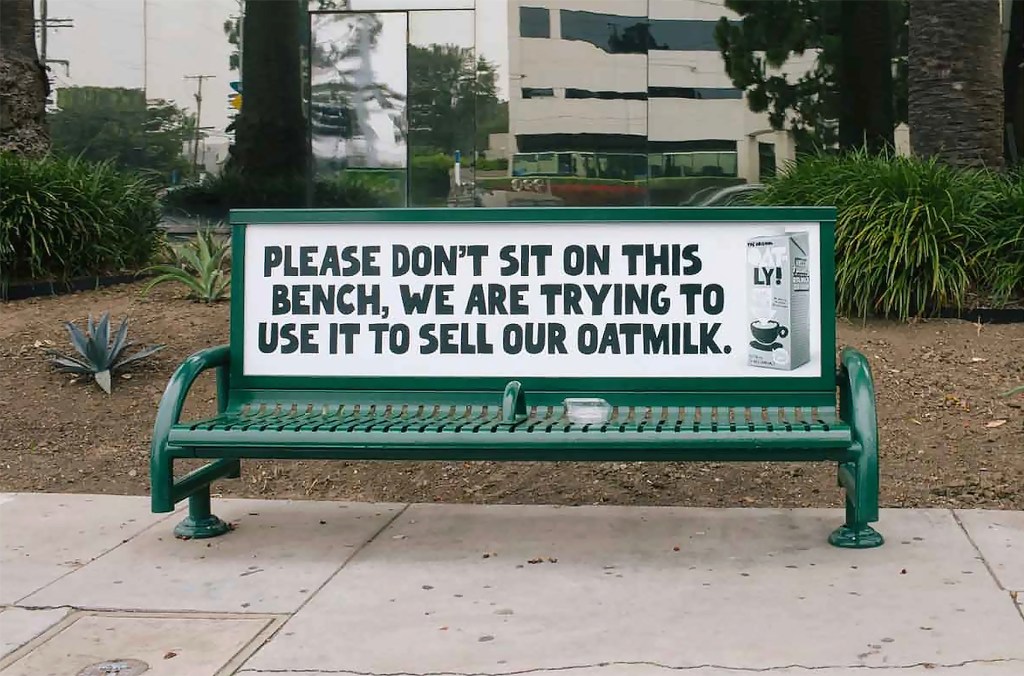
Oatly’s marketing campaigns have consistently defied industry norms. For instance, their packaging often features hand-drawn illustrations and direct, unvarnished text that eschews typical corporate jargon. A notable campaign involved a detailed list of ingredients and nutritional information presented with a disarming honesty, directly addressing consumer skepticism about plant-based alternatives. Another example includes their bold statements on sustainability and the dairy industry, often framed with a self-aware, almost playful cynicism that resonates with a socially conscious audience. These initiatives, while deviating from standard marketing playbooks, have consistently generated significant public engagement and brand loyalty.
Despite the brand’s clear and recognizable voice, Lee admits that defining precisely what is "on brand" for Oatly is not a straightforward, quantifiable exercise. Nor does he desire it to be. "There is an Oatly idea, and there is… that is not an Oatly idea," he explained. "How do you know? I don’t know. It’s just you develop a feeling. You develop this sense for what feels Oatly and what doesn’t feel Oatly, and it’s hard to wrap words around it.”
This intangible quality might present challenges for those seeking a replicable process. However, Lee’s core argument is that a genuine brand voice resists reduction to a mere checklist; it must remain a fluid and continuously evolving entity. He elaborates on this point: "A lot of what I’ve spoken about – a company acting human and doing human things – is easy to say, and it sounds kind of normal. But the reality within corporations and businesses it is extremely difficult. Because as everyone knows, when you go into a company, suddenly it’s company speak. You talk like you wouldn’t talk at home.”
Consequently, Lee observes that brand leaders often assume the role of enforcers, tasked with creating guidelines that ensure safety and prevent missteps. Lee, however, advocates for a different approach: creative leaders should foster a deep, shared instinct within the organization, enabling everyone to recognize strong ideas. This collective intuition allows the team to collectively reject ideas that are safe but ultimately misaligned with the brand’s authentic identity.
The Escalating Challenge of Courage in Scaling a Brand
The common refrain among startup founders often centers on a perceived disadvantage: "If only I had the marketing budget of the big guys…" However, Michael Lee posits that startup founders should leverage their agility. Smaller entities, he argues, are inherently better positioned to undertake significant risks. "It is much harder to be disruptive and courageous with your brand at the $100 million level than it is at the $10 million level," Lee stated. "That, I think, is the most difficult challenge – to maintain that edge and continue to be disruptive."
As a brand grows and scales, each campaign faces intensified scrutiny from a broader array of internal stakeholders. The pressure to protect existing brand equity becomes paramount, leading many companies to subtly erode their distinctive edges, trading their original voice for something more palatable and less polarizing. This phenomenon often results in a homogenization of brand messaging, where the unique personality that once attracted consumers gradually fades.
Preserving creative integrity, according to Lee, hinges on a return to fundamental principles: the company’s organizational structure and its genuine commitment to supporting creative endeavors. This commitment, he emphasizes, must be pervasive, extending "not from just the creative director, but the entire company, from the top all the way down.”
Oatly’s organizational structure is therefore a critical component of its enduring creative vitality. The absence of a brand book necessitates continuous effort from the creative team to shape and refine the brand’s identity. The lack of extensive approval layers fosters a profound sense of ownership and accountability among creatives, compelling them to ensure the accuracy and impact of their work. Furthermore, the initial directive for new team members to "forget everything you know about marketing" liberates them to explore and define a fresh, authentic approach, thereby perpetuating Oatly’s distinctive and unvarnished brand narrative. This commitment to fostering an environment where creative risk-taking is not only permitted but actively encouraged is what underpins Oatly’s ability to maintain its provocative and human-centric brand persona as it continues its global expansion.