Farhan Pambudi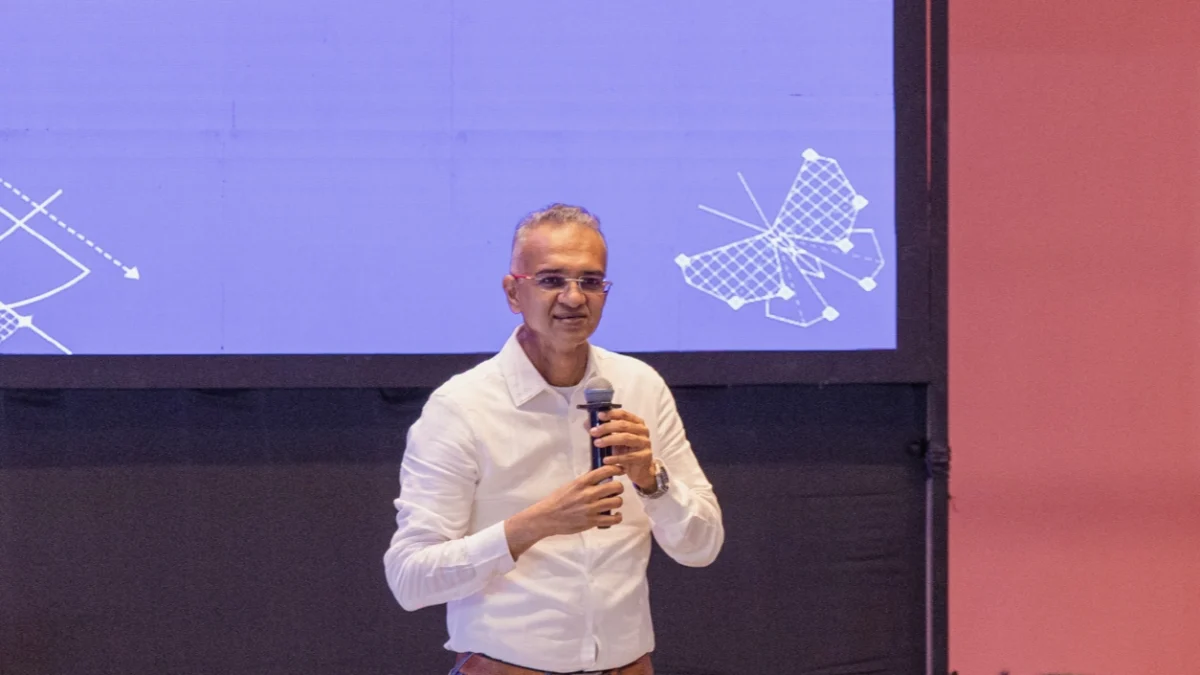
India’s digital payment landscape is poised for a transformative shift as the National Payments Corporation of India (NPCI) prepares to integrate advanced artificial intelligence (AI) to propel the Unified Payments Interface (UPI) toward a milestone of one billion daily transactions. During an extensive dialogue at Mumbai Tech Week (MTW) 2026, Dilip Asbe, the Managing Director and CEO of NPCI, detailed a strategic vision where AI serves as the primary engine for user acquisition, fraud mitigation, and the democratization of credit. As UPI currently processes over 750 million transactions per day, the transition to the next phase of growth involves navigating complex regulatory environments, addressing market concentration risks, and leveraging India’s vast datasets to build localized machine learning models.
The Strategic Vision for One Billion Daily Transactions
The growth trajectory of UPI has been one of the most significant success stories in global fintech. From its inception in 2016, the platform has evolved from a simple peer-to-peer transfer mechanism into a comprehensive ecosystem supporting merchant payments, bill settlements, and credit integrations. However, reaching the next "half a billion" users requires overcoming barriers related to digital literacy, linguistic diversity, and trust in digital systems.
Asbe emphasized that the collaboration between the NPCI, the Reserve Bank of India (RBI), and the Union Government is critical to this expansion. The target of one billion daily transactions is not merely a numerical goal but a benchmark for financial inclusion. To achieve this, the NPCI is pivoting toward AI-driven solutions that simplify the user experience. By automating complex processes and providing intuitive interfaces, the organization aims to make digital payments as seamless as cash for the rural and semi-urban populations of India.
AI as a Shield Against Financial Fraud and Mule Accounts
As the volume of digital transactions increases, so does the sophistication of financial crimes. One of the most pressing challenges identified by Asbe is the prevalence of "mule accounts"—bank accounts used by criminals to launder illicit funds. AI and machine learning are now being deployed to identify patterns of suspicious behavior that traditional rule-based systems might miss.
"We must use AI effectively to protect our current citizens, to find fraud, and to find mules," Asbe stated. The next wave of UPI security will likely involve real-time predictive analytics that can flag a transaction before it is completed, rather than merely reporting it after the fact. By analyzing the digital footprints of millions of users, NPCI’s AI frameworks can establish "normal" behavioral baselines, allowing for the immediate detection of anomalies. This proactive stance is essential for maintaining public trust in the digital economy, especially as more first-time users enter the ecosystem.
Democratizing Credit through Digital Footprints
A significant portion of India’s population remains "credit invisible," lacking the formal documentation or credit history required by traditional banking institutions. Asbe highlighted that AI will play a pivotal role in bridging this gap by analyzing the digital footprints generated through UPI transactions.
For small merchants and individual users, a consistent history of digital payments serves as a proxy for creditworthiness. AI models can process this alternative data to provide real-time credit scoring, enabling banks and non-banking financial companies (NBFCs) to offer micro-loans and credit lines directly through UPI apps. This initiative aligns with the RBI’s recent move to allow "Credit on UPI," which permits users to link pre-sanctioned credit lines to their payment handles, effectively turning a smartphone into a virtual credit card.
The Evolution of Voice Interfaces and Multilingual Solutions
Despite the ubiquity of smartphones, the textual interface remains a barrier for many users in a country with 22 official languages and hundreds of dialects. Asbe acknowledged that while the NPCI launched "Hello! UPI"—a voice-assistant-based system—in 2023, adoption has been gradual. The primary hurdle remains the accuracy and latency of voice models in diverse linguistic contexts.
"We must use AI to look at the voice and multilingual solutions to make onboarding simpler," Asbe noted. The future of UPI involves a "voice-first" approach where users can initiate and authorize transactions through natural language commands. For this to succeed, AI models must be trained on localized datasets that capture the nuances of regional accents and colloquialisms. Once these models reach a threshold of high accuracy, voice could become the dominant interface for the next generation of UPI users, particularly in the agricultural and informal sectors.
Agentic Finance and the Regulatory Framework
The global fintech landscape is currently witnessing the rise of "agentic finance," where AI agents are empowered to make financial decisions or execute transactions on behalf of users. While the United States has seen early adoption through platforms like Coinbase and OpenAI’s integration with personal financial data, India is taking a more cautious, regulation-first approach.
Asbe referenced demos conducted with Razorpay involving "agentic commerce," where AI assistants could navigate e-commerce platforms and handle payments. However, he stressed that a wider rollout is contingent upon a robust regulatory framework. The core of this framework must be user consent and traceability. If an AI agent executes a transaction, the system must be able to verify the specific instructions and consent provided by the human user. This ensures accountability and provides a safety net in the event of technical malfunctions or unauthorized actions.
The Opportunity for Small Language Models (SLMs)
While Large Language Models (LLMs) like GPT-4 dominate the headlines, Asbe believes the future of Indian finance lies in Small Language Models (SLMs). Unlike LLMs, which require massive computational power and process generalized data, SLMs are "sharp, specific, and as deterministic as possible."
The Indian financial ecosystem possesses an incredibly rich and diverse dataset. By leveraging this data, Indian banks and fintechs can develop specialized models tailored to specific tasks, such as dispute resolution or loan underwriting. An early example of this is "FIMI," an AI model launched by NPCI last year to handle user disputes. FIMI is already serving over a million users, assisting with mandate cancellations and issue resolution at scale. Asbe’s vision is for a decentralized ecosystem where various financial institutions build their own SLMs, creating a competitive market for high-accuracy, low-cost AI solutions.
Addressing the Concentration Risk in the UPI Ecosystem
A recurring point of discussion in the Indian fintech sector is the dominance of two major players: Walmart-owned PhonePe and Google Pay. Together, these platforms command over 80% of the market share by transaction volume. This concentration has prompted the NPCI to propose a 30% market share cap for third-party app providers (TPAPs) to ensure a level playing field and mitigate systemic risk.
The deadline for implementing this cap is currently set for December 31, 2026. Asbe remarked that the lack of a viable commercial model for new entrants is a primary reason for this concentration. Currently, UPI operates on a "zero Merchant Discount Rate (MDR)" model for P2M (peer-to-merchant) transactions, meaning apps do not earn a direct fee from transactions. This makes it difficult for smaller players to compete with well-funded incumbents who can afford to subsidize their operations.
Asbe suggested that if the ecosystem can develop sustainable business models—perhaps through the cross-selling of financial products like insurance or credit—newer players will be incentivized to invest. The NPCI’s role is to facilitate this competition without disrupting the user experience or the stability of the network.
BHIM as a Sovereign Alternative
In an effort to provide a secure and sovereign alternative to private-sector apps, the NPCI recently spun off the BHIM (Bharat Interface for Money) app into a wholly-owned subsidiary. While BHIM currently holds a modest 1% market share, transaction volumes have seen steady growth.
Asbe clarified that the NPCI is not chasing a specific market share target for BHIM. Instead, the goal is to maintain BHIM as a "benchmark" app that prioritizes security and public interest. It serves as a safety valve for the digital payment ecosystem, ensuring that there is always a government-backed option available to citizens, regardless of the commercial strategies of private corporations.
Chronology of UPI’s AI and Regulatory Evolution
The path toward an AI-integrated UPI has been marked by several key milestones over the past few years:
- 2016: Launch of UPI, revolutionizing mobile-first payments in India.
- 2022: NPCI first announces the intention to cap market share at 30%, later deferring the deadline to allow the market to mature.
- 2023: Introduction of "Hello! UPI" and "BillPay Connect," marking the start of voice-based payment initiatives.
- 2024: Launch of "FIMI," the first AI model specifically designed for payment dispute resolution.
- 2025: Pilot programs for agentic commerce and AI-chatbot-led e-commerce conducted with partners like Razorpay.
- 2026 (February): Dilip Asbe’s address at Mumbai Tech Week, outlining the AI-centric roadmap for 1 billion transactions.
- 2026 (December 31): Current deadline for the implementation of the 30% market share cap for UPI apps.
Broader Impact and Implications for the Global Economy
The strategies outlined by Asbe have implications far beyond India’s borders. As many nations look to implement their own Real-Time Payment (RTP) systems, the "India Stack"—comprising Aadhaar, UPI, and the Data Empowerment and Protection Architecture (DEPA)—is increasingly viewed as a global blueprint.
The integration of AI into this stack represents the next frontier of digital public infrastructure. By proving that AI can be used to manage fraud and distribute credit at a population scale of 1.4 billion people, India is setting a precedent for how emerging economies can leapfrog traditional banking hurdles. For global investors, the focus remains on India’s regulatory landscape. The balance between fostering innovation (such as agentic finance) and maintaining strict consumer protections will determine the flow of capital into the next generation of Indian fintech startups.
As the NPCI moves toward the end of 2026, the focus will remain on refining these AI models to ensure they are inclusive, secure, and efficient. The journey from 750 million to one billion daily transactions is not just a quest for volume; it is a mission to ensure that every Indian citizen, regardless of their linguistic or economic background, has a secure and intelligent digital financial identity.