Farhan Pambudi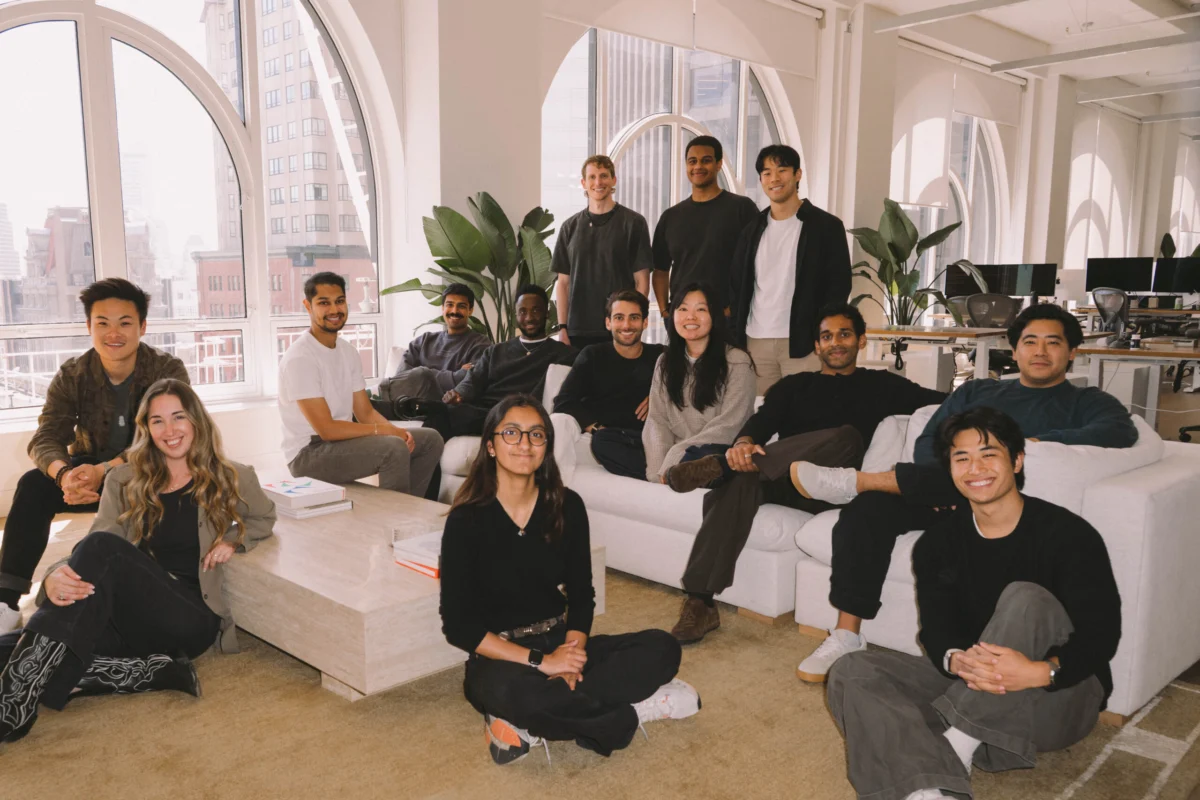
The rapid evolution of artificial intelligence has moved beyond simple text generation into the realm of autonomous execution, where AI agents are now capable of managing complex logistics, identifying supply chain vendors, and negotiating terms. However, a critical friction point remains: the legacy financial infrastructure. While an AI agent can identify a freight provider and organize a delivery in milliseconds, the final step of the process—executing the payment—still requires a human to step in and authorize the transaction. This bottleneck has prompted the emergence of a new category of fintech designed specifically for the "machine economy." Natural, a startup focused on building the financial backbone for autonomous agents, has announced it has raised $30 million in Series A funding to address this structural gap, bringing its total capital to $40 million.
The funding round was led by Forerunner, a venture capital firm known for its focus on the evolution of commerce and consumer experiences. Kirsten Green, founder and managing partner at Forerunner, spearheaded the investment, citing the necessity of a fundamental redesign of payment rails to accommodate a future where transactions are initiated by software rather than people. Natural’s entry into the market signals a direct challenge to established giants like Stripe, as the industry races to define how money will move in an era dominated by agentic workflows.
The Friction Between AI Autonomy and Legacy Financial Rails
To understand the necessity of Natural’s platform, one must examine the current state of global "financial rails"—the underlying networks, such as ACH (Automated Clearing House), SWIFT, and credit card processing systems, that facilitate the movement of capital. These systems were architected in the mid-to-late 20th century with a core assumption: a human being is the primary decision-maker and authorized signatory.
In traditional finance, security protocols are built around human identity verification, two-factor authentication (2FA), and manual oversight. For an AI agent, these requirements are functional dead ends. A credit card transaction often requires a CVV or a biometric check, while ACH transfers involve multi-day settlement periods and manual bank logins. For an agent designed to operate at the speed of light, waiting three days for a human to approve a vendor payment or navigate a banking portal defeats the purpose of automation.
Natural is positioning itself as an "agent orchestration layer" that allows AI to not only store funds but also move them autonomously. By integrating this infrastructure, businesses can empower their AI models to act as independent economic actors. This allows for a seamless "end-to-end" workflow where an agent can identify a business need, select a provider, and complete the financial settlement without human intervention, provided it stays within predefined budgetary and risk parameters.
The Strategic Vision of Kahlil Lalji and the Founding Team
The impetus for Natural came about a year ago when co-founder and CEO Kahlil Lalji observed a widening chasm between AI capabilities and financial architecture. Lalji is a seasoned figure in the fintech space, having previously co-founded Ivella, a Y Combinator-backed banking product designed for couples. Ivella was acquired in 2023 by Earnin, where Lalji subsequently served as an engineer.
Despite his success, Lalji initially expressed a desire to move away from the highly regulated and often volatile finance sector. The end of the Zero Interest Rate Policy (ZIRP) era had significantly altered the venture landscape, making fintech a more challenging environment for new entrants. However, the sheer scale of the "agentic payments" problem proved too significant to ignore. Lalji realized that without a dedicated payment layer, the potential for AI agents to transform global commerce would be permanently throttled.
Lalji reunited with his Ivella co-founder Eric Wang and teamed up with Walt Leung, a former engineering manager at Nextdoor, to launch Natural in 2025. The team’s pedigree has been a significant draw for talent; the startup has already recruited senior engineers and product specialists from industry leaders including Stripe, Ramp, and Square. This concentration of fintech expertise suggests that Natural is not merely building a wrapper for existing services, but is instead attempting to rebuild the ledger and settlement logic from the ground up.
Funding History and Market Context
The $30 million Series A round represents a significant vote of confidence in a market that is still in its nascent stages. Forerunner’s involvement is particularly noteworthy. Kirsten Green’s firm has a history of identifying shifts in commerce before they become mainstream, having been early investors in companies like Dollar Shave Club, Warby Parker, and Chime.
According to market data, the global AI market is projected to reach nearly $2 trillion by 2030, with a substantial portion of that growth driven by autonomous agents. As these agents take over procurement, advertising spend, and logistics management, the volume of machine-initiated transactions is expected to dwarf current human-initiated volumes. Natural’s total funding of $40 million provides the runway necessary to navigate the complex regulatory hurdles of the financial sector while aggressively scaling its technical infrastructure.
Competitive Landscape: Natural vs. Stripe and Stablecoin Innovators
Natural enters a competitive field that is rapidly bifurcating into two camps: legacy-compatible innovators and crypto-native disruptors.
-
The Incumbents: Stripe, currently valued at approximately $70 billion, has not been idle. The company has already begun rolling out features aimed at AI developers, recognizing that "agentic commerce" is the next frontier. Stripe’s advantage lies in its massive existing merchant network and deep integrations. However, Lalji argues that Natural’s agility and its ground-up architecture for agents will allow it to outpace a giant that must still maintain compatibility with millions of traditional users.
-
Stablecoin-Based Solutions: Other startups, such as the DCVC-backed Skyfire Systems, are betting that traditional banking rails are too broken to be fixed for AI. These firms utilize USD-backed stablecoins and blockchain technology to facilitate instantaneous, programmable payments between agents. This approach bypasses the ACH system entirely.
Natural is taking a hybrid approach. While it plans to incorporate stablecoins into its architecture to leverage their speed and programmability, it is also building deep support for traditional bank payments. This "best of both worlds" strategy is designed to make the platform palatable to enterprise clients who may be hesitant to move their entire treasury into digital assets but still require the speed of automated transactions.
The Economic Implications of "Computer Speed" Transactions
The core of Lalji’s thesis is that the global economy is currently limited by "human speed." In the current paradigm, a transaction involves a human seeing an invoice, logging into a portal, and clicking "approve." This process introduces latency and limits the frequency of transactions.
Lalji suggests that when payments occur at computer speed, the market will see an explosion in transaction frequency. "The number of payments that may occur in the world may be two or three or four orders of magnitude greater than the number of payments that exist today," Lalji noted. This shift could lead to:
- Micro-transactions: AI agents could pay for services in real-time on a per-second or per-request basis, rather than through monthly subscriptions.
- Dynamic Supply Chains: Agents could continuously re-route orders and settle payments with different vendors minute-by-minute based on price fluctuations or shipping delays.
- Automated Dispute Resolution: Natural is specifically looking at reinventing how disputed transactions are handled. In a world of millions of micro-transactions, human-led dispute resolution is impossible. Natural aims to build automated logic to handle refunds and chargebacks within the agentic layer.
Regulatory and Security Challenges
Building a financial system for non-human entities brings unprecedented regulatory challenges. Traditional "Know Your Customer" (KYC) and "Anti-Money Laundering" (AML) laws are designed to verify the identity of people and legal entities. When an AI agent owned by a corporation starts transacting with another agent, the legal definitions of "authorization" and "intent" become blurred.
Natural must navigate these waters by creating robust "Know Your Agent" protocols. This involves ensuring that every transaction can be traced back to a responsible human or corporate entity, while still allowing the agent the autonomy to operate. Security is another paramount concern; if an agent’s logic is compromised, it could theoretically drain a corporate account in seconds. Natural’s architecture includes "guardrails" that allow companies to set strict limits on what an agent can spend, who it can pay, and under what conditions.
Looking Ahead: The Foundation of the Machine Economy
The successful Series A funding puts Natural in a position to transition from its beta trial phase into a full-scale market launch. The company’s focus on the "orchestration layer" suggests it wants to be the invisible infrastructure that powers every AI agent, regardless of whether that agent is booking a flight for a consumer or purchasing raw materials for a factory.
As AI models become more "reasoning-heavy" and capable of long-term planning, the ability to interact with the physical and digital world through capital becomes their most potent tool. Natural is betting that by the end of the decade, the concept of a human manually entering credit card details will seem as antiquated as writing a paper check.
By solving the "last mile" of AI autonomy—the payment—Natural is not just building a fintech company; it is building the foundational economic protocol for the next era of computing. The race to become the "Stripe for AI" is officially underway, and with $40 million in the bank and a team of industry veterans, Natural has positioned itself as a formidable contender in the fight to define the future of money.