Ella Zulfa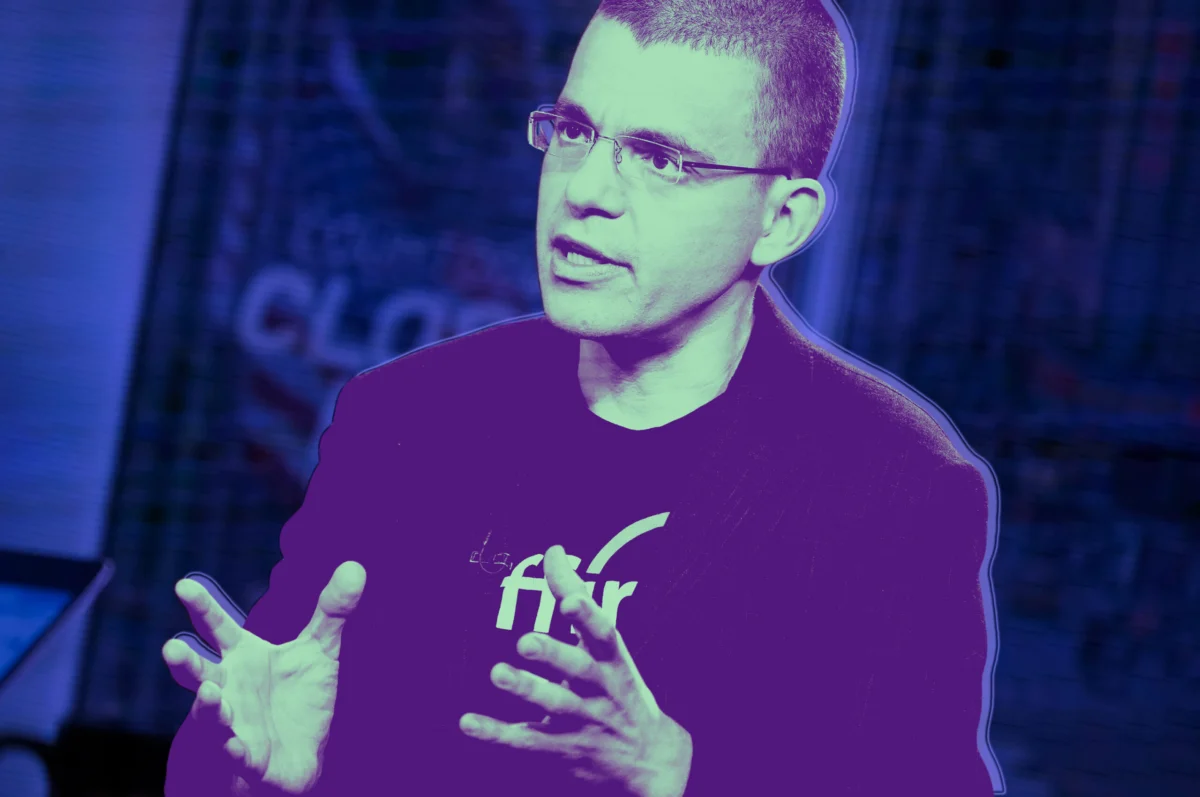
Max Levchin, the visionary PayPal co-founder and current CEO of Affirm, has articulated a clear perspective on the burgeoning impact of artificial intelligence on the software industry. While acknowledging AI’s potential to reshape the technological landscape, Levchin asserts that companies deeply entrenched in complex, real-world logistics and operations, such as DoorDash, are significantly more insulated from the disruptive forces of "vibe coding" than purely software-centric businesses. Vibe coding, a nascent trend characterized by the AI-assisted creation of applications from natural language prompts, represents a new frontier in software development, but Levchin believes its reach has distinct limitations.
In a recent appearance on the Sourcery podcast, Levchin, at the helm of the buy now, pay later fintech giant Affirm, valued at approximately $19.9 billion, posited that AI’s advancement could indeed lead to the obsolescence of certain software companies. He elaborated on this by noting a rapid escalation in the expected quality of software. "The bar for quality of software is going up rapidly," Levchin stated. He explained that if a software product is perceived as subpar, exhibiting a poor user interface or functionality, businesses are increasingly empowered to develop superior alternatives internally using AI coding tools. This capability, he suggests, creates a direct avenue for companies to replace inadequate existing applications and tools with their own AI-generated solutions, potentially leading to the decline of businesses that offer such flawed software.
"I think companies that have built software and just sell that software are very vulnerable," Levchin emphasized. "If you really hate some piece of software that you’re using and the software doesn’t have some deep sort of proprietary data, proprietary source of value, it will get replaced. There’s no reason why not." This sentiment underscores a critical distinction: software that relies solely on its codebase or interface, without a unique underlying value proposition or exclusive data assets, is susceptible to being replicated or superseded by AI-driven custom solutions.
Within this evolving disruptive environment, Levchin highlighted delivery platforms like DoorDash as exemplars of resilient business models. He pointed to the intricate operational fabric that underpins DoorDash’s success. "DoorDash employees have called every restaurant, negotiated with owners and extracted menus, all to create a seamless food delivery experience," Levchin noted. This process is not merely about a well-designed app; it involves extensive real-world logistics, intricate integrations with a vast network of businesses, and the cultivation of crucial relationships. DoorDash, therefore, represents a complex ecosystem that transcends the confines of a simple software product.
"By way of having a great app, it’s important because it integrates with all your favorite restaurants," Levchin conceded. "I think DoorDash is actually quite safe in their business." His reasoning suggests that while a superior app is a component, the true defensibility of DoorDash lies in its established network, operational infrastructure, and the tangible, real-world services it orchestrates. These elements are far more challenging for AI to replicate through "vibe coding" alone, as they necessitate physical presence, human negotiation, and on-the-ground execution.
The Shadow of the "Software Apocalypse"
Levchin’s pronouncements emerge against a backdrop of heightened anxiety and intense debate surrounding the future trajectory of the software industry. Recent market performance has seen significant downturns in technology stocks, a phenomenon some analysts have controversially termed the "software apocalypse." This sell-off, which gained momentum in early February, was reportedly triggered by investor apprehension following the unveiling of Anthropic’s advanced AI tool. This particular system demonstrated a capacity to handle a wide spectrum of administrative tasks for legal professionals, signaling that AI was moving beyond routine data processing into specialized, high-value domains. Such advancements suggested that AI was not just a tool for automation but a potential competitor in niche software markets, including the legal software sector, as reported by Business Insider.
Since this pivotal moment, prominent software industry giants have experienced substantial declines in their market valuations. Shares of companies such as Salesforce, Snowflake, and Microsoft have seen declines ranging from 18% to 38% year-to-date. This trend is fueled by growing concerns that businesses might increasingly opt to leverage AI to develop their own proprietary software solutions rather than purchasing off-the-shelf products. Business Insider has extensively covered this developing narrative, linking the market movements to Levchin’s own observations on "vibe coding." The aggregate impact of this market correction has been staggering, with global software and services stocks losing close to $1 trillion in market capitalization, according to reports from Reuters.
This period of market volatility and investor caution highlights a fundamental shift in how software value is perceived. Historically, software companies have commanded premium valuations based on their intellectual property, recurring revenue models, and the perceived difficulty of replication. However, the rapid maturation of AI, particularly generative AI capable of producing functional code from natural language inputs, has introduced a new variable. The ability for companies to create tailored software solutions quickly and cost-effectively using AI tools poses a direct challenge to the business models of many traditional software vendors, especially those offering less differentiated or more commoditized solutions.
The Enduring Importance of Coding Craftsmanship
Despite his embrace of AI-powered coding assistance, Levchin maintains a strong conviction regarding the continued necessity of human programming expertise. In his discussion on the Sourcery podcast, he revealed his own practice of "vibe coding," utilizing Anthropic’s Claude to generate code snippets. However, this reliance on AI has not diminished his respect for the fundamental skills of software engineering. Levchin, who holds a degree in computer science from the University of Illinois in Urbana-Champaign, argued that the foundational skill of learning to code remains indispensable for aspiring and practicing software engineers.
He eloquently described the act of writing code as an "art form," noting that "some code is more elegant than others." This perspective emphasizes that software development is not purely a mechanical process but involves elements of creativity, efficiency, and aesthetic sensibility. "There’s a matter of taste and elegance in programming," Levchin stated. "You still need some degree of taste… to steer [AI] towards the right outcome. And for that, you have to understand what you’re doing."
This sentiment suggests that while AI can automate the generation of functional code, human programmers are still crucial for defining the goals, evaluating the quality, and refining the output. An understanding of algorithmic principles, data structures, software architecture, and best practices is essential to guide AI effectively. Without this foundational knowledge, users might inadvertently generate inefficient, insecure, or suboptimal code, defeating the purpose of leveraging advanced AI tools. The "art" of programming, therefore, shifts from manual construction to intelligent direction and sophisticated refinement.
The implications of Levchin’s analysis extend beyond the immediate market fluctuations. They point towards a future where software development is likely to be a collaborative effort between human ingenuity and artificial intelligence. Companies that can effectively integrate AI into their development workflows, while retaining skilled human oversight, will likely gain a competitive advantage. Conversely, businesses that offer software lacking significant proprietary value or deep integration into complex, real-world operations may face considerable pressure from AI-driven customization and internal development initiatives.
Broader Industry Reactions and Future Outlook
The discourse ignited by Levchin’s comments and the broader "software apocalypse" narrative has elicited varied reactions across the tech industry. While some executives and analysts share his concerns about the vulnerability of certain software segments, others remain optimistic about AI’s potential to augment rather than replace human roles and existing software solutions.
For instance, some proponents of AI argue that these tools will democratize software creation, enabling a wider range of individuals and businesses to build custom applications, thereby stimulating innovation and economic growth. They posit that AI will free up developers from mundane coding tasks, allowing them to focus on more complex problem-solving, architectural design, and the development of novel functionalities.
However, concerns persist about the potential for job displacement in roles heavily focused on routine coding. The economic implications of such a shift are a subject of ongoing analysis, with policymakers and industry leaders grappling with strategies to adapt the workforce to these evolving demands. Educational institutions are also re-evaluating curricula to ensure students are equipped with the skills needed to thrive in an AI-augmented development environment.
The long-term impact of "vibe coding" and AI-driven software development remains a subject of intense scrutiny. The speed at which AI capabilities are advancing suggests that the landscape will continue to evolve rapidly. Businesses that demonstrate agility, a commitment to innovation, and a deep understanding of their customers’ needs, particularly those embedded in complex operational realities, appear best positioned to navigate this transformative period. The distinction Levchin draws between software-as-a-product and software-as-an-integrated-solution is likely to become increasingly salient as AI continues to reshape the technological frontier. The future of software may not be an apocalypse, but rather a profound evolution, demanding adaptability and a redefinition of value.