Putri Inara
The rapid ascent of pickleball from a niche backyard pastime to the fastest-growing sport in the United States has provided more than just a recreational outlet for millions; it has offered a masterclass in community building, strategic simplicity, and scalable growth. For digital content creators and professional bloggers operating in an increasingly saturated market, the mechanics of pickleball offer a surprising parallels to the strategies required for long-term digital viability. As the creator economy continues to evolve, the principles of the "court"—ranging from the tactical "dink" to the importance of the "kitchen"—are being repurposed as metaphors for high-level content strategy and audience engagement.
The Evolution of a Phenomenon: A Chronological Context
To understand the lessons pickleball offers, one must first examine its trajectory. The sport was conceptualized in 1965 on Bainbridge Island, Washington, by Joel Pritchard, Bill Bell, and Barney McCallum. Facing a summer afternoon with bored children and a lack of proper equipment, the founders improvised with a perforated plastic ball and handmade plywood paddles on a badminton court.
By 1972, a corporation was formed to protect the sport’s interests, and by 1984, the USA Pickleball Association (USAPA) was established to formalize the rules. However, the true explosion occurred between 2020 and 2023. According to the Sports & Fitness Industry Association (SFIA), pickleball participation grew by 158.6% over three years, reaching an estimated 8.9 million players in the United States alone. This growth was driven by the sport’s low barrier to entry, its social nature, and its adaptability to various skill levels—qualities that mirror the most successful digital publishing platforms.
Strategic Imperatives: Starting Small and Thinking Globally
The foundational lesson for any blogger is the concept of the Minimum Viable Product (MVP). Pickleball did not begin with professional leagues or televised tournaments; it began with a single improvised game. In the context of digital publishing, this mirrors the transition from a solitary blog post to a comprehensive content ecosystem.
Market data suggests that the majority of successful blogs—those generating significant revenue or influence—started with a narrow niche before expanding. Professional bloggers who "think big" while "starting small" allow themselves the flexibility to test content pillars without the overhead of a massive media launch. This organic growth ensures that the foundation of the blog is built on actual reader interest rather than theoretical market demand.
Community Dynamics: The Digital Rally
In pickleball, a "rally" is the continuous play between opponents. In blogging, the rally is the ongoing dialogue between the creator and the audience. Statistical analysis from HubSpot indicates that blogs that prioritize active engagement—responding to comments, integrating user-generated content, and maintaining a presence on social media—see a 25% higher retention rate among readers.
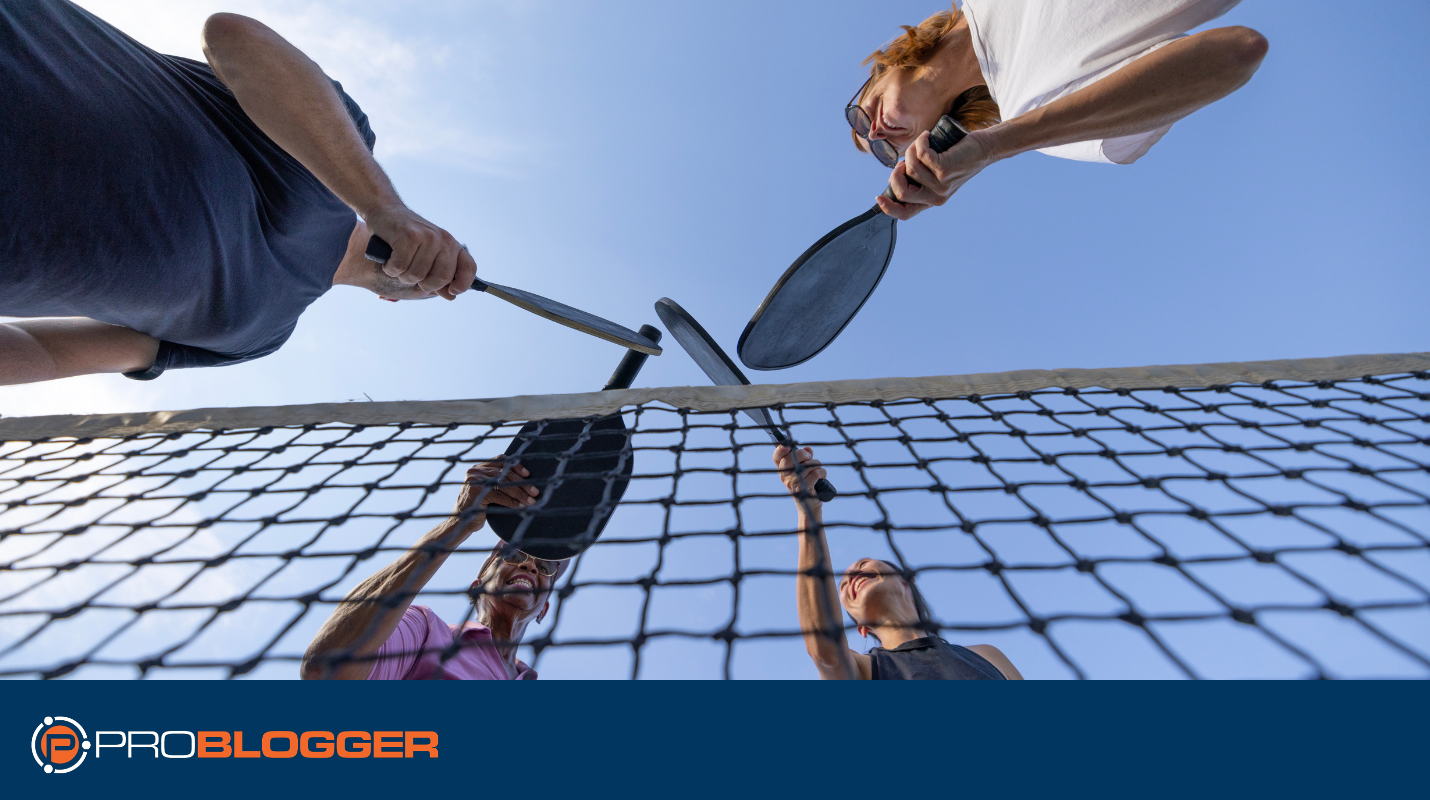
The social infrastructure of pickleball is one of its primary drivers of growth. Players often rotate in and out of games, fostering a sense of inclusivity. For bloggers, this translates to moving away from a "broadcast" model of communication toward a "community" model. By fostering a vibrant comment section or a dedicated social media group, bloggers transform passive consumers into active stakeholders in the brand’s success.
The Power of Tactical Simplicity: The ‘Dink’ Strategy
One of the most nuanced elements of pickleball is the "dink"—a soft shot hit from the non-volley zone that just clears the net. While beginners often try to power the ball past their opponents, advanced players use the dink to control the tempo and force errors.
For content creators, "dinking" is the art of simplifying complex information. In an era of "information overload," clarity is a competitive advantage. According to readability studies, content written at an eighth-grade level typically sees higher engagement and shareability than content laden with technical jargon. By breaking down sophisticated concepts into digestible, actionable insights, bloggers can control the "flow" of information and ensure their message resonates with the widest possible audience.
Navigating the ‘Kitchen’: Ethical Boundaries and Market Positioning
In pickleball, the "kitchen" refers to the seven-foot non-volley zone on both sides of the net. Players are prohibited from volleying while standing in this area, a rule designed to prevent aggressive "smashing" and encourage strategic play.
In the blogging world, the "kitchen" represents the ethical and strategic boundaries of content creation. This includes the balance between editorial integrity and sponsored content. Overstepping these bounds—such as failing to disclose affiliate links or prioritizing "clickbait" over value—can result in a loss of trust, much like a foot fault in pickleball results in a lost point. Finding the "sweet spot" involves identifying the intersection of creator expertise, audience need, and market opportunity without compromising the long-term health of the brand.
Data-Driven Resilience: Learning from the ‘Whiff’
Even professional athletes occasionally "whiff"—a term used when a player misses the ball entirely. In the digital space, not every article or marketing campaign will achieve the desired Key Performance Indicators (KPIs). However, the professional journalistic approach views these "whiffs" as essential data points.
By utilizing analytics tools to track bounce rates, click-through rates (CTR), and average time on page, bloggers can diagnose why certain content failed to land. This iterative process is identical to a player adjusting their stance or grip after a missed shot. Resilience in blogging is not merely about persistence; it is about the ability to pivot based on empirical evidence.
Agility and Adaptation in an Evolving Landscape
The digital landscape is currently undergoing a seismic shift due to the integration of Artificial Intelligence (AI) and changes in Search Engine Results Pages (SERP). Just as pickleball players must adapt to different court surfaces and wind conditions, bloggers must remain agile.
Adaptation involves staying abreast of SEO updates, such as Google’s Helpful Content Update, and diversifying traffic sources beyond organic search. Industry experts suggest that bloggers who rely on a single platform for traffic are at high risk. Diversification—much like a player developing both a strong forehand and backhand—is the key to longevity.
The ‘Strong Serve’: Hooking the Reader
A serve in pickleball must be underhand and clear the non-volley zone. It is the only way to start a point and gain the opportunity to score. In blogging, the "serve" is the headline and the introductory paragraph.
Data from the American Press Institute shows that readers decide whether to continue reading an article within the first few seconds. A "strong serve" in blogging involves a compelling hook, a clear value proposition, and a professional tone. If the introduction fails to provide immediate relevance, the reader will "exit," and the opportunity for conversion is lost.
Strategic Positioning and Niche Authority
Positioning on the court determines a player’s ability to defend and attack. In the global blogosphere, which hosts over 600 million blogs, positioning is a matter of survival. Strategic positioning involves identifying a "Blue Ocean"—a market space that is currently underserved or lacks high-quality content.
By establishing authority in a specific niche, bloggers can command higher advertising rates and foster more loyal followings. This is the digital equivalent of "controlling the T" on a court—occupying the most advantageous position to respond to any development in the market.
The Sustainability of Passion: Preventing Creator Burnout
The final lesson from pickleball is perhaps the most human: the element of enjoyment. Despite the competitive nature of the sport, its primary appeal is that it is fun. The blogging industry is notorious for high rates of burnout, often driven by the relentless demand for new content and the pressure of algorithm chasing.

Maintaining a sense of passion for the subject matter is not just a personal preference; it is a business necessity. Enthusiastic writing is more engaging, more authentic, and more likely to build a lasting connection with an audience. When a creator loses interest in their topic, the quality of the content inevitably suffers, leading to audience attrition.
Broader Impact and Industry Analysis
The intersection of recreational trends and professional strategies highlights a broader shift in how modern businesses operate. The "Pickleball Model" of growth—characterized by low entry costs, high social engagement, and tactical simplicity—is being mirrored across various sectors of the digital economy.
Industry analysts suggest that the next decade of blogging will be defined by "micro-communities" rather than mass-market appeal. As AI-generated content becomes more prevalent, the human element—the "authentic rally" between creator and reader—will become the most valuable commodity. By adopting the strategic mindset of a pickleball player, bloggers can navigate this changing terrain with confidence, ensuring their digital presence remains both competitive and sustainable.
In conclusion, the lessons from the pickleball court offer a robust framework for digital success. By focusing on community, simplicity, and strategic positioning, bloggers can move beyond mere survival and achieve a level of growth that mirrors the sport’s own extraordinary rise. The court is set, the rules are clear, and for those willing to master the game, the rewards are substantial.