Ena Muazin
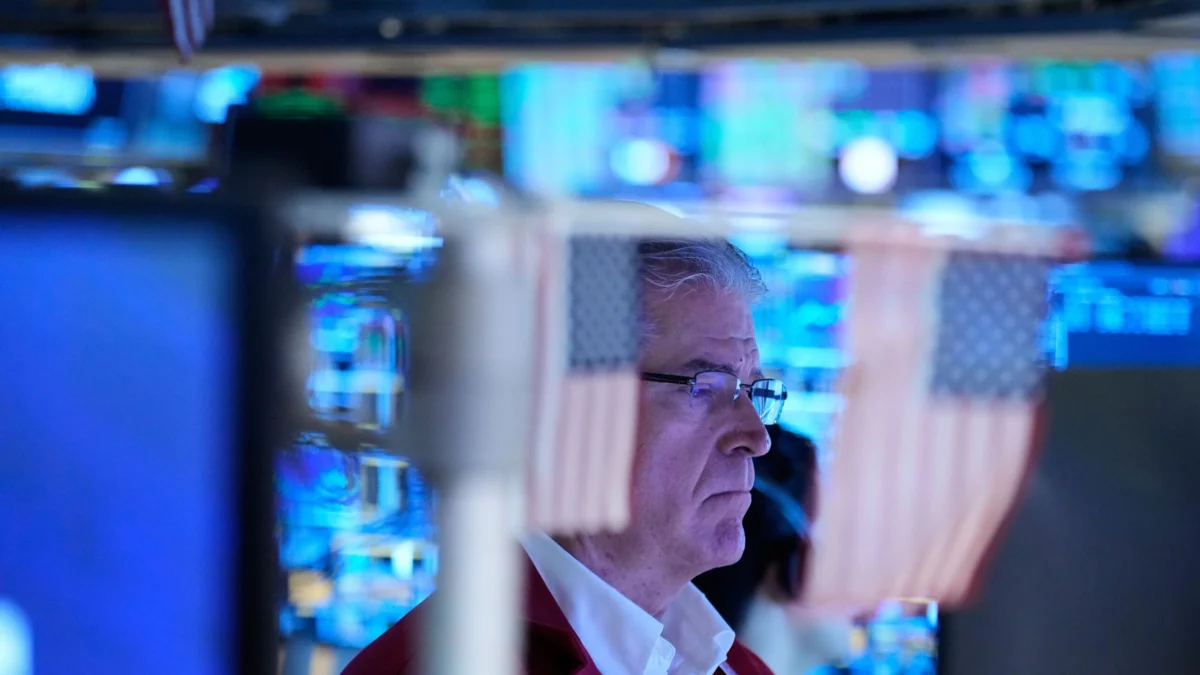
Düsseldorf – Investors are adopting a cautious stance, shedding positions just ahead of the U.S. Federal Reserve’s next interest rate decision, mirroring the losses experienced in the previous trading session. This preemptive move underscores the significant weight market participants are placing on the Federal Reserve’s impending announcement, which is poised to have a profound impact on global financial markets. The prevailing sentiment among market observers, as indicated by the CME Fed-Watch tool, points towards an almost unanimous expectation of a rate hike. This anticipation is fueled by recent economic data, including the August inflation figures, which showed the annual inflation rate holding steady at 3.4 percent, as reported by the relevant statistics office last week. Furthermore, the core inflation rate, a metric particularly closely watched by the Fed, remains elevated at 2.4 percent, signaling persistent price pressures within the economy.
The Federal Reserve’s Dual Mandate and Current Economic Landscape
The Federal Reserve operates under a dual mandate, tasked with fostering both price stability and maximum employment. The recent August jobs report presented a picture of a robust labor market, with more positions created than anticipated. This strength in employment figures further bolsters the case for a monetary policy tightening by the Federal Reserve, as it suggests the economy can withstand higher borrowing costs without a significant detrimental impact on job creation.

Presidential Pressure and Monetary Policy Discourse
In stark contrast to the market’s prevailing sentiment and the Federal Reserve’s likely course of action, U.S. President Donald Trump has publicly advocated for a rate cut. Following the release of the August employment report, President Trump took to his social media platform, Truth Social, to express his strong disapproval of current interest rate levels. He issued a directive, stating, "Cut the rates, or I will stop doing business with countries that have a deficit with us." He further elaborated, asserting that high interest rates unfairly disadvantage the United States, a situation he declared he would not permit. This direct intervention from the highest office in the U.S. injects an additional layer of complexity into the already intricate monetary policy decision-making process. Historically, presidential pressure on central banks has been a recurring theme, often sparking debates about central bank independence and the delicate balance between political influence and economic stewardship.
Oil Price Surge Fuels Inflation Concerns and Market Volatility
Adding another layer of complexity to the economic outlook, oil prices have surged past the $100 per barrel mark, driven by escalating tensions in the Middle East. This development has significant implications for inflation, a key concern for central bankers worldwide. Brent crude, the European benchmark, was trading at $105 per barrel for November delivery on Tuesday. Throughout September, the price of this oil variety saw an 18 percent increase. While still below its peak of over $120 per barrel reached during the conflict with Iran, experts anticipate further price hikes. This persistent rise in energy costs is a critical factor in the ongoing interest rate debate, as elevated oil prices can directly translate into higher consumer prices, thereby complicating the Federal Reserve’s efforts to manage inflation.
The geopolitical situation has further exacerbated supply chain concerns. Unlike previous periods of regional conflict, the current instability threatens not only the vital Strait of Hormuz but also alternative routes for key oil-producing nations like Saudi Arabia. The pipeline in the Saudi port of Yanbu has reportedly sustained damage, and the Houthi rebels in Yemen have actively engaged in the conflict, posing a threat to the vital trade route connecting Saudi Arabia to the Red Sea. This disruption in oil supply routes creates a tangible risk of sustained higher energy prices, which could potentially reignite inflationary pressures and force central banks to adopt more aggressive tightening measures.

Rising U.S. Treasury Yields Reflect Economic Headwinds
In tandem with these developments, yields on U.S. Treasury bonds continue their upward trajectory. The confluence of high inflation and heightened expectations of further interest rate hikes is placing downward pressure on bond prices. The yield on the benchmark 10-year U.S. Treasury note reached a significant milestone on Tuesday, climbing to 5.04 percent in intraday trading. This marks the highest level observed in 19 years, signaling a substantial increase in borrowing costs for the U.S. government and potentially for corporations and consumers alike.
Several factors are contributing to this climb in Treasury yields. The recent increase in the issuance of corporate and government bonds has expanded the supply of debt instruments available in the market. Furthermore, a proposed buyback program by the U.S. government, reportedly a measure considered by U.S. Treasury Secretary Scott Bessent to curb rising yields, has had a minimal impact. Concerns surrounding the long-term fiscal trajectory of the United States are also contributing to the negative sentiment surrounding Treasury bonds, further driving up their yields. This rise in yields has broad implications, increasing the cost of capital for businesses, potentially slowing investment, and impacting mortgage rates and other consumer borrowing costs.
The Resurgence of AI Concerns and Market Reaction
Adding to the market’s anxieties, recent warnings from prominent figures in the Artificial Intelligence (AI) sector have sent ripples through the technology stocks. CEOs of leading AI companies, including Anthropic and OpenAI, issued statements on Monday calling for a slowdown in AI development to ensure the safety and security of these rapidly advancing systems. This cautionary stance triggered significant sell-offs in AI-related equities on Wall Street and other global exchanges.

The technology-heavy Nasdaq Composite experienced a notable decline during intraday trading on Monday, falling by as much as 1.3 percent. U.S. semiconductor manufacturers, in particular, saw substantial losses. However, a broader downward trend in the tech sector has not yet materialized. By Tuesday, many of these previously affected stocks showed signs of recovery, trading slightly higher. The Nasdaq index itself initially remained flat before later slipping 0.6 percent. This volatility highlights the sensitive nature of the AI market and the potential for significant price swings based on pronouncements from industry leaders and regulatory discussions. The debate around AI safety and its ethical implications is likely to remain a key focus for investors in the technology sector.
A Closer Look at Individual Equities
Chip Stocks: In the wake of Monday’s significant declines, shares of Intel, ARM Holdings, AMD, and Marvell Technology have shown signs of recovery, with all recording modest gains on Tuesday. This rebound suggests that investors may be re-evaluating the impact of the AI sector warnings, with some seeing these dips as buying opportunities for fundamentally strong companies. The performance of these chip manufacturers is closely tied to the broader trends in AI development and adoption, making them particularly sensitive to news and sentiment surrounding the sector.
Coca-Cola: Beverage giant Coca-Cola announced an ambitious investment plan to inject ten billion dollars into its domestic market by 2030. This significant capital commitment, intended for both the company and its bottling partners, includes previously announced projects across several U.S. states. Despite this positive news, Coca-Cola’s stock experienced a slight dip of 0.4 percent. This minor decline, in the context of broader market uncertainty, underscores the prevailing cautious sentiment among investors, even in the face of substantial long-term investment commitments.

Skyworks Solutions: Skyworks Solutions, a key semiconductor supplier to Apple, has demonstrated a robust upward trend in its stock price over recent days. This surge follows Apple’s recent unveiling of its new foldable iPhone, a development that is expected to boost demand for components manufactured by Skyworks. Furthermore, CEO Phil Brace recently indicated that a proposed $22 billion merger with Qorvo is nearing final regulatory approval. This confluence of positive catalysts has propelled Skyworks Solutions’ stock up by 12.4 percent on Tuesday, adding to a remarkable one-third gain since mid-July. The company’s strong performance highlights its strategic importance within the supply chain of major technology firms and its ability to capitalize on new product cycles and significant corporate transactions.
The Fed’s Strategic Considerations and Future Outlook
The Federal Reserve faces a complex balancing act. On one hand, persistent inflation, evidenced by the recent CPI and core inflation data, necessitates a firm monetary policy stance to maintain price stability. On the other hand, the global economic slowdown, coupled with geopolitical uncertainties, warrants a careful consideration of the potential impact of aggressive rate hikes on economic growth and employment.
Market analysts are keenly observing Federal Reserve Chair Jerome Powell’s upcoming statements for any further signals regarding the future path of monetary policy. The consensus among many economists is that the Federal Reserve is likely to proceed with another interest rate hike, but the subsequent trajectory will be heavily influenced by incoming economic data and the evolving geopolitical landscape. The market’s current pricing-in of a rate hike suggests that the immediate reaction to the announcement may be limited, unless Chair Powell offers unexpected forward guidance on the pace and duration of future tightening measures.

The role of the Federal Reserve in navigating these turbulent economic waters remains critical. Its decisions will not only shape the domestic economic landscape of the United States but will also have significant repercussions for global financial markets, international trade, and the economic well-being of nations worldwide. Investors, policymakers, and consumers alike will be closely watching for clarity and stability from the Federal Reserve as it attempts to steer the economy through this period of heightened uncertainty. The coming days and weeks will undoubtedly be crucial in determining the short-term direction of financial markets and the longer-term economic outlook.