Gilang Muhammad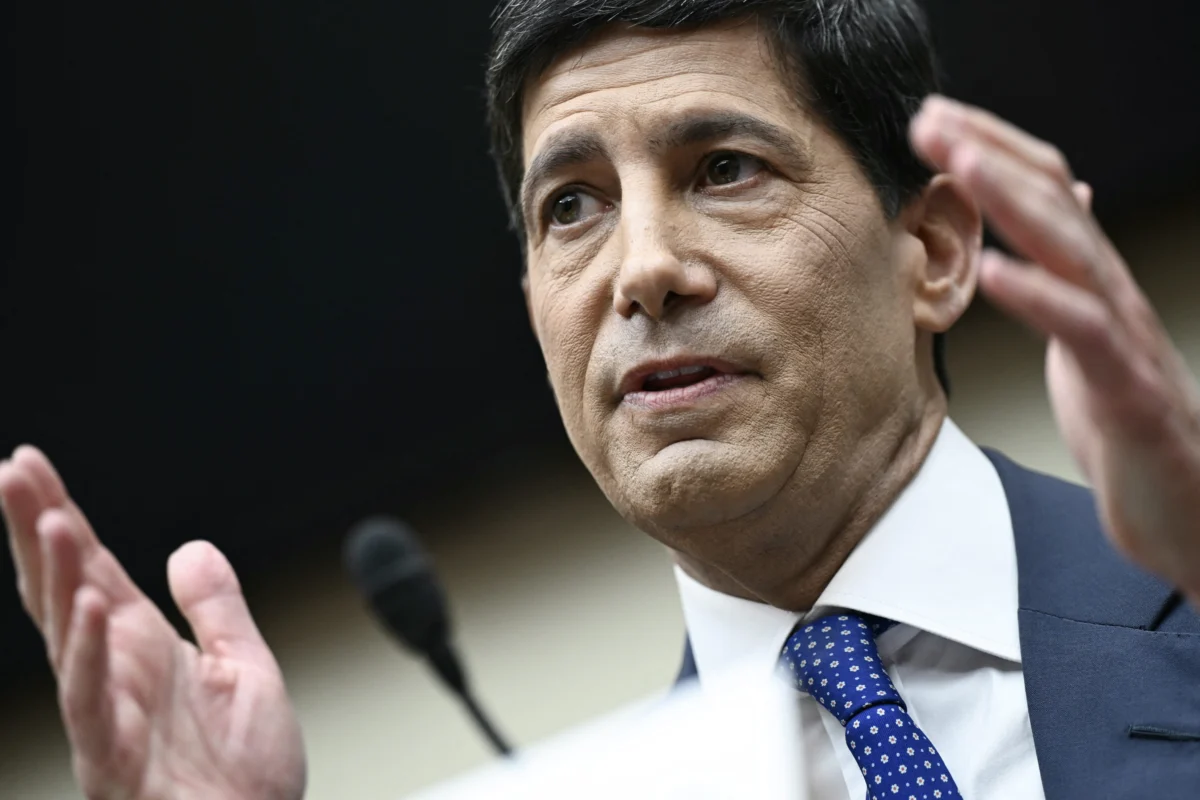
In a significant shift from the often-deliberate obfuscation of his predecessors, newly appointed Federal Reserve Chairman Kevin Warsh has quickly distinguished himself with a communication style marked by a concise, almost aphoristic, use of language. While not reaching the legendary opacity of a former Chairman Alan Greenspan, Warsh has nonetheless adopted a lexicon notable for its repetition and, paradoxically, its initial lack of immediate clarity regarding precise monetary policy implications. This deliberate choice of phrasing, delivered across his initial public engagements, has placed a premium on understanding the nuances embedded within his seemingly simple declarations, prompting economists and market watchers alike to embark on an urgent quest to decipher the "Warsh code."
Since his nomination hearing in April, followed by his inaugural press conference, a significant roundtable discussion in Portugal, and two subsequent congressional testimonies, Chairman Warsh has consistently woven three particular phrases into his public discourse. The concept of a "family fight" has been invoked a striking 13 times, suggesting an internal dynamic within the Federal Open Market Committee (FOMC). He has returned to the bedrock notion of "first principles" on 11 occasions, signaling a fundamental reassessment of the central bank’s operational philosophy. Perhaps most critically, the assertion that "inflation is a choice" for the Fed has been reiterated six times, a statement with profound implications for the institution’s commitment to price stability. While the frequency of these phrases is readily quantifiable, their precise meaning for the future trajectory of monetary policy presents a far more complex interpretative challenge. With a Chairman who has consciously opted for a more laconic approach compared to previous leaders, the weight of his chosen words becomes exceptionally significant for analysts striving to anticipate the direction of the world’s most influential central bank.
The Context of a New Era at the Fed: Warsh’s Ascent and Economic Landscape
Kevin Warsh’s hypothetical appointment as Fed chief marks a pivotal moment, arriving at a juncture characterized by ongoing debates over monetary policy’s efficacy, the Fed’s expanded role post-crisis, and persistent inflationary pressures. Warsh, with his background as a former Federal Reserve Governor (serving from 2006 to 2011) and a distinguished career in finance and economics, brings a unique perspective. His previous tenure at the Fed, particularly during the tumultuous period of the global financial crisis, would have exposed him to the complexities of unconventional monetary policy and the challenges of economic recovery. His return as Chairman would naturally be viewed through the lens of this experience, suggesting a potential inclination towards a more circumspect and perhaps conventional approach to central banking, particularly in an environment where inflation has proven stubbornly elevated.
The economic backdrop against which Warsh assumes leadership is critical. Assuming a contemporary setting, the global economy would likely be grappling with the aftershocks of supply chain disruptions, geopolitical tensions impacting commodity markets, and the lingering effects of unprecedented fiscal and monetary stimulus. Inflation, having surged beyond central bank targets in recent years, would be a paramount concern. Debates surrounding the Fed’s dual mandate—achieving maximum employment and price stability—would be intense, with questions arising about the appropriate balance between these objectives, especially when they appear to conflict. Moreover, the very framework of monetary policy, including the role of quantitative easing, forward guidance, and inflation targeting strategies like Flexible Average Inflation Targeting (FAIT) introduced under previous leadership, would be under scrutiny. It is within this complex and often contentious environment that Chairman Warsh’s carefully chosen phrases are now being scrutinized, each word potentially carrying the weight of future policy shifts and economic direction.
Decoding the "Family Fight": Internal Dynamics and Policy Debate
Chairman Warsh’s repeated use of the phrase "a good family fight" — 13 times in his initial appearances — has sparked considerable discussion among Fed watchers regarding the internal dynamics of the Federal Open Market Committee. On the surface, it suggests a desire for robust, uninhibited debate within the FOMC, a departure from any perceived predisposition towards consensus or a highly scripted approach.
Dan Greenhaus, a strategist at Solus Alternative Asset Management, interprets this as an encouraging sign for improved policymaking. He posits that if Chairman Warsh actively fosters an environment where "prevailing assumptions can be challenged rather than simply accepted," the long-term outcome could be superior policy decisions. Greenhaus emphasizes that the benefit might not be in altering the result of any single meeting, but rather in "improving the quality of the decision-making process over time." This perspective highlights the value of intellectual dissent and rigorous scrutiny in refining economic strategy.
Loretta Mester, a former President of the Cleveland Fed, offers an insider’s view, noting that the atmosphere during her time on the FOMC already allowed for diverse arguments. She states, "Ensuring the environment at the [Federal Open Market Committee] meeting allows for all views/arguments to be heard. I note that this was already the atmosphere when I was on the FOMC. I never felt constrained in what I said or the policy case I argued." Mester acknowledges the practical challenge of managing a group of 19 individuals, suggesting that without some order, "it is only the loudest voice in the room that gets heard," potentially stifling a broader range of views. This underscores the delicate balance between fostering open debate and maintaining an effective, structured decision-making process.
Claudia Sahm, chief economist at New Century Advisors, views Warsh’s "family fight" as a preference for a more "livelier back-and-forth" than the typically "highly scripted affairs" of FOMC meetings, where prepared remarks are often read aloud. While she believes this style is one Warsh is "more comfortable with," Sahm expresses skepticism about its actual impact on policy decisions, reiterating that "19 participants is a large group for a free-for-all conversation." Her analysis suggests that while the Chairman might prefer a less formal discussion, the institutional inertia and practicalities of a large committee might limit the extent of such a change.
Mark Spindel, a Fed author and CIO at Potomac River Capital, delves deeper into the psychological and political dimensions of the phrase. To Spindel, "this is his aphorism for the natural debate going on inside the FOMC and the Board." Crucially, Spindel argues that the "family fight" implies disagreements that, "like all ‘family fights,’ are best kept to members of the family and not revealed too much to the public." This second part, Spindel contends, is where "his committee colleagues (and market participants) are finding problematic," as it "doesn’t fit the priors." He observes that "members of the committee are clearly willing to disagree in public, or at least state their opinions much more openly (than Chairman Warsh)." Spindel also interprets the phrase as a "way of deflecting his responsibility from external pressure (POTUS, CONGRESS, MARKETS)," suggesting a strategic attempt to manage external expectations and internal dissent simultaneously.
Michael Feroli, chief U.S. economist at JPMorgan, offers a more straightforward interpretation, suggesting that "the family fight is him trying to be folksy." However, Feroli quickly adds that this approach "doesn’t depart from the tradition under [Ben] Bernanke of (publicly) welcoming dissenting opinions." This indicates that while Warsh’s phrasing might be distinctive, the underlying principle of allowing dissent is not entirely novel to the Fed’s recent history.
The collective interpretations suggest that while Chairman Warsh desires a more dynamic internal discourse, the practical implementation and the extent to which it will translate into visible policy shifts or public transparency remain subjects of debate. The challenge for Warsh will be to cultivate an environment of healthy debate without sacrificing the coherent messaging and unified front often desired by financial markets.
Returning to "First Principles": A Fundamental Reassessment of Monetary Policy
The invocation of "first principles" 11 times by Chairman Warsh signals a profound inclination to revisit the foundational assumptions and operational framework of the Federal Reserve. This phrase, far from being a mere rhetorical flourish, appears to be a cornerstone of his vision for a "regime change" at the Fed, as described by some analysts.
Mark Spindel views "first principles" as intentionally "vague enough to mean whatever Warsh wants it to mean," yet, in context, it clearly serves as "the basis for the decision making and structural reform he is manifesting." Spindel highlights Warsh’s statements over the summer in Sintra, where he noted his central banking leadership colleagues shared a "willingness to go back to first principles" as he questioned the entire process of monetary policy making. This suggests a broader, international movement toward introspection among central bankers, with Warsh positioning himself as a leading voice in this re-evaluation. Spindel points to Warsh’s "re-introduction of the monetary aggregates" and his pithy remark that "monetary policy should have something to do with money" as examples of this return to basics. He critically notes that "the science of monetary policy and other workhorses of monetary policy (The Phillips Curve), economic forecasting even appear to be unhelpful in Warsh’s first principled approach." This implies a skepticism towards complex models and an emphasis on more direct, perhaps historically proven, monetary levers. Spindel further connects this to Warsh’s critique of previous policies, such as "the low level of interest rates, the balance sheet, the failure to tighten sooner, FAIT," all of which, "to Warsh, was a departure from ‘first principles.’" This suggests a desire to unwind or fundamentally alter aspects of the unconventional policies adopted in recent decades.
Claudia Sahm directly interprets "first principles" as "code for ‘question everything.’" She underscores Warsh’s repeated calls for "regime change" at the Fed, arguing that "questioning the basic assumptions of how monetary policy is done fits that agenda." However, Sahm expresses skepticism about the feasibility of a complete overhaul: "I am skeptical that Warsh will be able to rewrite first principles. Showing that an assumption is flawed is not enough; it requires offering a better replacement." She predicts that despite his task forces, Warsh is "likely to come up short on new first principles — no regime change in monetary policy, but some incremental improvements to how it’s done." This highlights the significant challenge of fundamentally altering an institution as deeply entrenched as the Fed.

Loretta Mester provides a more prescriptive definition, seeing it as an imperative to "Rethink the way the Fed goes about achieving its dual mandate goals of price stability and maximum employment without preconceived notions or assumptions, or precluding approaches because they may differ from the current approach." She advocates for a fresh look at "communications, inflation and labor market assessment, balance sheet and operating framework, and data sources." Mester emphasizes the need for the committee to consider "new approaches rather than minor tweaks," recognizing the historical tendency for incremental changes. The challenge, she notes, will then be "how best to transition there."
Michael Feroli links the "first principles" rhetoric to Warsh’s apparent skepticism of academic influence within the Fed. He suggests it "feels like it has the same spirit as his remark about PhDs from elite institutions not keeping money in monetary policy." Feroli perceives both statements as implying that the institution has allowed "academically driven types distract the Fed from focusing on a few basic economic principles." He contrasts this with former Chairman Powell, who, despite not having a PhD, "certainly seemed less defensive about it!" This suggests Warsh might be pushing for a more practitioner-oriented approach to central banking.
Dan Greenhaus concludes that a return to "first principles could have significant implications for policymaking." He frames it as an "originalist’ approach" that questions "What is the Fed’s mandate, and how should it go about fulfilling that mandate?" Greenhaus suggests this direction implies "a more limited role for the Fed beyond monetary policy, including greater skepticism toward its involvement in areas such as regulatory policy and climate-related issues." Ultimately, it signifies "a willingness to reassess how much the Fed’s role has expanded since the Global Financial Crisis and whether that expansion has gone too far."
The collective interpretation of "first principles" paints a picture of a Chairman determined to steer the Fed back to what he perceives as its core mandate, potentially stripping away layers of complexity and expanded responsibilities accumulated over decades. This could entail a re-evaluation of its balance sheet policies, its forward guidance strategies, and even its involvement in broader economic and social issues, aligning more closely with a traditional view of central bank functions focused primarily on price stability and monetary aggregates.
"Inflation is a Choice": Reasserting the Fed’s Ultimate Responsibility
Chairman Warsh’s assertion that "Inflation is a choice, and the Fed must take responsibility for it," articulated six times in his initial appearances, is perhaps the most direct and potent statement regarding his policy philosophy. This phrase immediately resonates with classical monetary theory and signals a hawkish stance on price stability, potentially setting a new tone for the central bank’s approach to inflation control.
Loretta Mester explicitly connects this phrase to "Milton Friedman’s line that ‘Inflation is always and everywhere a monetary phenomenon, in the sense that it is and can be produced only by a more rapid increase in the quantity of money than in output.’" She elaborates that, "Over the longer run, to achieve price stability the Fed has to ensure that aggregate demand is not growing more strongly than aggregate supply. Otherwise, there will be price pressures and sustained inflation." Mester acknowledges the short-run complexities, noting that "supply is temporarily disrupted and prices rise for certain goods and/or services." In such cases, the Fed might "want to look through that" due to the "long and variable lags of the effects of monetary policy." However, she warns that "when supply disruptions are longer lasting or there is a series of multiple disruptions (like after the pandemic and now), the Fed needs to ensure that monetary policy is restrictive enough to bring demand into alignment with supply or else there will be a sustained rise in inflation." This nuanced explanation provides the theoretical framework behind Warsh’s statement, emphasizing the Fed’s ultimate long-run control.
Claudia Sahm agrees that "Inflation is a choice’ is a nod to Warsh’s mentor Milton Friedman." She points out that the Fed’s existing framework already contains a version of this: "’the inflation rate over the longer run is primarily determined by monetary policy.’" However, Sahm identifies a crucial distinction in Warsh’s phrasing: "Warsh is restating something the Fed has said for years, but he is omitting the timeframe — and that omission matters." She explains that "In the short run, supply shocks like energy disruptions or tariffs can move inflation regardless of what the Fed does." Sahm concludes that Warsh’s wording, by omitting the long-run qualifier, "is unlikely to change other Fed officials’ views on monetary policy, but it might confuse the public about what the Fed can do," potentially overstating the Fed’s immediate control over all inflationary pressures.
Dan Greenhaus interprets this statement as indicating "a Fed that is less willing to attribute prolonged inflation overshoots primarily to exogenous factors such as tariffs, fiscal stimulus, or supply shocks." He summarizes Warsh’s message as "essentially that ‘the buck stops with us.’" Consequently, Greenhaus believes Chairman Warsh "will [be] less tolerant of explanations for persistently elevated inflation that do not acknowledge the Federal Reserve’s own role." In this view, while the Fed might not be responsible for every initial inflationary shock, "it is ultimately responsible for ensuring that those shocks do not become persistent inflation." This signifies a stricter accountability standard for the central bank.
Michael Feroli notes an interesting tension between "Inflation is a choice, and the Fed must take responsibility for it" and another potential Warsh catchphrase: "’I don’t believe that we have a cruel choice.’" Feroli highlights that "it’s a pillar of modern monetary economics that inflation is a choice that in the long run is under the control of the central bank, so not many will have a problem with his first catch phrase." The contentious part, he explains, is "how long is the long run." However, the idea that "there is no short-run tradeoff between growth and inflation then begs for the question: why would the Fed ever choose inflation?" This delves into the core of central bank independence, which "rests on the idea that a politically motivated central bank might be tempted to exploit that short run tradeoff to juice the economy at the long run expense of price stability." Warsh’s statements suggest a firm commitment to resisting such short-term temptations.
Mark Spindel echoes the sentiment that this is "another phrase that can mean whatever Warsh wants it to mean," but notes its consistency with the committee’s restatement of their inflation mandate under Warsh: "’the committee will deliver price stability.’" Spindel recounts an exchange where Warsh "struggled to explain exactly what he would do about that" when "questioned aggressively by Sen. John Kennedy." Ultimately, Warsh’s response hinted at "higher rates might be in the offing." Spindel adds that Warsh "criticized his predecessors who he implied were comfortable with higher inflation rates." For Spindel, the core message is clear: "At its simplest, the Fed sets the price of money, and if money is too cheap, the Fed has to act."
Collectively, these interpretations confirm Warsh’s strong emphasis on the Fed’s primary responsibility for price stability. His rhetoric suggests a less accommodating stance towards persistent inflation, a reduced willingness to attribute it solely to external factors, and a readiness to use monetary policy tools, including potentially higher interest rates, to bring inflation back under control, even if it entails difficult short-term economic trade-offs. This stance marks a significant re-prioritization, potentially signaling a more assertive and less patient approach to inflationary pressures compared to recent eras.
Broader Implications: A New Direction for Fed Policy and Communication
Chairman Kevin Warsh’s distinctive communication strategy and the philosophical underpinnings of his repeated phrases suggest a potential pivot for the Federal Reserve on multiple fronts. His deliberate shift towards concise, almost aphoristic statements, while creating an initial interpretive challenge, could eventually lead to greater clarity if his actions consistently align with these principles. However, the immediate effect is to introduce a period of heightened scrutiny and potential market volatility as participants strive to fully grasp the implications of his "Warsh code."
The emphasis on "first principles" strongly implies a hawkish lean on monetary policy. By questioning the expansive role the Fed has assumed since the Global Financial Crisis, Warsh signals a desire to refocus the central bank squarely on its core mandates of price stability and maximum employment, potentially reducing its involvement in areas like regulatory policy, climate-related issues, or even some aspects of financial market intervention. This re-prioritization could lead to a more constrained balance sheet policy, a less interventionist approach to market liquidity, and a greater reliance on traditional interest rate tools. For markets, this could mean a reduced "Fed put" – the implicit expectation that the Fed will intervene to support asset prices – and a higher bar for monetary accommodation.
His insistence that "inflation is a choice" directly challenges any notion that persistent inflation is merely a transient phenomenon beyond the Fed’s ultimate control. This perspective suggests a lower tolerance for inflation overshoots and a quicker, more decisive response to inflationary pressures, even those stemming initially from supply-side shocks. In practice, this could translate into a more proactive stance on interest rate hikes, a firmer commitment to demand-side management, and a willingness to accept potential short-term economic slowdowns to ensure long-run price stability. The market would likely interpret this as a more aggressive inflation fighter, potentially leading to higher long-term interest rate expectations and a stronger dollar.
The call for a "good family fight" within the FOMC, while ostensibly aimed at improving decision-making, also carries implications for the Fed’s public image and internal cohesion. If the debates are kept too private, as some analysts suggest Warsh intends, it could fuel perceptions of opacity, potentially undermining the Fed’s efforts towards transparency. Conversely, if internal disagreements become too public or lead to significant policy dissents, it could introduce uncertainty into market expectations. The challenge for Warsh will be to manage these internal dynamics effectively, fostering robust debate without creating an impression of disunity or policy paralysis.
Ultimately, Chairman Warsh’s approach signals a potential return to a more traditional, perhaps even conservative, philosophy of central banking. This could involve a less academic, more practitioner-oriented Fed, a greater focus on monetary aggregates, and a steadfast commitment to price stability as the overriding objective. The success of this "regime change" will hinge on Warsh’s ability to translate his rhetorical principles into concrete policy actions, to build consensus within the FOMC, and to effectively communicate his vision to a global audience eager to understand the trajectory of the world’s most powerful financial institution. The coming months will be crucial in observing whether his carefully chosen words merely articulate a philosophy or truly herald a transformative era for the Federal Reserve.