Lina Wu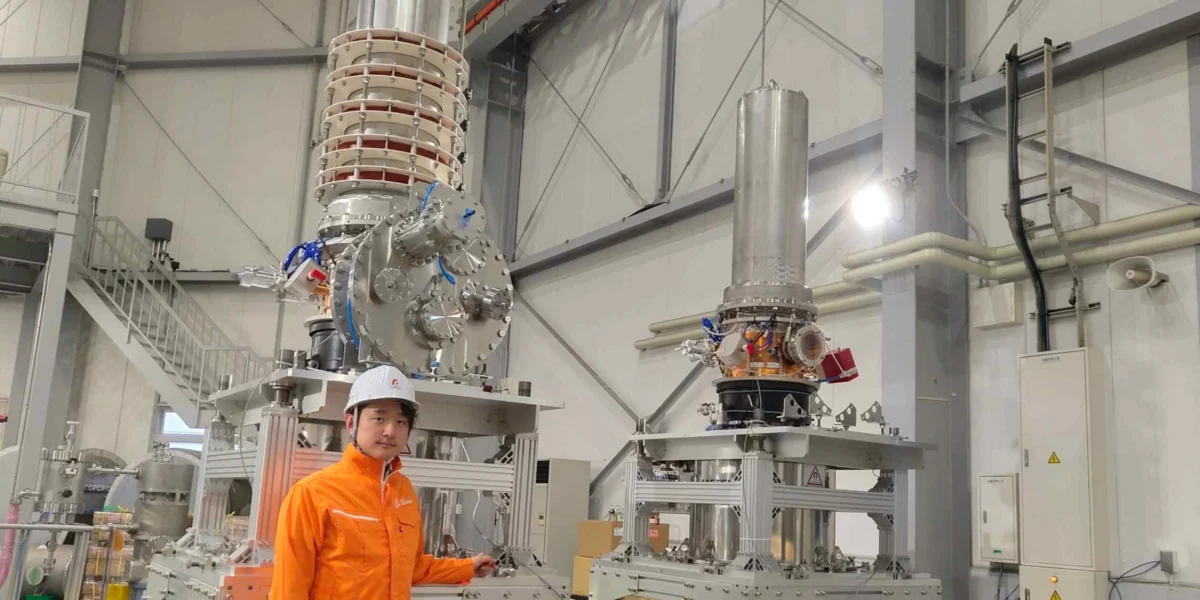
TOKYO — Japan’s Green Transformation (GX) Acceleration Agency has injected significant capital into two pioneering startups, Kyoto Fusioneering and the unnamed plastics recycling company, catalyzing a total of 20 billion yen ($125 million) in combined public-private investment. This strategic funding underscores Japan’s ambitious commitment to decarbonization and the development of next-generation technologies, positioning these nascent ventures at the forefront of the nation’s evolving industrial landscape. The investment in Kyoto Fusioneering, a company dedicated to advancing nuclear fusion technology, and a separate, yet equally critical, investment in a plastics recycling innovator, signals a dual-pronged approach to tackling both energy and environmental challenges. This initiative is a cornerstone of the broader Japanese government’s plan to mobilize a staggering 370 trillion yen ($2.3 trillion) in public and private investment across 17 strategic sectors by fiscal year 2040.
Accelerating the Fusion Frontier
The investment in Kyoto Fusioneering is particularly noteworthy, aligning with global efforts to harness the immense, clean energy potential of nuclear fusion. This technology, often hailed as the "holy grail" of energy, promises a virtually limitless supply of power with minimal environmental impact. Unlike nuclear fission, which splits atoms and produces long-lived radioactive waste, fusion merges atomic nuclei, releasing vast amounts of energy and producing only helium and neutrons as byproducts. Achieving sustained, commercially viable fusion power, however, has been an engineering and scientific challenge that has eluded researchers for decades.
Kyoto Fusioneering, established in 2019, has been making significant strides in developing auxiliary equipment crucial for the construction and operation of nuclear fusion reactors. Their focus on specialized components, such as high-temperature superconducting magnets and advanced cooling systems, addresses critical bottlenecks that have historically hindered fusion development. These components are essential for creating and sustaining the extreme conditions – temperatures exceeding 100 million degrees Celsius and powerful magnetic fields – required to initiate and control the fusion reaction. The company’s innovative approach to these complex engineering problems has garnered international attention and has positioned it as a key player in the global race to commercialize fusion energy.
The funding from the GX Acceleration Agency will undoubtedly accelerate Kyoto Fusioneering’s research and development efforts, enabling them to scale up their technological solutions and move closer to practical applications. This investment is not merely a financial infusion; it represents a tangible endorsement of the company’s technological prowess and its potential to contribute significantly to Japan’s future energy security and its net-zero emissions goals. The agency’s backing signals a strong governmental belief in the viability and necessity of fusion power as a long-term energy solution.
Revolutionizing Plastics Recycling for a Circular Economy
Parallel to its commitment to fusion energy, the GX Acceleration Agency’s investment in a plastics recycling startup underscores Japan’s dedication to fostering a circular economy. Plastic waste represents a pervasive environmental crisis, polluting oceans, landfills, and ecosystems worldwide. While recycling efforts have been ongoing, current methods often struggle to effectively process the diverse and complex types of plastics produced, leading to significant material loss and a reliance on virgin plastic production.
The specific details of the plastics recycling company remain undisclosed, but the nature of the investment suggests a focus on advanced recycling technologies. These could include chemical recycling processes, which break down plastics into their constituent monomers, allowing them to be re-formed into high-quality new plastics, or innovative mechanical recycling techniques that enhance efficiency and expand the range of materials that can be processed. Such technologies are vital for diverting plastic waste from landfills and incinerators, reducing the demand for fossil fuels used in virgin plastic production, and mitigating the environmental consequences associated with plastic pollution.
By supporting this recycling venture, the GX Acceleration Agency is not only addressing an immediate environmental concern but also investing in the development of a sustainable materials industry. A robust circular economy for plastics would create new economic opportunities, reduce reliance on imported raw materials, and contribute to a more resilient and environmentally responsible industrial sector. The synergy between advancements in clean energy like fusion and the efficient management of waste materials like plastics highlights a holistic approach to sustainability championed by the Japanese government.
A Strategic Framework for National Transformation
The GX Acceleration Agency operates within the broader framework of Japan’s Green Transformation (GX) initiative, a comprehensive national strategy launched to achieve carbon neutrality by 2050. The agency’s role is to identify and nurture promising technologies and businesses that can drive this transformation, acting as a critical bridge between government policy and market innovation. The 370 trillion yen ($2.3 trillion) target for investment across 17 strategic sectors by 2040 is an ambitious undertaking, demonstrating Japan’s resolve to fundamentally reshape its economy and society towards sustainability.
The 17 strategic sectors encompass a wide array of areas crucial for decarbonization, including renewable energy, hydrogen, energy storage, carbon capture, utilization, and storage (CCUS), as well as advanced materials and manufacturing processes. The investments in fusion and plastics recycling are prime examples of how the GX initiative is targeting high-impact, long-term solutions. By focusing on both cutting-edge energy generation and waste management, Japan is building a multifaceted approach to environmental stewardship and economic resilience.
Chronology of Support and Future Outlook
While the exact timeline leading to these specific investments is not detailed in the initial report, the establishment of the GX Acceleration Agency in recent years has been a precursor to such strategic funding. The agency was created to streamline and accelerate the flow of capital towards green technologies, recognizing the need for agile and responsive investment mechanisms. The current investments are likely the culmination of rigorous evaluation processes, identifying companies with strong technological foundations, clear development roadmaps, and the potential for significant societal impact.
The immediate implications of this funding are substantial for both Kyoto Fusioneering and the plastics recycling firm. For Kyoto Fusioneering, it means accelerated progress in developing and testing their specialized fusion reactor components, potentially shortening the timeline to pilot projects and eventual commercial deployment. For the plastics recycling company, it signifies the ability to scale up their operations, refine their technologies, and contribute more significantly to the national recycling infrastructure.
Looking ahead, these investments are expected to attract further private sector capital. The government’s commitment, demonstrated through the GX Acceleration Agency, de-risks investments for private entities and signals a favorable regulatory and market environment for these emerging sectors. This catalytic effect is precisely what the GX initiative aims to achieve – creating a virtuous cycle of innovation, investment, and sustainable growth.
Broader Implications for Japan and the Global Energy Landscape
Japan’s proactive stance on investing in nuclear fusion and advanced recycling has significant implications beyond its national borders. In the realm of fusion energy, Japan’s continued progress contributes to the global effort to develop a clean, abundant energy source. Success in this field could revolutionize the global energy landscape, reducing reliance on fossil fuels and mitigating the impacts of climate change on a planetary scale. Companies like Kyoto Fusioneering are not just building components for reactors; they are building the future of energy.
Similarly, advancements in plastics recycling technologies developed in Japan could offer scalable solutions for other nations grappling with plastic waste. The sharing of knowledge and technology in this area could foster international cooperation and contribute to global efforts to establish a truly circular economy for plastics. This positions Japan as a leader in sustainable industrial practices and environmental solutions.
The total of 370 trillion yen ($2.3 trillion) earmarked for strategic sectors by 2040 is a testament to Japan’s long-term vision. This level of investment suggests a fundamental shift in national economic priorities, moving away from traditional carbon-intensive industries towards a future powered by innovation and sustainability. The success of initiatives like the GX Acceleration Agency’s funding of Kyoto Fusioneering and the plastics recycling startup will be critical indicators of Japan’s ability to achieve its ambitious climate goals and secure its economic future in a rapidly changing world. The journey towards a carbon-neutral society is complex and demanding, but these strategic investments demonstrate a clear and determined path forward, fueled by technological ambition and a commitment to a sustainable planet.