Lina Wu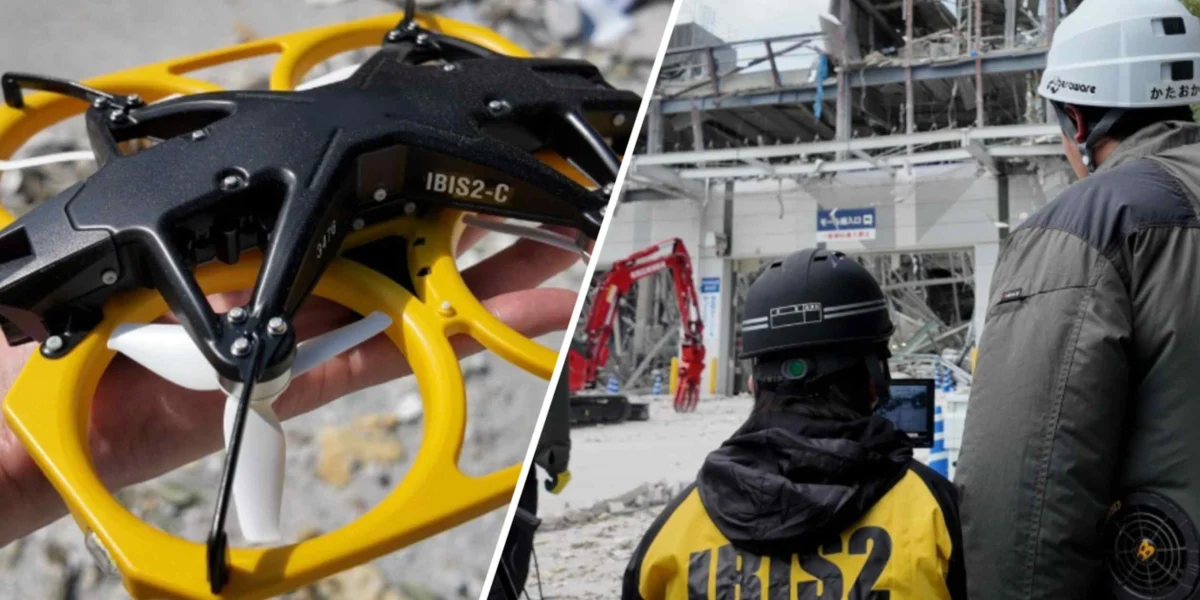
Japan-made drones, specifically Liberaware’s lightweight IBIS2 model, emerged as critical tools in the aftermath of the devastating earthquake that struck Kumamoto prefecture nearly one month ago, offering a glimmer of progress in the nation’s burgeoning drone industry. While these domestically produced unmanned aerial vehicles (UAVs) demonstrated their effectiveness in supporting rescue and recovery operations, their deployment also underscored the significant hurdles Japan faces in scaling up production and competing with established global players, particularly those from China. The incident highlights a critical juncture for Japan’s technological ambitions, revealing both the potential of its innovations and the entrenched challenges of market dominance.

The earthquake, which struck on July 26, 2026, with a magnitude of 7.0, inflicted widespread destruction across Kumamoto prefecture on the island of Kyushu. The seismic event triggered landslides, damaged infrastructure, and left thousands displaced. In the chaotic initial hours and days following the quake, emergency responders grappled with access to remote and debris-strewn areas. This is where the agility and aerial perspective offered by drones became invaluable. Liberaware’s IBIS2, known for its compact design and ease of deployment, was among the UAVs utilized to survey damaged areas, identify trapped individuals, and assess structural integrity of buildings and bridges that were rendered inaccessible by ground.
Liberaware’s IBIS2: A Beacon of Japanese Innovation in Disaster Response
Liberaware, a Japanese company specializing in disaster-response drones, has been diligently developing its technology, drawing significant lessons from past catastrophic events that have impacted Japan. The company’s philosophy centers on creating robust, user-friendly, and rapidly deployable UAVs capable of operating in extreme conditions. The IBIS2, a testament to this approach, is designed for portability, allowing it to be transported and launched by a single operator, a crucial advantage in disaster zones where resources are often stretched thin.

During the Kumamoto earthquake relief efforts, IBIS2 drones were instrumental in several key areas. They provided real-time aerial reconnaissance, enabling emergency teams to gain a comprehensive overview of the affected landscape, identify critical damage hotspots, and pinpoint areas requiring immediate attention. The high-resolution cameras equipped on the drones allowed for detailed inspection of collapsed structures, helping to assess the risk of secondary collapses and guide rescue personnel safely. Furthermore, the drones were employed to locate potential survivors by scanning areas that were difficult or dangerous for human rescuers to access, such as steep slopes or unstable ruins.
"Our goal with the IBIS2 is to provide a tool that can make a tangible difference when every second counts," stated a Liberaware spokesperson, reflecting on the deployment. "Seeing our technology assist in the efforts to save lives and aid recovery in Kumamoto reinforces our commitment to developing solutions tailored for these critical situations. We have continuously refined our designs based on feedback from previous disaster simulations and actual events, focusing on resilience and operational efficiency."

The Shadow of Global Dominance: China’s Hold on the Drone Market
Despite the success of Japanese drones like the IBIS2 in specific, high-stakes scenarios, the broader drone industry landscape remains heavily dominated by Chinese manufacturers. Companies such as DJI have established a formidable market share globally, offering a wide range of drones at competitive price points, supported by extensive research and development and sophisticated supply chains. This dominance presents a significant challenge for smaller, domestic players like Liberaware, not only in terms of market penetration but also in the ability to scale up production to meet potential widespread demand.
The reliance on foreign-made drones, particularly from China, has been a recurring concern for governments worldwide, including Japan, especially in sectors with national security implications. The Kumamoto earthquake, while showcasing the capabilities of Japanese innovation, also implicitly highlights the strategic imperative for Japan to bolster its domestic drone manufacturing capacity. The ability to rapidly deploy a large number of specialized drones, manufactured domestically, could prove crucial in future large-scale disaster responses or other national emergencies.

Learning from Past Disasters: A Foundation for Resilience
Japan’s history is unfortunately punctuated by natural disasters, from the Great Hanshin Earthquake of 1995 to the Great East Japan Earthquake and Tsunami of 2011. These events have served as harsh but invaluable learning experiences, driving advancements in disaster preparedness and response technologies. The development of drones for emergency services is a direct outgrowth of these lessons. Companies like Liberaware have actively participated in disaster drills and simulations, often in collaboration with national and local government agencies, to test and improve their products under realistic conditions.
The timeline leading up to the Kumamoto earthquake’s relief efforts involved years of iterative development for Liberaware. Following the 2011 tsunami, there was a recognized need for more agile and advanced aerial surveillance tools. This spurred investment and innovation in the UAV sector. The development of the IBIS2, for instance, likely incorporated lessons learned about battery life in extreme cold or heat, signal reliability in complex terrain, and the need for intuitive operation by personnel who may not be technical experts. The company’s focus on lightweight, portable designs addresses the logistical challenges faced by first responders who often have to navigate damaged infrastructure on foot.

Supporting Data and Operational Metrics
While specific operational metrics for the IBIS2 during the Kumamoto earthquake are not publicly disclosed in detail, the general advantages of such drones in disaster scenarios are well-documented. Typically, drones can cover vast areas much faster than ground crews, providing critical situational awareness within minutes. For instance, a single drone sortie can survey several square kilometers, identifying blocked roads, damaged buildings, and potential hazards. The thermal imaging capabilities, often integrated into disaster-response drones, can help detect individuals hidden by debris or in low-visibility conditions.
The economic implications of domestic drone production are also significant. A robust national drone industry can foster job creation, stimulate technological innovation, and reduce reliance on foreign suppliers, thereby enhancing national security and economic resilience. However, the high cost of research and development, coupled with the challenges of achieving economies of scale, often makes it difficult for smaller domestic companies to compete with global giants. Supporting policies from the Japanese government, such as subsidies for R&D, tax incentives for manufacturers, and preferential procurement for domestic products in government contracts, are crucial to nurturing this sector.

Official Responses and Future Implications
The Japanese government, recognizing the strategic importance of a domestic drone industry, has been actively promoting its development. Following the Kumamoto earthquake, there has likely been renewed discussion and potential allocation of resources towards supporting companies like Liberaware. This could include increased funding for disaster-response technology research, streamlined regulatory processes for drone deployment in emergencies, and initiatives to foster collaborations between technology developers and disaster management agencies.
The implications of this event extend beyond immediate relief. It serves as a powerful case study for the global drone industry and for national disaster preparedness strategies. For Liberaware and similar Japanese companies, the successful deployment in Kumamoto is a significant endorsement, potentially leading to increased orders and further investment. However, the long-term challenge will be to translate this localized success into sustained market growth and widespread adoption.

The incident also underscores the evolving role of technology in disaster management. Drones are no longer nascent tools but essential components of a modern emergency response toolkit. Their ability to provide aerial perspectives, assess damage, and assist in search and rescue operations is unparalleled. As drone technology continues to advance, with improvements in AI, longer flight times, and enhanced payload capabilities, their importance in mitigating the impact of natural disasters will only grow.
Navigating the Path Forward: Scaling Up and Innovation
Liberaware’s experience in Kumamoto exemplifies the dual nature of technological advancement in a globalized world. While Japanese ingenuity can produce highly effective, specialized solutions, the challenge of scaling up production to meet broader market demands and compete with established international players remains a significant hurdle. The company, like many in the advanced technology sector, faces the perpetual balancing act of innovation, production capacity, and market strategy.

Future growth for Liberaware and the Japanese drone industry will likely depend on a multi-pronged approach. This includes continued investment in research and development to maintain a technological edge, strategic partnerships with larger companies to leverage manufacturing capabilities and distribution networks, and proactive engagement with government agencies to secure long-term contracts and support for domestic production. Furthermore, exploring international markets for their specialized disaster-response drones could provide a pathway to increased scale and revenue.
The Kumamoto earthquake, while a tragedy, has provided a critical platform for showcasing the capabilities of Japanese-made drones. It has also served as a stark reminder of the competitive landscape and the strategic necessity for Japan to fortify its domestic technological capabilities. The path ahead for Liberaware and the broader Japanese drone industry is one of continued innovation, strategic partnerships, and a persistent drive to overcome the challenges of scaling up in a globally competitive market, ensuring that Japan can effectively leverage its own technological strengths in times of crisis.