Evan Lee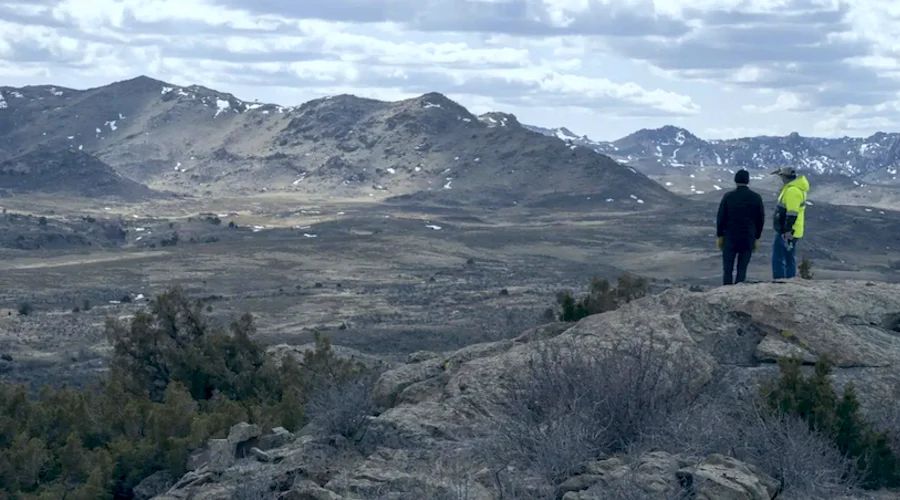
American Rare Earths (ASX: ARR | OTCQX: ARRNF) has announced a significant milestone for its Halleck Creek rare earths project in Wyoming, having been chosen to provide feedstock for the U.S. Department of Energy (DOE) Minerals to Materials Supply Chain Research Facility (METALLIC) consortium. This initiative, spearheaded by the National Energy Technology Laboratory (NETL), aims to forge robust and secure domestic supply chains for critical minerals, a strategic imperative for the United States. The selection underscores the Halleck Creek project’s substantial potential and its role in bolstering American self-sufficiency in vital mineral resources.
The Halleck Creek project, held by American Rare Earths’ subsidiary Wyoming Rare, has garnered international recognition. In 2023, it was prominently featured among the world’s top 10 rare earth projects, a ranking based on total rare earth oxides (TREOs) content. This prestigious classification highlights the project’s considerable scale and the high concentration of valuable rare earth elements within its deposits. The project’s significance is further amplified by its latest resource estimate, which pegs the Cowboy State mine, a key component of the Halleck Creek development, at an impressive 547.5 million tonnes of TREOs at a cut-off grade of 1,000 parts per million (ppm). This substantial resource base positions the project as a cornerstone for future domestic rare earth production.
A crucial step in this collaboration occurred in December 2025, when American Rare Earths supplied approximately five tonnes of allanite ore from the Cowboy State mine’s test pit to the METALLIC consortium. Allanite is a significant mineral source for rare earth elements, making the ore a valuable input for the consortium’s research endeavors. The METALLIC consortium represents a formidable aggregation of research power, pooling the expertise and resources of nine national laboratories. Its primary objective is to validate, refine, and accelerate the commercialization of innovative technologies developed by domestic entities. This collaborative approach is designed to maximize the impact of DOE and other U.S. government investments in critical mineral research and development.
The ore from the Cowboy State mine at Halleck Creek is designated as one of the key feedstocks for the METALLIC program. Its unique mineralogical composition and high rare earth content make it an ideal material for testing and advancing processing technologies across all four of the METALLIC test centers. Researchers within the consortium will work in close collaboration with American Rare Earths, employing mineral processing methods that have been developed by the company. Concurrently, they will explore and test novel processing techniques. This dual approach offers significant advantages for American Rare Earths.
Validation and Innovation in Rare Earth Processing
The involvement of the METALLIC consortium in processing its ore provides American Rare Earths with a valuable third-party affirmation of its established process flowsheets. This independent validation lends significant credibility to the company’s technological advancements and can be instrumental in de-risking future project development and attracting further investment. Furthermore, the testing of novel processing methods by leading national laboratories holds the potential to uncover more efficient and cost-effective ways to extract and refine magnetic rare earth elements. These elements are indispensable for the production of high-performance magnets used in a wide array of advanced technologies, including electric vehicles, wind turbines, and defense systems.
Mark Wall, Chief Executive of American Rare Earths, expressed enthusiasm about the company’s involvement. "Supporting a Department of Energy program is an exciting step for the company as we focus in on advancing the largest US domestic rare earths deposit," Wall stated in a recent news release. He further emphasized the mutual benefits of the collaboration: "American Rare Earths benefits by having leading DOE scientists processing our ore as a part of the drive to domestic rare earth supply chain security within the United States." This statement highlights the strategic alignment between the company’s commercial objectives and the national interest in securing a reliable domestic supply of critical minerals.
The Strategic Imperative of Domestic Critical Minerals
The United States has long recognized the strategic vulnerability associated with its heavy reliance on foreign sources for critical minerals, particularly rare earth elements. These elements, despite their name, are relatively abundant in the Earth’s crust but are difficult and expensive to extract and process economically. China has historically dominated the global supply chain for rare earths, controlling a significant portion of mining, processing, and refining operations. This dominance has raised concerns about supply chain security, price volatility, and potential geopolitical leverage.
In response to these concerns, the U.S. government has implemented a range of policies and initiatives aimed at revitalizing domestic mining and processing capabilities. The establishment of the METALLIC consortium and its focus on critical mineral supply chains are direct manifestations of this strategic imperative. By investing in research and development and fostering partnerships with domestic companies like American Rare Earths, the DOE seeks to build a resilient and competitive U.S. rare earth industry.
Halleck Creek Project: A Pillar of U.S. Rare Earth Potential
The Halleck Creek project’s substantial resource estimate is a critical factor in its selection for the METALLIC program. The project is located in Converse County, Wyoming, a region with a history of mineral exploration and development. The Cowboy State mine, specifically, is characterized by its large tonnage and favorable grades of rare earth elements, including neodymium, praseodymium, dysprosium, and terbium, which are vital for the production of high-strength permanent magnets.
The project’s development timeline has seen incremental progress, with a focus on resource definition and preliminary economic assessments. The latest resource update, as of the reporting period, indicates a robust and economically viable deposit. The company has been diligently working on metallurgical testing and process design to optimize the extraction and separation of individual rare earth elements from the ore. The collaboration with the DOE’s METALLIC consortium represents a significant acceleration of these efforts, providing access to cutting-edge research and validation at a national laboratory level.
Broader Implications for the Rare Earth Industry
The selection of the Halleck Creek project as feedstock for the METALLIC consortium carries several important implications for the broader rare earth industry in the United States and globally.
- Accelerated Technology Development: Access to national laboratory resources and expertise will undoubtedly accelerate the development and refinement of rare earth processing technologies. This could lead to breakthroughs in efficiency, cost reduction, and environmental performance, making domestic rare earth production more competitive.
- Enhanced Investment Appeal: The DOE’s endorsement, in the form of feedstock selection for a critical research program, serves as a strong validation for American Rare Earths and its project. This can significantly enhance the project’s attractiveness to private investors, potentially facilitating the capital required for full-scale development.
- Strengthened Domestic Supply Chain: The success of the METALLIC program, with Halleck Creek as a key component, will contribute directly to the establishment of a more secure and diversified domestic rare earth supply chain. This reduces reliance on geopolitical rivals and mitigates the risks associated with supply disruptions.
- Economic Development Opportunities: The development of the Halleck Creek project, should it proceed to commercial production, could generate significant economic benefits for Wyoming and the surrounding regions, including job creation, infrastructure development, and increased tax revenues.
- Environmental Stewardship: As the industry evolves, there is an increasing focus on sustainable and environmentally responsible mining and processing practices. Collaboration with national laboratories can also foster the development of greener technologies, minimizing the environmental footprint of rare earth extraction.
The partnership between American Rare Earths and the DOE’s METALLIC consortium marks a pivotal moment in the journey to revive and strengthen the U.S. rare earth industry. By leveraging the vast potential of the Halleck Creek project and the advanced research capabilities of the nation’s top laboratories, this collaboration is poised to make substantial contributions to securing critical mineral supply chains for the future. The success of this initiative could serve as a blueprint for other domestic critical mineral projects, accelerating the transition towards greater resource independence and technological innovation in the United States. The ongoing work at Halleck Creek, now intertwined with national strategic research, underscores its growing importance not just as a mineral deposit, but as a vital component of America’s future in advanced materials and technologies.