Farhan Pambudi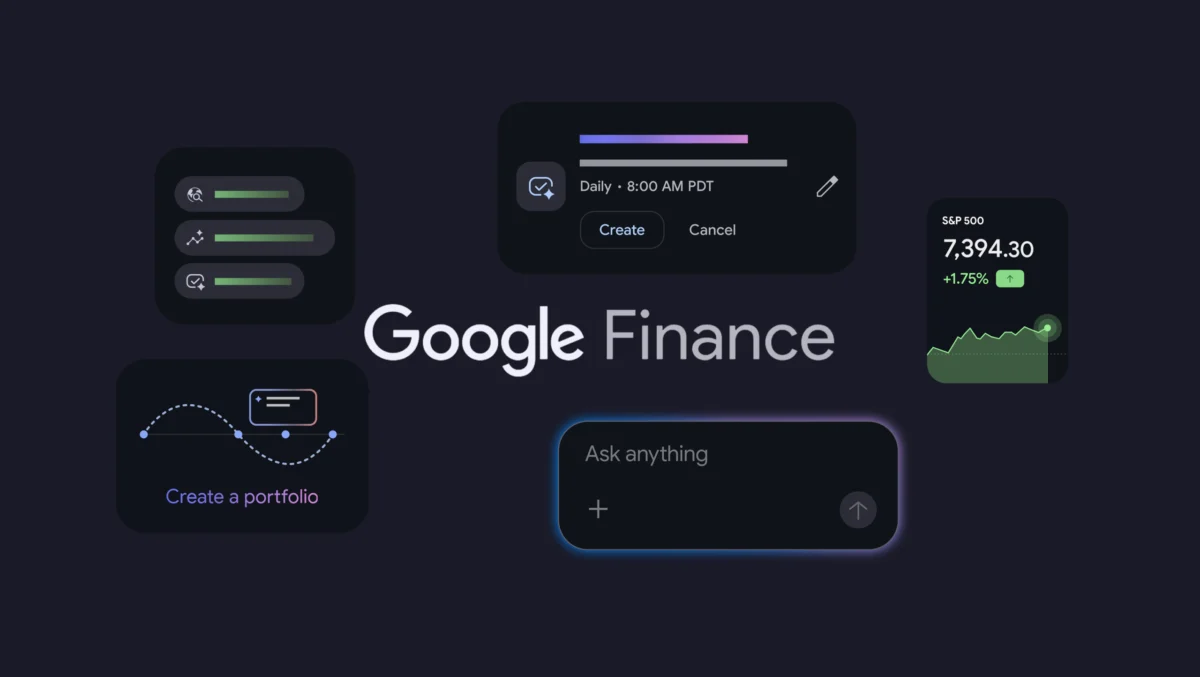
Google on Thursday officially launched a dedicated mobile application for Google Finance, marking a significant strategic shift for the platform as it transitions from a specialized search feature into a comprehensive, standalone financial ecosystem. The new app, initially available on Android with an iOS version slated for release in the coming months, centralizes user watchlists while providing real-time market data, live financial news, and a suite of sophisticated artificial intelligence tools. Among the most prominent additions is the "Key Moments" feature, an AI-driven engine designed to provide narrative explanations for stock volatility, effectively translating complex market movements into digestible insights for retail investors.
The rollout signifies more than just a technical update; it represents Google’s aggressive entry into the increasingly competitive financial information market. By consolidating its financial tools into a dedicated mobile environment, Google is positioning itself as a direct competitor to long-established consumer finance platforms such as Yahoo Finance and mobile-centric trading interfaces like Robinhood. The launch also coincides with the graduation of the Google Finance web experience from its beta phase, bringing a revamped, AI-enhanced interface to users globally.
A New Era of AI-Driven Financial Intelligence
The centerpiece of the new Google Finance experience is the integration of generative artificial intelligence to solve the "information overload" problem faced by many modern investors. The "Key Moments" feature utilizes Google’s advanced large language models to scan thousands of news articles, earnings reports, and market signals in real-time. When a stock experiences a significant price swing, the AI identifies the most likely catalysts—such as an unexpected earnings beat, a regulatory shift, or a macroeconomic data release—and presents a concise summary to the user.
Beyond mere observation, the app introduces proactive AI tasks. Users can now set up natural-language prompts to receive tailored briefings. For example, an investor can request a "weekly summary of how tech sector volatility impacted my specific holdings" or ask the system to "alert me when any stock in my watchlist reaches a five-year valuation high." These tasks run in the background, transforming the app from a passive data ticker into an active financial assistant.
Furthermore, the portfolio management system has been reimagined. While users can still manually input data, they now have the option to create portfolios by describing their investments to a chatbot or uploading documentation. Once established, the AI research tool allows for deep-dive queries. A user might ask, "What sectors are currently underrepresented in my portfolio?" or "How would a rise in interest rates likely affect my current dividend yield?" The AI then analyzes the user’s specific holdings against broader market trends to provide an objective architectural overview of their investments.
Chronology of Development: From Search Tab to Standalone Ecosystem
The journey toward a standalone Google Finance app has been nearly two decades in the making, though the most rapid acceleration occurred within the last 24 months.

- 2006–2015: The Formative Years: Google Finance launched in 2006 as a competitor to Yahoo Finance and MSN Money. For years, it remained a relatively static web tool primarily used for quick ticker searches within the main Google Search engine.
- 2017–2020: The Integration Phase: Google briefly folded Finance more deeply into Search, removing some legacy features like "Portfolios" in a move that initially frustrated power users. This period was characterized by a focus on "Search-first" financial data.
- 2023–2024: The AI Pivot: Recognizing the surge in retail investing during the post-pandemic era, Google began testing a revamped web experience. In August 2025, the company unveiled a beta version of the new Google Finance, heavily integrated with early AI upgrades and a live news feed.
- June 2026: Full Launch: The platform officially exits beta. The mobile app is launched on Android, portfolios are rolled out globally, and the AI "Key Moments" feature becomes the standard interface for market analysis.
This timeline reflects a broader trend within Alphabet Inc. to unbundle high-value services from the core search bar and provide them with dedicated real estate on users’ home screens, ensuring higher engagement and better data retention.
Supporting Data: The Retail Investment Boom
Google’s decision to double down on a dedicated finance app is supported by massive shifts in consumer behavior. Since 2020, the retail investment landscape has undergone a democratization fueled by zero-commission trading and mobile accessibility. According to industry reports, retail investors now account for approximately 20% to 25% of total stock market trading volume on any given day, a significant increase from the 10% to 15% seen a decade ago.
Market research indicates that the "information gap" is the primary hurdle for new investors. A 2025 survey of retail traders found that 64% felt overwhelmed by the sheer volume of financial news, and 51% struggled to understand why their stocks were moving even when news was available. By implementing "Key Moments" and natural-language portfolio analysis, Google is directly addressing this pain point, leveraging its dominance in search and AI to provide clarity where traditional charts often provide only raw data.
Furthermore, the "stickiness" of financial apps is a key driver for tech giants. Users check financial apps an average of 7 to 10 times per day during market hours. For Google, capturing this attention means more time spent within its ecosystem and more high-intent data that can be used to refine its broader AI models.
Competitive Landscape and Industry Reactions
The launch places Google in a tripartite battle for the "financial home screen." On one side are the legacy data providers like Yahoo Finance, which boasts a deep well of historical data and community features. On the other are "fintech" disruptors like Robinhood and SoFi, which integrate data with the actual execution of trades.
Google’s strategy appears to be carving out a middle ground: the "Intelligence Layer." By not offering direct trading (at least for now), Google maintains a level of perceived objectivity. It acts as the analytical bridge, helping users decide what to do before they head to their brokerage app to execute the trade.
Industry analysts suggest that this move could pressure competitors to accelerate their own AI integrations. "Google is fundamentally changing the expectation of what a finance app should do," noted one senior fintech analyst. "It’s no longer enough to show a green or red line. The user now expects the app to tell them why the line is moving and what it means for their specific retirement goals. If Yahoo and others don’t match this narrative AI capability, they risk becoming mere data utilities rather than decision-making platforms."

While Google has not released official statements from external partners, the integration of live earnings calls—a feature promised for the coming months—suggests partnerships with financial data aggregators and corporate relations platforms. The ability to listen to these calls directly within the app would further consolidate the investor’s workflow, reducing the need to jump between multiple websites and third-party tools.
Broader Impact and Future Implications
The global rollout of Google Finance’s portfolio features suggests a push toward hyper-personalization. As the app moves to iOS and adds features like live earnings calls, the boundary between a "news app" and a "financial advisor" will continue to blur.
One of the most significant implications of this launch is the potential for AI-driven sentiment democratization. Historically, sophisticated sentiment analysis and real-time news correlation were the domain of institutional investors using expensive Bloomberg Terminals or Reuters Eikon systems. By putting these tools—powered by the same AI architecture used in Google’s enterprise products—into a free mobile app, Google is narrowing the information gap between Wall Street and Main Street.
However, the move also raises questions regarding data privacy and the influence of AI on market behavior. As more retail investors rely on AI summaries to explain market movements, there is a risk of "narrative feedback loops," where the AI’s interpretation of an event becomes the dominant driver of further trading activity. Google’s responsibility in ensuring the objectivity and accuracy of its "Key Moments" will be paramount as the app gains mass adoption.
Looking ahead, the integration of Google Finance with other Workspace tools—such as Google Sheets for advanced modeling or Google Calendar for tracking dividend dates and earnings reports—is a logical next step. For now, the launch of the Android app and the global web rollout marks the beginning of a new chapter where AI does not just report the news but explains the market in a way that is accessible to everyone.
The app is available for download on the Google Play Store starting today, with the web experience updates automatically reflecting for users worldwide. As Google continues to iterate on these tools, the financial information sector will likely see a renewed focus on "insight over information," forever changing how the average person interacts with the global economy.