Farhan Pambudi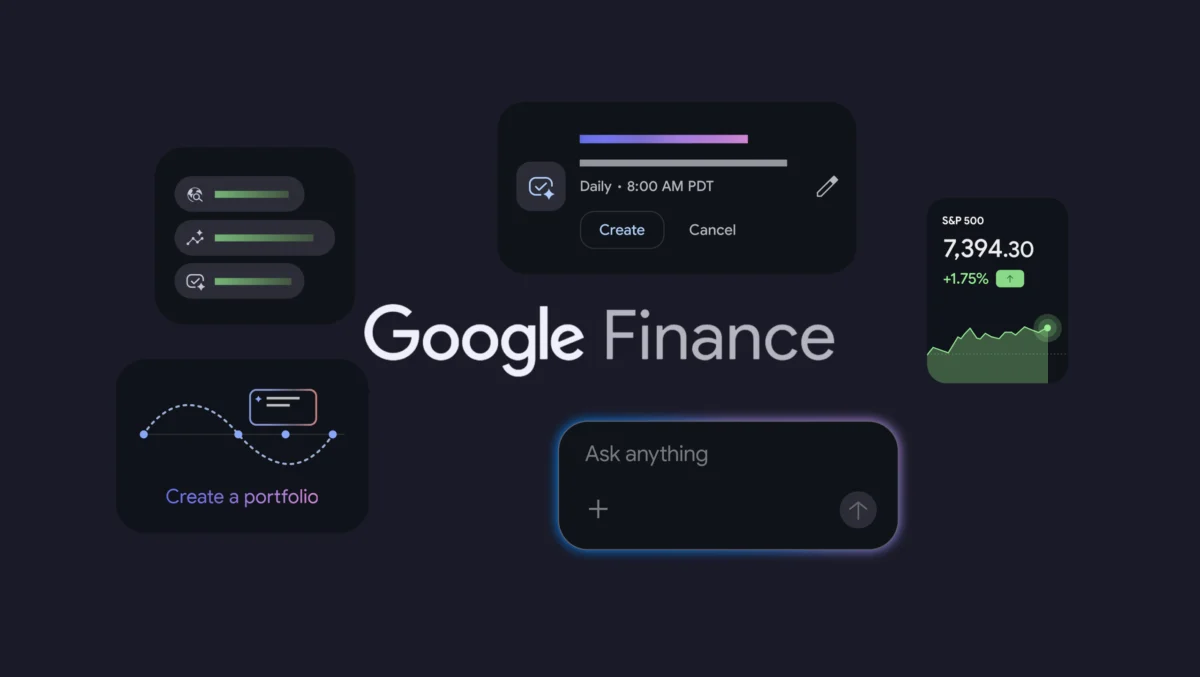
On Thursday, Google officially expanded its financial services ecosystem by launching a standalone mobile application for Google Finance, signaling a major strategic shift for a platform that has long existed primarily as a web-based utility. The new application, which debuted first on the Android operating system, is designed to provide retail investors with a centralized hub for tracking watchlists, accessing real-time market data, and consuming live financial news. Beyond standard tracking features, the app introduces Google’s proprietary "Key Moments" feature, an artificial intelligence-driven tool engineered to provide context-heavy explanations for stock price volatility and market shifts.
The launch represents a transition for Google Finance from a secondary feature within the Google Search ecosystem to a primary, native mobile experience. While an iOS version is currently in development and expected to arrive in the coming months, the initial Android release serves as a testing ground for several sophisticated AI integrations. Google has also confirmed that the platform will soon support live earnings calls, further bridging the gap between casual news consumption and professional-grade financial analysis.
The Evolution of Google Finance: From Web Utility to Native Powerhouse
For nearly two decades, Google Finance has occupied a unique niche in the tech giant’s portfolio. Launched in 2006 to compete with established portals like Yahoo Finance and MSN Money, the service has undergone several identity shifts. In 2017, the platform underwent a controversial redesign that removed several advanced charting tools, focusing instead on a simplified experience integrated directly into Google Search results. This move was initially seen as a pivot away from the "prosumer" investor toward the casual user.
However, the 2026 launch of a dedicated app suggests a reversal of that trajectory. By offering a standalone application, Google is responding to a decade-long trend in which retail investors have moved away from desktop terminals and toward "mobile-first" financial management. The decision to exit the "beta" phase for its revamped web experience—unveiled in late 2025—coincides with this mobile rollout, creating a unified cross-platform environment for users to manage their portfolios.
AI-Powered Insights: The "Key Moments" and Natural Language Integration
The centerpiece of the new Google Finance experience is the integration of generative artificial intelligence and natural language processing. The "Key Moments" feature aims to solve a common pain point for retail investors: understanding the "why" behind market movements. Instead of requiring users to cross-reference news headlines with stock charts manually, the AI parses thousands of data points and news articles in real-time to generate concise summaries explaining specific price actions.

Furthermore, Google is leveraging its advancements in Large Language Models (LLMs) to transform how users interact with their portfolios. Within the new web and mobile interfaces, users are no longer restricted to manual data entry. The platform now allows investors to create or update portfolios by simply describing their holdings to an AI chatbot or uploading existing financial documents.
Once a portfolio is established, the AI transitions into a research assistant. Users can pose complex, natural-language questions such as, "Which sectors are currently underrepresented in my portfolio?" or "How does my exposure to the tech sector compare to the S&P 500?" This level of automated analysis, once reserved for high-end wealth management software, is now being democratized for the general public.
Strategic Market Positioning and Competitive Landscape
Google’s entry into the standalone finance app market places it in direct competition with several entrenched players. The landscape is currently dominated by:
- Traditional Financial Portals: Yahoo Finance remains the incumbent leader in terms of traffic and depth of historical data. Its mobile app has long been the gold standard for free real-time tracking and news aggregation.
- Trading Platforms: Apps like Robinhood and E-Trade have successfully integrated news and social features into their trading interfaces, creating a "one-stop-shop" for both information and execution.
- OS-Integrated Services: Apple Stocks, which is natively integrated into iOS and macOS, provides a seamless experience for iPhone users, often acting as the default starting point for casual market checks.
Industry analysts suggest that Google’s competitive advantage lies in its vast data index and search dominance. By tying financial data to its broader news and search ecosystem, Google can offer a level of contextual awareness that specialized trading apps may lack. The "Tasks" feature, also announced on Thursday, allows users to set up automated, natural-language prompts for timely briefings. For instance, a user can request a daily summary of how specific geopolitical events are impacting their energy holdings, a task that Google Finance performs in the background using its global news-crawling capabilities.
Technical Specifications and Global Rollout
The rollout of these features is being managed in phases. While the Android app is the most visible component of the announcement, the backend updates to the Google Finance web experience are equally significant. The "Portfolios" feature is now rolling out globally, allowing users to view their investments in a unified dashboard that tracks performance metrics and historical growth.
Technical highlights of the new update include:

- Real-time Data Sync: Seamless synchronization between the Google Finance mobile app, the web dashboard, and Google Search.
- Background Processing: The AI assistant operates continuously, monitoring market changes and preparing summaries even when the user is not actively using the app.
- Natural Language Tasks: Users can set recurring "briefings" using conversational English, which are then delivered via notifications or a dedicated "Insights" tab.
- Portfolio Import: Support for bulk-uploading investment data via common file formats, reducing the friction of switching from other platforms.
Implications for the Fintech Industry and User Privacy
Google’s deeper dive into personal finance data raises pertinent questions regarding data privacy and the role of Big Tech in financial decision-making. As users describe their holdings to a chatbot or upload investment files, Google gains access to highly sensitive financial profiles. The company has stated that these features are designed to empower users with information, but privacy advocates will likely monitor how this data is utilized within Google’s broader advertising and profiling algorithms.
From a market perspective, the move underscores the "AI arms race" currently taking place in the fintech sector. As generative AI becomes a standard feature, the value proposition for financial apps is shifting from providing "raw data" to providing "actionable intelligence." Google’s ability to synthesize news through "Key Moments" could set a new industry benchmark for how financial news is consumed.
Looking Ahead: The Roadmap for 2026 and Beyond
Google has signaled that this launch is merely the foundation of a more robust financial ecosystem. The upcoming integration of live earnings calls is a direct challenge to platforms like Bloomberg and specialized "earnings" apps that cater to more sophisticated investors. By providing a free, AI-enhanced platform for listening to and summarizing corporate disclosures, Google could significantly lower the barrier to entry for deep fundamental analysis.
The anticipated iOS release will be a critical milestone for the platform’s success. Given the high concentration of affluent retail investors on the iOS platform, Google Finance will need to offer a polished, high-performance experience to compete with Apple’s native Stocks app.
As the "beta" label is removed from the web experience, Google Finance appears ready to reclaim its status as a premier destination for market intelligence. By combining its massive search infrastructure with cutting-edge generative AI, Google is betting that the future of investing is not just about having the data, but about understanding the complex narrative behind the numbers. In an increasingly volatile global economy, the demand for tools that provide "Key Moments" and automated portfolio analysis is likely to grow, positioning Google as a formidable contender in the evolving digital finance landscape.